Louisiana Gov. John Bel Edwards (D) issued an executive order on Saturday requiring all people ages 8 and older to wear face coverings in public to curb the spread of the coronavirus, according to The Advocate.
Why it matters: Louisiana is now the 25th state to issue some form of a mask mandate as case counts surge across the U.S.
India is set to reinstate mandatory lockdowns for cities as medical facilities across the country are strained due to a recent surge in new coronavirus infections, the New York Times reports.
Why it matters: Roughly four months ago, India's Prime Minister Narendra Modi announced a national lockdown to prevent the spread of the virus, hoping to avoid the large-scale crisis it's now experiencing.
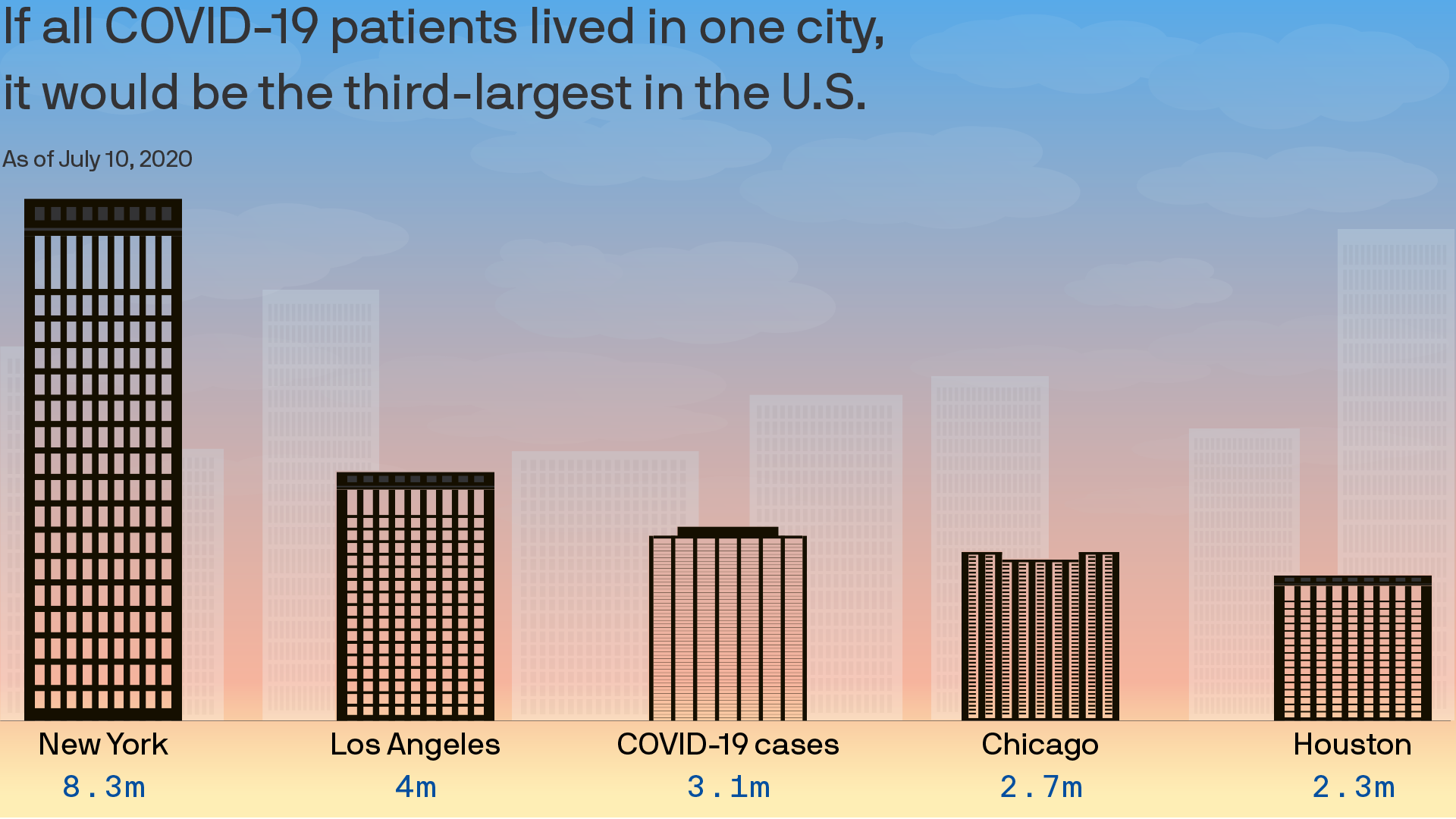
By any standard, no matter how you look at it, the U.S. is losing its war against the coronavirus.
Why it matters: The pandemic is not an abstraction, and it is not something that’s simmering in the background. It is an ongoing emergency ravaging nearly the entire country, with a loss of life equivalent to a Sept. 11 every three days — for four months and counting.
Data released by Florida's Agency for Health Care Administration on Friday shows that 6,974 people in the state are currently being treated in hospitals for the coronavirus, the Orlando Sentinel reports.
Why it matters: Florida has experienced a surge in coronavirus cases over the past two weeks and has broken single-day records for new cases multiple times since the end of last month.
It feels like mid-March in America again. The coronavirus is surging, deaths are climbing and the country is dreading a wave of disruptions, less than four months since the first round started.
The big picture: Lingering under all the happy talk of future plans is the reality of this virus — which thrives in potential super-spreader conditions like mass gatherings.
It's often easier to socially distance in rural America, but it can simultaneously be more challenging to get medical care.
Axios Re:Cap digs into the pandemic's urban-rural divide with microbiologist Amber Schmidtke, who has found that coronavirus-related morbidity is higher in many of Georgia's rural counties than in Atlanta.
Some 250,000 to 370,000 deaths may have been averted between March and May 15 as a result of the statewide stay-at-home orders enacted to mitigate spread of the coronavirus, a study published Thursday in Health Affairs projects.
Why it matters: The U.S. has changed strategies since then. New modeling suggests the outbreaks could lead to more than 200,000 deaths by the end of year.
By letting the coronavirus surge through the population with only minimal social distancing measures in place, the U.S. has accidentally become the world’s largest experiment in herd immunity.
Why it matters: Letting the virus spread while minimizing human loss is doable, in theory. But it requires very strict protections for vulnerable people, almost none of which the U.S. has established.