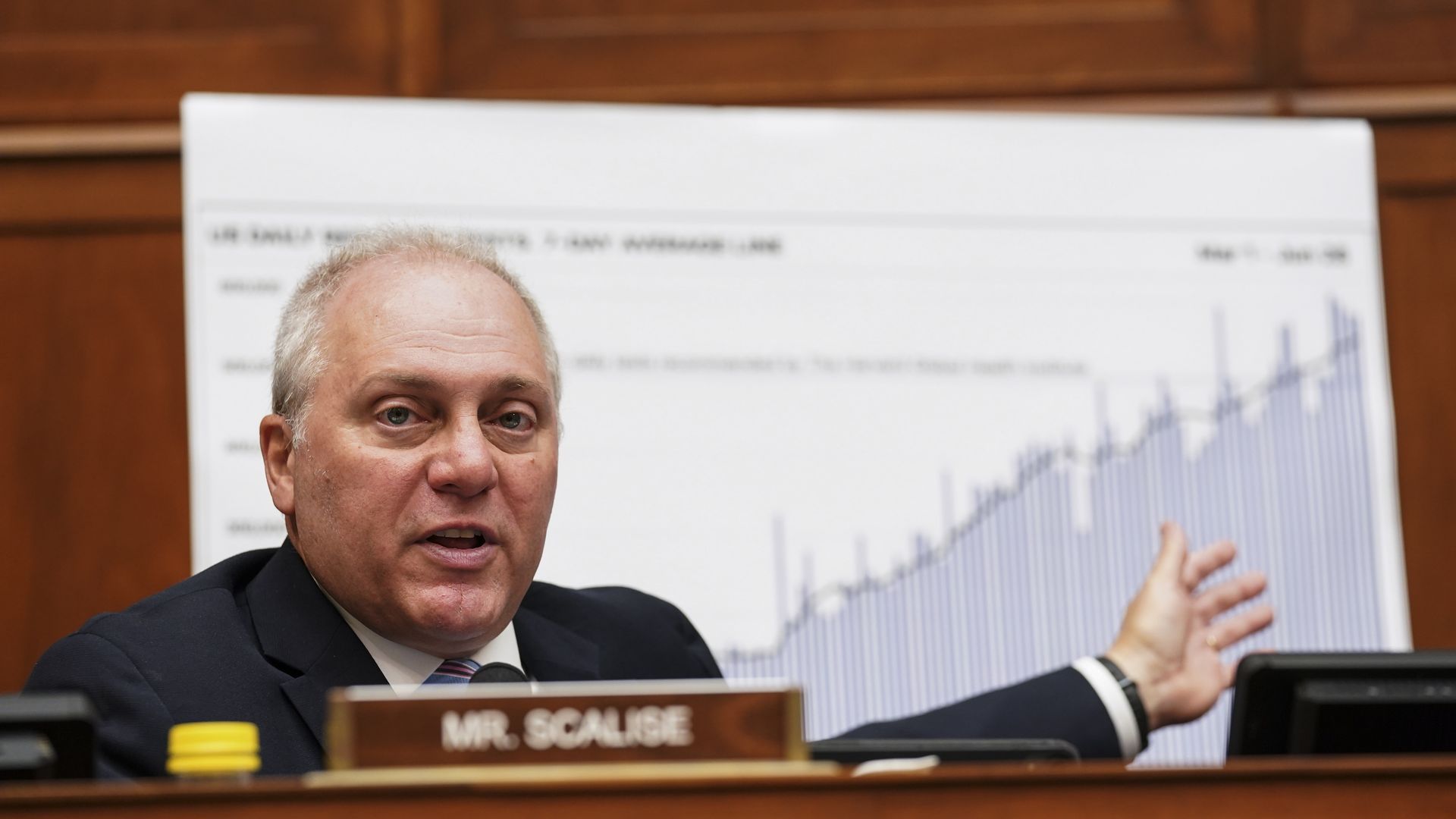
House Minority Whip Steve Scalise’s PAC is inviting lobbyists to attend a four-day “Summer Meeting” at Disney World's Polynesian Village in Florida, all but daring donors to swallow their concern about coronavirus and contribute $10,000 to his leadership PAC.
Why it matters: Scalise appears to be the first House lawmakers to host an in-person destination fundraiser since the severity of pandemic became clear. The invite for the “Summer Meeting” for the Scalise Leadership Fund, obtained by Axios, makes no mention of COVID-19.
At least eight Mississippi state lawmakers have received positive tests for the novel coronavirus after many were in the Capitol building and chose not to wear masks or practice social distancing, AP reports.
Why it matters: The infected officials include 73-year-old Lt. Gov. Delbert Hosemann, who presides over the Senate, and 57-year-old House Speaker Philip Gunn — both of whom are Republicans.
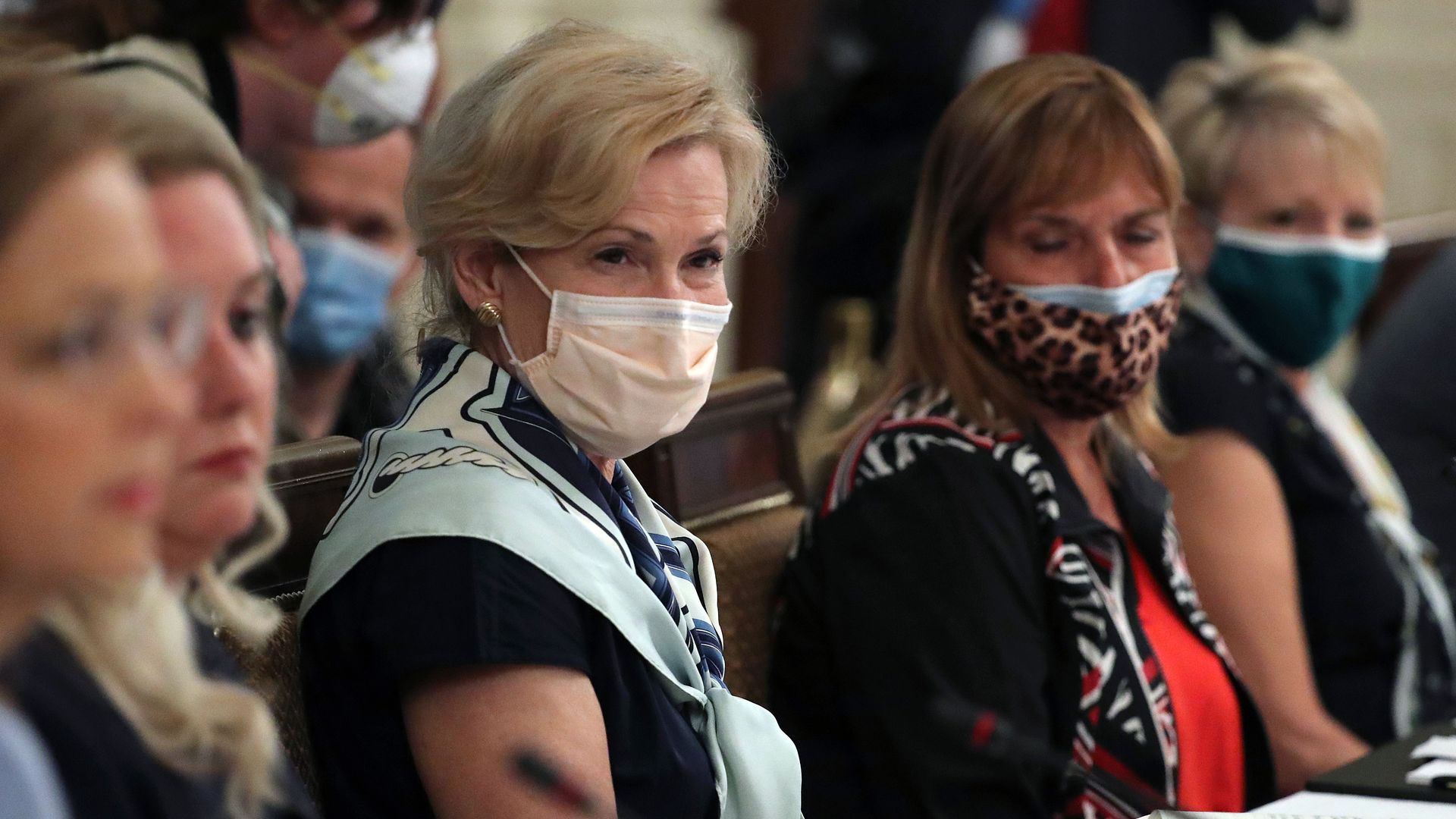
Many of the Southern states that are experiencing a significant surge in coronavirus infections "stepped on the gas" while lifting lockdown restrictions, unlike the regions in the North that were hit hard in March and April, White House coronavirus task force coordinator Deborah Birx told Wharton Business Daily on Tuesday.
Why it matters: The White House published non-binding guidelines in April that recommended states report 14 days of declining coronavirus cases before reopening. Most states did not meet that criteria, according to the New York Times.
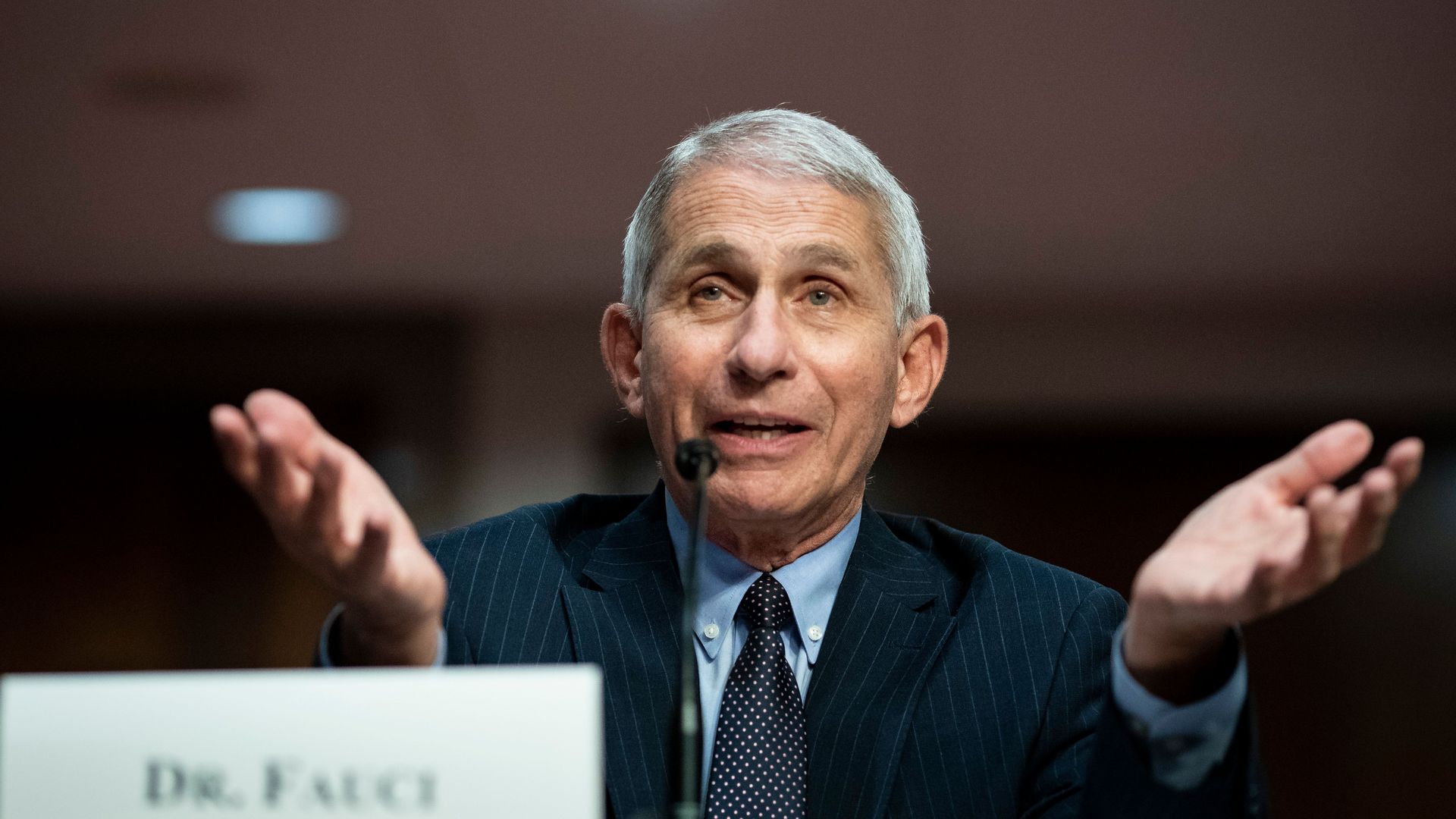
Anthony Fauci said at an event with Sen. Doug Jones (D-Ala.) on Tuesday "that it's a false narrative to take comfort in a lower rate of death" from the coronavirus in the U.S., warning: "There’s so many other things that are dangerous and bad about the virus. Don’t get into false complacency."
The big picture: The mean age of Americans currently being infected by the virus has declined by 15 years compared to where it stood several months ago. This has been one contributing factor in the lower death rate the U.S. has experienced during the recent surge in cases, since "the younger you are, the better you do, and the less likely you're gonna get seriously ill and die," Fauci said.
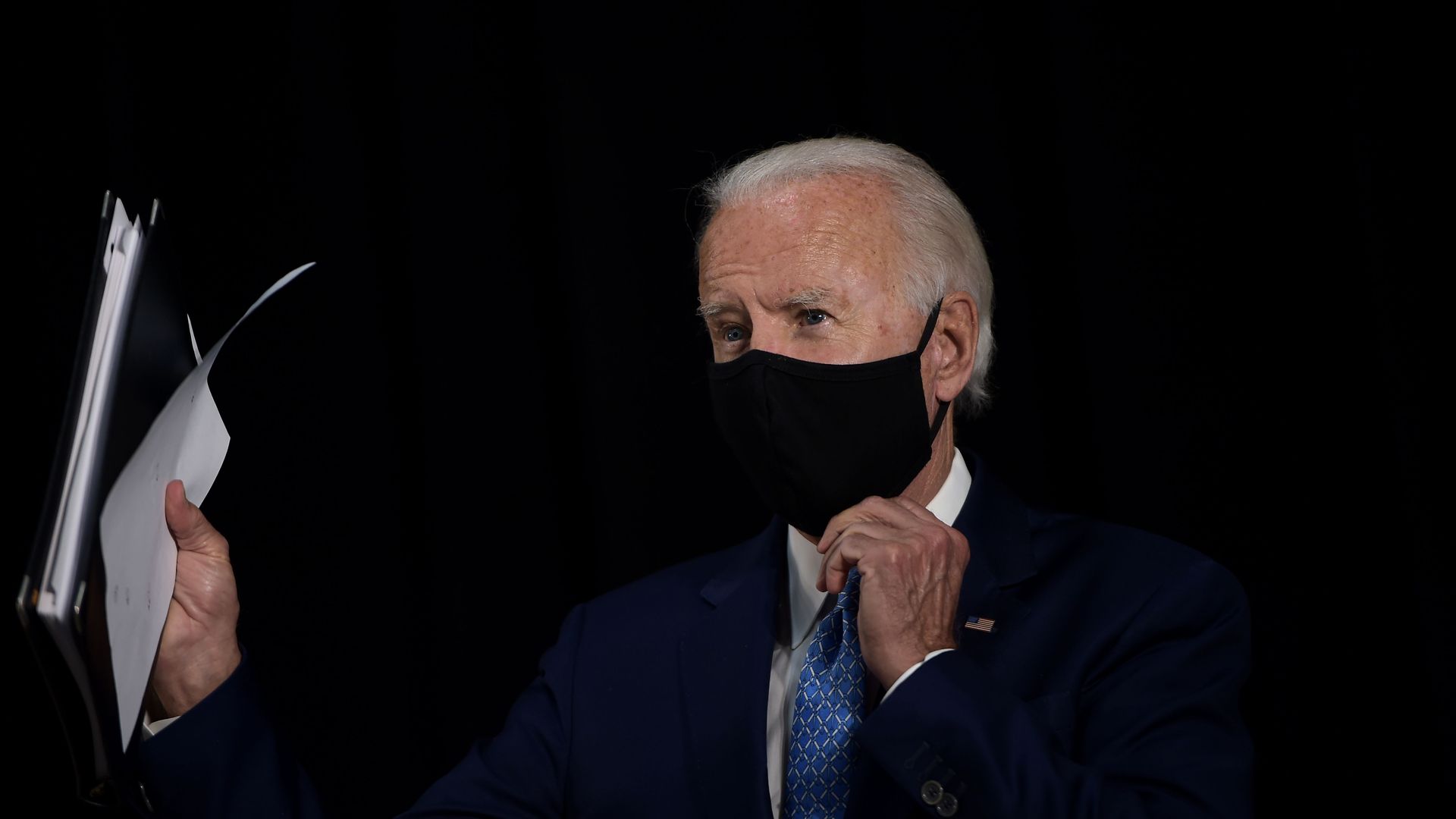
Joe Biden's campaign released a three-part plan Tuesday to rebuild U.S. supply chains in the wake of the coronavirus pandemic, and it's centered around the idea that the country is more vulnerable to global disruptions in spite of President Trump's "America First" rhetoric.
Why it matters: Biden is proposing a way to make sure the U.S. doesn't rely on other countries for personal protective equipment (PPE) and other related medical supplies. That's another way of acknowledging that we're not getting over this health crisis anytime soon.
Arizona reported a record 117 new coronavirus deaths, 3,356 total hospitalizations, and 869 ICU beds in use on Tuesday, according to data from Arizona's Department of Health Services.
Why it matters: The number of daily deaths in coronavirus hotspots across the Sunbelt has not reached the levels that New York saw at the peak of its outbreak, likely because many of the new cases are young people with little to no symptoms. But that could start to change as hospitals reach maximum capacity and more vulnerable groups contract the virus.
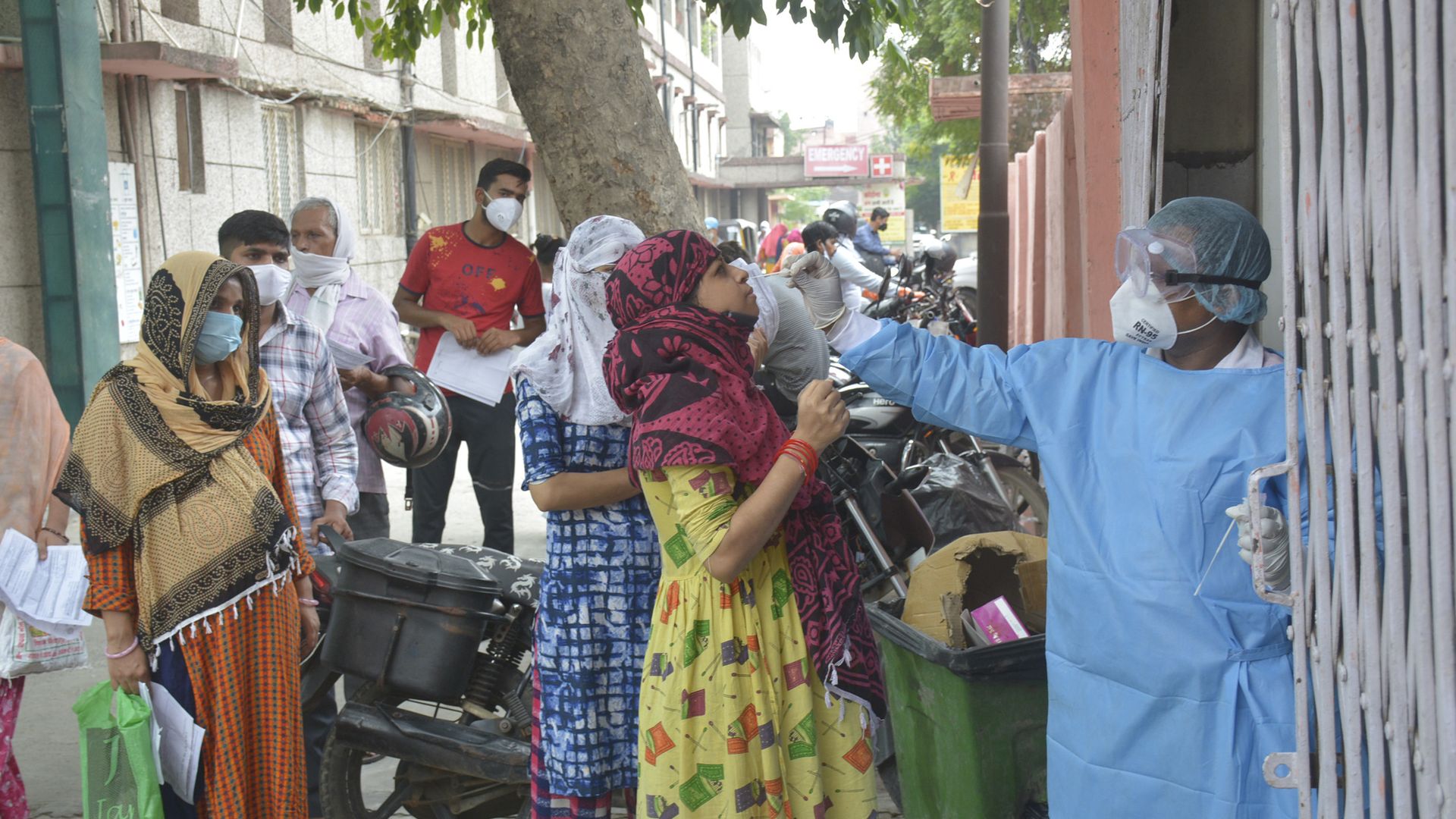
India has reported more coronavirus cases than any other countries but the U.S. and Brazil, per Johns Hopkins data.
The big picture: Schools, colleges, movie theaters, pools, religious gatherings and metro travel remain shut down according to guidance that lasts until the end of July, India's Ministry of Home Affairs announced last week.
Brazilian President Jair Bolsonaro announced Tuesday that he tested positive for coronavirus.
Why it matters: Brazil's coronavirus outbreak is one of the largest in the world, topped only by the U.S., and Bolsonaro has long downplayed the effects of the virus, pushing businesses to reopen over the last few months in order to jumpstart the country's economy.
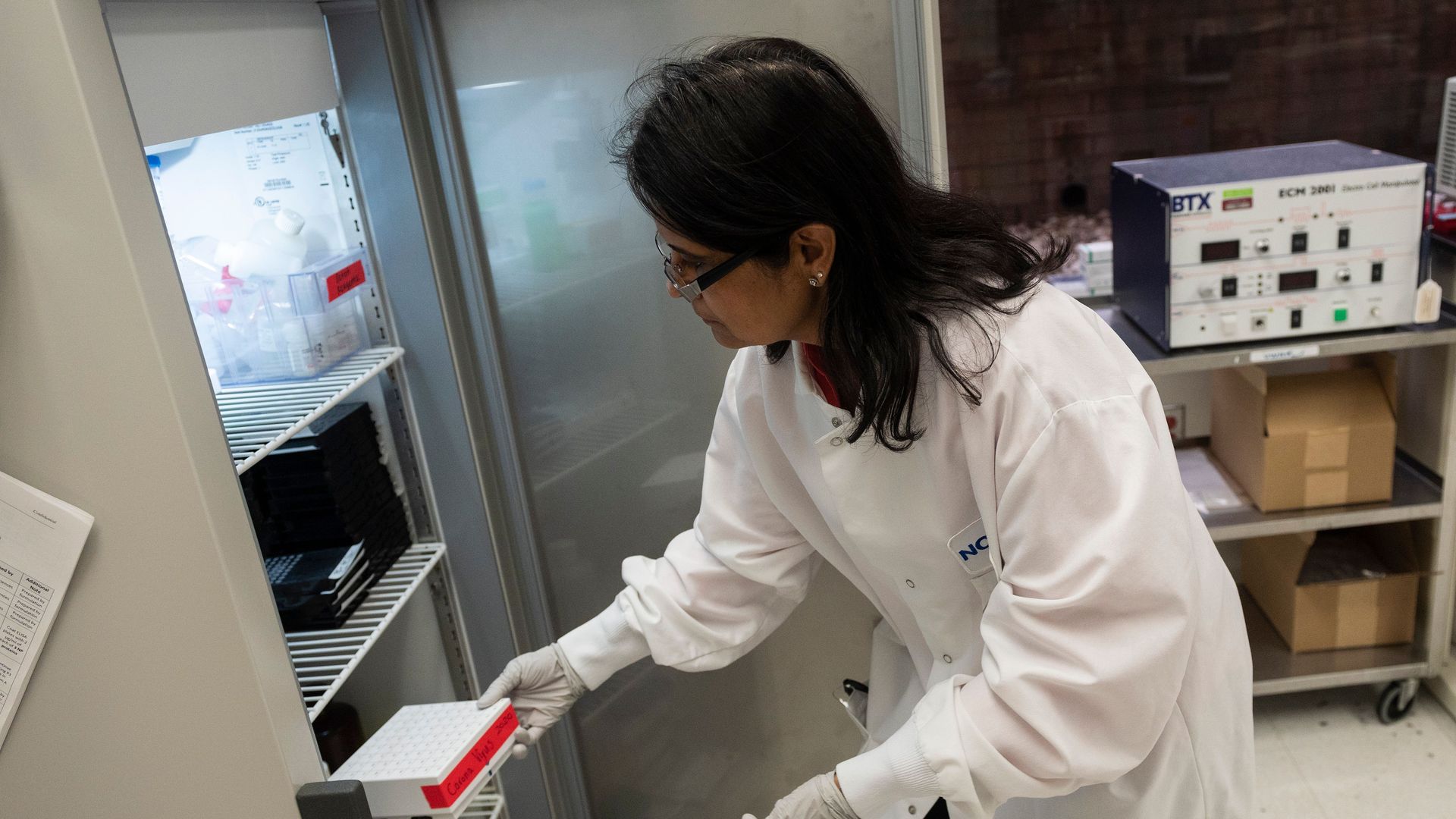
The Department of Health and Human Services and Department of Defense have awarded $1.6 billion to Novavax and $450 million to Regeneron Pharmaceuticals as part of the federal government's efforts to speed up the development of coronavirus treatments.
The bottom line: Federal scientists are holding out hope that these companies' treatments, along with other vaccines in development, will snuff out the spread of the coronavirus.
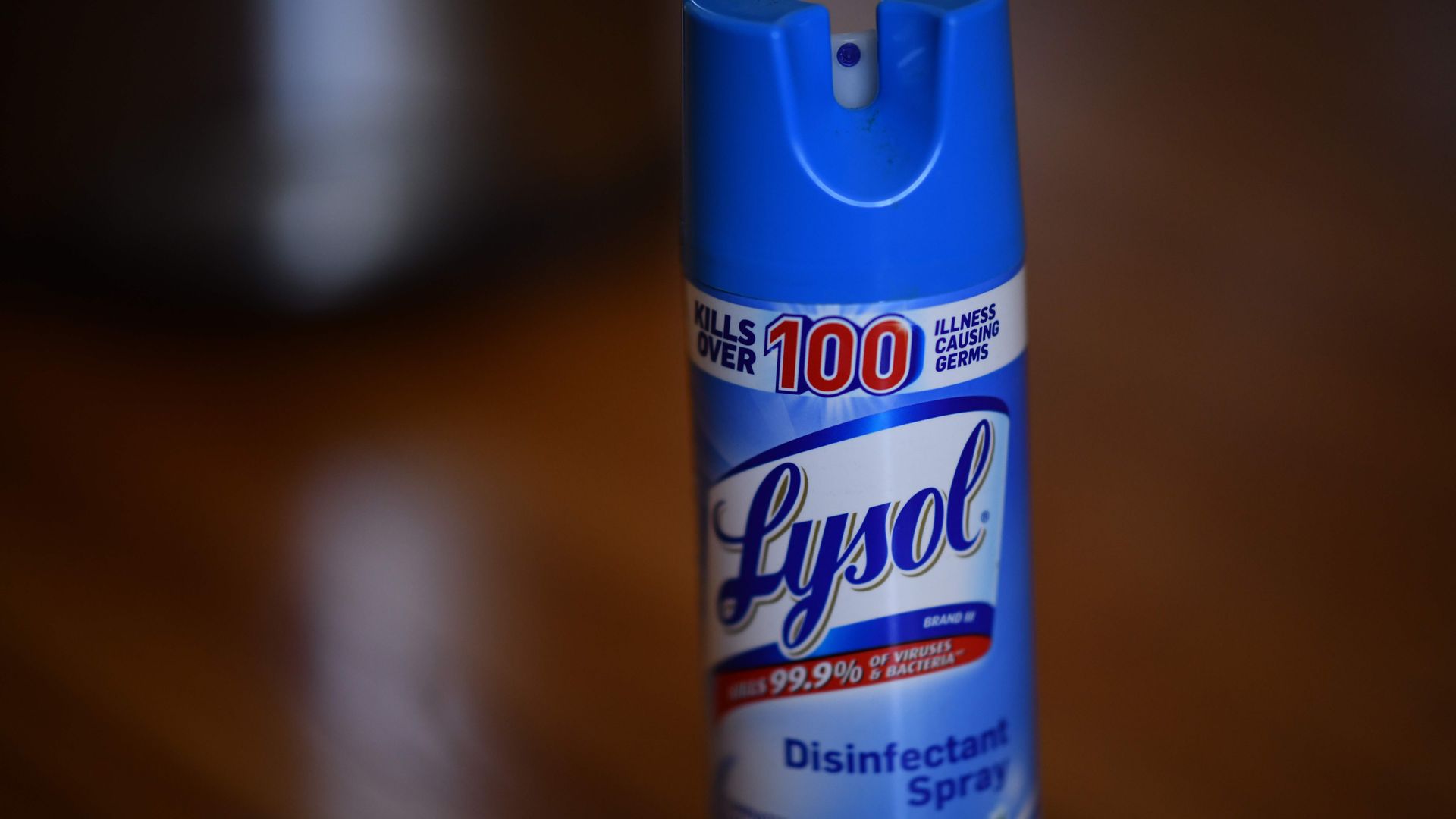
The Environmental Protection Agency announced Monday that it has approved two Lysol disinfectant sprays as effective tools for killing the novel coronavirus on surfaces.
The big picture: Touching surfaces or objects and then touching your face, nose or mouth is not believed to be the primary way the virus spreads, according to Centers for Disease Control and Prevention guidance updated in late May.
Given the reporting lag for most traditional economic indicators, investors have turned to real-time data to assess the U.S. economy. Almost all of which shows business activity stalling or declining.
What's happening: Economists at Jefferies write in a note to clients that their in-house economic activity index has "flat-lined" and "has now been moving sideways for the past three weeks."
While MLB struggles with testing delays ahead of its shortened season, Japan's Nippon Pro Baseball (NPB) — the world's second-best league behind MLB — has not only resumed play, but will soon allow fans at games.
President Trump’s decision to ask the Supreme Court to throw out the Affordable Care Act may alienate the independent voters who can swing the presidential election. That could be especially important in battleground states.
The big picture: Many of the ACA’s benefits are hugely popular with independents — even beyond protections for people with pre-existing conditions, which gets the most attention.
Small hospitals, physician clinics, surgery centers, dental offices and other health care businesses were among the most common recipients of loans under the Paycheck Protection Program, according to data released by the federal government on Monday.
The big picture: Medical facilities had to halt routine procedures in the early days of the coronavirus pandemic as a way to prevent spread of infection and keep hospital beds open. PPP loans saved some, but certainly not all, of the jobs that are dependent on those routine procedures.
The longer the coronavirus pandemic lasts, the farther we're moving apart, according to our analysis of nearly four months of data from the Axios-Ipsos Coronavirus Index.
Why it matters: Ever since life in the U.S. as we knew it came to a screeching halt, we've been trying to get our heads around what a "new normal" will look like. But so far, the politicization of the virus — and our socioeconomic differences — are working against any notion of national unity in impact or response.