The pandemic is not only making it harder for people in developing countries to afford food, it's making it harder to get food and supplies into those countries in the first place.
Zoom in: The UN’s World Food Programme (WFP) is tasked with filling many of those gaps, supplying food aid to 100 million people. Since late March, it has also been transporting health workers, medical supplies and other humanitarian cargo all over the world through its Humanitarian Air Service.
Black Americansare consistently underrepresented in clinical trials for diseases ranging from diabetes to heart disease to different cancers, despite being disproportionately affected by many of them.
Why it matters: The current COVID-19 pandemic is taking an unequal toll on underrepresented communities. As researchers race to develop treatments, having diverse trial participants is key to creating safe and effective drugs and to understanding how socioeconomic and environmental factorsinfluence diagnosis, treatment and outcome.
California on Thursday issued a statewide order requiring people to wear face coverings in public settings.
Why it matters: The order comes the same day that the state saw its biggest increase in new cases, with 4,084 new confirmed infections. California Gov. Gavin Newsom cited a body of scientific research that indicates asymptomatic people can still spread the virus.
Economics is rarely aligned with morality. That's one lesson from the looting example I wrote about last week: Looting is harmful to society, and is criminalized for good reason, even though it can have positive economic consequences.
Why it matters: The disconnect between economic and moral imperatives lies at the heart of the biggest issues facing America today, from the rising appeal of socialism to the question of how to deal with the coronavirus outbreak.
President Trump said in an interview with the Wall Street Journal published Thursday that he personally thinks testing for the coronavirus is "overrated," arguing that it has led to an increase in confirmed cases in the U.S. that "makes us look bad."
Why it matters: The ability to test and isolate patients who have tested positive for the coronavirus is viewed by health experts as critical to being able to safely reopen the economy.
CNET reports that the newly unveiled electric bus from the U.K. startup company Arrival has some features that make it suitable for the pandemic age by enabling social distancing.
The big picture: "[T]he interior of the bus is customizable, with removable seats, so you can create additional space between passengers. It's a pretty novel way to increase or decrease seats to meet reopening guidelines," CNET reports.
Another 1.5 million Americans filed new applications for jobless benefits last week, the Labor Department said Thursday.
Why it matters: The numberofunemployment applications is still historically high, though they have steadily dropped since peaking at 6.9 million at the start of the coronavirus pandemic.
Florida has become the de facto hub for sports leagues hoping to resume play this summer, but the state has experienced a dangerous spike in coronavirus cases since it began reopening last month.
The state of play: The NBA and MLS plan to resume their seasons at Walt Disney World near Orlando, with rigorous testing and countless safety measures in place. Meanwhile, the WNBA plans to play at IMG Academy near Tampa Bay.
New York City is no longer the metro area with the most new coronavirus cases each day in the U.S. In fact, it's not even in the top 20, per Nephron Research. Neither is Boston, D.C., San Francisco or Detroit.
Between the lines: We may still be in the first wave of the coronavirus pandemic as a country, but this phase of it looks very different than the first.
Coronavirus cases are quickly spreading in Arizona, a handful of southern and western states and, ominously, Oklahoma — the planned site of President Trump's controversial rally this weekend.
Why it matters: Once community spread takes off, cases can begin to increase exponentially.
Large companies have started pocketing billions of taxpayer dollars thanks to tax breaks tucked into the federal coronavirus stimulus.
Why it matters: Corporations are getting sizable, multiyear cash benefits, while most Americans received one-time, $1,200 checks to offset the economic turmoil and mass unemployment arising from the pandemic.
The World Health Organization has announced that it has stopped trials examining the potential of hydroxychloroquine as a treatment for the novel coronavirus after its multi-country trials showed "no benefit."
The big picture: The WHO paused last month tests of the anti-malarial drug after a review published in The Lancet stated potentially fatal health problems. It restarted trials after this paper was retracted, the BBC notes. The WHO said Wednesday its data "showed that hydroxychloroquine does not result in the reduction of mortality of hospitalized COVID-19 patients." The FDA ended on Monday its emergency use authorization of the drug that President Trump said previously he supported and used.
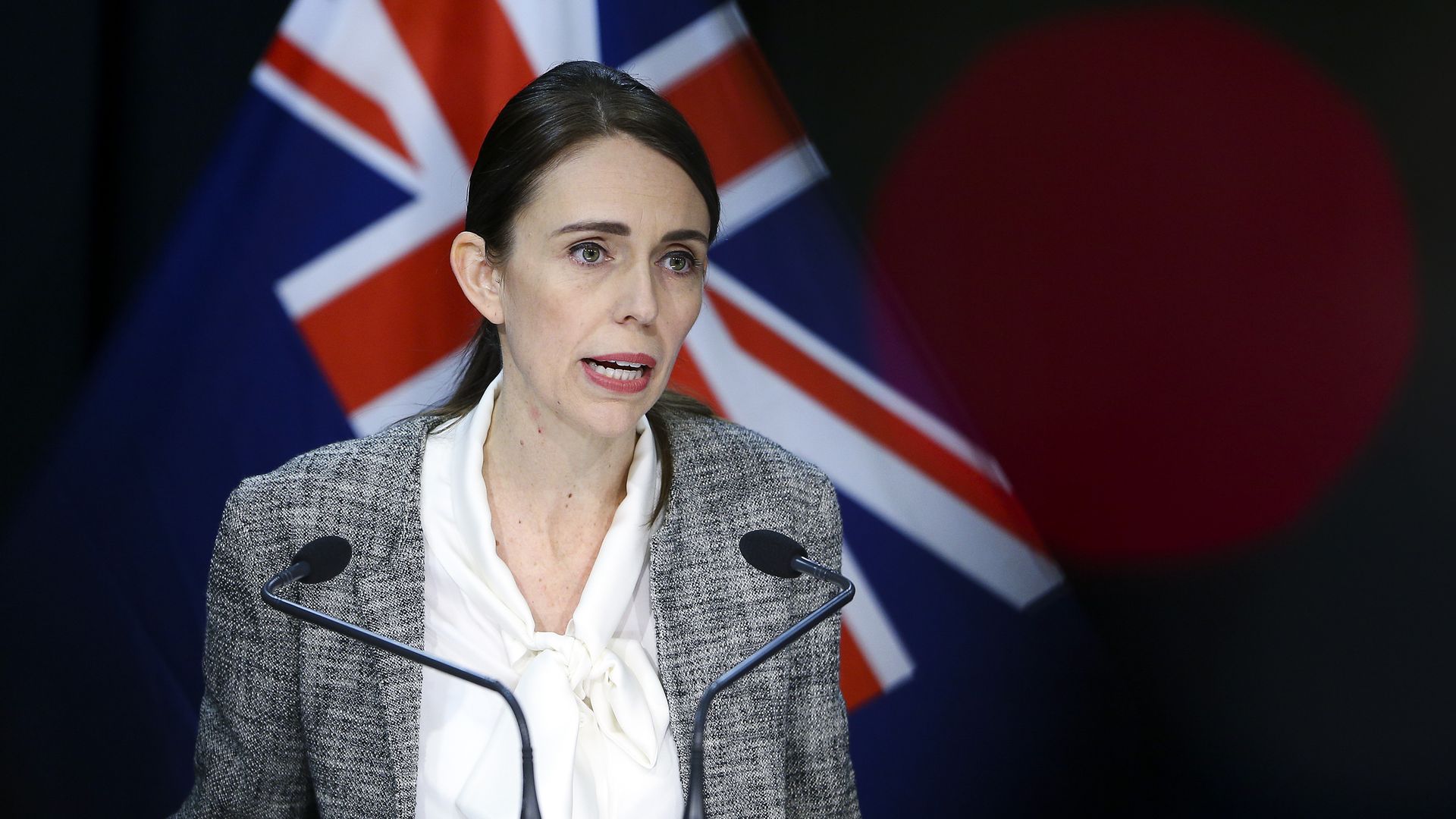
New Zealand's Defense Force will now oversee the isolation of new arrivals and audit the coronavirus quarantine process, Prime Minister Jacinda Ardern announced at a news conference on Wednesday.
Driving the news: The country's top health official told a briefingon Thursday afternoon local time that another traveler had tested positive for COVID-19 after arriving at the border, which is closed to all travelers but NZ citizens and residents. Two women returning from the U.K. tested positive on Tuesday — ending New Zealand's 24-day run of no new infections.