Americans tend to think South Korea and Germany responded effectively to the COVID-19 pandemic, while China and Italy failed to do so, according to new polling from Pew Research.
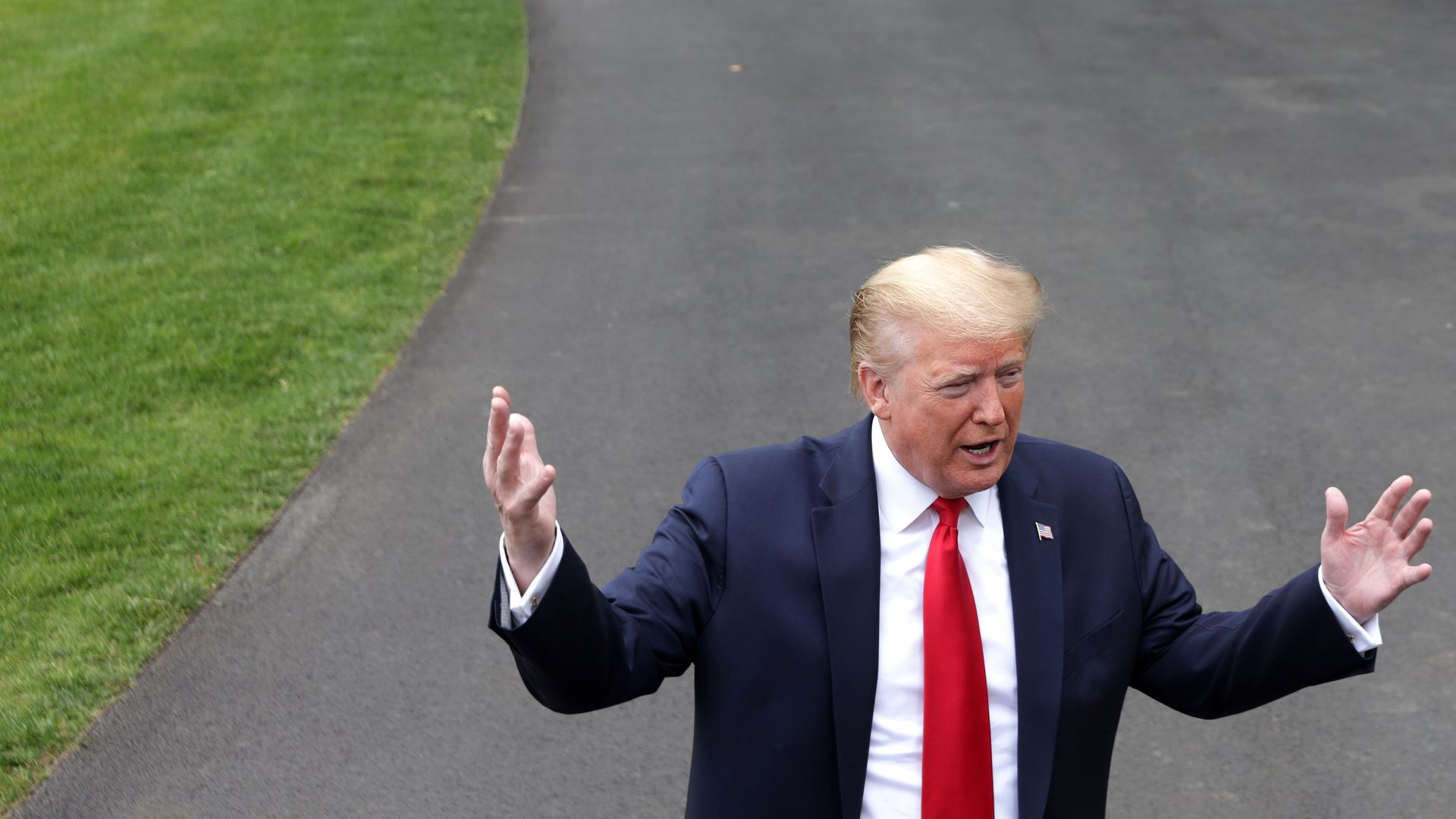
President Trump told reporters on Thursday that while a second wave of the novel coronavirus is "a very distinct possibility," the U.S. should not issue widespread lockdowns or stay-at-home orders to fight the next outbreak.
President Trump said on Thursday that the Centers for Disease Control and Prevention would issue guidance "today or tomorrow" to guide churches on reopening amid the coronavirus pandemic.
Why it matters: Early versions of detailed CDC guidelines for reopening the country included guidance for religious institutions to hold in-person services, which the White House requested to be taken out, according to AP.
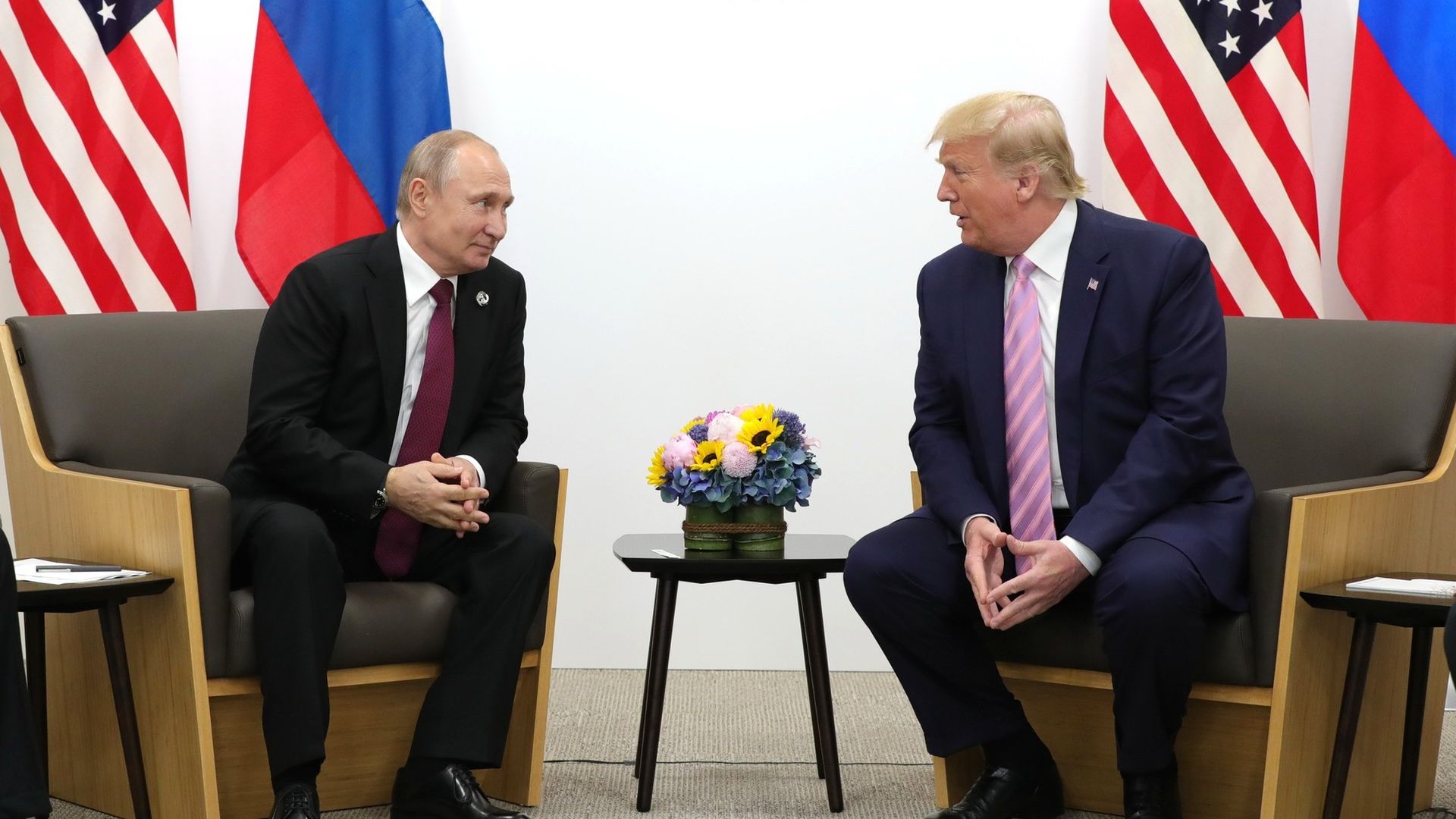
50 ventilators manufactured in the U.S. arrived in Russia on Thursday as part of a $5.6 million relief package to fight the coronavirus, the U.S. embassy in Moscow announced.
Why it matters: Russia is reporting the most coronavirus cases outside of the U.S., although experts doubt the official tally, as the nation's death toll is well below other most-affected countries.
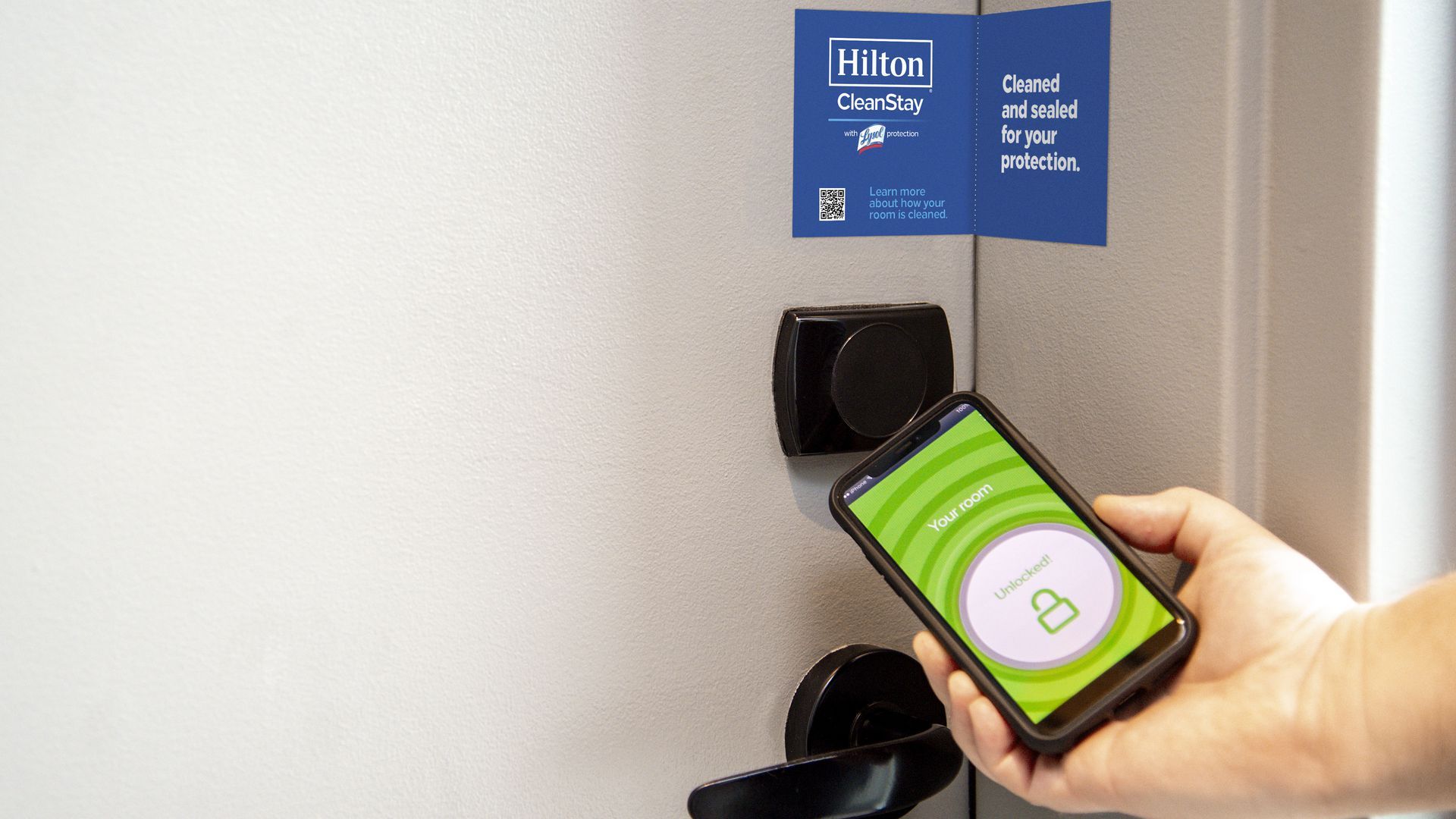
The travel and tourism sector has been one of the hardest hit by the pandemic, and is desperate to reassure potential customers that they will be safe from the novel coronavirus when and if they start traveling again.
The bottom line: The only two things that will always thrive in a crisis are cockroaches and co-branding opportunities.
Rep. Jahana Hayes (D-Conn.), during an Axios event Thursday, called the Centers for Disease Control and Prevention's guidance for reopening schools "so completely unrealistic".
The big picture: The CDC released guidance this week on reopening nonessential businesses, including schools, and advises administrators to consult with local health departments to gradually scale-up operations for schools safely.
Rep. Jahana Hayes (D-Conn.) said at a virtual Axios event on Thursday that a school in her district where she taught had 30% of student absences after classes went virtual due to the coronavirus pandemic.
What she's saying: "19,000 students, and 30% of them have not been reached because they don’t have technology. They don’t have a connected device. I saw where some districts were online within three or four days and other districts were still struggling to connect."
The coronavirus pandemic could reduce incoming student enrollment by up to 20%, Ted Mitchell, president of the American Council on Education, said at a virtual Axios event on Thursday.
What Mitchell is saying: "When you look at current college students, there’s always attrition especially between freshman and sophomore year. So that’s usually around 8%-10% so add on top of that another 10%."
This year's real-estate outlook is bleak, but commercial property rents are expected to improve over the next two years, according to the Urban Land Institute's annual survey of real estate economists and analysts.
The state of play: Brick-and-mortar retailers, which were already shrinking before the pandemic, are suffering across the board. Meanwhile, e-commerce is rapidly increasing its market share.
Legal battles between cities and states are expected to intensify in the coming months with dust-ups over municipal broadband networks, paid sick leave and affordable housing policies at the forefront.
Why it matters: After some high-profile disputes with governors over pandemic-related restrictions, some mayors are emboldened in pushing back on state laws prohibiting city-level policies that, they say, will be important to recovering from the coronavirus pandemic.
Information is coming out about how European nations hope to use economic stimulus packages to bolster deployment of climate-friendly energy sources.
Why it matters: The UN, International Energy Agency, International Monetary Fund and others want governments to use big pandemic response plans to help accelerate the global energy transition.
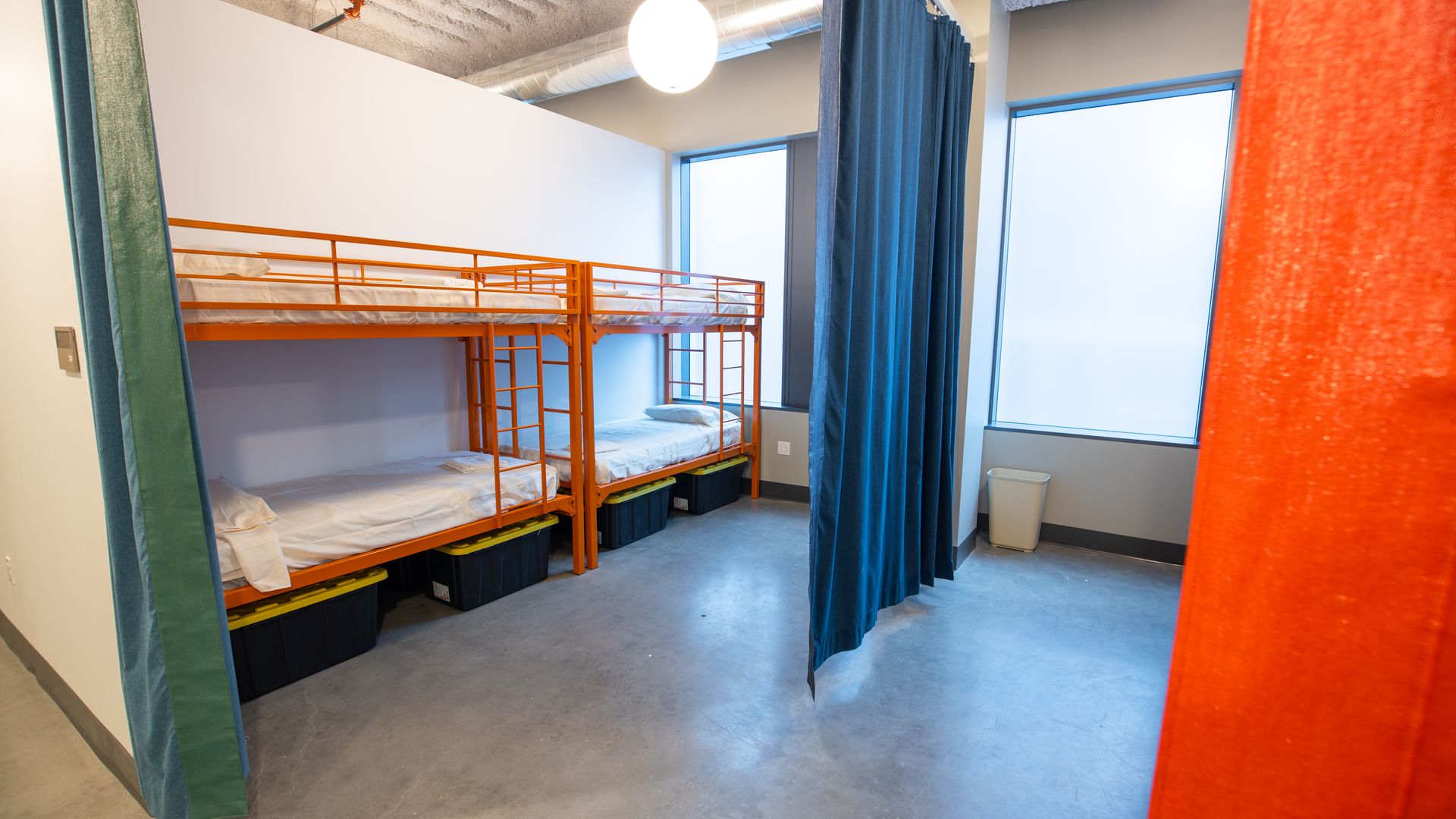
Amazon has announced a partnership with Mary's Place to create a permanent family shelter in Seattle that would house up to 200 family members, including those who may be experiencing economic hardship fueled by the pandemic.
The big picture: Nearly half of U.S. households have lost income since March, according to preliminary Census data. In Washington state, nearly 45% of households lost income and about 16% surveyed said they're experiencing housing insecurity.
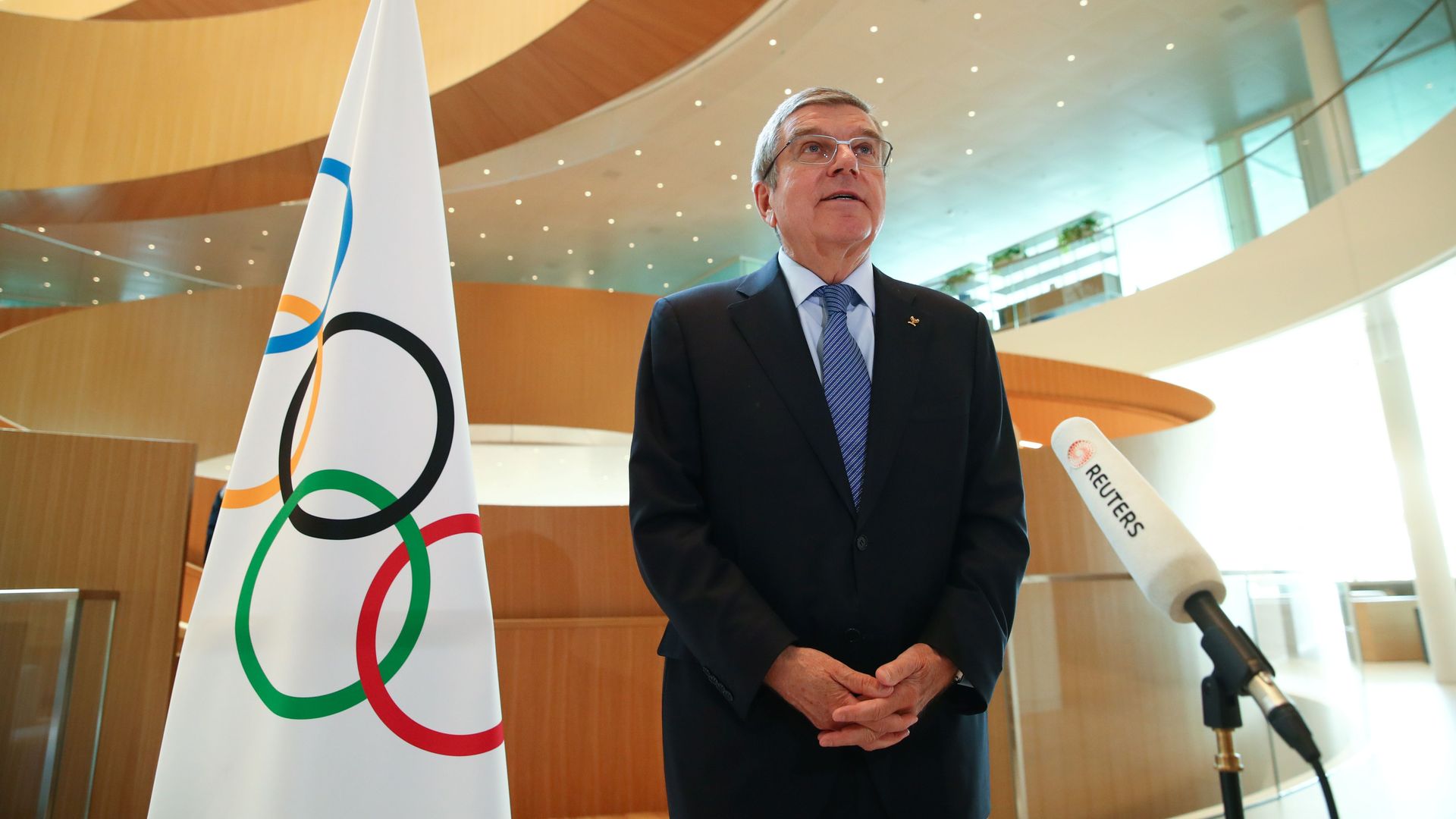
The rescheduled Tokyo 2020 Summer Olympics would have to be canceled entirely if the coronavirus pandemic means they cannot be held in 2021, International Olympic Committee President Thomas Bach told the BBC on Wednesday.
The state of play: "You cannot forever employ 3,000, or 5,000, people in an organizing committee. You cannot every year change the entire sports schedule worldwide of all the major federations. You cannot have the athletes being in uncertainty. You cannot have so much overlapping with a future Olympic Games," Bach said.
Several Southern states are seeing a rise in new coronavirus cases, moving them further away from an important target for safely reopening parts of their economies.
Why it matters: The Trump administration's reopening guidelines call for a consistent decline in new cases before proceeding with the process — and some states are proceeding even without clearing that threshold.
States and cities are trying to fill in the gaps that could prevent many vulnerable people from successfully isolating themselves — an important part of tracing coronavirus infections and reducing the virus' spread.
Between the lines: People who don’t have a home, who live in communal settings, or who don’t have a way to meet their basic needs without leaving the home pose complicated challenges to the U.S.’ containment effort.
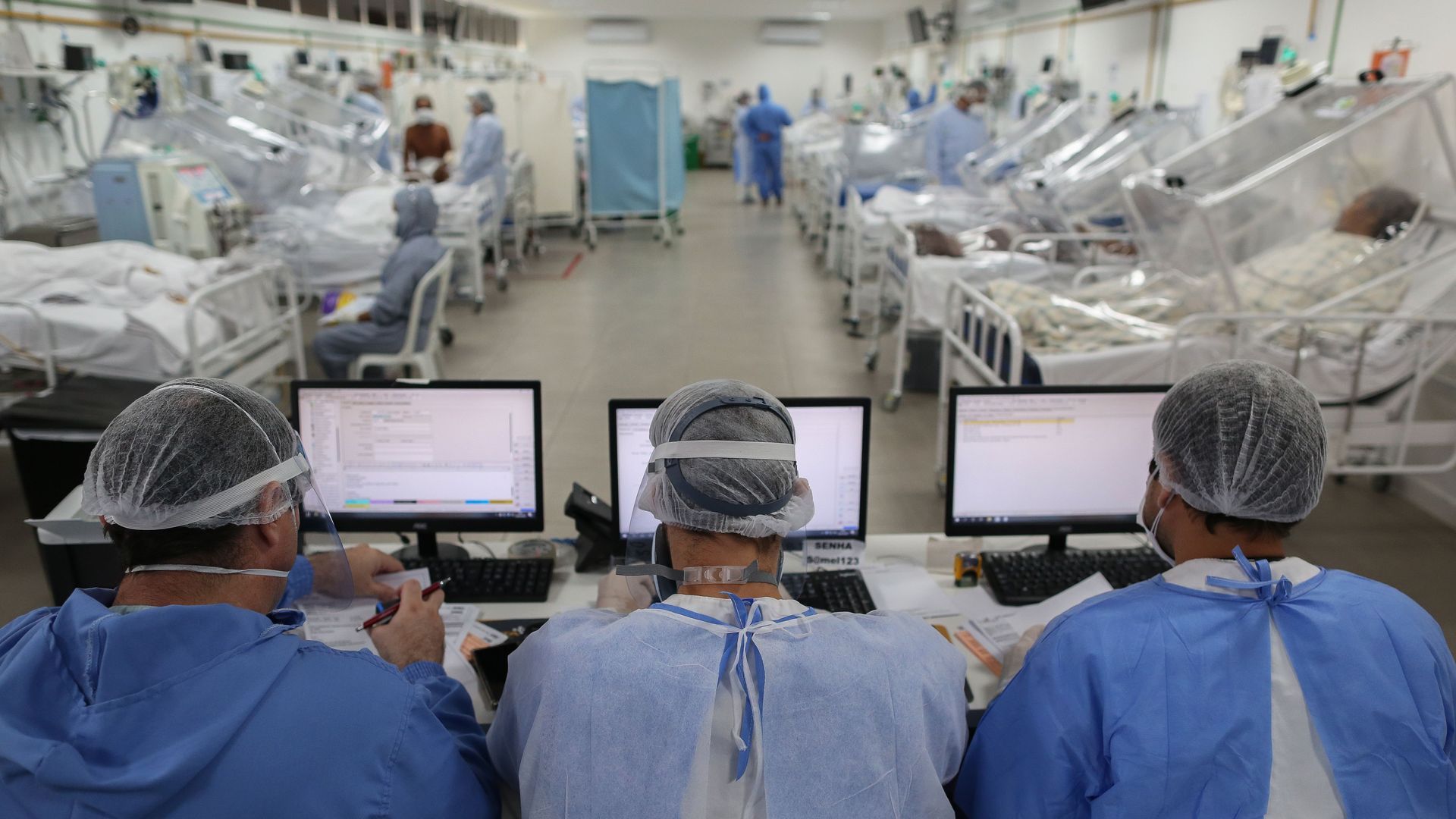
Latin America has overtaken the U.S. and Europe for the largest number of new daily novel coronavirus cases this week, per Reuters.
Why it matters: The outbreak in Latin America, and Brazil in particular, significantly contributed to global infection numbers surpassing 5 million early on Thursday. The surge in cases indicates a shift in the spread of COVID-19 from the original epicenter of China to Europe and the U.S.
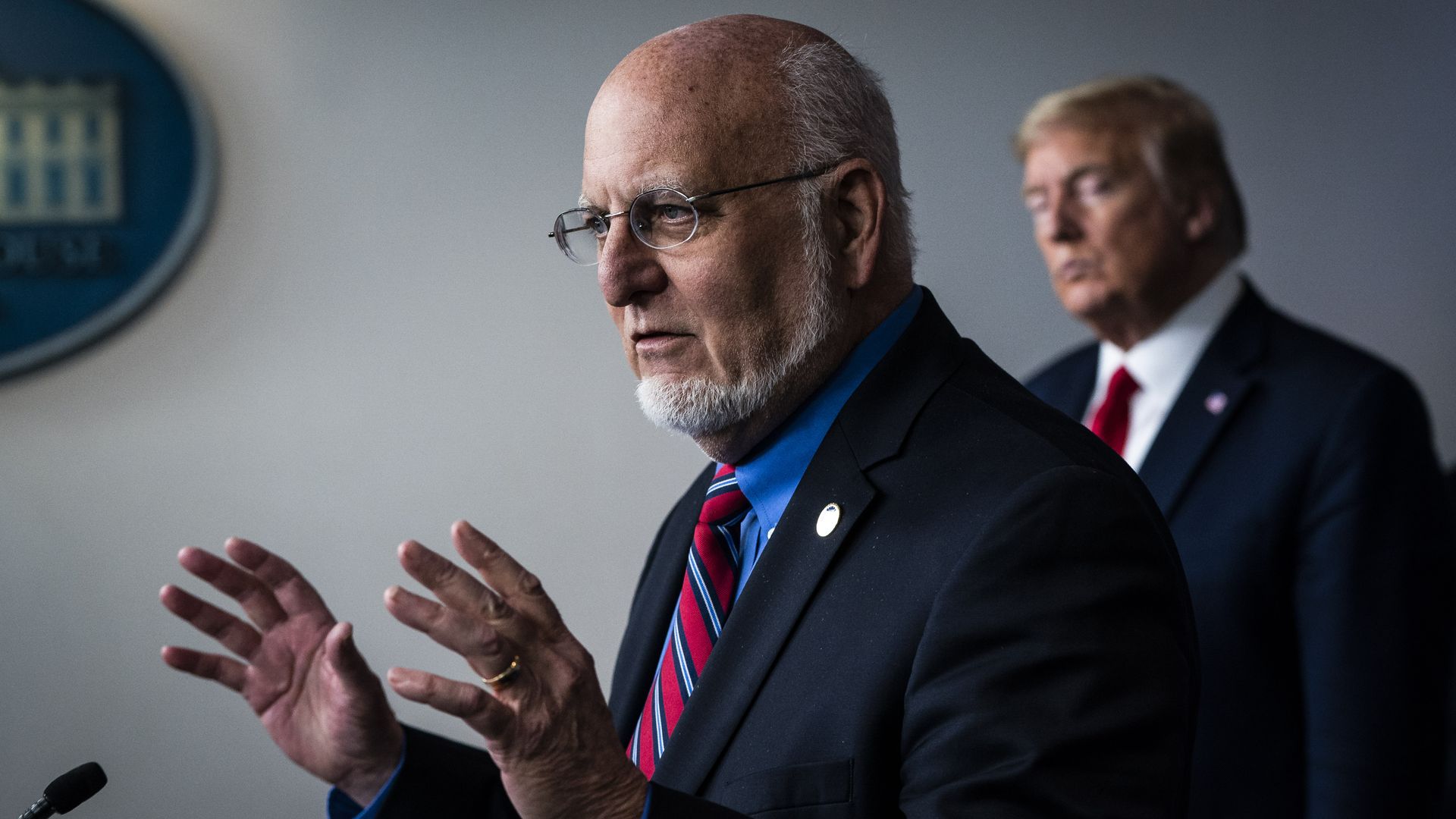
Essential data to track the spread of the novel coronavirus in the U.S. is regularly delayed and incomplete when sent to the Centers for Disease Control and Prevention, CDC Director Robert Redfield told the Financial Timeson Wednesday.
The big picture: Most states still aren't doing enough coronavirus testing, especially those that have suffered from larger outbreaks, Axios' Caitlin Owens and Naema Ahmed reported this week.
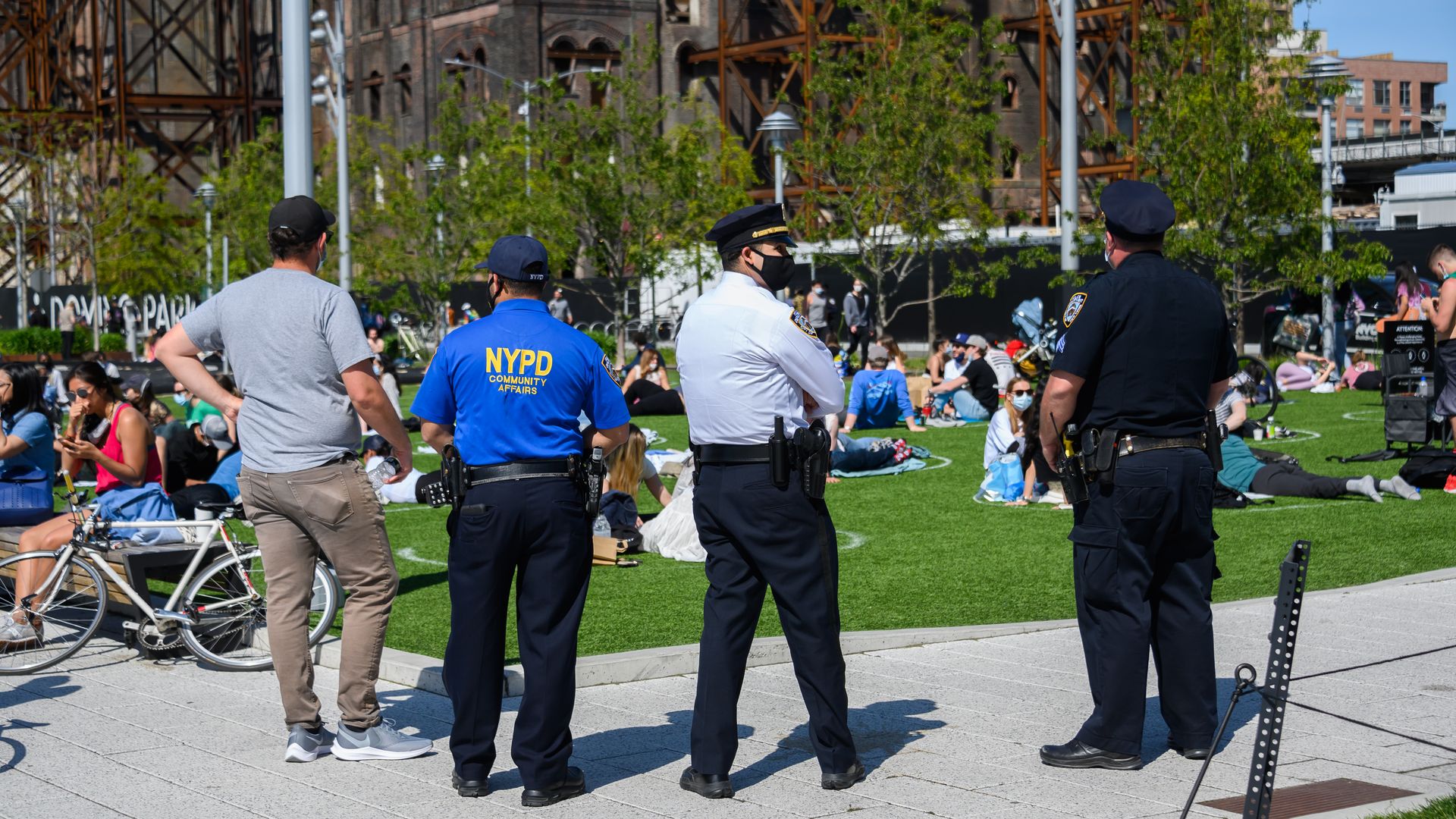
5,521 New York Police Department officers returned for duty as of Wednesday after previously testing positive for the novel coronavirus, the NYPD tweeted.
Why it matters: The CDC considers immediate health risks from the coronavirus for law enforcement to be low when they are performing routine duties. But the pandemic has resulted in a "worst-case scenario" for the NYPD, as one out of every six officers were out sick in April, per the New York Times.
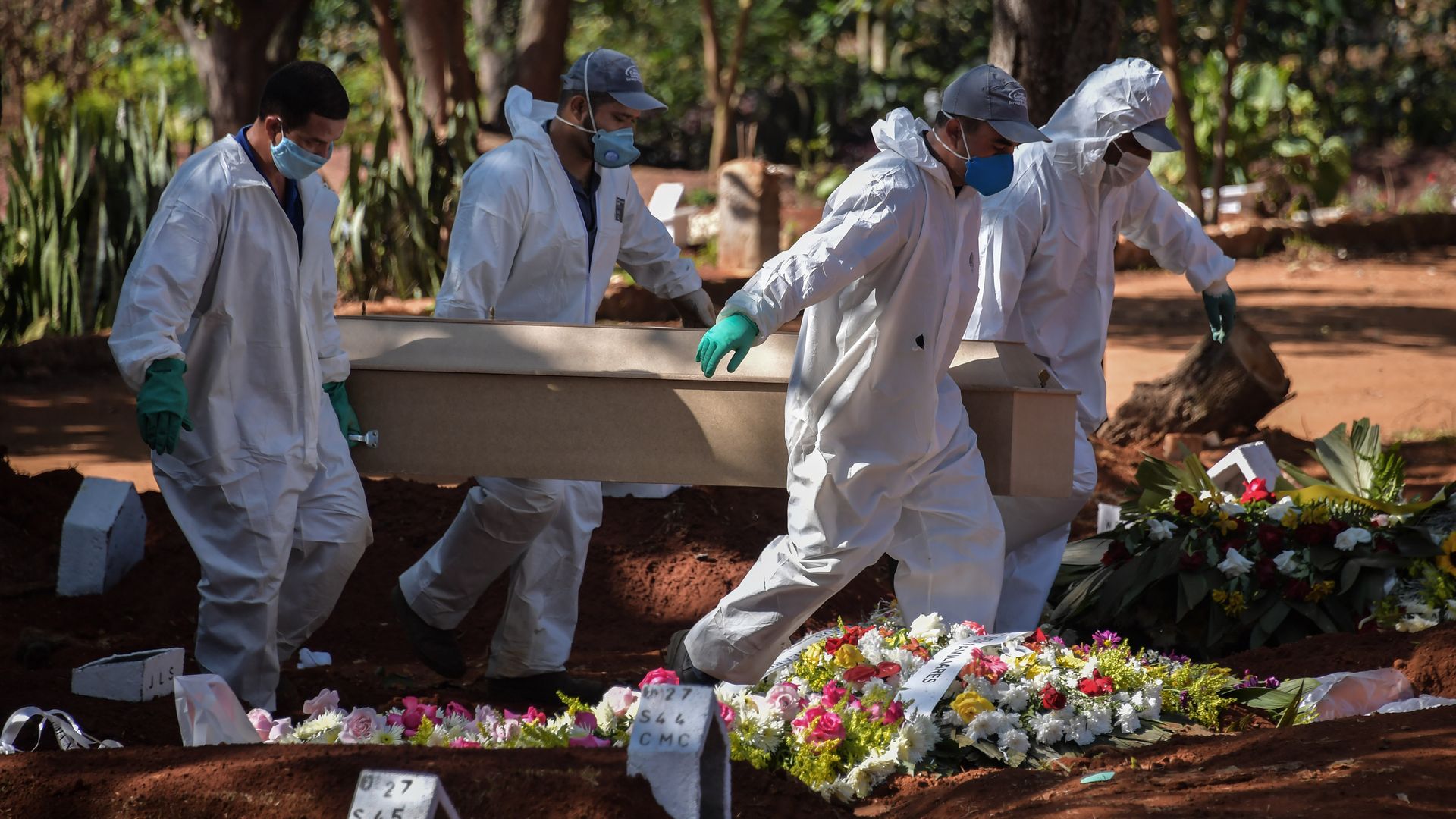
Coronavirus deaths in São Paulo, the largest city in Brazil and the Western Hemisphere, have increased by over 485% since the city's health department began keeping track in April.
The big picture: Prolonged lapses in testing and tracking, documented by the Washington Post in April, have led to severely undercounted death tolls in Brazil. The country is reporting the third-most confirmed COVID-19 cases in the world, per Johns Hopkins data — only behind Russia and the U.S.