Wednesday's health stories

First day of GOP retreat: Obamacare repeal 101
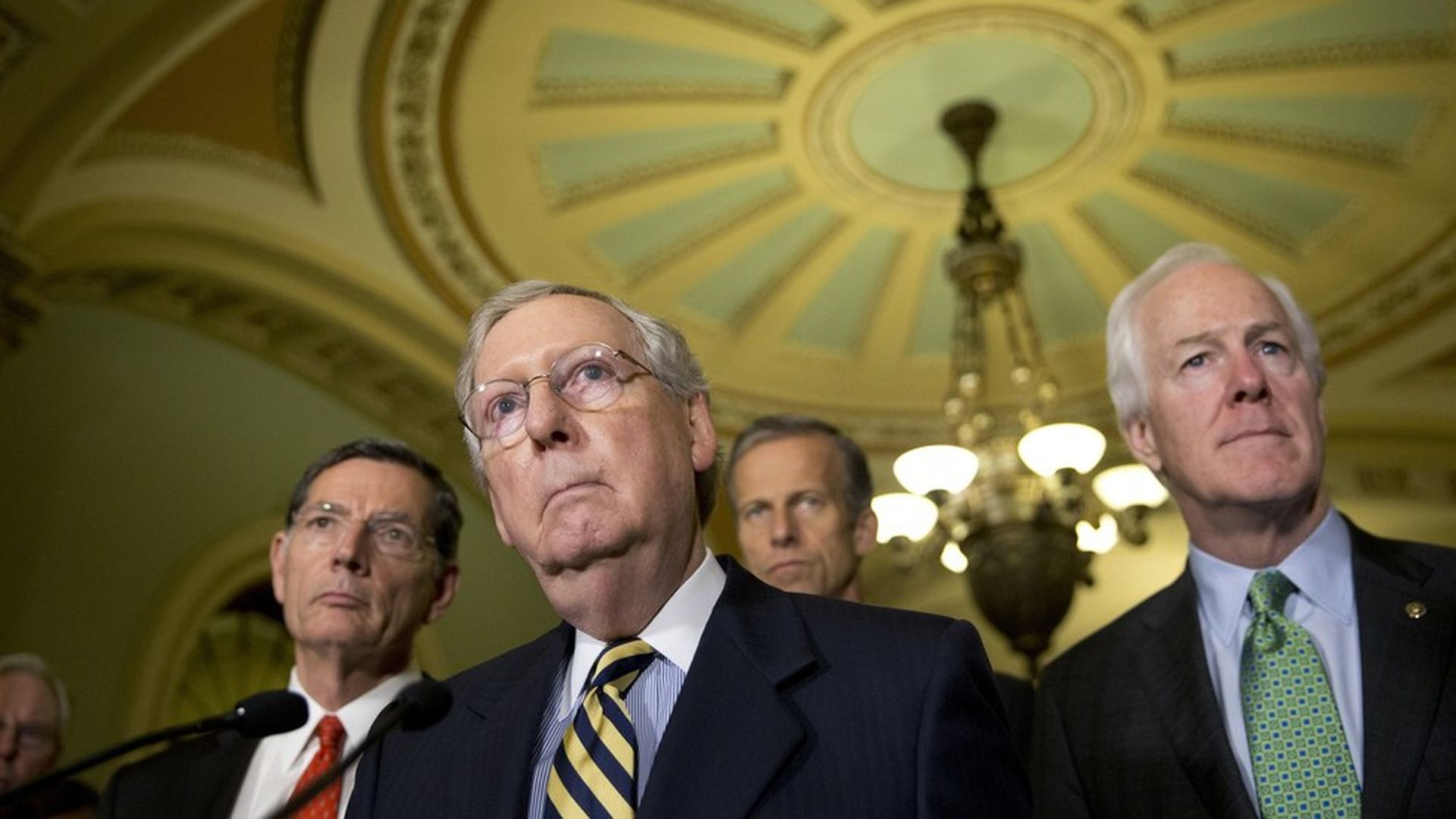
PHILADELPHIA — The first day of the GOP retreat focused on Obamacare repeal's "state of play," filling in members who haven't been following the day-to-day developments.
They also discussed tax reform, which could be "potentially intertwined" with repealing and replacing the health care law, Sen. Bill Cassidy told me. One of the big outstanding questions is what to do about Obamacare's revenues and figuring out "how much of those could be used for tax reform, and how much of those could be used to fund a replacement."
But as far as deciding policy details, "actual policy specifically did not come up," he said. Sens. John Barrasso and Lamar Alexander spoke to Senate Republicans about health care after Majority Leader Mitch McConnell and Speaker Paul Ryan addressed a joint House-Senate audience.
There's also still no detailed timeline, Cassidy said, at least in the Senate. Rep. Diane Black said earlier in the day House committees will begin marking up the repeal bill — which will contain pieces of replacement — in the next two weeks. A vote is expected on the House floor at the end of February or the beginning of March.

Don't worry — the insurance industry has a plan

America's Health Insurance Plans, the main industry trade group, seems to be making peace with the idea that the individual mandate is going away. So it's proposing a form of "continuous coverage," an idea that's also in a lot of Republican replacement plans — where people would only be guaranteed coverage for pre-existing conditions if they keep themselves insured.
In a statement to the House Ways and Means oversight subcommittee Tuesday, AHIP suggested designing the plan this way: Everyone would have a chance to sign up for insurance during 2018 open enrollment, and after that, they'd have to stay insured for 12 months. If they don't, they'd either pay higher premiums when they do sign up, or they'd have to wait six months to enroll — which is how it works with Medicare Part B and D.

New hepatitis C drugs may be more dangerous than you think

Drugs approved in recent years that can cure hepatitis C may have severe side effects, including liver failure, according to a new report by the Institute for Safe Medication Practices. The report, which the NYT has analyzed in depth, looks at 9 popular antiviral drugs, including the widely used Sovaldi and Harvoni — both made by Gilead Sciences and priced at $1k per pill. The drugs have been successful for many patients in curing the disease within 12 weeks.
Disclaimer: The number of risks appear relatively low, and the findings are not conclusive. But experts say the report is a warning that shouldn't be ignored. Thomas Moore, an author of the report, said the study reflects a larger question about the drug approval process. Approval for the newer hepatitis C drugs was expedited because better treatments were so badly needed.
Why it matters: Hepatitis C drugs like Sovaldi carry a huge price tag, but they've also been a point of pride for the drug industry — since they can cure a disease that wasn't curable before. That, in their view, was a good justification for the price. But if the drugs cause horrible side effects, it may be harder to make that case.
GOP 'accelerating the replacement' of Obamacare
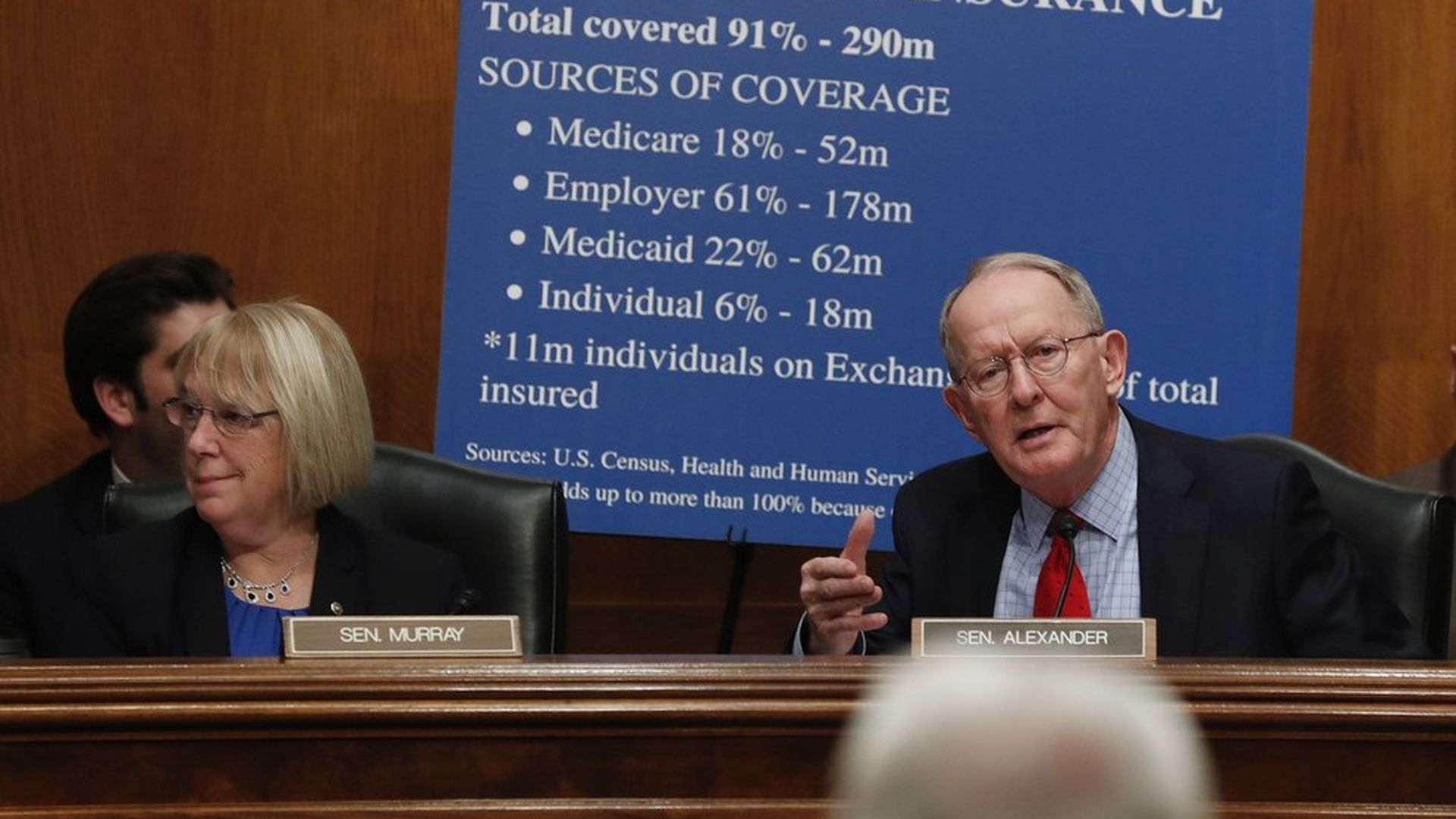
House and Senate Republican leaders met Tuesday to get on the same page before the GOP leaves for its retreat tomorrow. While no final decisions were made about the timing for repealing and replacing Obamacare, Senate HELP Committee Chairman Lamar Alexander said everybody agrees they need to be done at the same time.
"We're accelerating the replacement part of the package, because we want — both the House and the Senate, and the president — want to do repeal and replacement at the same time," Alexander said after the meeting. He said the timing of both repeal and replace is "governed by getting it right, making sure we do no harm."
A leadership aide said they talked about putting pieces of replacement in the repeal bill, which Republicans have said they plan to pass through a budget process called reconciliation. "It's going to be repeal plus, they're going to fit as much as possible into reconciliation," the aide said.

How Molina Healthcare views Obamacare now
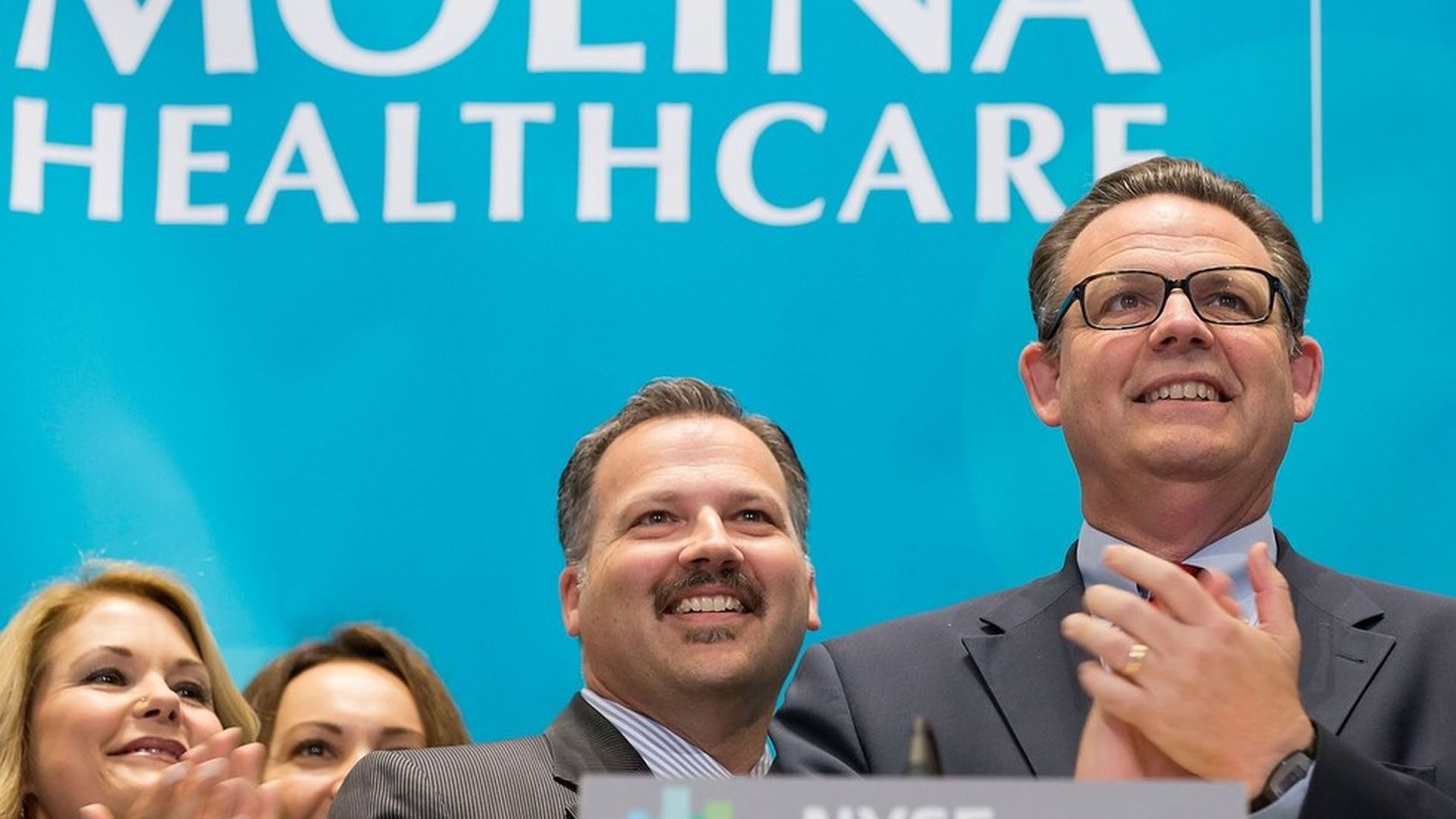
Molina Healthcare CEO J. Mario Molina isn't fazed by President Trump's Obamacare executive order. But he's also not entirely confident about what will happen with the law and its insurance marketplaces — and he won't commit to staying in the marketplaces in 2018.
In an interview, Molina said the executive order is "symbolic" and doesn't change the plans for his company, an insurer that mostly covers Medicaid members but also has more than a half million Obamacare customers. Yet when asked if Molina Healthcare would keep offering Obamacare plans in 2018, he said: "There are just too many unknowns at this point to give a definitive answer."

Heritage survey: Don't delay Obamacare repeal
The Heritage Foundation has a new survey showing that 72% of Americans will take Congress less seriously if it "waits to fulfill promises to repeal Obamacare."
Why it matters: The group's advocacy arm, Heritage Action, is pushing this survey to Republican members of Congress. It shows what kind of pressure the GOP is under to move quickly on repeal, when a growing number of Republicans are voicing doubts about acting before a replacement is ready.
Biotech billionaire in talks to oversee health care for Trump
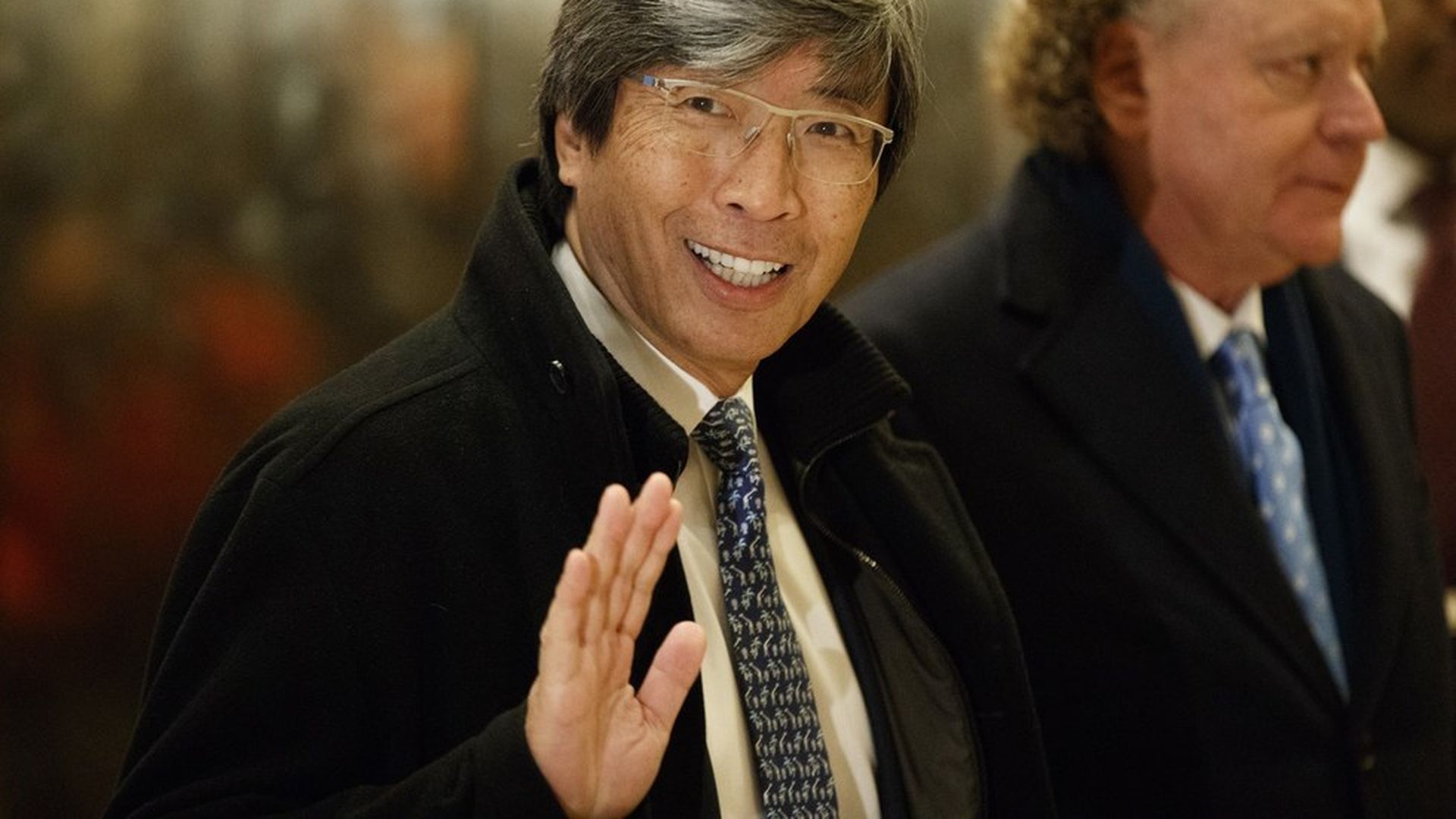
STAT's Dylan Scott has a big scoop this morning: Biotech billionaire and surgeon Dr. Patrick-Shiong is in talks with the Trump administration about the prospect of overseeing the U.S. health care system. Soon-Shiong has met with Trump and his team at least twice in the past few weeks about serving as a "health care czar" with a broad portfolio.
Between the lines: Soon-Shiong really gets around. STAT notes that he pitched the Obama administration on a similar role. He also did a lot of self-promotion when he consulted with then-Vice President Joe Biden on his cancer "moonshot" program.
If you only read one thing on executive actions ...
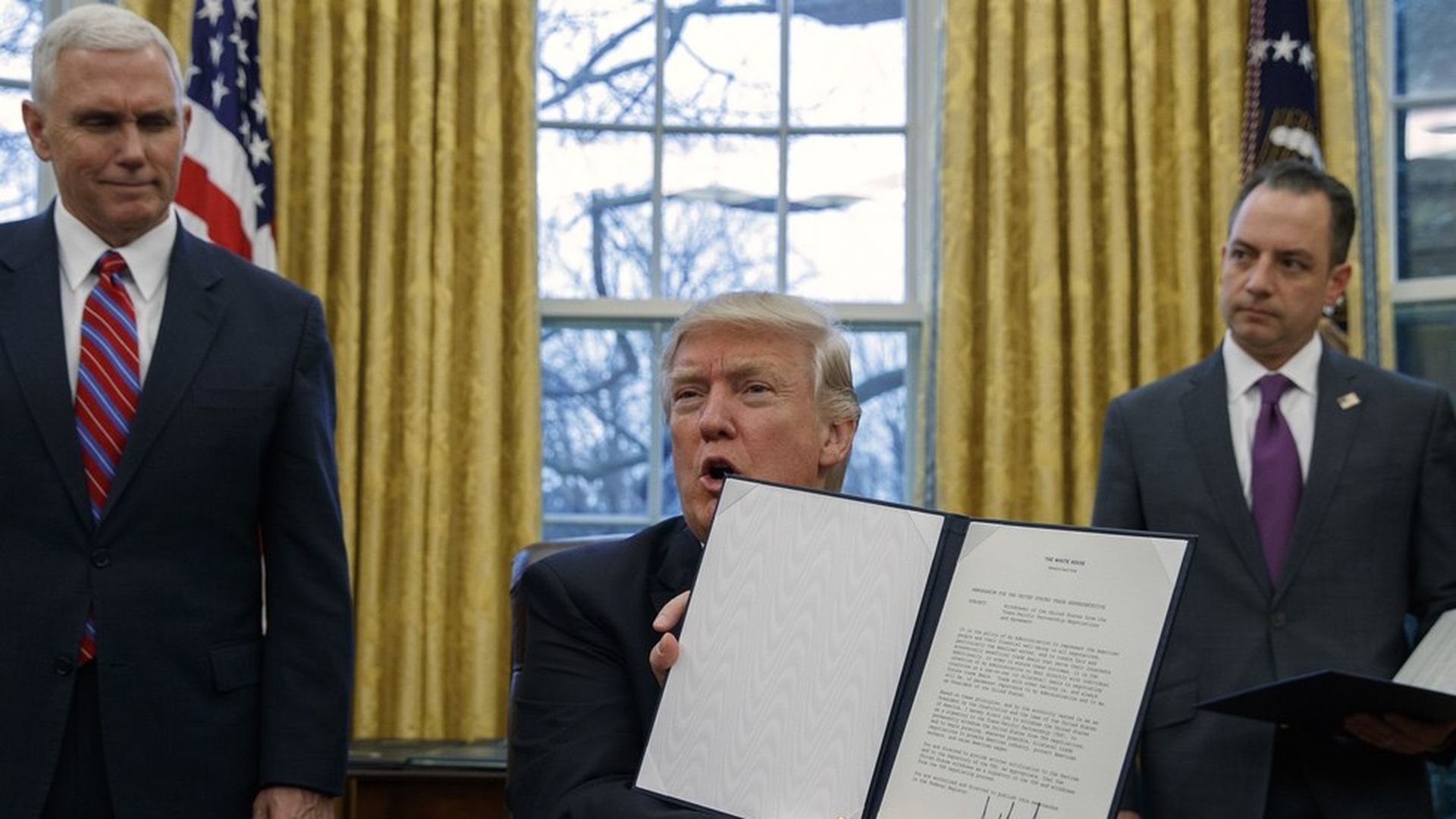
You should read this Incidental Economist post by smart people Nicholas Bagley and Adrianna McIntyre, who have found a long list of actions the Trump administration can take on its own to dismantle Obamacare, depending on how much it's willing to set the individual market on fire. A few of the highlights:
- Grant more waivers from the individual mandate
- Trim back the law's "essential benefits"
- Stop giving cost-sharing payments to insurers
- Allow states to impose work requirements, charge premiums for Medicaid
- Delay enforcement of the health insurer, pharmaceutical, and medical device taxes
- Loosen the rules for state Obamacare waivers
Tom Price's confirmation hearing just got more interesting
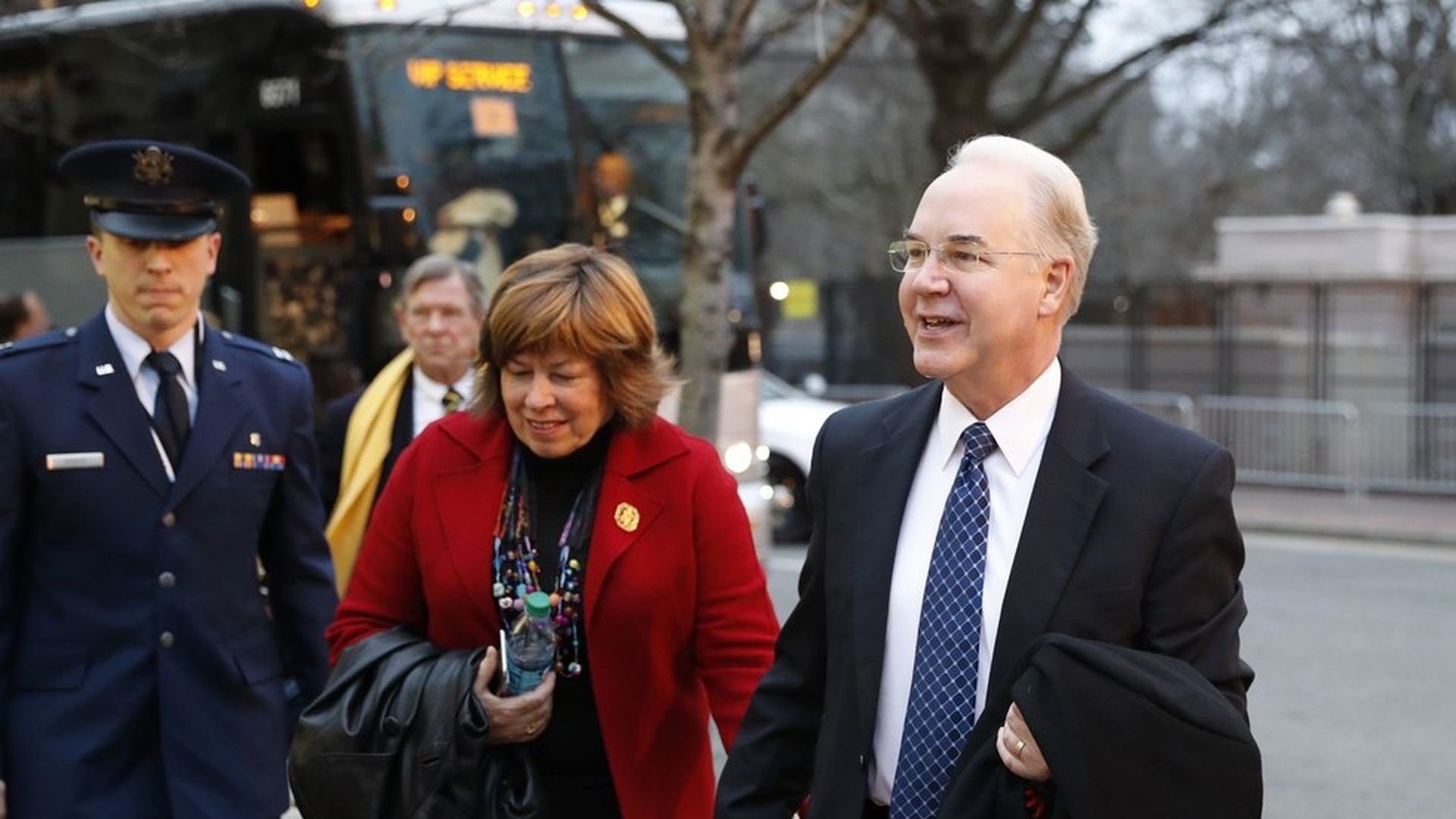
President Trump's Health and Human Services nominee was already going to face more questions about his stocks and his ethics. But now, the Senate Finance Committee will have even more reason to grill him on policy this morning — thanks to that Obamacare executive order Trump put out late Friday night. Like, what does it really mean? And how would Price apply it once he's running HHS?