Thursday's health stories

Another Obamacare lawsuit pops up
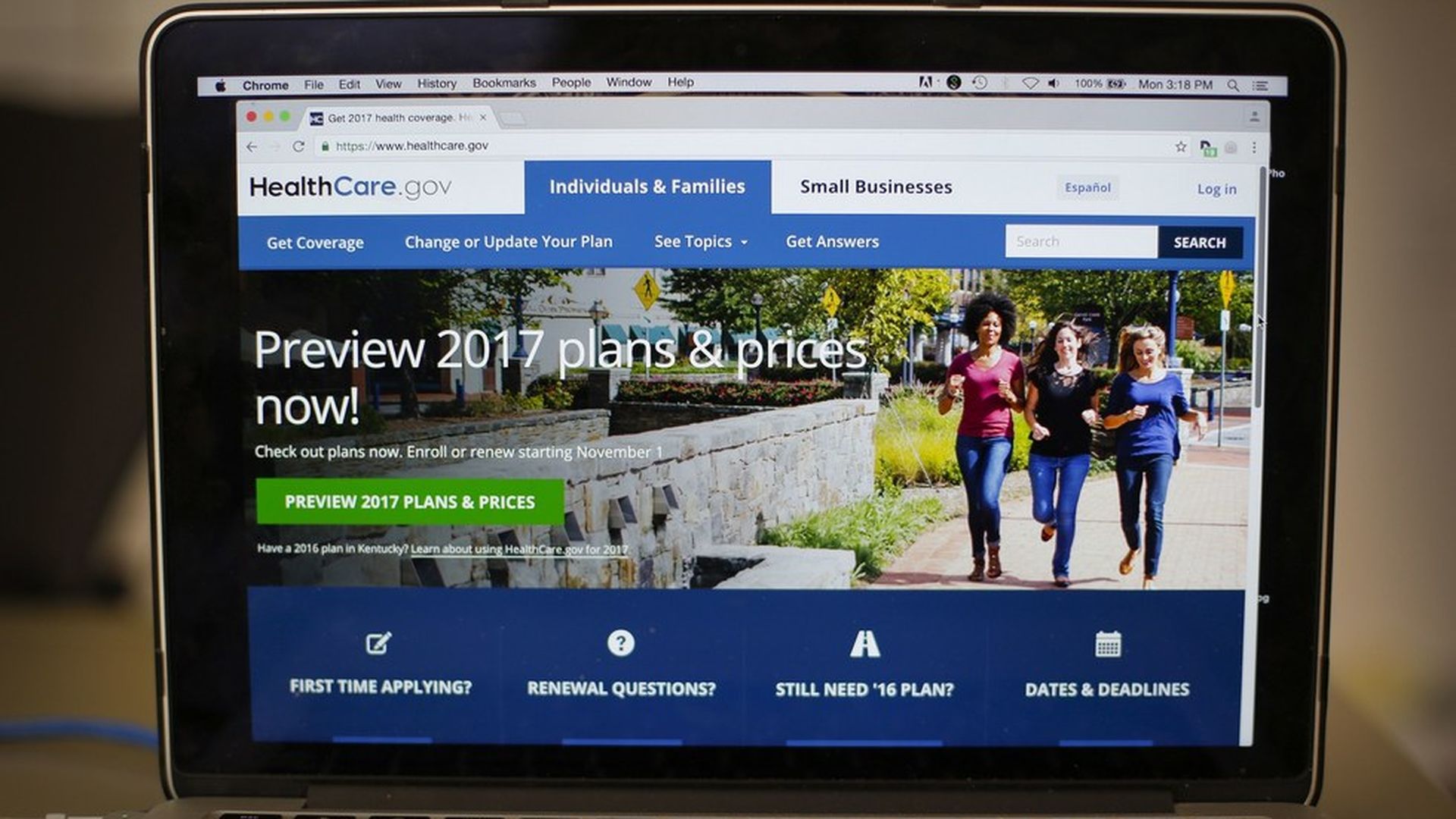
A handful of health insurance companies have sued the federal government for funds that were promised in an Obamacare program. Add Molina Healthcare to the list.
Molina, whose chief executive told me he couldn't give a "definitive answer" about staying in the Obamacare marketplaces for 2018, filed a lawsuit this week against the feds. The company is demanding payment of the $52 million it is owed under Obamacare's risk corridor program.
Why this matters: A handful of insurers that lost a lot of money on the Obamacare exchanges have sued to try to recoup these risk corridor payments. Now, even the companies that have fared well on the exchanges, like Molina, are fed up and are pressing to get money that was promised to them.

GOP senator on Obamacare: "outright repeal possibly"
PHILADELPHIA — Sen. James Risch told reporters on Thursday big changes are coming to Obamacare.
There's definitely going to be changes to Obamacare, very substantial changes and outright repeal possibly. But there's gotta be something in place.
When questioned whether this was different than the repeal-and-replace mantra the party has been pushing since winning the White House in November, Risch said no, he's always supported keeping pieces of the law.
"I've always said that this thing needs to be gone through and find the pieces that work and the ones that don't, the vast majority of it, the overall philosophy of it, the guts of it, don't work," he said. "But does that mean a section like keeping 23-year-old's ability to stay on their parents' insurance policy isn't a good idea? Eh, that's not a bad idea."
He said the GOP's self-imposed April deadline for repealing and replacing the health care law is "aspirational," but not "required." He also said no decisions have been made about what to do about the law's taxes or Medicaid expansion.
Our thought bubble: We don't really buy this. "Outright repeal possibly" is not the same as November's confident assurance that Obamacare was history. This change in language tracks with the growing realization that following through with repeal without a replacement ready would have consequences in insurance markets, and that crafting replacement policy is much, much easier said than done. Some outside analysts have for months speculated the result of the GOP's crusade would end up being changes to Obamacare itself, and this might be a step in that direction.

Here's the HHS "gag order"
There's been a lot of coverage of alleged "gag orders" that the Trump administration has issued to employees at various federal agencies, and now the one to Department of Health and Human Services employees has been released. It was included in a letter to the White House from two top House Democrats, Frank Pallone and Elijah Cummings, demanding that the administration reverse that order and others.
Here's the key language:
No correspondence to public officials (e.g., Members of Congress, Governors) or containing interpretations or statements of Department regulations or policy, unless specifically authorized by me or my designee, shall be sent between now and February 3, during which time you will have the opportunity to brief President Trump's appointees and designees on any such correspondence which might be issued.
In a letter to White House counsel Donald McGahn, the Democrats charge that the memos violate federal whistleblower protection laws. We've reached out to the administration for comment, and will keep you posted.

Only 15% of primary care physicians support Obamacare repeal
A new survey from Penn shows what primary care physicians think of Obamacare:
- 15% support complete repeal (38% of Trump voters; 0% of Clinton voters)
- Agreement that specific ACA provisions are important for U.S. health: 95% for covering preexisting conditions, 91% for tax credits for small businesses, 88% for family coverage through age 26, 73% for Medicaid expansion, 50% for the individual mandate
The takeaway: In 2015, doctor support for Obamacare split largely along partisan lines. This new poll shows that — just as general support for Obamacare reached a high after Trump's win — doctors are people, too.
Trump: Goal is for "no one" to be hurt by repeal
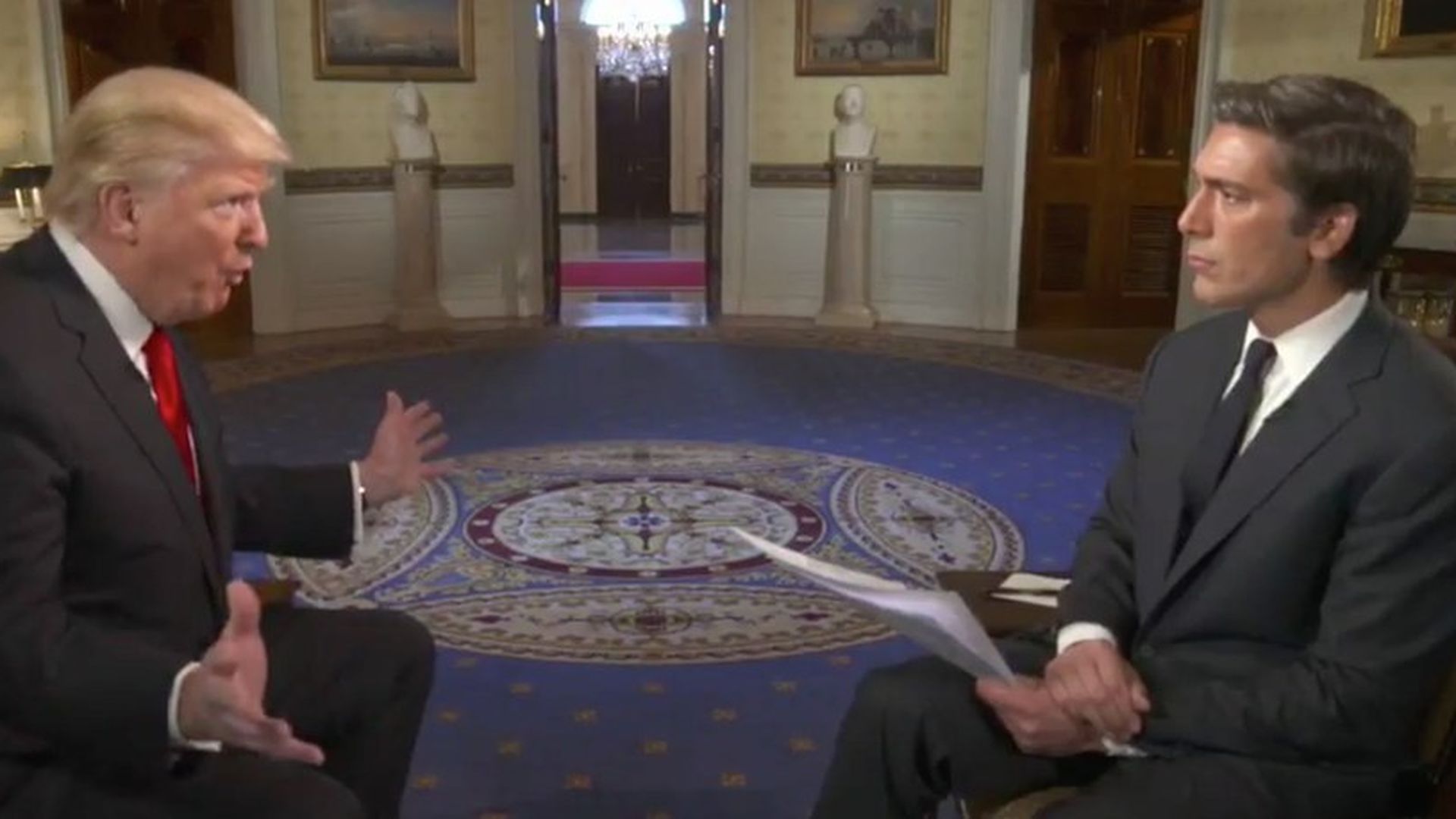
President Trump told ABC News last night that he wants to make sure "no one" loses coverage in the repeal and replacement of Obamacare — but he acknowledged he couldn't guarantee it. "Knowing ABC, you'll have this one person on television saying how they were hurt, OK?" Trump said in the interview. "We want no one. We want the answer to be no one."
"Here's what I can assure you: We are going to have a better plan, much better health care, much better service treatment, a plan where you can have access to the doctor that you want and the plan that you want," Trump said. "We're going to have a much better health care plan at much less money."
Remember the canceled plans? Trump brought them up to remind this audience that even Obamacare caused disruption — though he seemed to think the people whose old, pre-Obamacare plans were canceled in 2013 never got insurance again. "You have millions of people that now aren't insured anymore," Trump said. In reality, many of them got extensions of their old plans and others switched to new ones — and the uninsured rate is now down to a record low of 8.6 percent.
Toby Cosgrove on VA reform, Obamacare's hits and misses

Toby Cosgrove, the president and chief executive officer of the Cleveland Clinic, has had a front-row seat to how Obamacare has affected hospitals and the rest of the health care industry.
And as the vice chairman of the Commission on Care — which studied ways to improve the Veterans Administration — he became convinced that veterans have to go outside the system to get better health care, because the system can't handle all of their needs.
He spoke with Axios about these topics and why withdrew from consideration to run the VA under the Trump administration. His answers are condensed, and paraphrased in some cases, for quick reading.
First day of GOP retreat: Obamacare repeal 101
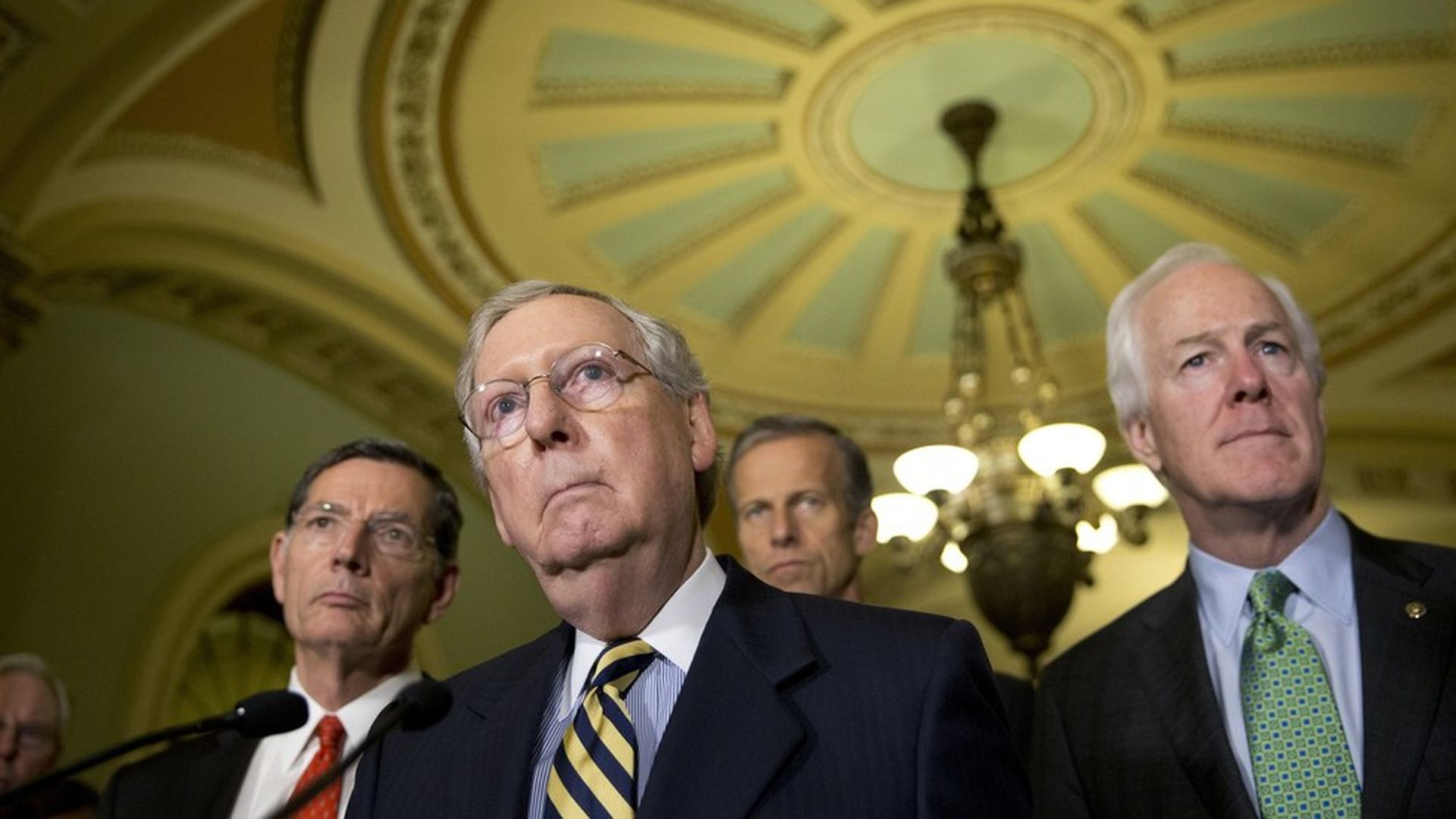
PHILADELPHIA — The first day of the GOP retreat focused on Obamacare repeal's "state of play," filling in members who haven't been following the day-to-day developments.
They also discussed tax reform, which could be "potentially intertwined" with repealing and replacing the health care law, Sen. Bill Cassidy told me. One of the big outstanding questions is what to do about Obamacare's revenues and figuring out "how much of those could be used for tax reform, and how much of those could be used to fund a replacement."
But as far as deciding policy details, "actual policy specifically did not come up," he said. Sens. John Barrasso and Lamar Alexander spoke to Senate Republicans about health care after Majority Leader Mitch McConnell and Speaker Paul Ryan addressed a joint House-Senate audience.
There's also still no detailed timeline, Cassidy said, at least in the Senate. Rep. Diane Black said earlier in the day House committees will begin marking up the repeal bill — which will contain pieces of replacement — in the next two weeks. A vote is expected on the House floor at the end of February or the beginning of March.
Don't worry — the insurance industry has a plan

America's Health Insurance Plans, the main industry trade group, seems to be making peace with the idea that the individual mandate is going away. So it's proposing a form of "continuous coverage," an idea that's also in a lot of Republican replacement plans — where people would only be guaranteed coverage for pre-existing conditions if they keep themselves insured.
In a statement to the House Ways and Means oversight subcommittee Tuesday, AHIP suggested designing the plan this way: Everyone would have a chance to sign up for insurance during 2018 open enrollment, and after that, they'd have to stay insured for 12 months. If they don't, they'd either pay higher premiums when they do sign up, or they'd have to wait six months to enroll — which is how it works with Medicare Part B and D.

New hepatitis C drugs may be more dangerous than you think

Drugs approved in recent years that can cure hepatitis C may have severe side effects, including liver failure, according to a new report by the Institute for Safe Medication Practices. The report, which the NYT has analyzed in depth, looks at 9 popular antiviral drugs, including the widely used Sovaldi and Harvoni — both made by Gilead Sciences and priced at $1k per pill. The drugs have been successful for many patients in curing the disease within 12 weeks.
Disclaimer: The number of risks appear relatively low, and the findings are not conclusive. But experts say the report is a warning that shouldn't be ignored. Thomas Moore, an author of the report, said the study reflects a larger question about the drug approval process. Approval for the newer hepatitis C drugs was expedited because better treatments were so badly needed.
Why it matters: Hepatitis C drugs like Sovaldi carry a huge price tag, but they've also been a point of pride for the drug industry — since they can cure a disease that wasn't curable before. That, in their view, was a good justification for the price. But if the drugs cause horrible side effects, it may be harder to make that case.