Friday's health stories

Obamacare outreach to continue under Trump
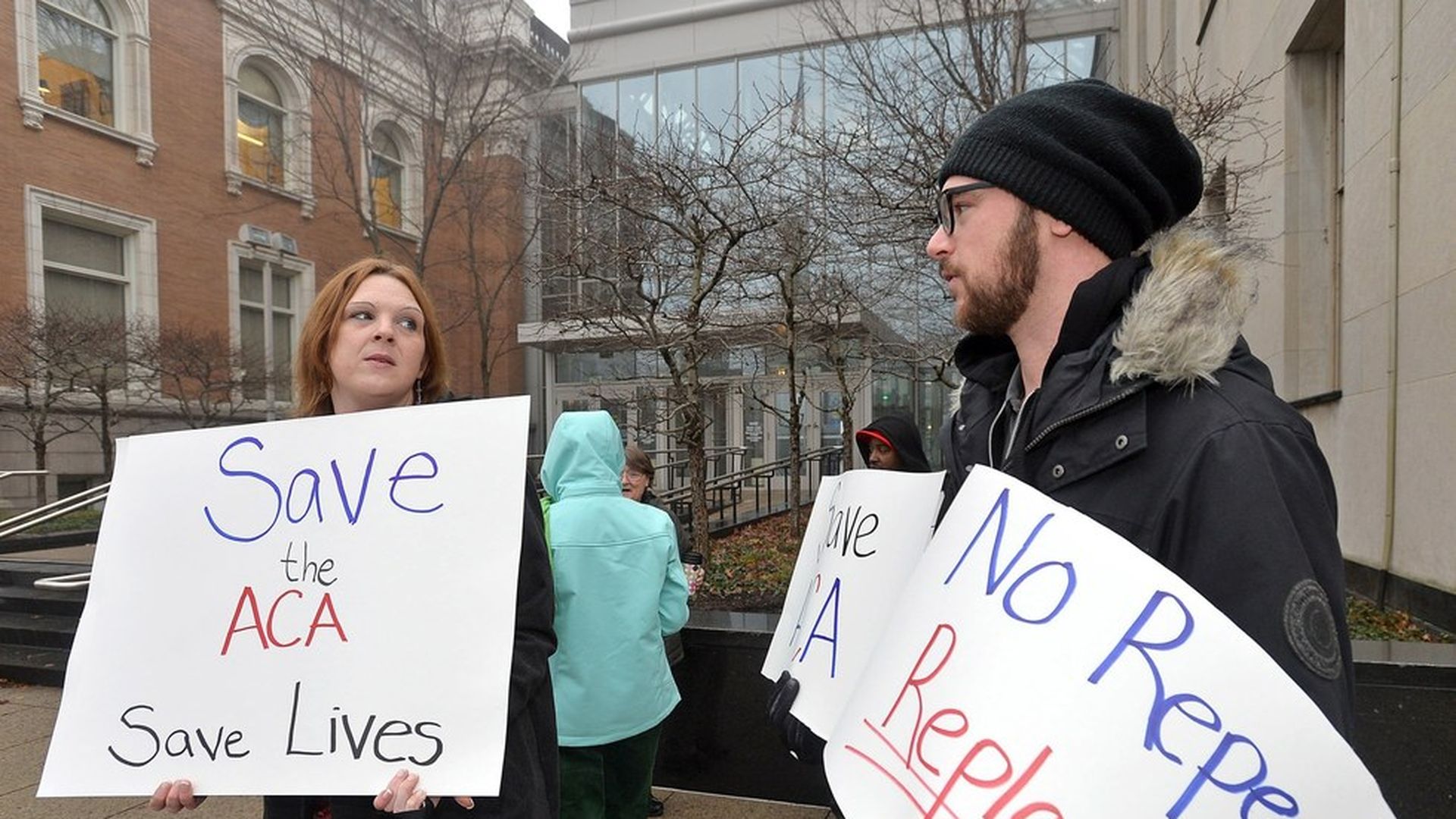
A Health and Human Services spokesperson reports that phone calls and digital outreach to enroll in ACA will continue through the January 31 deadline to get coverage, according to Politico. That's a partial reversal. The HHS suspended Obamacare ads yesterday. What they told Politico:
"Once an assessment was made, we pulled back the most expensive and least efficient part of this massive ad campaign which was set to run over the weekend," said an HHS spokesman. "Those costs savings will be returned to the U.S. Treasury."
The cancelled ads will save about $4 million to $5 million.

Behind closed doors, GOP has no consensus on Obamacare
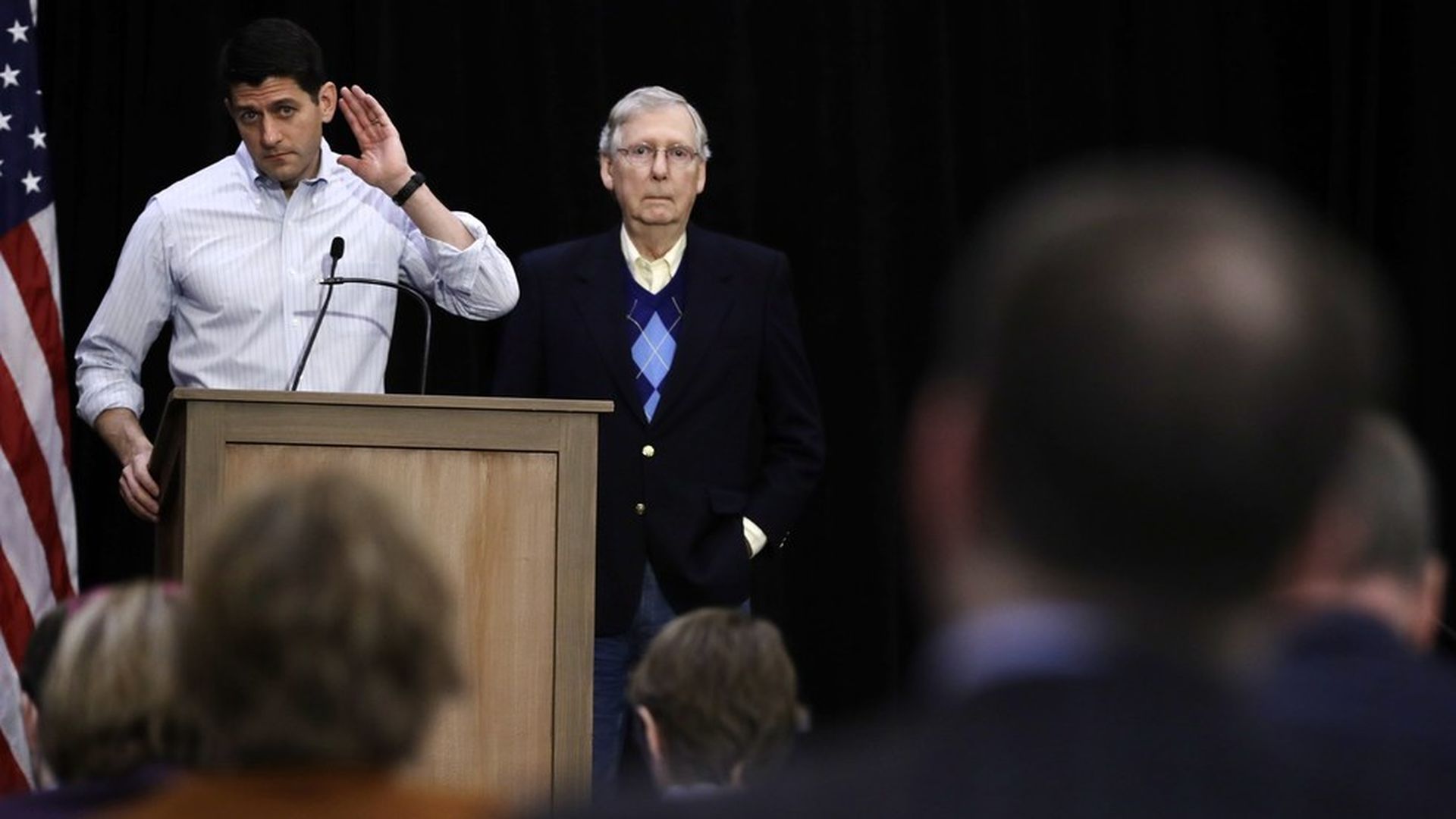
The Washington Post has a recording of a closed door meeting of House and Senate GOP members debating Obamacare repeal can be summed up like so. As the Post writes: "The recording reveals a GOP that appears to be filled with doubts about how to make good on a long-standing promise to get rid of Obamacare without explicit guidance from President Trump or his administration."
There seems to be no consensus amongst Republican lawmakers on how, or even if, to repeal the law. Additionally, the plan for controversial issues like Medicaid overhaul and the defunding of Planned Parenthood remains murky.
Why they're worried:
We'd better be sure that we're prepared to live with the market we've created ... That's going to be called Trumpcare. Republicans will own that lock, stock and barrel, and we'll be judged in the election less than two years away. — Rep. Tom MacArthur

Insurers to Trump: Um, we need Obamacare signups

Health insurers are getting a bit stressed over the Trump administration's decision to pull Obamacare advertising in the final days of open enrollment. Here's what Kristine Grow, a spokeswoman for America's Health Insurance Plans, the main health insurance trade group, said in a statement this afternoon:
At a time when the individual market faces challenges, we need as many people as possible to participate — so that costs go down for everyone. Balancing out the risk pool is an important action that can be taken now to help stabilize the market, improve affordability, and send strong signals as health plans develop their products for 2018.
Trump administration officials say they're mainly targeting $4 million to $5 million in TV and radio ads, and that the other sources of Obamacare enrollment information — like the website, the call center, Twitter, etc. — will still be available. "We aren't going to continue spending millions of taxpayers' dollars promoting a failed government program," said an HHS spokesman. "Once an assessment was made, we pulled back the most expensive and least efficient part of this massive ad campaign which was set to run over the weekend."
Why insurers are worried: There's usually a last-minute enrollment surge for Obamacare, mainly from young adults — but that was always when the Obama administration was making a heavy sales pitch. Last year, nearly 687,000 people signed up in the final week.
The trouble with selling insurance across state lines
One Obamacare replacement idea that resurfaced in Philadelphia Thursday: House Budget Committee chairwoman Diane Black said the "reconciliation" bill could include a provision to let health insurance be sold across state lines. That's not surprising since it's been on the Republican agenda for years, but state insurance commissioners hate the idea — and they spoke out against it just earlier this week.
In a letter to top Republicans and Democrats on the two House health committees, the National Association of Insurance Commissioners said the state lines idea would be imposed "by federal edict ... Such federal actions would strip states of the ability to protect consumers and create competitive markets and should be rejected." That's a political fight the Republicans may not have had to face before, but they will now.

Another Obamacare lawsuit pops up
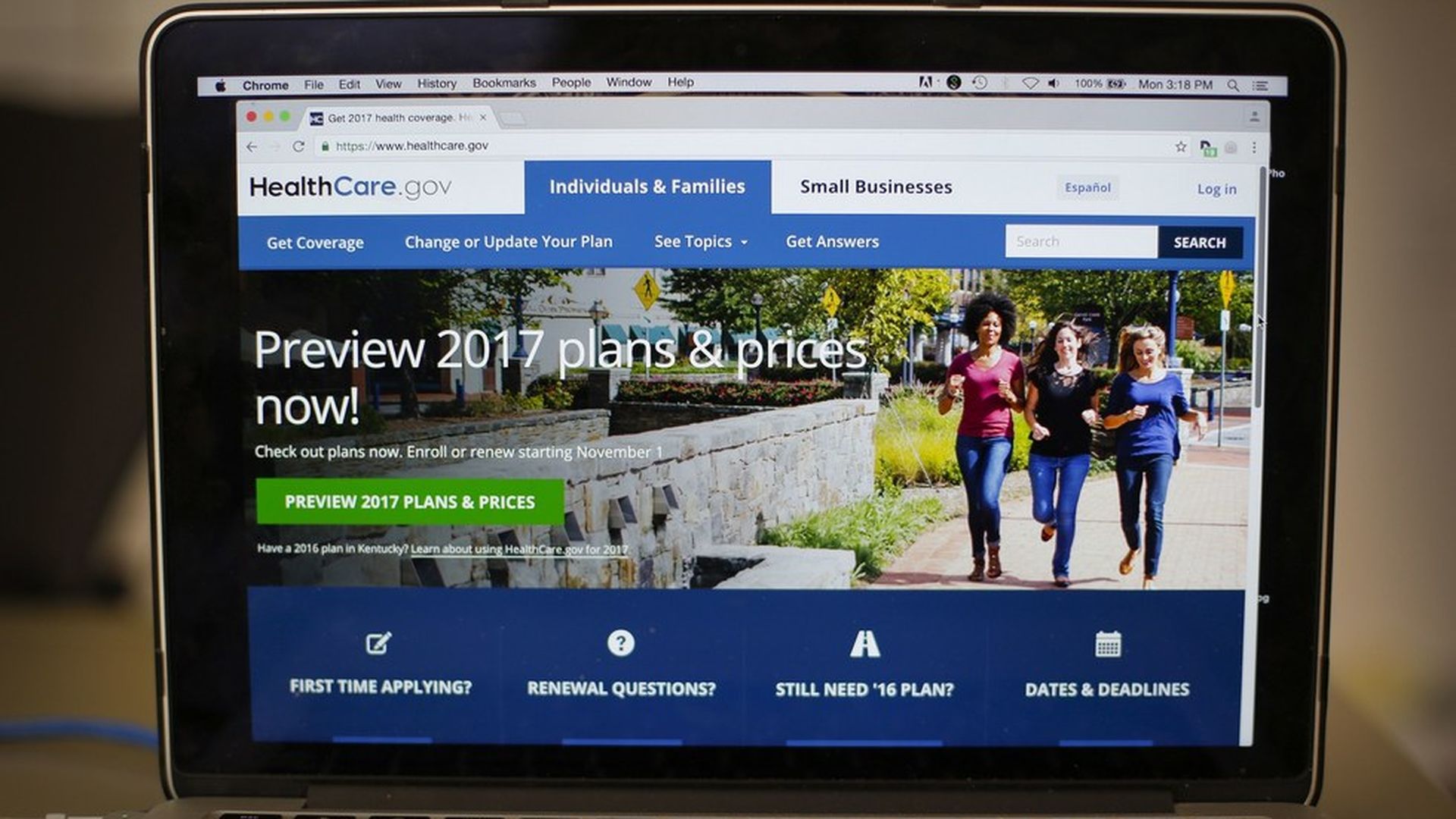
A handful of health insurance companies have sued the federal government for funds that were promised in an Obamacare program. Add Molina Healthcare to the list.
Molina, whose chief executive told me he couldn't give a "definitive answer" about staying in the Obamacare marketplaces for 2018, filed a lawsuit this week against the feds. The company is demanding payment of the $52 million it is owed under Obamacare's risk corridor program.
Why this matters: A handful of insurers that lost a lot of money on the Obamacare exchanges have sued to try to recoup these risk corridor payments. Now, even the companies that have fared well on the exchanges, like Molina, are fed up and are pressing to get money that was promised to them.

GOP senator on Obamacare: "outright repeal possibly"
PHILADELPHIA — Sen. James Risch told reporters on Thursday big changes are coming to Obamacare.
There's definitely going to be changes to Obamacare, very substantial changes and outright repeal possibly. But there's gotta be something in place.
When questioned whether this was different than the repeal-and-replace mantra the party has been pushing since winning the White House in November, Risch said no, he's always supported keeping pieces of the law.
"I've always said that this thing needs to be gone through and find the pieces that work and the ones that don't, the vast majority of it, the overall philosophy of it, the guts of it, don't work," he said. "But does that mean a section like keeping 23-year-old's ability to stay on their parents' insurance policy isn't a good idea? Eh, that's not a bad idea."
He said the GOP's self-imposed April deadline for repealing and replacing the health care law is "aspirational," but not "required." He also said no decisions have been made about what to do about the law's taxes or Medicaid expansion.
Our thought bubble: We don't really buy this. "Outright repeal possibly" is not the same as November's confident assurance that Obamacare was history. This change in language tracks with the growing realization that following through with repeal without a replacement ready would have consequences in insurance markets, and that crafting replacement policy is much, much easier said than done. Some outside analysts have for months speculated the result of the GOP's crusade would end up being changes to Obamacare itself, and this might be a step in that direction.
Here's the HHS "gag order"
There's been a lot of coverage of alleged "gag orders" that the Trump administration has issued to employees at various federal agencies, and now the one to Department of Health and Human Services employees has been released. It was included in a letter to the White House from two top House Democrats, Frank Pallone and Elijah Cummings, demanding that the administration reverse that order and others.
Here's the key language:
No correspondence to public officials (e.g., Members of Congress, Governors) or containing interpretations or statements of Department regulations or policy, unless specifically authorized by me or my designee, shall be sent between now and February 3, during which time you will have the opportunity to brief President Trump's appointees and designees on any such correspondence which might be issued.
In a letter to White House counsel Donald McGahn, the Democrats charge that the memos violate federal whistleblower protection laws. We've reached out to the administration for comment, and will keep you posted.
Only 15% of primary care physicians support Obamacare repeal
A new survey from Penn shows what primary care physicians think of Obamacare:
- 15% support complete repeal (38% of Trump voters; 0% of Clinton voters)
- Agreement that specific ACA provisions are important for U.S. health: 95% for covering preexisting conditions, 91% for tax credits for small businesses, 88% for family coverage through age 26, 73% for Medicaid expansion, 50% for the individual mandate
The takeaway: In 2015, doctor support for Obamacare split largely along partisan lines. This new poll shows that — just as general support for Obamacare reached a high after Trump's win — doctors are people, too.
Trump: Goal is for "no one" to be hurt by repeal
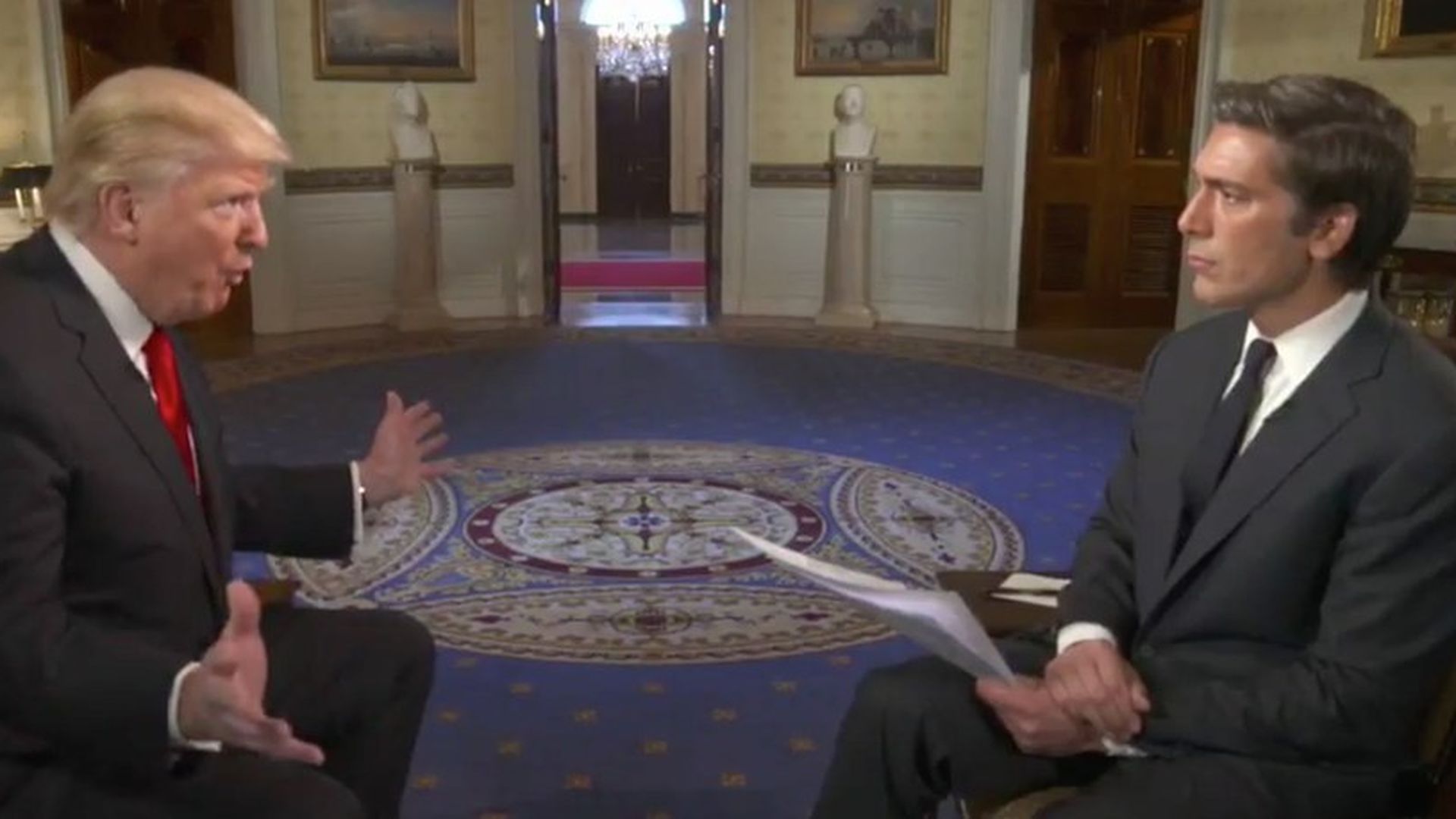
President Trump told ABC News last night that he wants to make sure "no one" loses coverage in the repeal and replacement of Obamacare — but he acknowledged he couldn't guarantee it. "Knowing ABC, you'll have this one person on television saying how they were hurt, OK?" Trump said in the interview. "We want no one. We want the answer to be no one."
"Here's what I can assure you: We are going to have a better plan, much better health care, much better service treatment, a plan where you can have access to the doctor that you want and the plan that you want," Trump said. "We're going to have a much better health care plan at much less money."
Remember the canceled plans? Trump brought them up to remind this audience that even Obamacare caused disruption — though he seemed to think the people whose old, pre-Obamacare plans were canceled in 2013 never got insurance again. "You have millions of people that now aren't insured anymore," Trump said. In reality, many of them got extensions of their old plans and others switched to new ones — and the uninsured rate is now down to a record low of 8.6 percent.