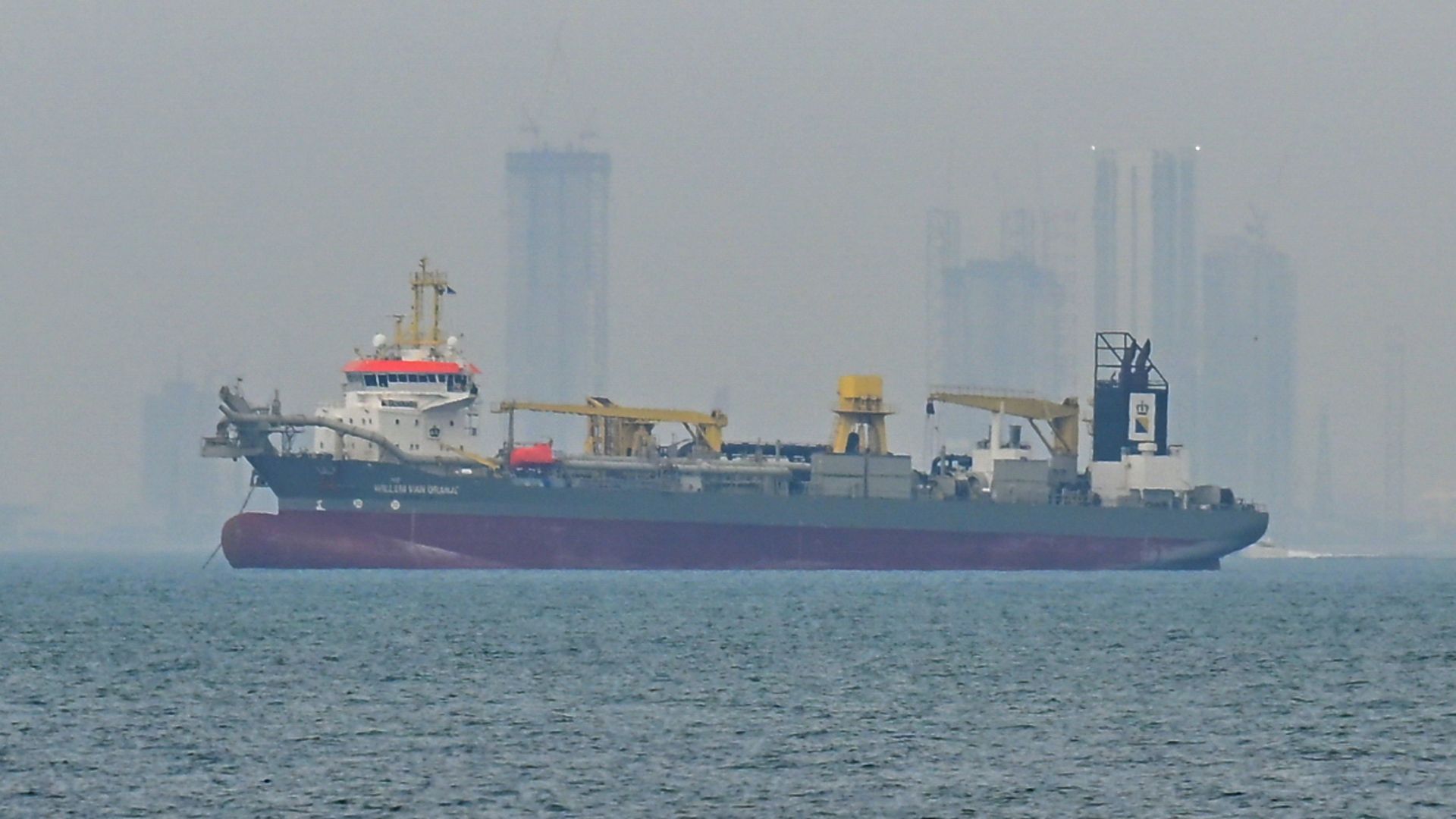
The Trump administration might suspend requirements that only U.S. ships can carry cargo between domestic ports as officials look to temper rising gasoline prices.
Why it matters: Possible waivers of the 1920 law, the Jones Act, show how the Trump administration is scrambling to ease the fuel price shock from the Iran war.
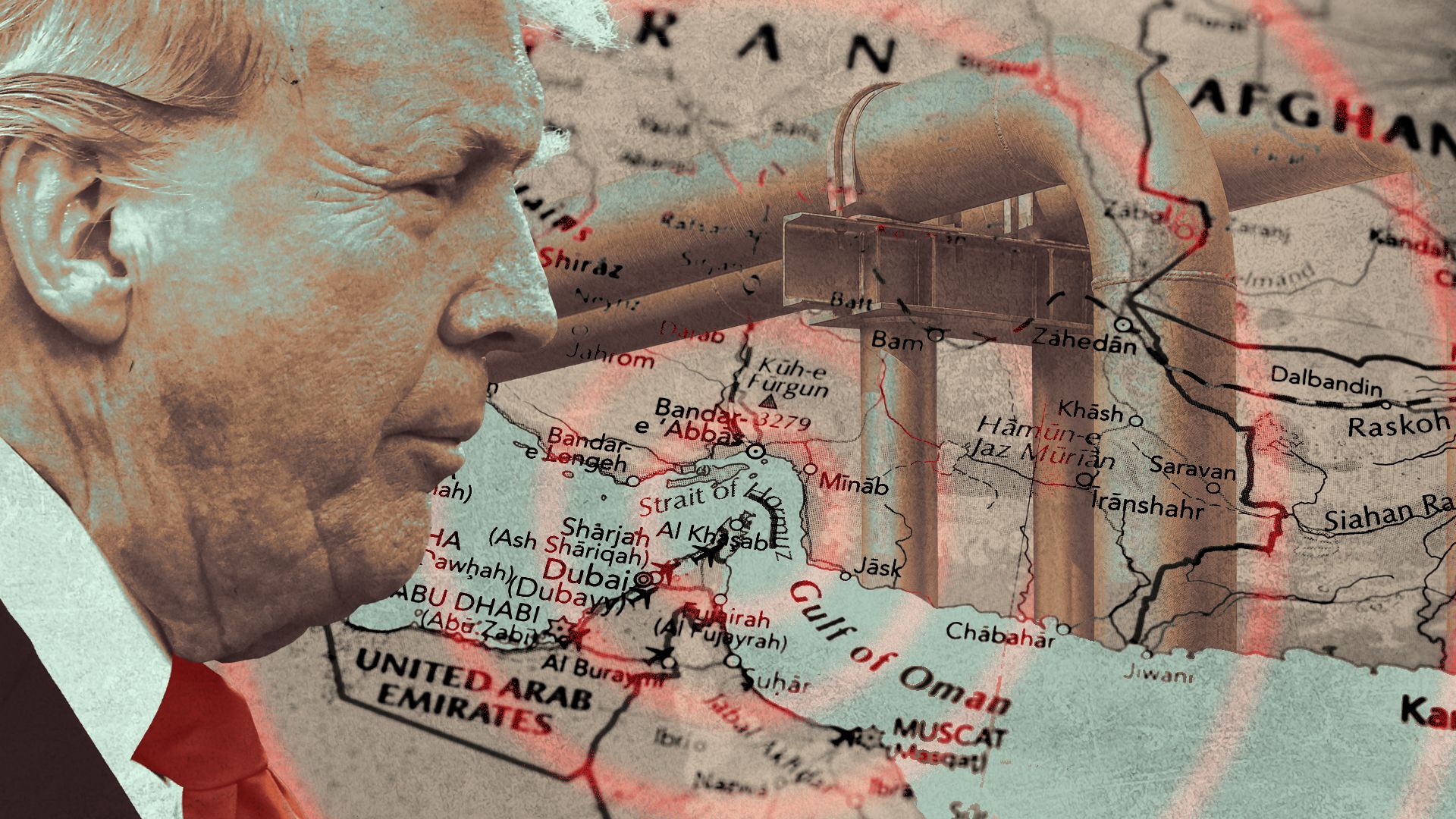
With shipping traffic at a near halt at the Strait of Hormuz, the possibility of prolonged disruption to supplies of oil and other important commodities has grown.
The big picture: If the military situation doesn't change soon, it will create a moderate stagflationary drag on the U.S. economy and a substantial one on Europe and East Asia.
Americans are growing increasingly concerned with rising gas prices, and about half are blaming President Trump, per flash polling conducted Wednesday night by Morning Consult and shared with Axios.
Why it matters: The spike in oil prices caused by the war is fast becoming a political liability for the White House — and threatening economic growth in the U.S.
The Iran war has stopped oil and fertilizer flows through the Strait of Hormuz, but it hasn't stopped Middle Eastern money flows. Yet.
The big picture: Countries like UAE and Saudi Arabia have successfully positioned themselves as global financial centers, while regional sovereign wealth funds have become major global investors.
Plans for historically large releases from emergency oil stockpiles reveal the scope of the energy crisis — and the market response reveals President Trump's limited options for tackling it.
Why it matters: The 400-million-barrel infusion over time from International Energy Agency member countries — including a big dose from U.S. holdings — likely won't push prices down by itself.
Why it matters: The world needs oil right now — Iran has effectively shut down the critical Strait of Hormuz, through which about 20% of the global supply travels.
The latest: The Trump administration said on Wednesday that the U.S. would release 172 million barrels of oil from the Strategic Petroleum Reserve, or about 40% of what's in there now.
By the numbers: The reserve, which is stored in huge underground salt caverns along the Gulf Coast, currently holds 415 million barrels — about 58% of capacity.
Where it stands: The U.S. has the largest oil stockpile among the 32 countries planning to release 400 million barrels of oil to deal with the spike in prices.
The coordinated release would amount to about 1.2 million barrels a day —about what the system can manage, JPMorgan Commodities Research finds.
Though potentially calming for jittery markets, it would be insufficient to counter the potential loss of roughly 12 million barrels a day from a prolonged Hormuz shutdown, the JPMorgan analysts note.
Reality check: America has plenty of oil — it is the world's largest producer, after all.
But storing enough oil for emergency use offers reassurance to markets that could restrain price spikes.
Catch up quick: The Trump administration has made replenishing the SPR a priority — but it has been slow going.
The One Big, Beautiful Bill Act contained some funding to make it happen, but nowhere near the billions of dollars required.
Even if the effort were fully funded, it would take a lot of time.
"Adding barrels is also more logistically challenging than releasing them," says S&P Global Energy.
Zoom in: A fully funded effort — Energy Secretary Chris Wright put the number at $20 billion — made at the fastest possible speed of 4 million barrels a month would get the SPR filled back up by 2031, per S&P Global.
And then there's a limit on how much can be drawn: The SPR must keep about 150 million barrels in place to maintain operational flexibility, JPMorgan noted.
Flashback: The U.S. Strategic Petroleum Reserve was established by President Ford in the wake of the 1973-74 Middle East oil embargo.
U.S. presidents have authorized emergency releases from the SPR on only four occasions: President Biden's 2022 drawdown after the Russian invasion of Ukraine, in 2011 during a crisis in Libya, after Hurricane Katrina in 2005 and during Operation Desert Storm in 1991.
Between the lines: The release of oil reserves won't mathematically solve the problem of lost supply, but it will psychologically keep investors from bidding crude oil prices higher, Mark Malek, chief investment officer at Siebert, wrote in a note Wednesday.
"The signaling effect can stabilize prices temporarily, even if the physical math doesn't work."
"Think of it as the energy equivalent of Mario Draghi's famous 'whatever it takes' moment during the European debt crisis," Malek wrote. "The credible threat of coordinated action is doing more heavy lifting than the actual barrels ever could."
President Trump's advisers warn the Iran war could drag on longer if the regime succeeds in strangling the Strait of Hormuz and driving oil prices beyond his tolerance.
"The Iranians f*cking around with the Strait makes him more dug in," a senior Trump administration official told Axios.
Why it matters: Trump launched Operation Epic Fury to destroy Iran's nuclear program, ballistic missiles, navy and regional proxies. But oil markets now are occupying as much of his headspace as battlefield data.
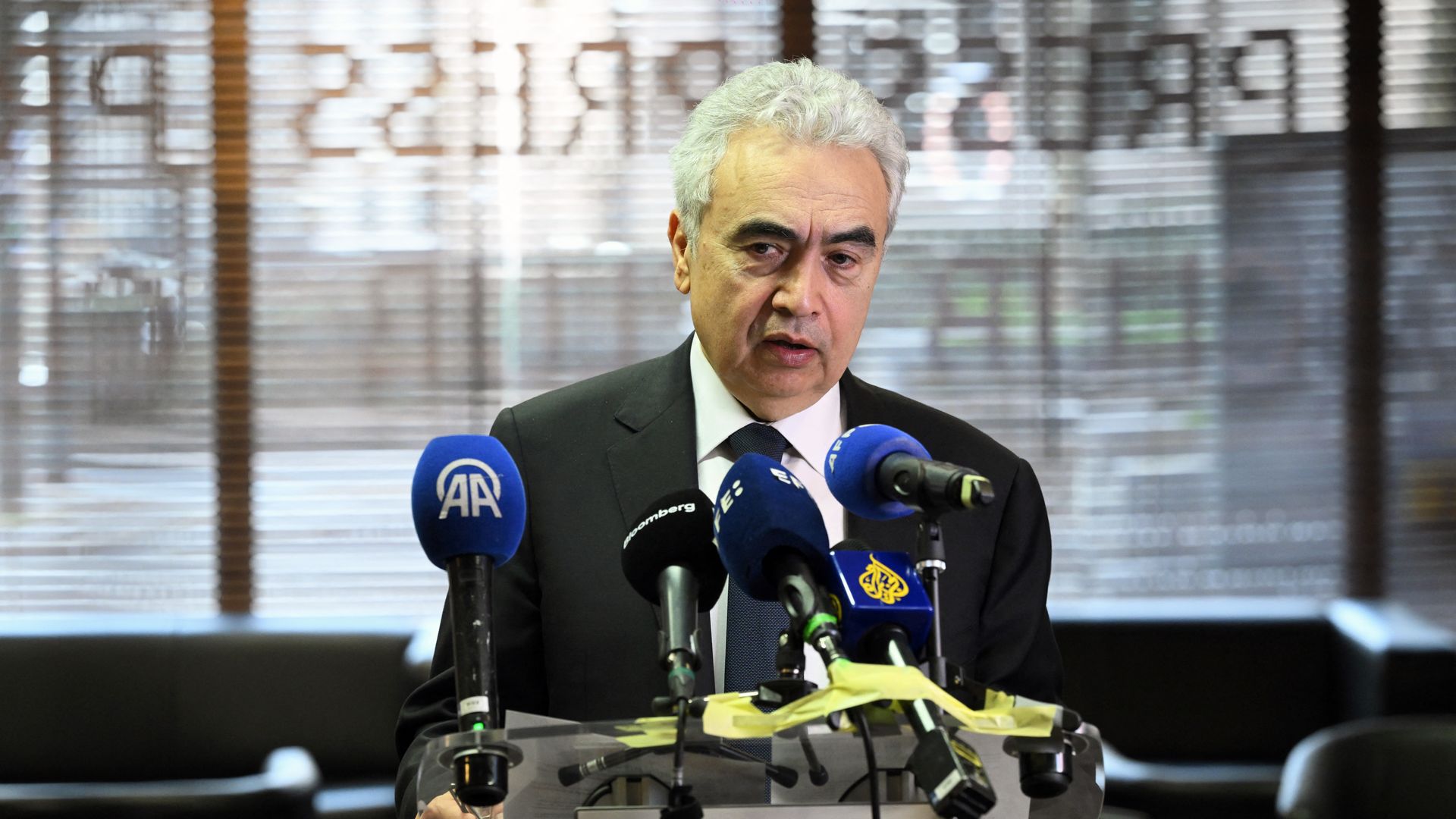
Energy Secretary Chris Wright said Wednesday the International Energy Agency "unanimously" agreed to President Trump's request to coordinate the release of 400 million barrels of oil and refined products from its reserves.
Why it matters: Consumers are seeing significant price jumpsat the pump — and Republicans recognize offsetting that increase is crucial ahead of the 2026 midterm elections.
There's "growing momentum to establish a naval protection system" in the Strait of Hormuz as Iran's military escalates attacks on commercial ships, Eurasia Group says.
The big picture: U.S. Central Command warned "the Iranian regime is using civilian ports along the Strait of Hormuz to conduct military operations that threaten international shipping" and put lives at risk.
Between the lines: Used EVs cost less than preowned gas cars (most are priced below $30,000) and they're the most affordable cars to own, according to a University of Michigan study.
The International Energy Agency said Wednesday its member governments will jointly release up to 400 million barrels of oil from strategic stockpiles after the Iran war set off a chaotic spike in crude prices.
Why it matters: It would be the largest joint release in the history of IEA, which coordinates members' emergency responses to oil shocks.
The Consumer Price Index was steady in February, and a gauge that excludes food and energy costs held at the lowest in four years, the government said on Wednesday.
Why it matters: Inflation was stable last month, but new price pressures from the Iran war have since emerged — a fresh factor for consumer affordability concerns.
Russia and other oil exporters outside the Mideast — and not ensnared in the conflict — are emerging as the economic winners in the Iran war.
Why it matters: The market mechanisms are perhaps obvious here — higher oil prices are good for nations that sell oil — but are worth underlining, as the energy market shift plays into the geopolitical calculations.