Iranian oil squeeze tests Trump's war plans

Add Axios as your preferred source to
see more of our stories on Google.
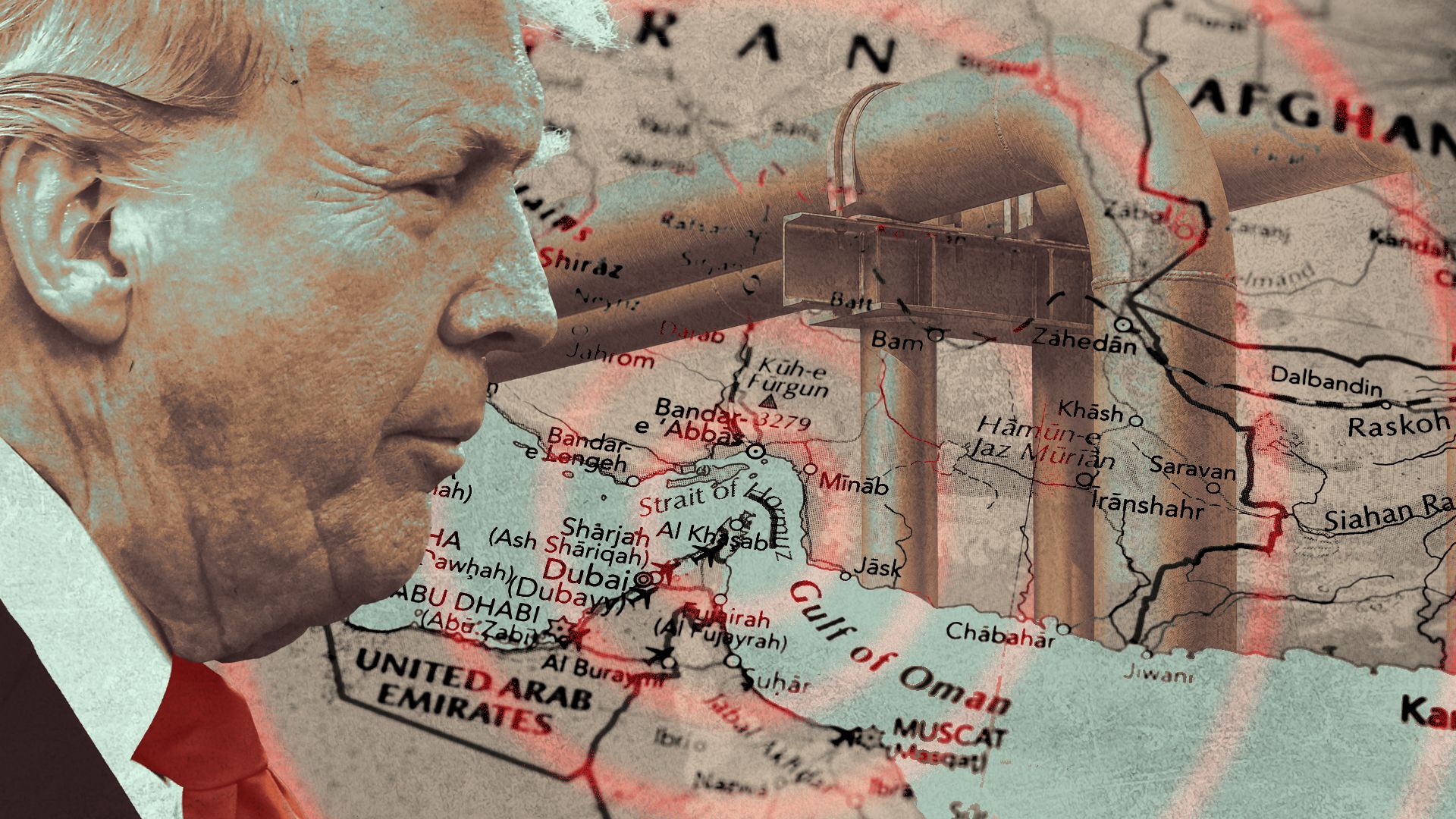
Photo illustration: Sarah Grillo/Axios. Photo: Beata Zawrzel/NurPhoto via Getty Image
President Trump's advisers warn the Iran war could drag on longer if the regime succeeds in strangling the Strait of Hormuz and driving oil prices beyond his tolerance.
- "The Iranians f*cking around with the Strait makes him more dug in," a senior Trump administration official told Axios.
Why it matters: Trump launched Operation Epic Fury to destroy Iran's nuclear program, ballistic missiles, navy and regional proxies. But oil markets now are occupying as much of his headspace as battlefield data.
- "The president sees the briefings. He sees the numbers. And he feels good about his decision, militarily," one Trump adviser said.
- "Oil is another matter. No one is panicking, but it's a concern. He's pulling out the stops. There's plenty of oil. It's just getting it on the market that's the thing."
Zoom in: Trump has publicly downplayed both the physical danger of traversing the Strait and the war's risk to the economy — while taking steps to address both.
- On Wednesday, he coordinated the largest emergency oil reserve release in history: 400 million barrels globally, including 172 million from the U.S. Strategic Petroleum Reserve.
- Trump also is discussing plans to supply naval escorts to tankers traversing the Strait and arranging insurance for those vessels — a crucial factor for shippers weighing the risk.
The urgency became clear Wednesday evening when two oil tankers were attacked in the Persian Gulf.
- Videos of a massive blaze in Iraqi waters spread rapidly on social media. Reuters published still images from Iraq's state-run ports authority that it said show one of the vessels on fire.
By the numbers: Trump prefers oil at $50 a barrel. The industry prefers a floor of around $60. Despite Trump's intervention, oil topped $100 per barrel on Wednesday night after spiking as high as $120 earlier this week.
- Iran has threatened to push prices to $200 a barrel, which would translate to roughly $5 per gallon at the pump for U.S. drivers, according to some analysts.
- About one-fifth of the world's oil travels through the Persian Gulf. China and India are its biggest consumers, but a sustained disruption ripples across every major economy.
The big picture: Iran's attempts to weaponize the oil markets are designed to increase global pressure on Trump and Israel to end the bombing that began Feb. 28.
- So far, Iran's attacks on Gulf states have unified the region against it. A record 135 countries co-sponsored a UN resolution condemning the regime's retaliatory strikes on Wednesday.
- But in the U.S., the war is broadly unpopular. Trump's personal approval ratings are at or near historic lows, and gas prices — once Trump's signature economic achievement — are now his most visible liability.
What they're saying: "The president is bullish on the success of the operation thus far and feels the country will realize he was right, per usual, once it's over and the objectives are fully met," another Trump adviser said.
- As for the higher gas prices, the adviser added that Trump "is not surprised at all by the price hikes, he fully expected it."
- "He genuinely believes, as many in the White House do, that gas prices will fall substantially when this is over — and long enough before the midterms where it will not be a problem."
The bottom line: "I wouldn't say he's looking for an exit strategy. But he doesn't want this to last longer than it needs to," said a confidant who spoke with Trump via phone.
