International agency announces historic oil release amid Iran war


Add Axios as your preferred source to
see more of our stories on Google.
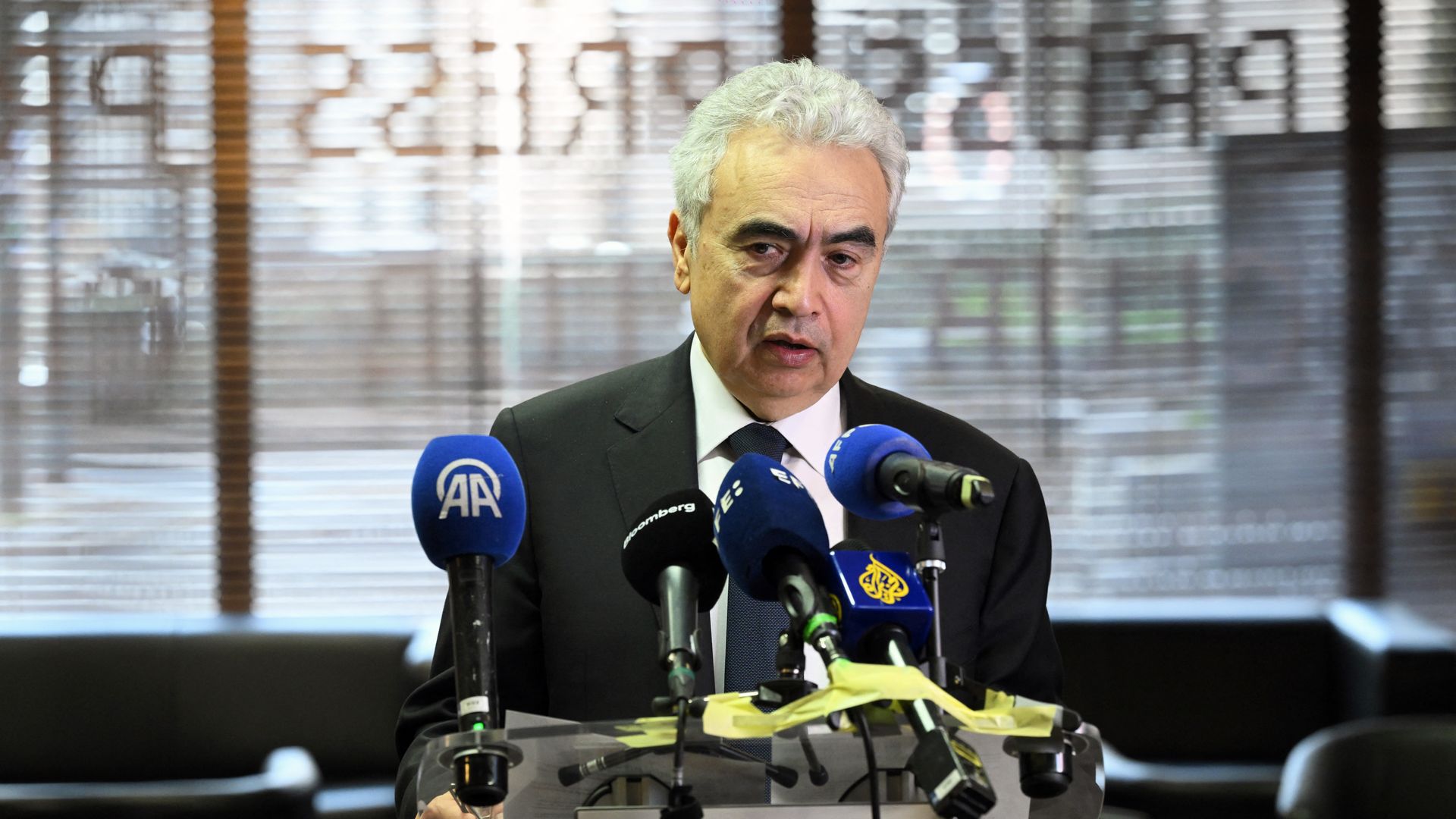
Birol speaks in Brussels on March 6. Photo: Nicolas Tucat /AFP via Getty Images
The International Energy Agency said Wednesday its member governments will jointly release up to 400 million barrels of oil from strategic stockpiles after the Iran war set off a chaotic spike in crude prices.
Why it matters: It would be the largest joint release in the history of IEA, which coordinates members' emergency responses to oil shocks.
- The effort is the most aggressive energy policy response yet to the conflict that's bottling up massive volumes as transit through the Strait of Hormuz off Iran remains largely frozen.
- It's also one of the largest coordinated global financial actions since the 2008 financial crisis.
The big picture: "The conflict in the Middle East is having significant impacts on global oil and gas markets, with major implications for energy security, energy affordability and the global economy," IEA executive director Fatih Birol said from the agency's Paris headquarters.
- "This a major action aiming to alleviate the immediate impacts of the disruption in markets," he said of the planned joint releases.
- The IEA said its 32 member countries unanimously agreed to the move.
- The U.S. "would likely supply the largest share of any release," Natasha Kaneva, JPMorgan Chase's head of commodity markets strategy, said in a note ahead of the announcement, Bloomberg News reported.
Context: The narrow waterway off Iran is a critical trade artery that roughly a quarter of the world's seaborne oil supply passes through, but is now too risky for nearly all journeys.
- That de facto closure is also causing spillover effects, with some Gulf region countries dialing back oil production as storage space gets tight.
- An average of 20 million barrels per day of crude oil and oil products passes through the strait, representing 25% of the world's seaborne oil trade. IEA noted that options to bypass it are limited.
- IEA member governments have emergency stockpiles of over 1.2 billion barrels, "with a further 600 million barrels of industry stocks held under government obligation," according to the agency.
Catch up quick: Oil prices soared to more than $100 per barrel earlier this week before easing as President Trump signaled the war was nearing its close (though his administration has delivered mixed messages since).
What's next: Prime Minister Sanae Takaichi said Japan would take the lead and release oil from its national reserves as early as next week," the FT reported ahead of the IEA announcement.
- The outlet also reported that Germany would comply with the request to release from their reserves.
- It will be the first coordinated IEA release since 2022 in the wake of Russia's invasion of Ukraine.
Yes, but: "The strategic reserves are not a permanent solution, of course, and crude oil will continue to trade like a 'meme stock' until the solution is peace," investment and advisory firm Macquarie said in a note ahead of the announcement.
- And Birol said: "The most important thing for a return to stable flows of oil and gas is the resumption of transit through the Strait of Hormuz."
What we're watching: The rate at which barrels are released from members' stockpiles.
Editor's note: This story has been updated with Bloomberg News reporting on JP Morgan Chase note.
