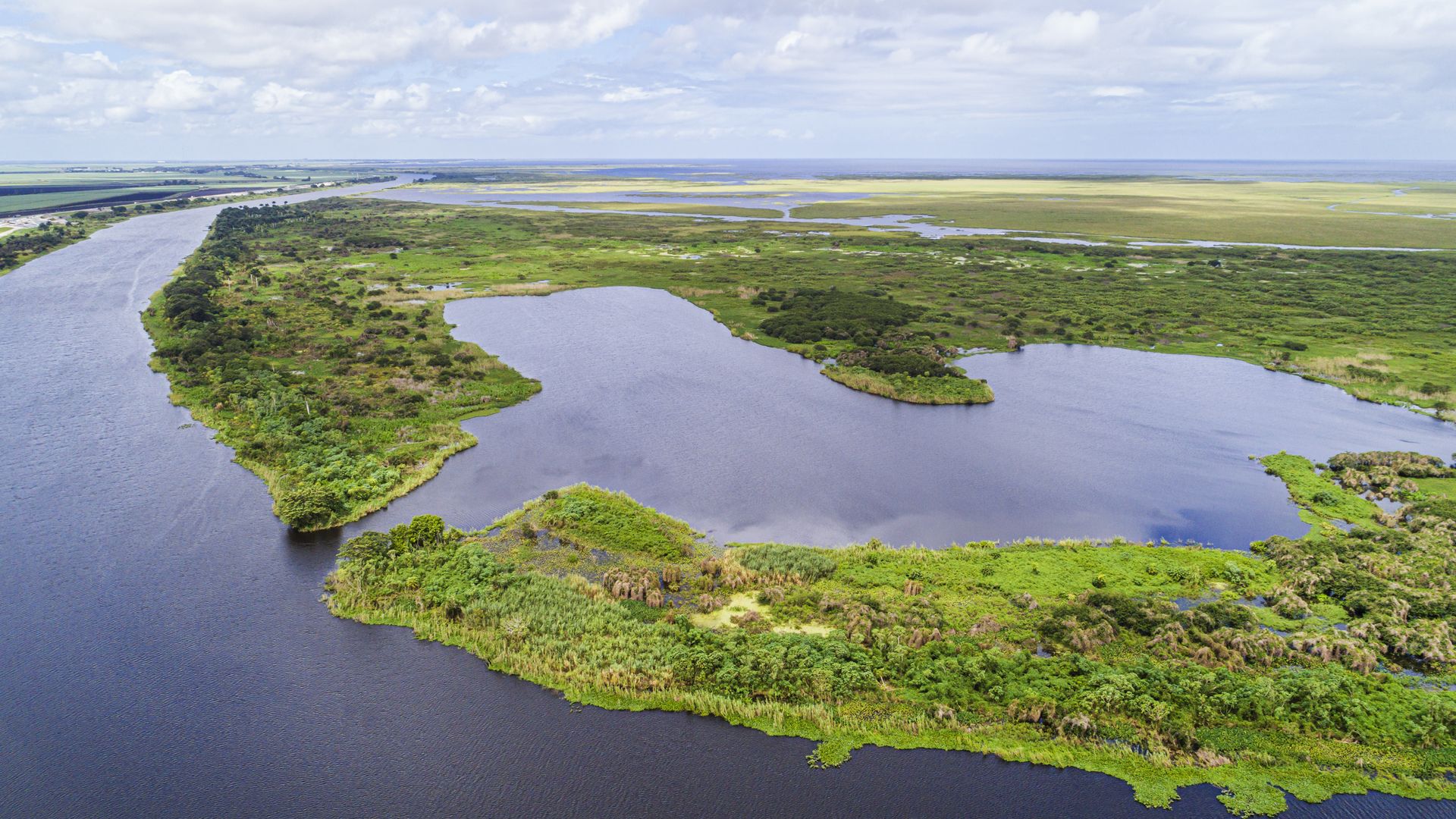
The Biden administration is pushing to increase federal environmental protections for "streams, marshes and other wetlands," effectively reversing a Trump-era rollback, the Washington Post reported Wednesday.
Why it matters: The move is likely to restart a "decades-long battle over how far federal officials can go to stop contaminants from entering small streams and other wetlands," per the Post.
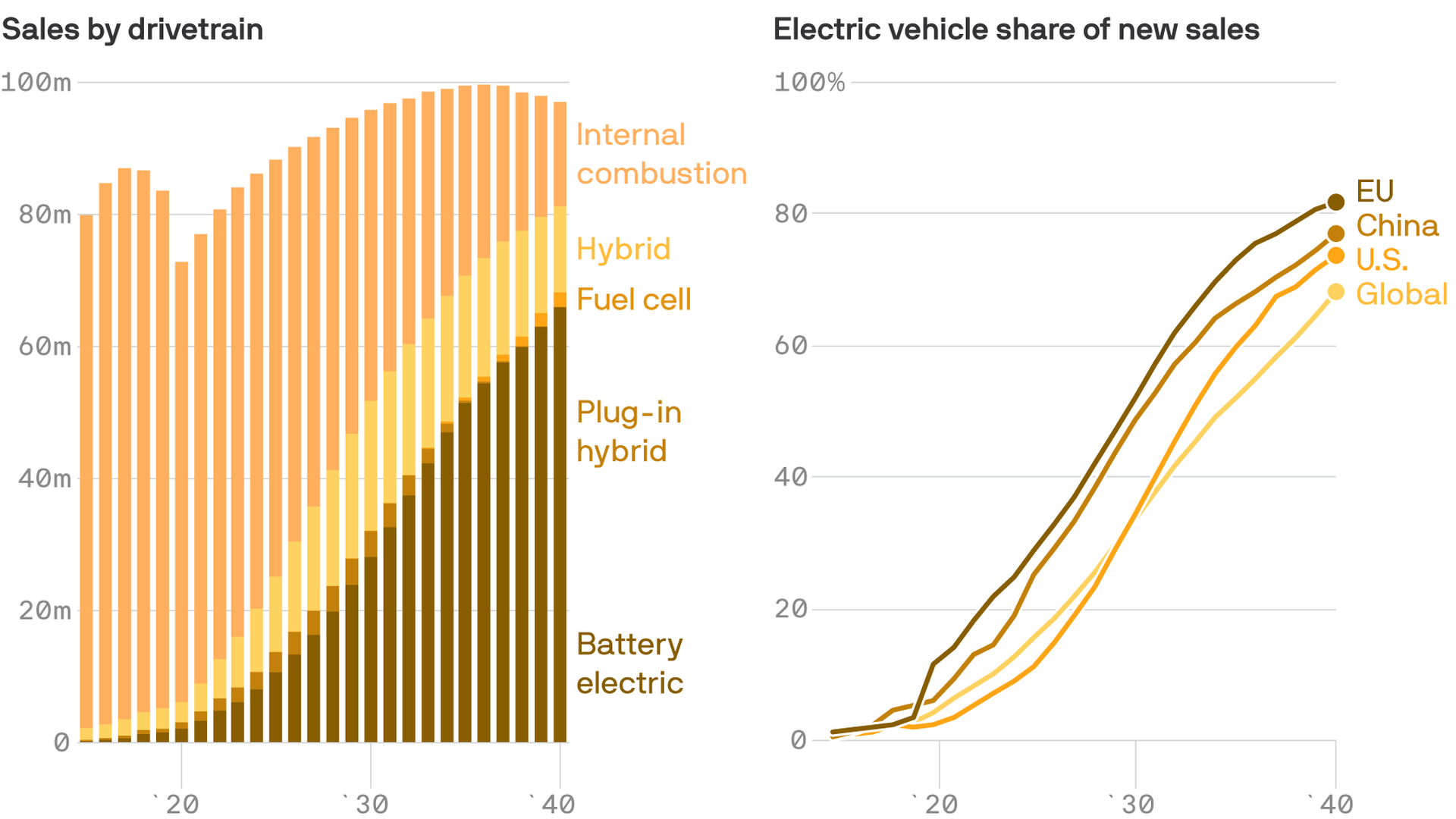
A new analysis finds the outlook for electric vehicle deployment is "getting much brighter," but it's off pace for meeting aggressive midcentury targets for cutting carbon emissions from transportation.
Why it matters: The research firm BloombergNEF provides closely watched analyses on the evolution of the battery-electric and fuel cell sector — not only passenger cars but also buses, heavy trucks and more.
Shell said Wednesday it would accelerate its clean energy and climate efforts following a major Dutch court ruling last month that ordered faster greenhouse gas emissions cuts.
Why it matters: CEO Ben van Beurden's announcement signals how the landmark court ruling could tangibly affect one of the world's most powerful oil giants, even though Shell plans to appeal the decision.
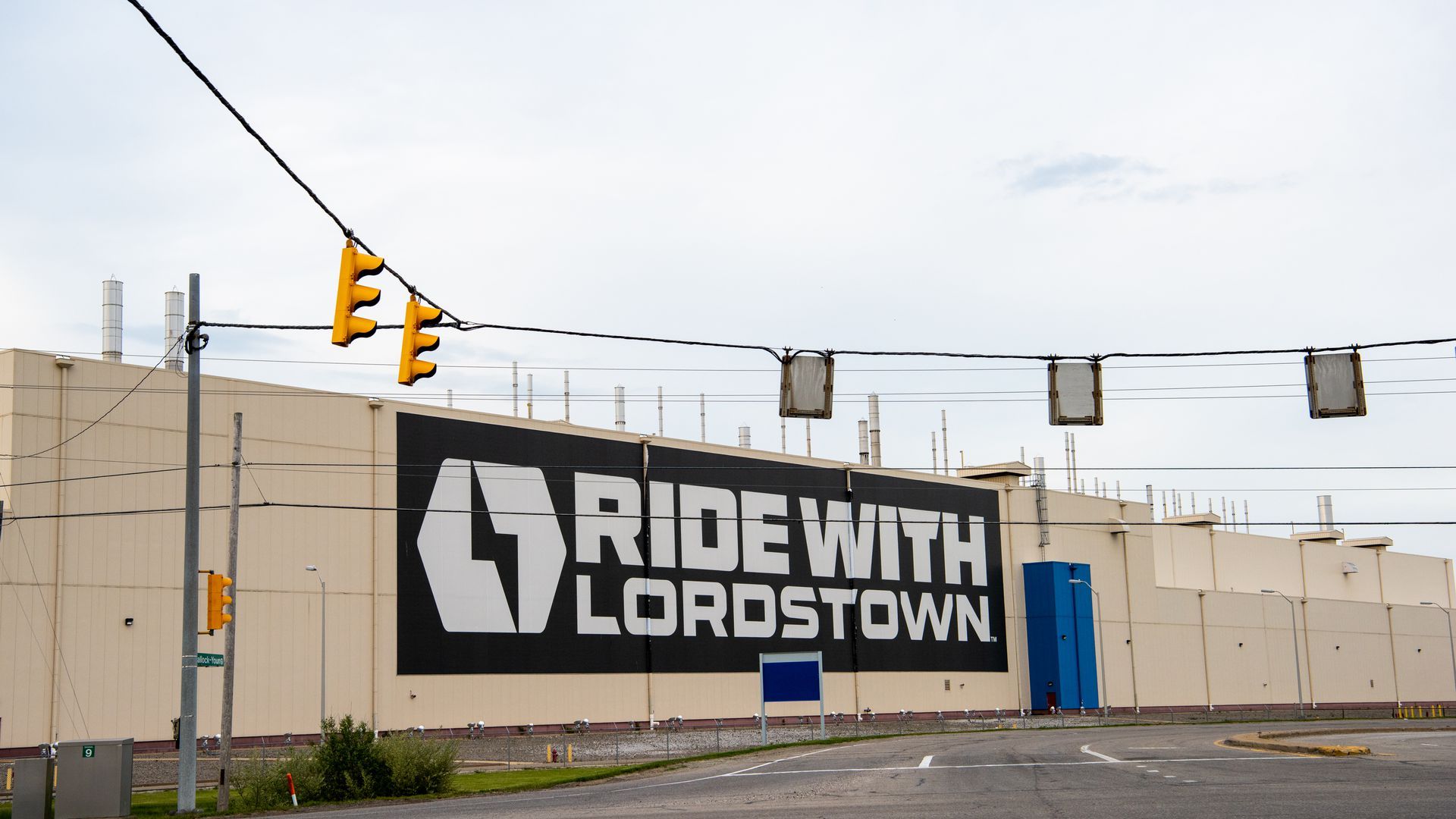
Lordstown Motors had plans to build its first electric pickup trucks this year, but the company revealed in a regulatory filing Tuesday that it doesn't have enough cash to begin production. The company's stock dropped more than 16% on the news.
Why it matters: Lordstown is one of several pre-revenue EV companies that public market investors have begun to view more critically after they went through SPAC (special purpose acquisition) mergers last year.
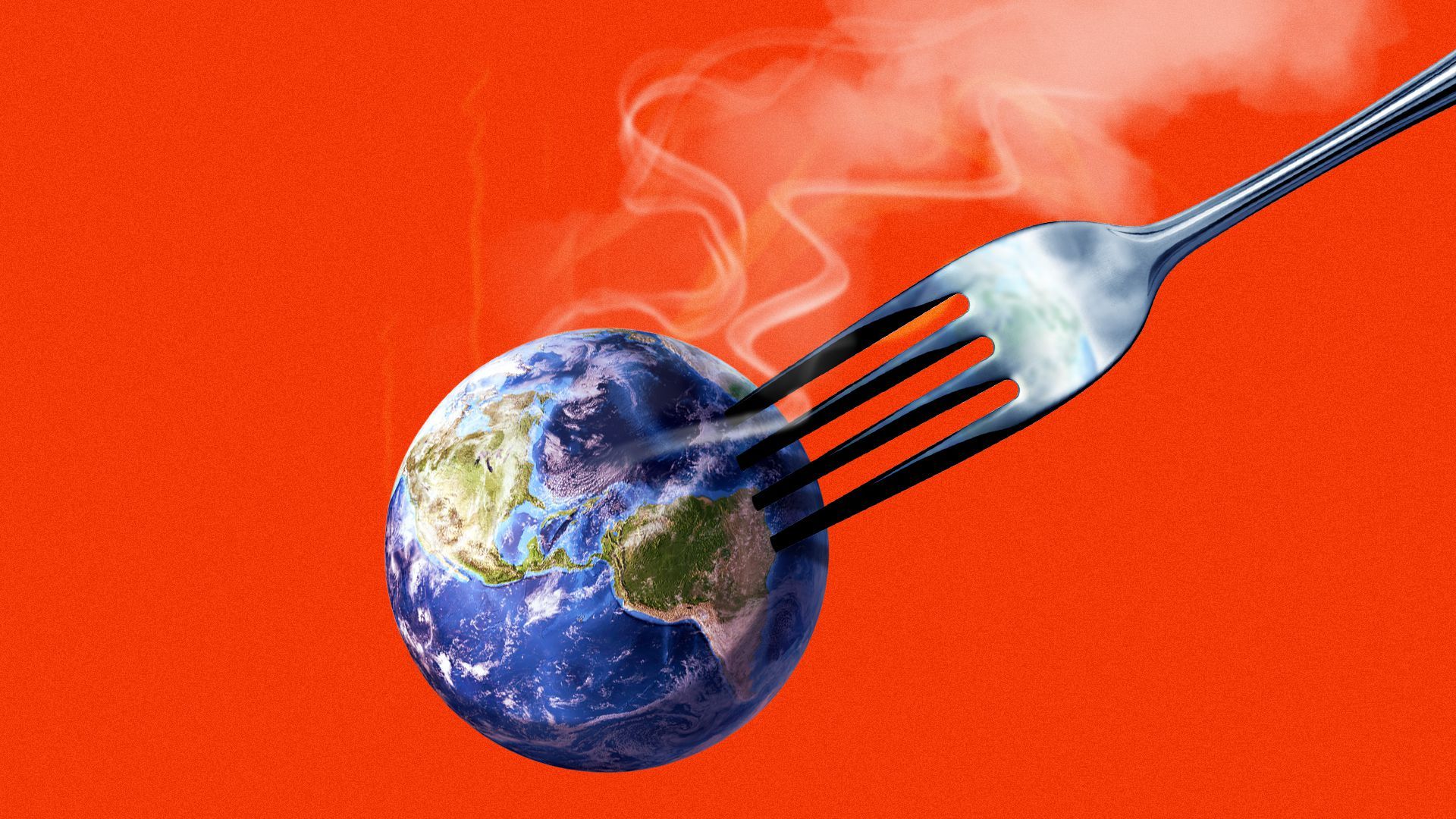
Emissions of planet-warming greenhouse gases from activities connected to growing and consuming food have been significantly underestimated, and may be twice as large as previously thought, new research finds.
Why it matters: Agriculture is already known to be one of the largest contributors to human-caused global warming. If the sector's emissions are larger than thought, it could mean the world will see more warming than anticipated.
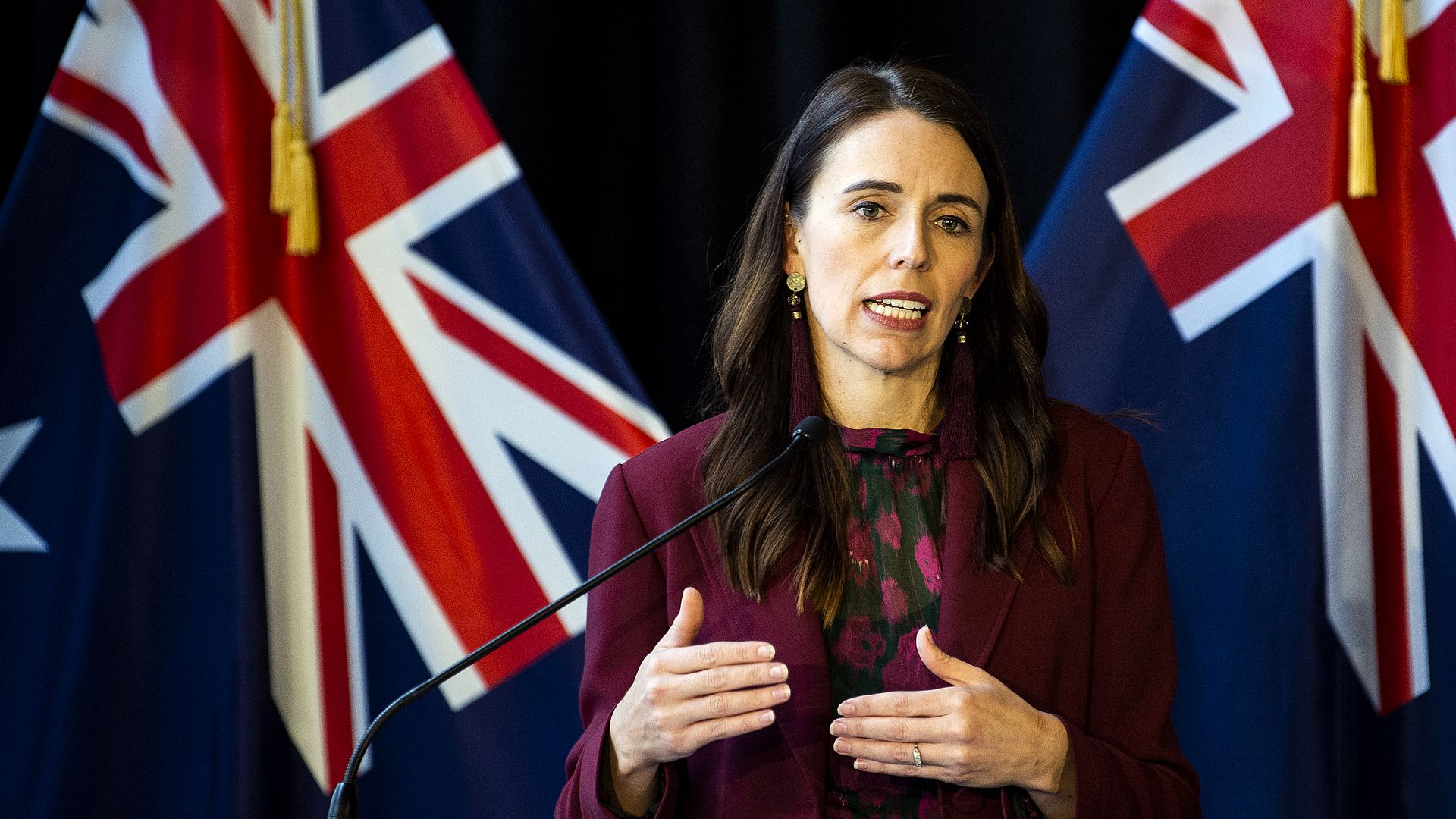
New Zealand Prime Minister Jacinda Ardern said in a speech Wednesday that the climate crisis was a matter of "life or death," as a blueprint for meeting her government's ambitious green targets was unveiled.
Driving the news: The Climate Commission, an independent body advising the government, outlines in its report what the country needs to do to meet its target for 2050 of producing zero carbon emissions — including reducing biogenic methane emissions by 24% to 47%, with no new household gas connections by 2025.
The U.S. Navy has used a drone to refuel a fighter jet in midair for the "first time ever," according to a statement.
Why it matters: The test shows that drones can now be used for tasks beyond reconnaissance missions or shooting targets, freeing up the Navy's costly crewed fighter jets for other operations.
At the same time as much of the Lower 48 states are seeing temperatures soar through the 90s, an unusually severe heat wave for this time of year has also struck the Middle East.
Why it matters: While these extreme weather events have roots in various weather systems, human-caused climate change is raising the odds and worsening the severity of extreme heat events worldwide.
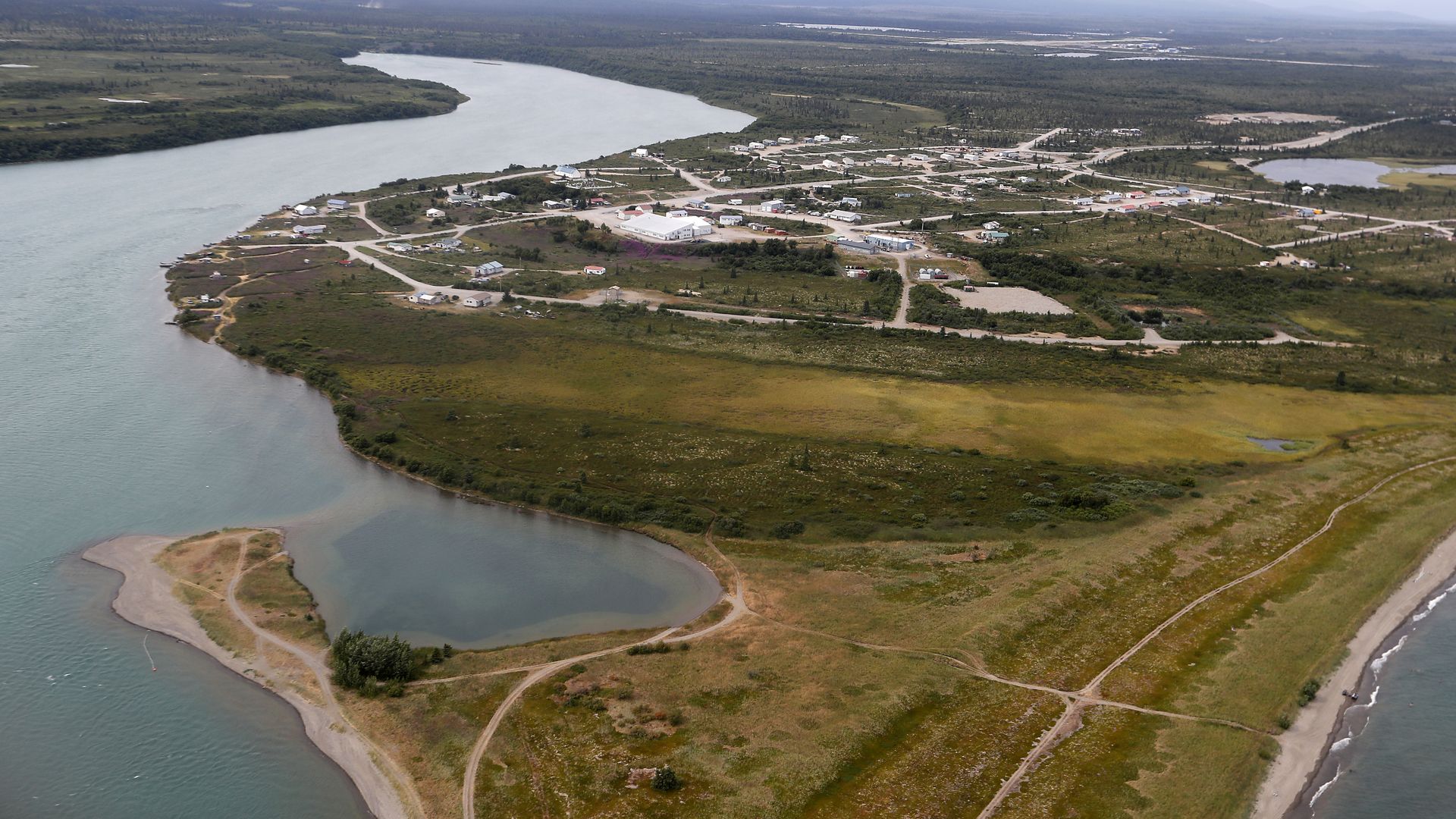
The Pedro Bay Corporation, an Alaska Native group that owns land near Bristol Bay, sold conservation easements on more than 44,000 acres to the environmental nonprofit Conservation Fund, the Washington Post reports.
Why it matters: The deal makes a large portion of the land, where backers of the Pebble Mine had hoped to build a gold mining road, off-limits to future development, standing in the way of Pebble Limited Partnership's massive project.
The think tank Resources for the Future on Tuesday released its latest report comparing various projections and scenarios around emissions, energy demand and more.
The big picture: The energy analyst hive mind is pretty united around the conclusion that nations' current and planned climate policies won't come close to meeting the goals of the Paris climate deal.
A new type of housing initiative kicking off in New York City seeks to address two major problems facing the U.S. today: The lack of widespread, high-speed broadband access for low-income residents, and the need to more widely deploy clean energy technologies.
Why it matters: The project is a unique marriage between two of the Biden administration's top infrastructure policy goals, except on a local level.
The White House is pledging a multi-agency push to spur more U.S. battery manufacturing and sustainable mining — both domestically and abroad — of raw materials used in battery tech.
Why it matters: The administration wants to speed U.S. market growth of electric cars and grid storage, but a global scramble for batteries and materials poses hurdles for companies and governments alike.