Sen. Sheldon Whitehouse (D-R.I.), one of Capitol Hill's most vocal members on climate change, went public on Monday about his fear that chances to enact major legislation on the topic are slipping away.
Why it matters: His tweets reflect wider angst on the left that large clean energy and climate investments will be jettisoned in infrastructure negotiations between the White House and Congress.
The amount of carbon dioxide in the Earth's atmosphere has reached its annual peak, climbing to 419 parts per million (ppm) in May, according to scientists from Scripps Institution of Oceanography and the National Oceanic and Atmospheric Administration (NOAA).
Why it matters: It's the highest CO2 reading since reliable instrument data began 63 years ago, but evidence shows it's also a peak since well before the start of human history.
The infrastructure drama enveloping Capitol Hill could spill onto the global climate stage.
Why it matters: Major new U.S. investments and policies could help spur other nations to take more aggressive and tangible steps to cut emissions. But failure to steer major new initiatives through Congress could hinder the White House diplomatic posture as the U.N. conference looms.
An International Energy Agency report puts some context around how much the world's largest oil companies are investing in clean energy.
The big picture: The chart above shows the combined investments of a collection of roughly 20 giants, including Shell, Exxon and BP, but also state-controlled companies like Saudi Aramco and China National Petroleum Corp.
Energy Secretary Jennifer Granholm will on Monday unveil new efforts aimed at massively cutting the cost of producing hydrogen with climate-friendly processes, according to an agency official.
Driving the news: The department will announce the "Hydrogen Shot" program to breathe life into the DOE's goal, first announced in April, to drive the costs of clean hydrogen down from about $5 per kilogram today to $1 per kilogram by 2030.
After 13 years without owning a car, I finally got one.
Why it matters: Driving is one of the most direct ways we as individuals benefit from our activities raising Earth’s temperature. It’s also one of the clearest ways we can embrace cleaner technologies.
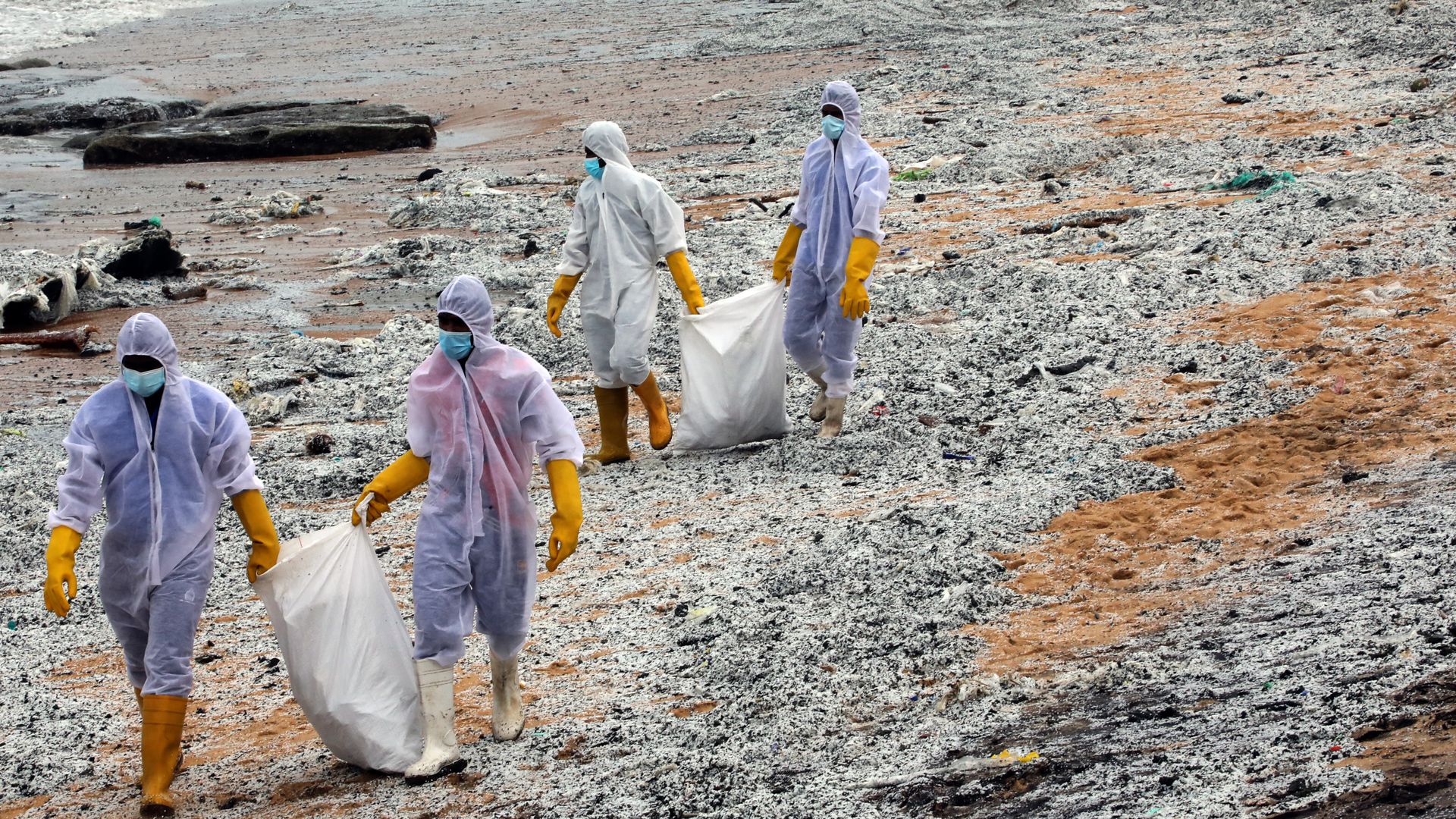
The sinking of a cargo ship carrying containers of harmful chemicals and plastics off the coast of Sri Lanka last week is shaping up to be an environmental disaster for the country.
The state of play: The ship, the X-Press Pearl, caught fire on May 20 and burned for two weeks before finally beginning to sink. Toxic debris from the fire has blanketed miles of the country's western coastline.