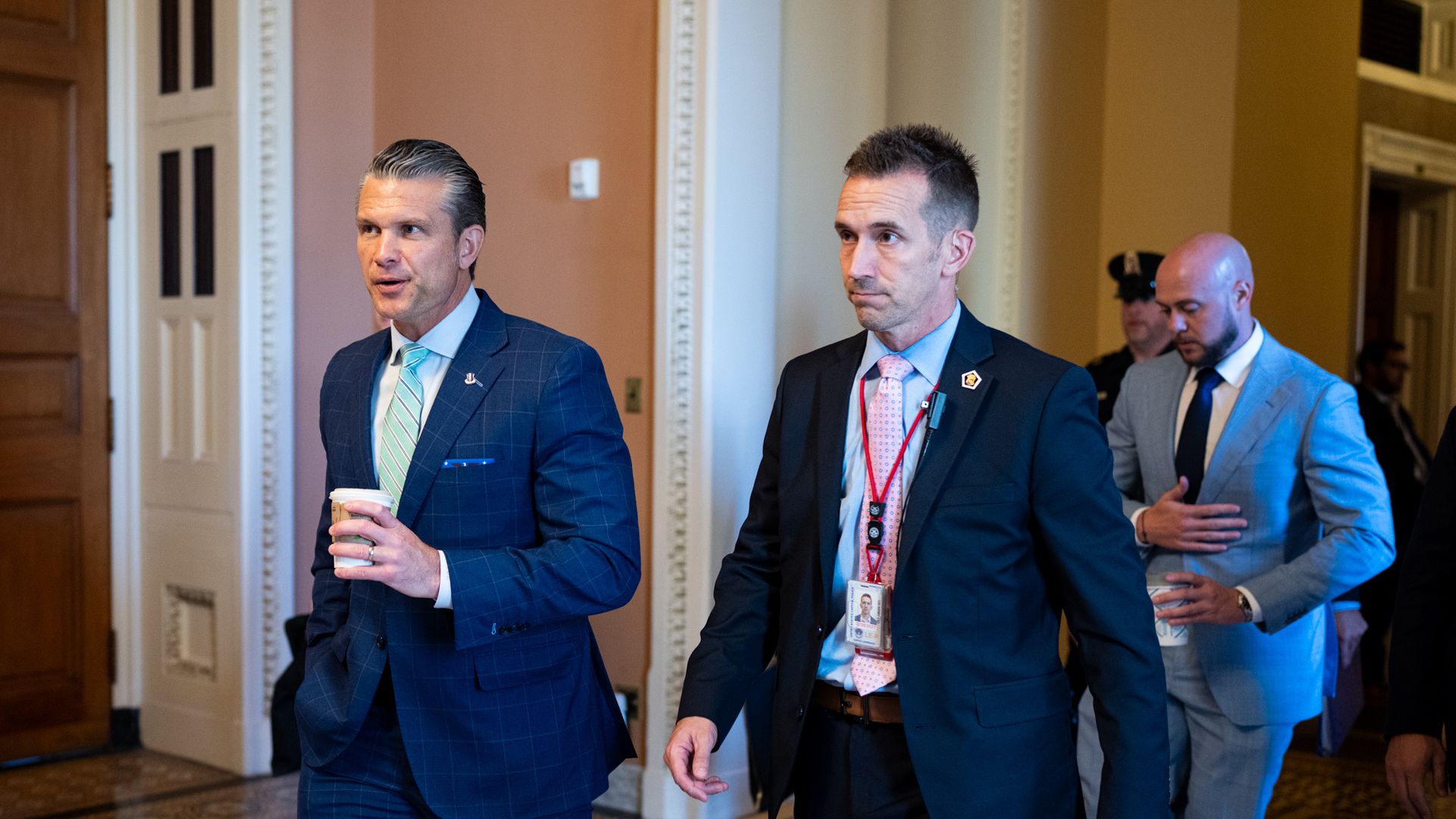
Top Pentagon officials are already pitching reconciliation 4.0 to Senate Republicans behind closed doors, underscoring the need for a massive boost in military funds, Axios has learned.
Why it matters: Thune hasn't embraced reconciliation 3.0. The White House is already looking beyond it.
Polymarket is making a bigger push into live sports, partnering with the ATP Tour — the global governing body of men's professional tennis — to pair official tennis match streams with real-time prediction markets data.
Why it matters: This deal is different from Polymarket's other sports partnerships because it goes beyond branding and official data into live media rights and product integration.
SpaceX exceeded revenue expectations and reduced its losses in its initial quarter as a publicly traded company, delivering sharp increases in all three of its divisions: space, connectivity and AI.
The company's stock was down more than 8% in after-hours trading. During the trading day, the shares ended up 9.4%, at $125.33, as investors anticipated the earnings report.
Why it matters: SpaceX has been under the microscope — with shares falling below their IPO price of $135 — as investors look for Elon Musk to deliver AI advancements.
The U.S. labor market remained on a solid trajectory in June, as employers cut back on the number of job postings but increased their rate of hiring.
Driving the news: That's the upshot of the Job Openings and Labor Turnover Survey issued Tuesday morning, which affirms a basic resilience in the job market also evident across a range of indicators.
Key sectors of the economy that spent years squeezed by high interest rates are gaining momentum.
Why it matters: For years, manufacturing and construction were among the clearest signs that the Federal Reserve's tightening campaign — reversed only somewhat at the end of last year — was weighing on the economy.
Now, manufacturing and construction are early sources of job growth, helped by an AI investment boom that has so far been unconstrained by still-high borrowing costs.
Bending Spoons on Tuesday said it has agreed to acquire Airtable, a San Francisco-based relational database company, for $1.29 billion in cash.
The implied equity value is $2.25 billion, including Airtable's cash and cash equivalents.
Why it matters: This is one of the first major SaaSpocalypse sales, and an absolute crater for many of Airtable's venture capital investors, despite the unicorn-level sale price.
Less information from the Federal Reserve would likely make the markets more volatile and market pricing more "error-prone," Goldman Sachs chief economist Jan Hatzius wrote in a note Monday.
Why it matters: Markets won't stop trying to predict the Fed's actions in the face of less information — investors will likely make the same guesses, only with less evidence and a greater chance of getting it wrong, he argued, echoing the concerns of several other analysts and economists.
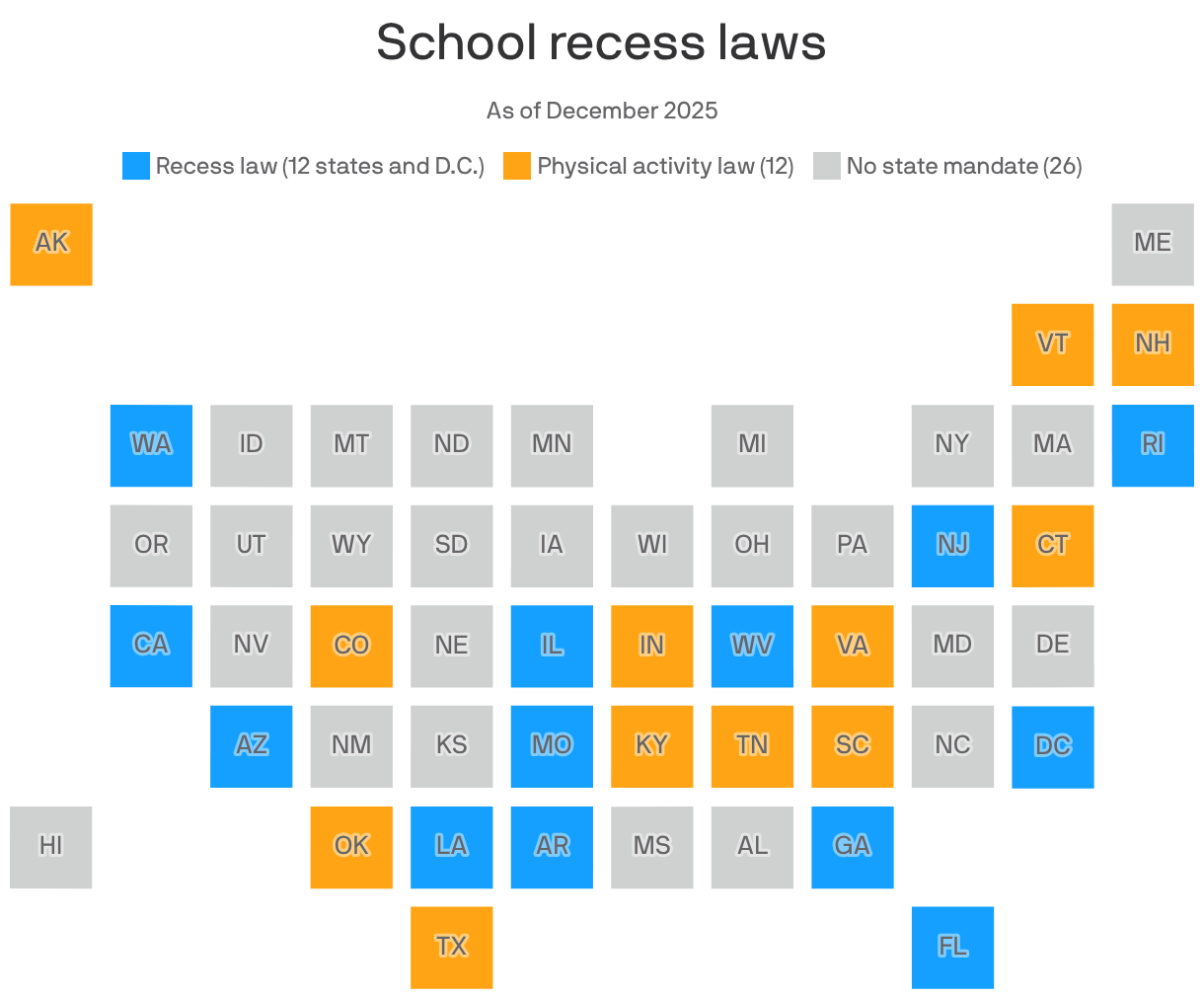
Data: Johns Hopkins Bloomberg School of Public Health research via Bloomberg American Health Initiative; Map: Sami Sparber/Axios
After decades of diminishing recess time, half of U.S. states now require it or other physical activity by law.
Why it matters: Yes, recess is literally child's play. But researchers, pediatricians and parents say it's crucial for young students' physical and mental health.
By many measures, the labor market is showing signs of improvement. But American workers are less confident than ever in the companies that employ them.
Why it matters: The disconnect underscores a broader feature of the U.S. economy. The economic indicators policymakers rely on suggest stability, even as AI and persistent concerns about job security reshape how workers see their future.
Beef sales are plunging, but processors continue to raise prices as a yearslong cattle shortage strains the industry.
Why it matters: Constrained cattle supplies are driving up costs for meatpackers, squeezing profits, and threatening to keep burgers and steaks expensive on menus and grocery shelves.
The U.S. and Japanese governments have acted together to try to prop up the value of the yen on global currency markets. The way they did it contains a clue about U.S. goals — and has some worrying implications for global markets.
The big picture: Headline indicators have been steady across global financial markets this summer. Yet there are some signs of strains beneath the surface, particularly in the form of rising long-term borrowing costs at a time of elevated debt worldwide.
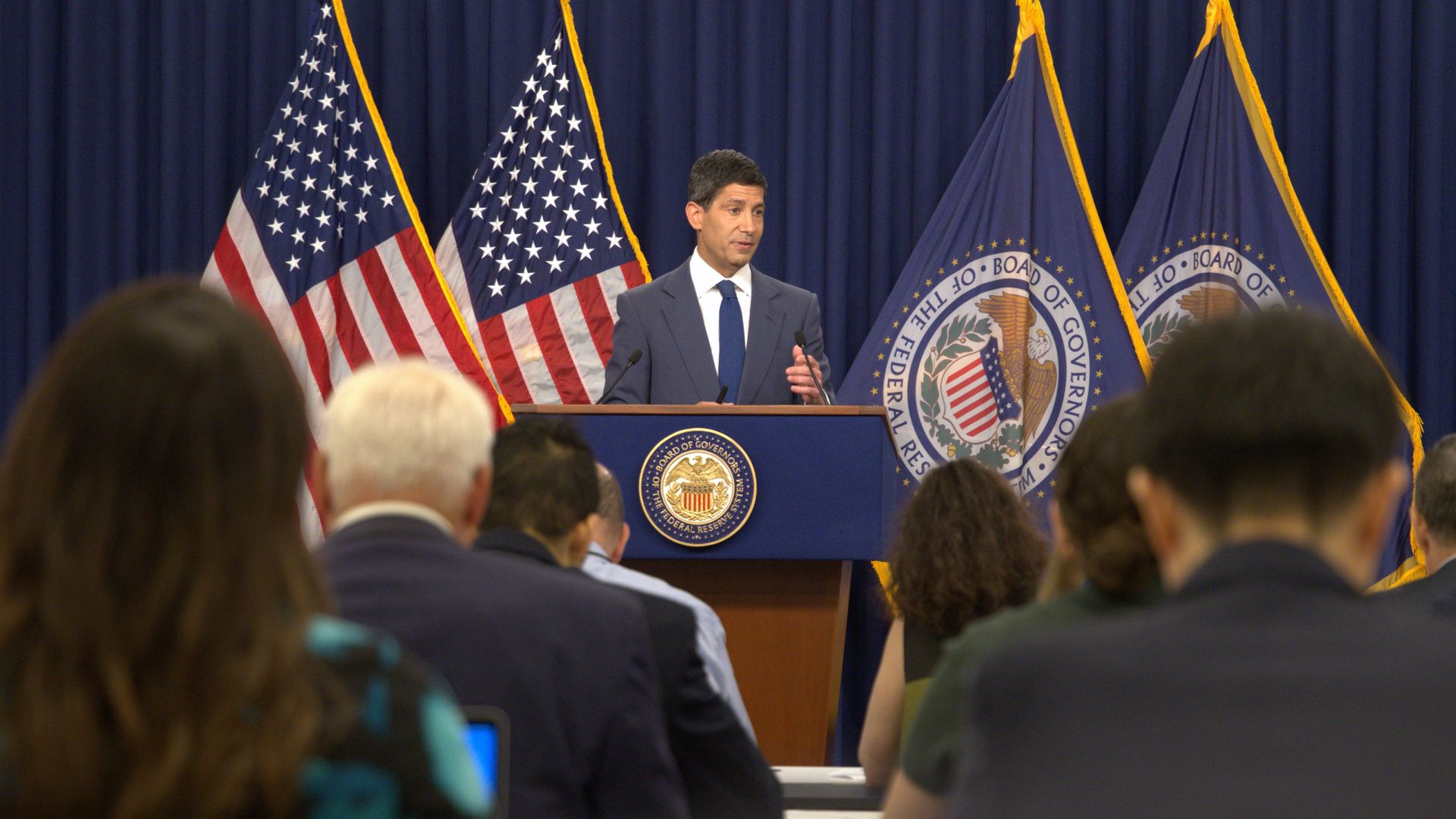
Federal Reserve chairman Kevin Warsh is reportedly weighing whether the central bank should hold fewer policy meetings each year.
Why it matters: Cutting the Fed's meeting schedule would be the biggest change to the process of monetary policymaking in decades, reducing the procedural burden on staff but giving policymakers fewer routine opportunities to adjust interest rates as the economy changes.
Private equity just met its match: International soccer.
Driving the news: FIFA has dropped plans to form a commercial subsidiary backed by up to $4.2 billion in private investment, led by Joshua Kushner's Thrive Eternal, less than a week after they became publicly known.
Far eastern Aurora's residents see rooftops rising across their landscape, but many still feel stuck in the middle of nowhere.
Zoom in: A King Soopers planned near 56th Avenue and Picadilly Road could see dirt moving later this summer, and a November vote could bring a library and rec center to the area along E-470.
Elon Musk's galactic AI rocket-social media company faces two big tests this week: reporting its first financials as a public company and potentially coping with a flood of unlocked stock.
Why it matters: Investors aren't exactly eager to scoop up shares. Judging by the SpaceX stock price, Musk's power to drive investor excitement is already fading.
America has been napping or distracted by trivialities while China is racing toward the future, in part by taking advantage of President Trump's trade, immigration and budget policies.
That's the eye-opening reality that Evan Osnos unfurls in a 12-page piece for The New Yorker, "The Future, Made in China."
Why it matters: China could beat the U.S. to the future on a host of fronts, including engineering a cure for cancer.
Climate adaptation is increasingly moving from planning to real-world action as heat waves, droughts, wildfires, floods and hurricanes test communities across the U.S.
Why it matters: Even if greenhouse gas emissions decline, many communities are already facing more frequent or intense climate extremes, prompting officials to invest in infrastructure designed to reduce future damage.
Nearly eight months after President Trump predicted U.S. companies would "rapidly rebuild Venezuela's dilapidated oil industry" to boost production, no new petroleum deals have been finalized there with American firms.
The U.S. Department of Energy is largely to blame, a dozen oil industry professionals, senior U.S. officials and Venezuela insiders tell Axios.
Why it matters: The price of oil is climbing as the Iran war squeezes global supplies, spotlighting the absence of finalized deals in Venezuela — a nation with the highest estimated petroleum reserves on the planet.
Generation X is not OK. The oft-forgotten cohort once identified with slacking has the lowest consumer confidence of any generation, per The Conference Board's latest numbers.
Why it matters: Xers might say nothing matters, but many in this generation are near or at their peak earning years, and if they're growing more morose it could drag down spending and the economy, to boot.