Beef prices continue to soar, undermining Tyson Foods

Add Axios as your preferred source to
see more of our stories on Google.
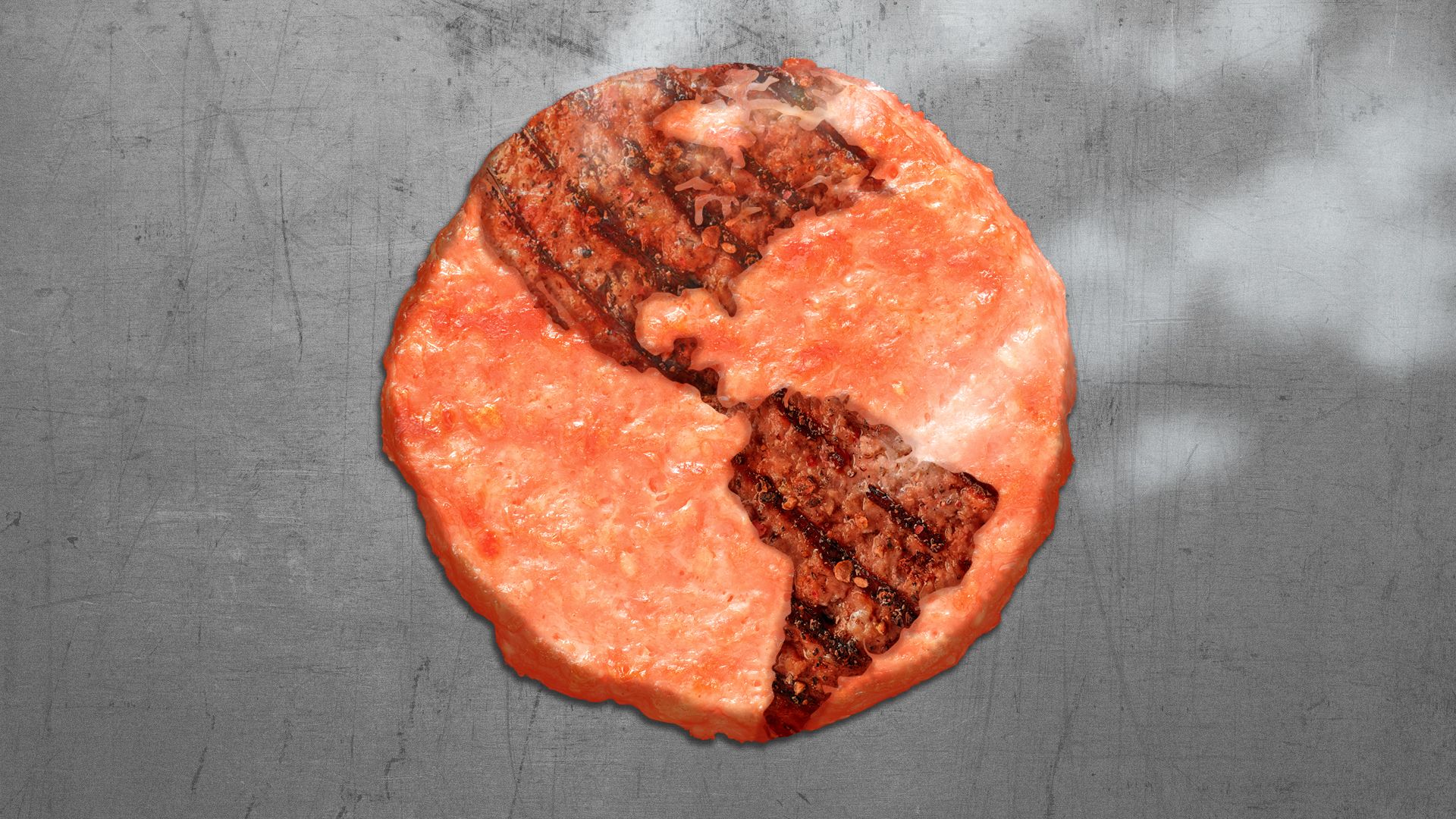
Illustration: Sarah Grillo/Axios
Beef sales are plunging, but processors continue to raise prices as a yearslong cattle shortage strains the industry.
Why it matters: Constrained cattle supplies are driving up costs for meatpackers, squeezing profits, and threatening to keep burgers and steaks expensive on menus and grocery shelves.
Driving the news: Tyson Foods on Monday cut its profit outlook, having posted an operating loss of $707 million in its beef division over the trailing nine months.
- In its most recent quarter, ended June 27, beef volumes declined by 15.9% from a year ago, while prices Tyson charged grocery stores, restaurants and other customers rose 12.1%.
- Tyson's efforts to streamline its beef-processing network helped, but soaring cattle costs — fueled by drought, higher feed costs and rising fertilizer and energy prices hitting farmers — more than erased those savings.
What they're saying: "Beef hasn't performed the way we expected, and we're not pretending otherwise," Donnie King, the company's outgoing CEO, said on an earnings call.
Zoom in: The U.S. cattle herd is starting to edge upward after years of decline, but it's still hovering near an all-time low, according to the Farm Bureau.
- Total cattle and calf inventory was 94.2 million as of July 1, up less than 1% from a year earlier, marking the month's first increase since 2018.
What's next: The U.S. Department of Agriculture is expected to lift its temporary pause on Mexican cattle imports after a period of concern over the screwworm, which could put downward pressure on prices.
- King said that move "does provide the potential for some level of improvement in 2027 and beyond."
- But "to be clear, the reopening of the Mexican border will not solve the entire gap of beef losses we are currently seeing," he said.
What we're watching: Whether beef prices continue to rise at restaurants.
- Beef and chicken make up about 25% to 35% of input costs for most restaurants, according to Bank of America analyst Sara Senatore.
