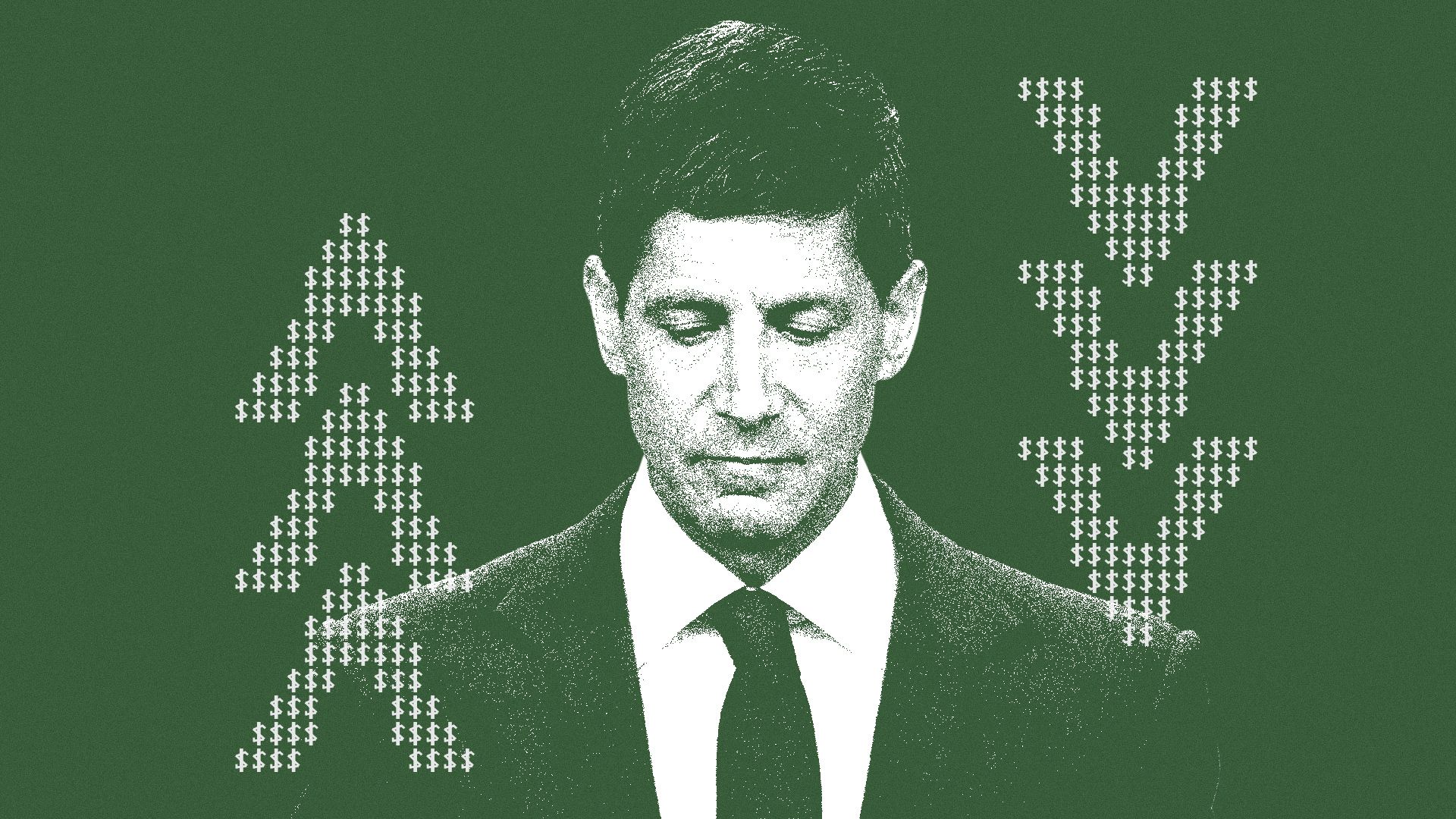
Inflation has been too high for too long, and the Federal Reserve should not count on it fading without further action.
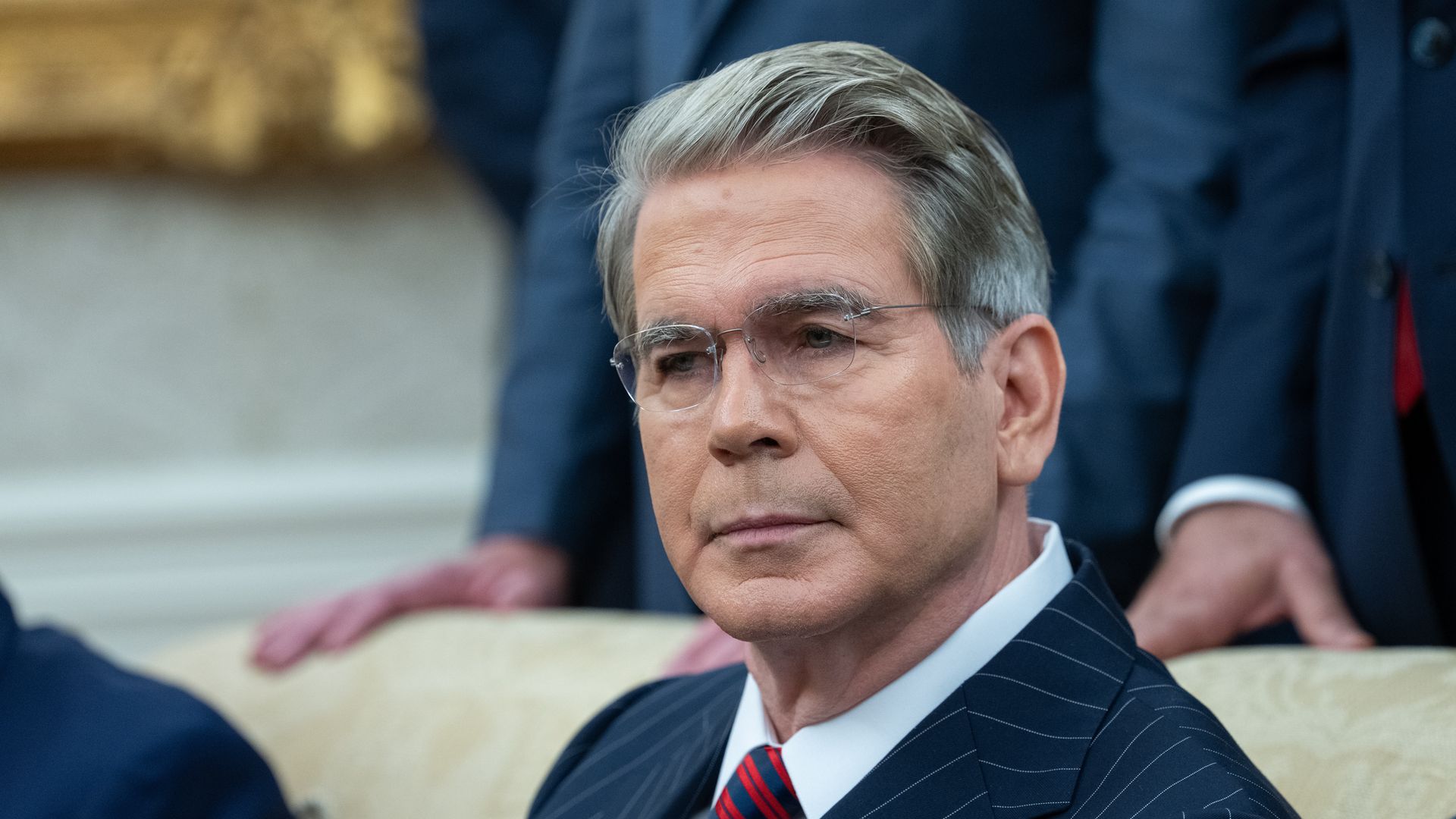
That is the argument from the three Fed officials who dissented from the decision led by chairman Kevin Warsh to leave interest rates unchanged this week, preferring instead to raise them.
Why it matters: Together, the dissents lay out a blueprint for the Fed's hawkish wing, arguing that repeated supply shocks paired with resilient demand have made inflation too persistent to fade on its own without tighter monetary policy.
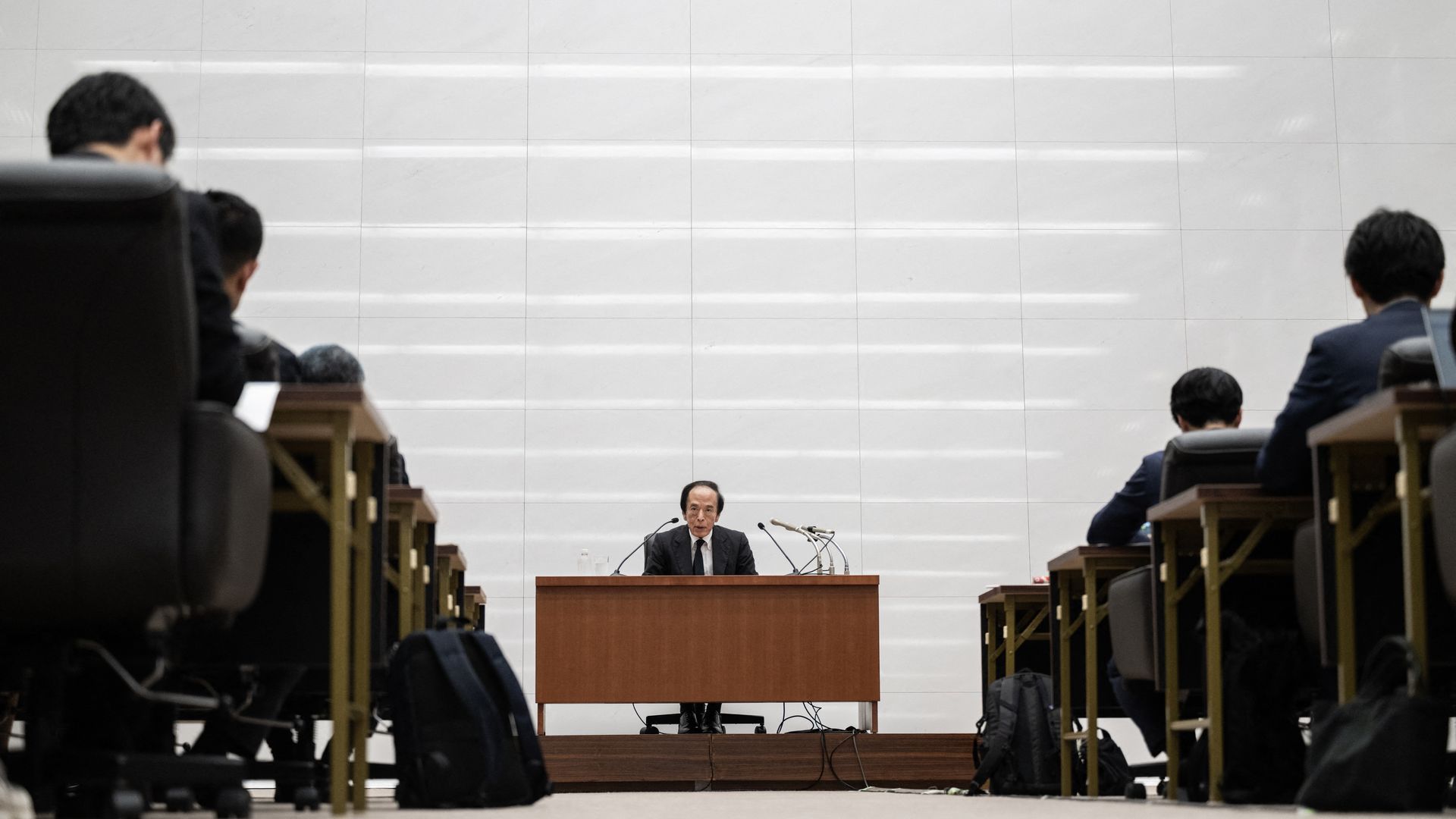
Concluding a busy week in central bank land, the Bank of Japan elected to leave interest rates unchanged overnight Thursday. But its communications were in sharp contrast to the Fed's from Wednesday.
Driving the news: The bank left its target policy rate at 1% as Bank of Japan governor Kazuo Ueda pledged that it will not fall behind the curve on its interest rate policy, one of several comments that signal more interest rate increases might be on the way.
It adds up to a sign that a rate hike in the months ahead is more likely.
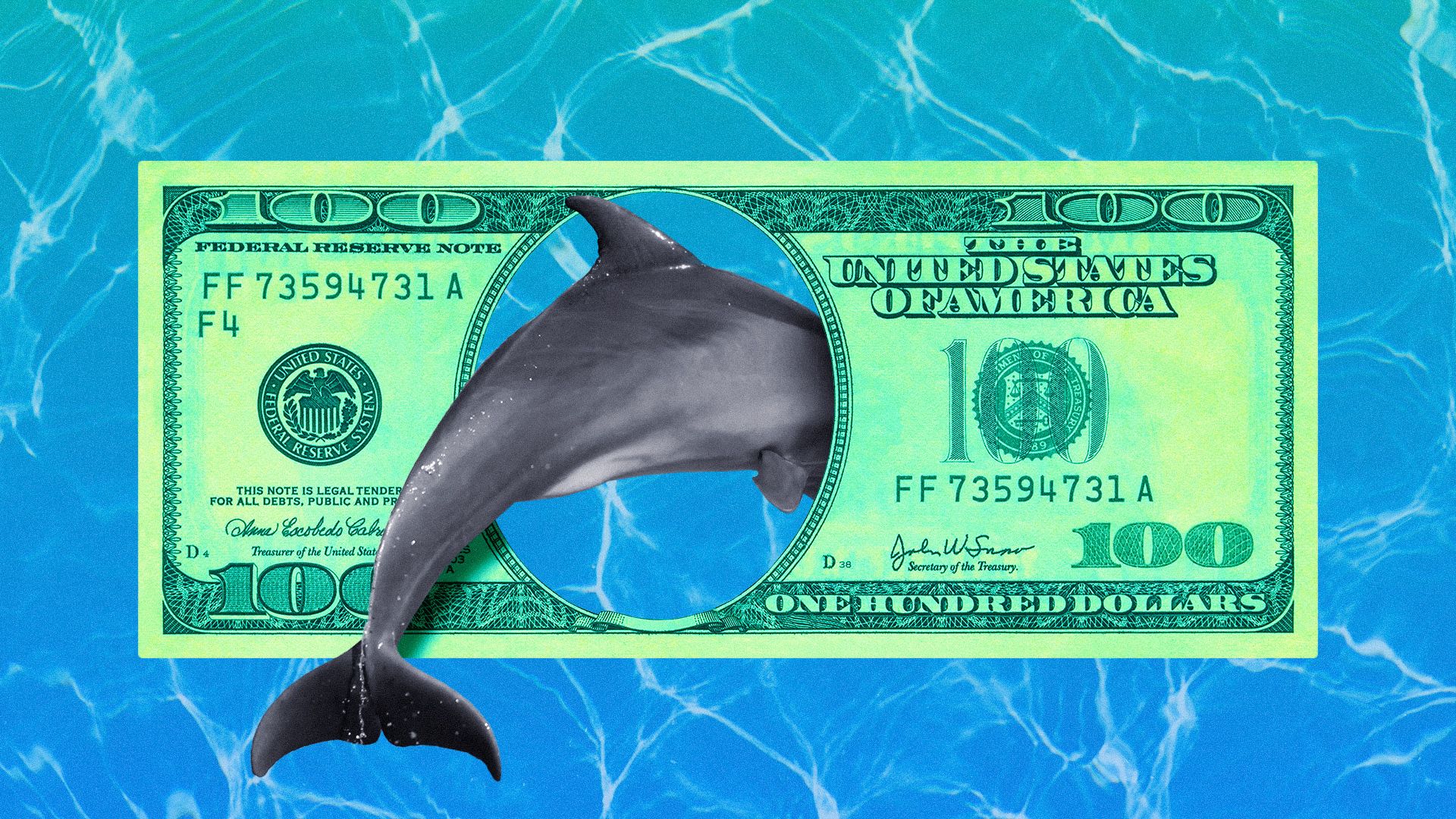
Delaware court fights over M&A are ordinary. Unless the parties are fighting over dozens of dolphins.
Driving the news: Creditors for The Dolphin Company, once one of the world's largest aquatic park operators, have asked a bankruptcy court judge for permission to sell its Mexican assets for $20 million to the company's current management.
Included would be 87 bottlenose dolphins, plus eight manatees, and six sea lions.
The data center boom is driving the earnings of staid industrial companies in addition to the makers of chips and servers.
Why it matters: The newfound importance of AI to producers of paint, asphalt and industrial cable, among others, mirrors the buildout's growing role as a driver of the "real economy."
The AI job apocalypse may need a rebrand — a new white paper finds that rather than triggering full-scale job losses, the new technology is slowing wage growth, especially among lower-paying occupations.
Why it matters: In other words, you get to keep your job, but you'll make less money doing it.
Microsoft had a great Thursday — its stock rose 16%, the biggest jump for the tech giant in nearly two decades.
The resulting surge in market cap — $450 billion — was apparently the biggest one-day gain in stock market history, per Bloomberg's analysis.
Between the lines: Investors were grooving on the company's latest earnings report and the powerful growth of the Azure cloud computing business — a sign that its AI investments are paying off.
The bottom line: The cloud business is making it rain over in Redmond, Washington.
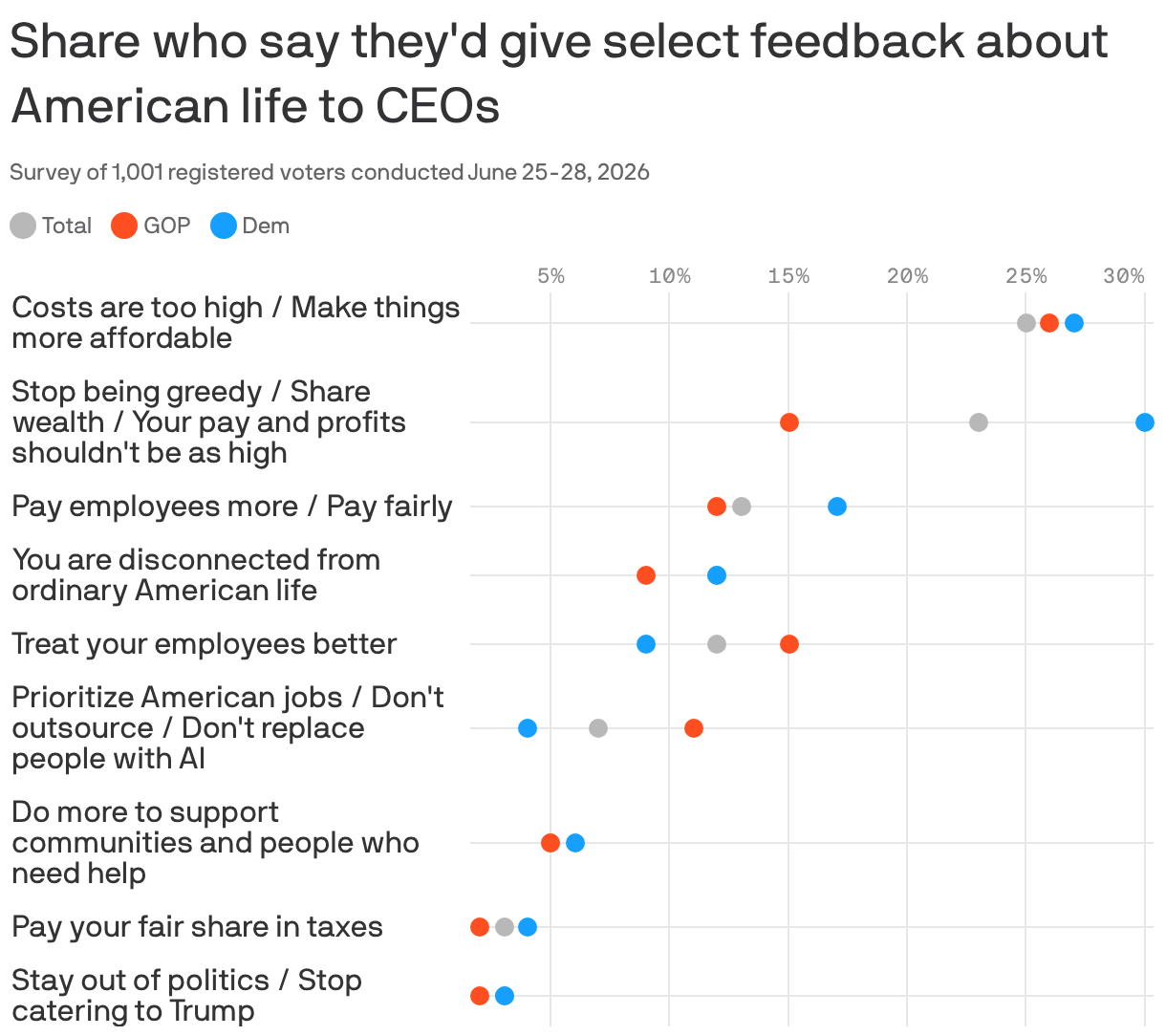
Data: Brunswick Group and Echelon Insights; Chart: Sara Wise/Axios
CEOs face an increasingly skeptical American public that's laser-focused on affordability and fairness, according to polling from the Brunswick Group and Echelon Insights provided first to Axios.
Why it matters: With the midterms less than 100 days away, the results show corporate leaders need to build trust through consistency and neutrality — rather than trying to chase political headwinds.
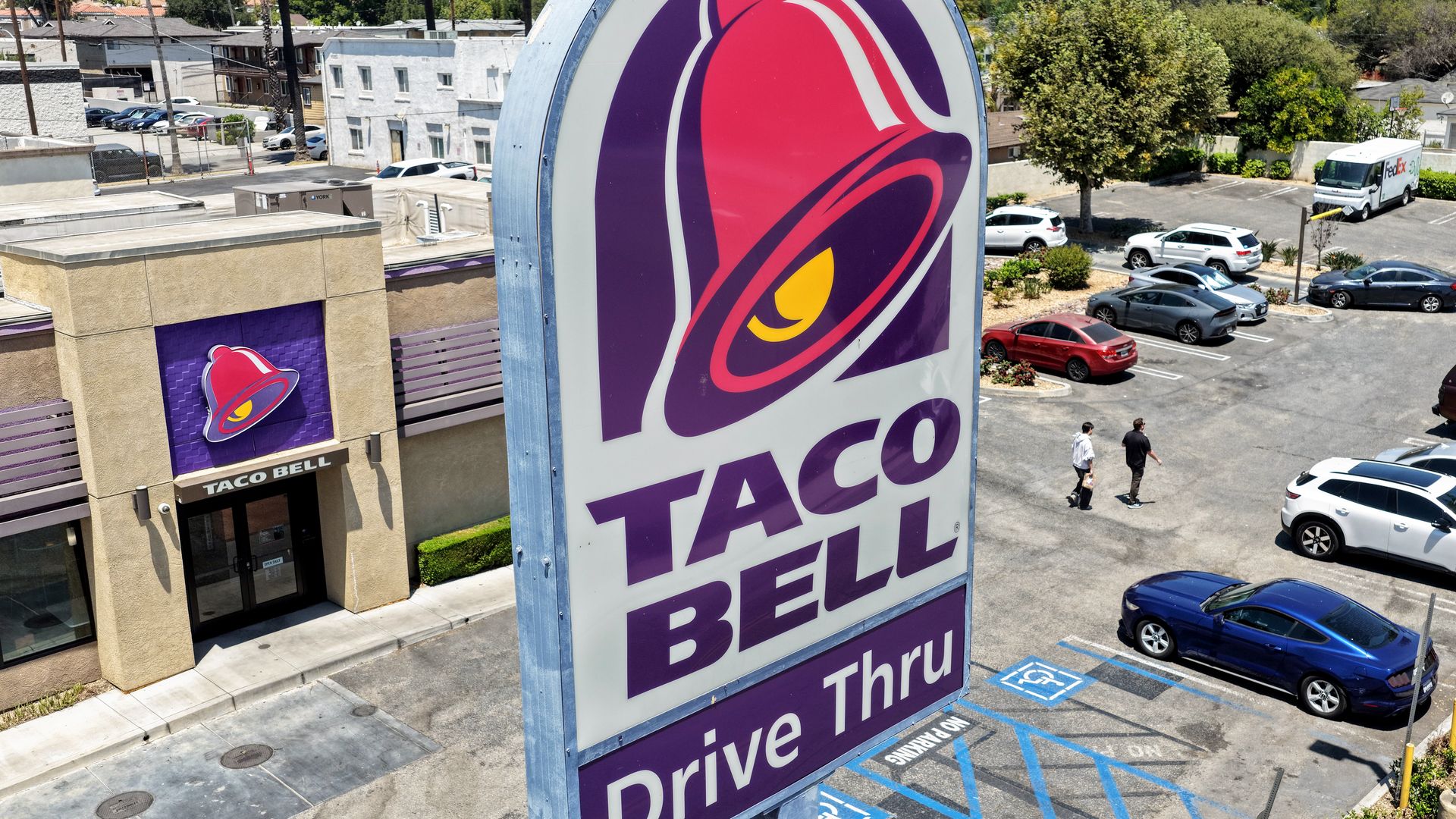
Taco Bell sales have fallen sharply since the national cyclospora outbreak, but the company's executives said they're already noticing signs of a rebound.
Why it matters: Health officials have identified more than 11,000 confirmed or suspected cases of the parasite, which can cause "explosive" diarrhea.
Amazon's AI cloud business soared in the second quarter, driving far higher revenue than expected, though the company's free cash flow also turned negative as it invests heavily in the business.
Amazon shares surged 9.4% in after-hours trading.
Why it matters: The surging AI economy — centered around cloud companies like Amazon, hyperscalers and data center investments — is booming, even as questions are mounting about whether it's sustainable.
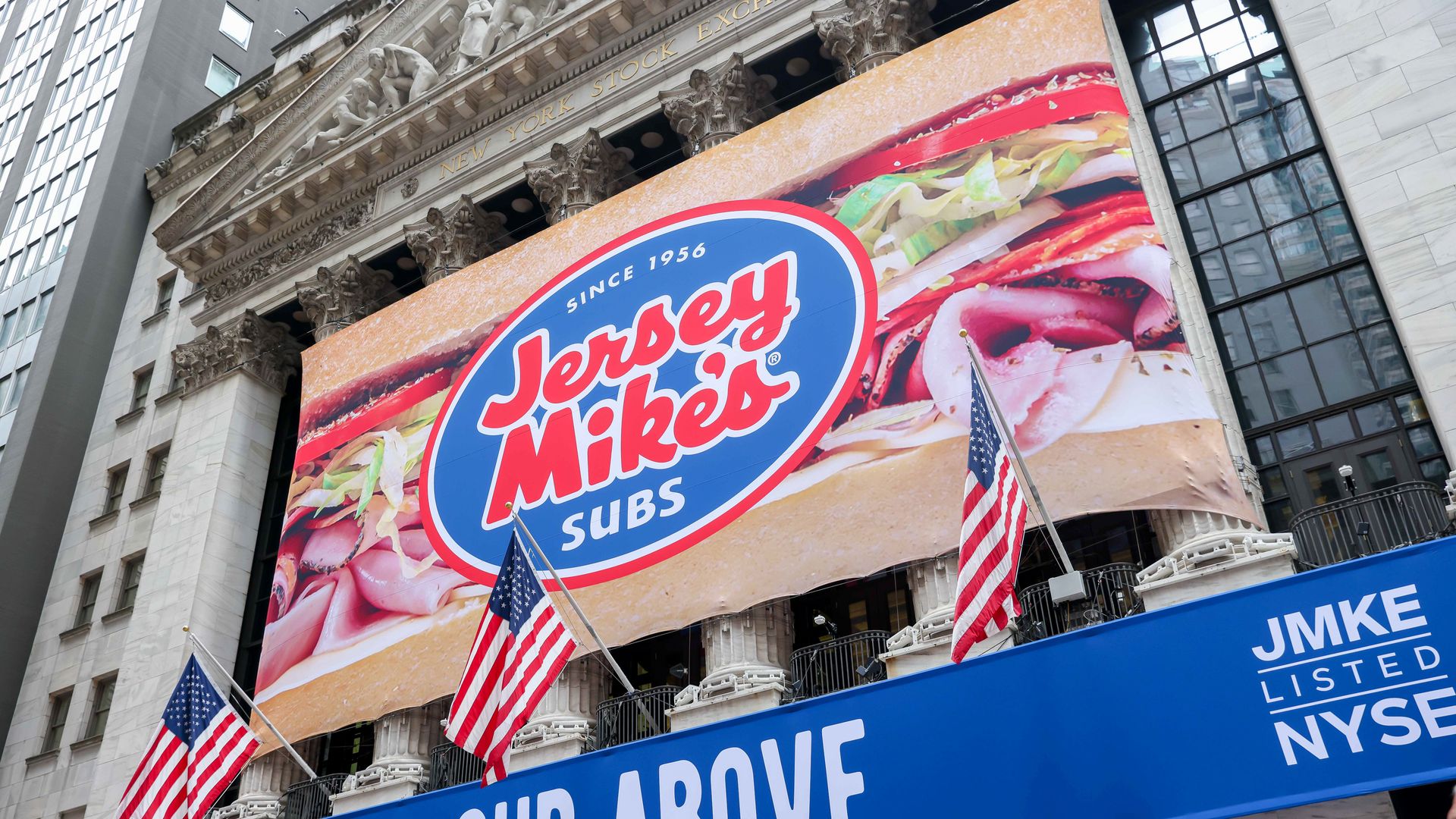
Jersey Mike's, the sub chain bought just last year by Blackstone, raised $1 billion in its IPO and today began trading on the New York Stock Exchange.
Why it matters: It's a rare 2026 bright spot for a restaurant industry that's been beset by high food costs and a recent parasite outbreak, even though its opening trades were below the IPO price.
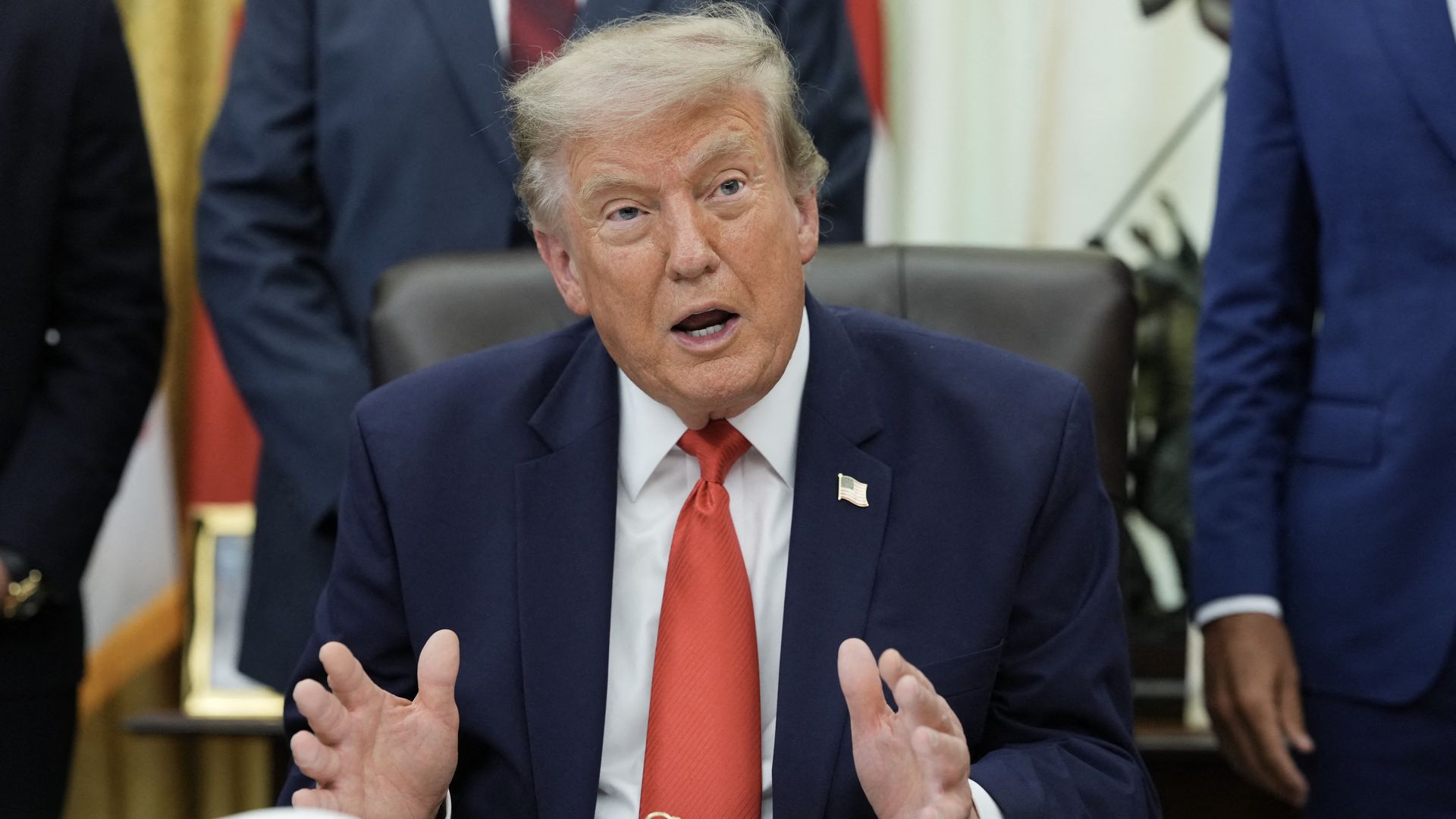
Treasury Secretary Scott Bessent and U.S. Trade Representative Jamieson Greer held a high-level video call with China's vice premier to prepare for the September visit of its president, Xi Jinping, Axios has learned.
Why it matters: The call sets the stage for President Trump and Xi to sign future trade deals between the U.S. and China. But there are tensions.
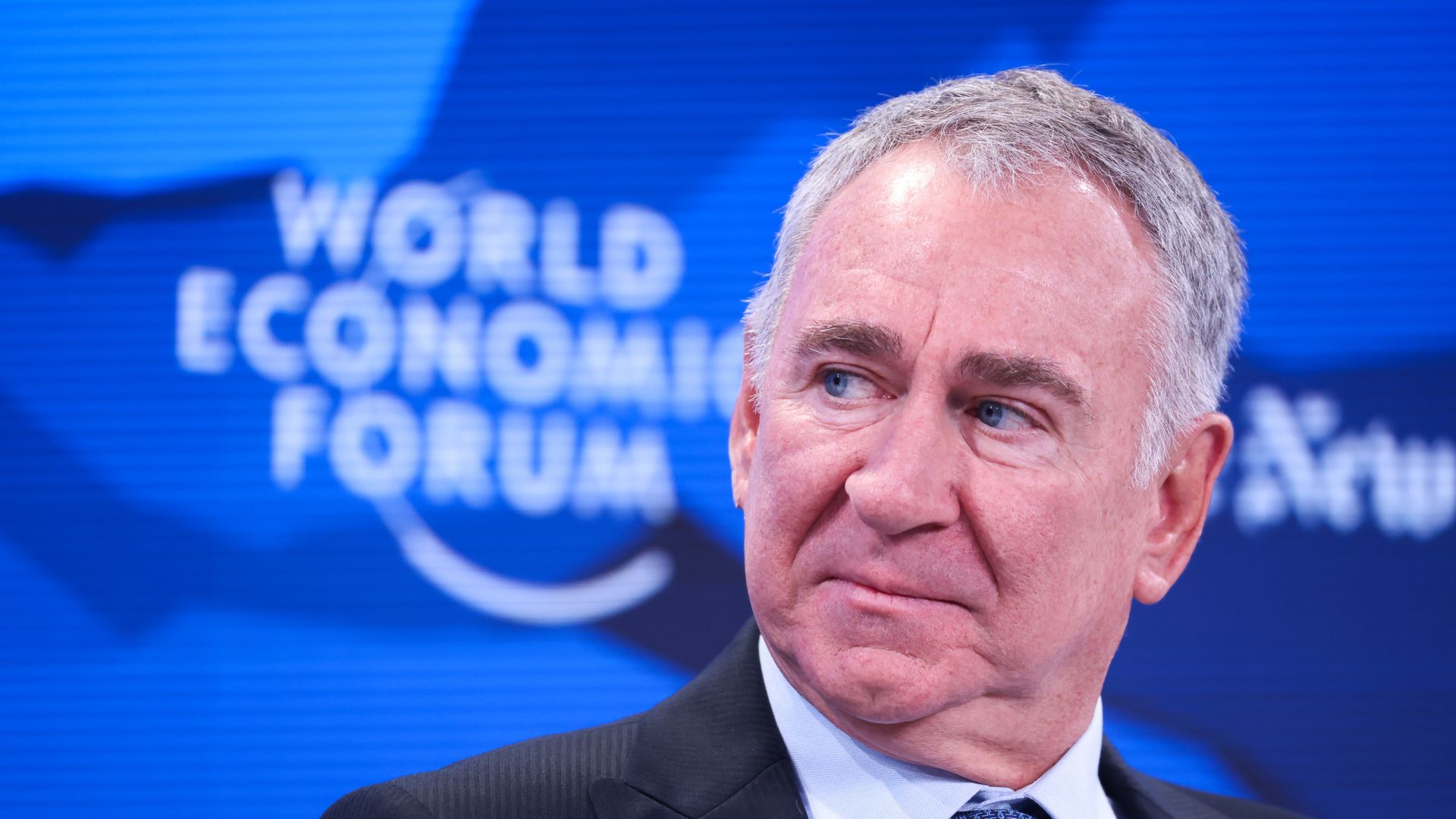
Situational Awareness, an AI-focused hedge fund founded by a former OpenAI researcher, has sold all of its public equities portfolio to Ken Griffin's Citadel, a source tells Axios.
Why it matters: This comes amidst a recent sell-off in AI stocks, particularly chipmakers.
In his press conferenceWednesday, Federal Reserve chairman Kevin Warsh started by asserting that the central bank will not waver in its pursuit of 2% inflation. Then, he repeatedly declined opportunities to connect that commitment to any concrete action.
The result was a steep bond market sell-off, driving longer-term interest rates higher as global investors questioned the Warsh Fed's willingness to raise the short-term interest rates it controls.
The big picture: Warsh has long offered gauzy, high-level critiques of how the modern Fed operates. On Wednesday, he described candid discussions of the biggest conceptual issues for monetary policy. But he was elusive and vague on central banking basics.
The U.S. economy grew at a 1.5% annualized rate in the second quarter, the government said on Thursday, capturing a three-month stretch shaped by the Middle East conflict and a surge in energy prices.
Why it matters: Consumer spending and business investment fueled by AI spending remained the economy's standout growth engines in the spring.
As AI expenses bite, Meta's second-quarter free cash flow fell to its lowest since just before the social media giant launched its layoff-laden "year of efficiency," the company reported Wednesday.
The big picture: The AI boom is transforming major tech giants from asset-light, cash-spewing behemoths into indebted owners of a sprawling fleet of super-expensive data centers. And nobody knows whether those data centers will eventually turn out to be profitable investments.