Fed leaves rates steady, with internal dissent

Add Axios as your preferred source to
see more of our stories on Google.
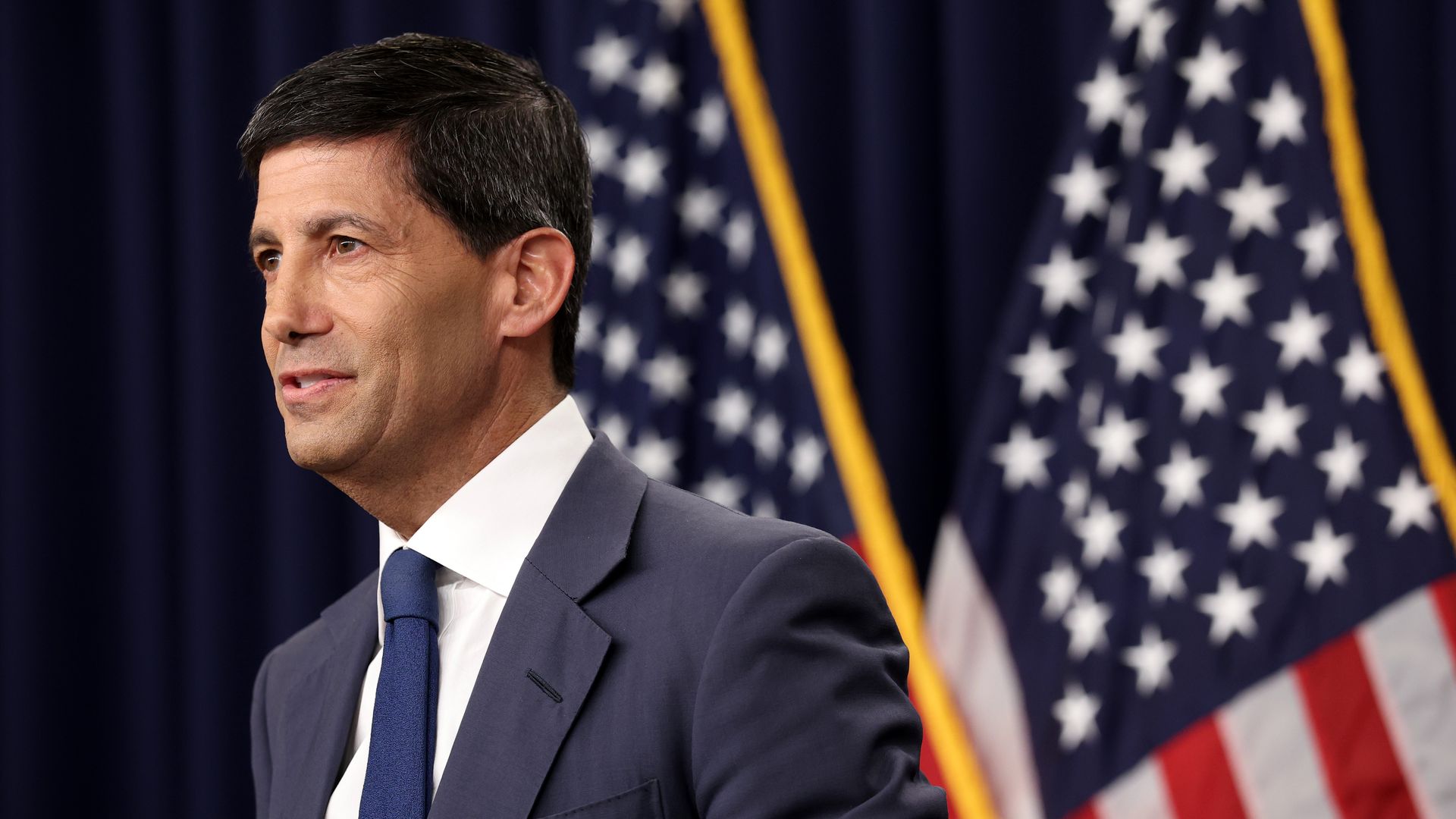
Federal Reserve chairman Kevin Warsh at a news conference in Washington, D.C. on Wednesday. Photo: Win McNamee/Getty Images
The Federal Reserve left its interest rate target unchanged Wednesday amid significant internal dissent from officials who preferred to raise rates.
The big picture: The central bank elected not to surprise markets with an interest rate hike, contrary to rampant speculation on Wall Street in recent days. But three members of the policy-setting Federal Open Market Committee did favor raising the cost of borrowing.
- Cleveland Fed president Beth Hammack, Minneapolis Fed president Neel Kashkari, and Dallas Fed president Lorie Logan preferred a quarter-point rate hike, with the other nine officials, including chairman Kevin Warsh, voting to stand pat.
Driving the news: The committee left its target range for the federal funds rate between 3.5% and 3.75%, where it has stood since December.
- "Economic activity is expanding at a solid pace despite elevated uncertainty that owes, in part, to the conflict in the Middle East," said the post-meeting policy statement, repeating language from the June meeting.
- The statement was virtually unchanged from the last meeting, offering no clues as to whether or in what circumstances the committee might raise rates later this year.
Between the lines: Speaking to reporters for the second time since becoming Fed chairman, Warsh affirmed the Fed's commitment to its 2% inflation target — despite several years of inflation being well above that.
- "There is no soft implicit target, not on this committee's watch," Warsh said at a news conference.
- "We understand that the five-plus years of inflation above target cannot be cured in nine weeks — or by a single month of modest price decreases," he added.
State of play: While most Fed watchers anticipated the holding action and financial markets priced it in as the most likely result of the meeting, there were rumblings in the last 10 days that persistently high inflation combined with a resurgence in energy prices might prompt a rate hike.
- Before the meeting, markets put the odds on that outcome at roughly 1 in 3, the most uncertainty around a Fed rate decision in years.
- Warsh has eschewed the kind of clear guidance about future rate moves that his predecessors tended to use — instead favoring that policy meetings feature a "good family fight," where the outcome isn't pre-ordained.
The intrigue: Warsh said that pullback in so-called forward guidance might help explain the sharp rise in borrowing costs in the bond market in recent weeks.
- "Prices reacted in real time to incoming information and the reduction in forward guidance may have been a factor," Warsh said.
- "Markets have made decisions because we stepped back, in part, from trying to influence those markets," Warsh later said. "That doesn't mean we take them as by dictation, but we're observing them."
Zoom out: Fed officials have chalked up a recent resurgence to one-off events like new tariffs and the Iran war, but several are losing patience and worry that the central bank's credibility as an inflation fighter is undermined by the sustained high inflation.
- "Did the Fed take an explicit change in its policy rate today? No, but I think that's the beginning of the story, not the end of the story," Warsh said.
Of note: Warsh — who spoke to reporters for about 45 minutes on Wednesday — committed to continue press conferences at least through the end of the year.
- That's a notable shift from the uncertainty surrounding his arrival as chairman. During his confirmation hearing, Warsh stopped short of committing to a press conference after every Fed meeting, questioning whether one was necessary after every policy decision.
Editor's note: This story has been updated with comments from Fed chairman Kevin Warsh's press conference.
