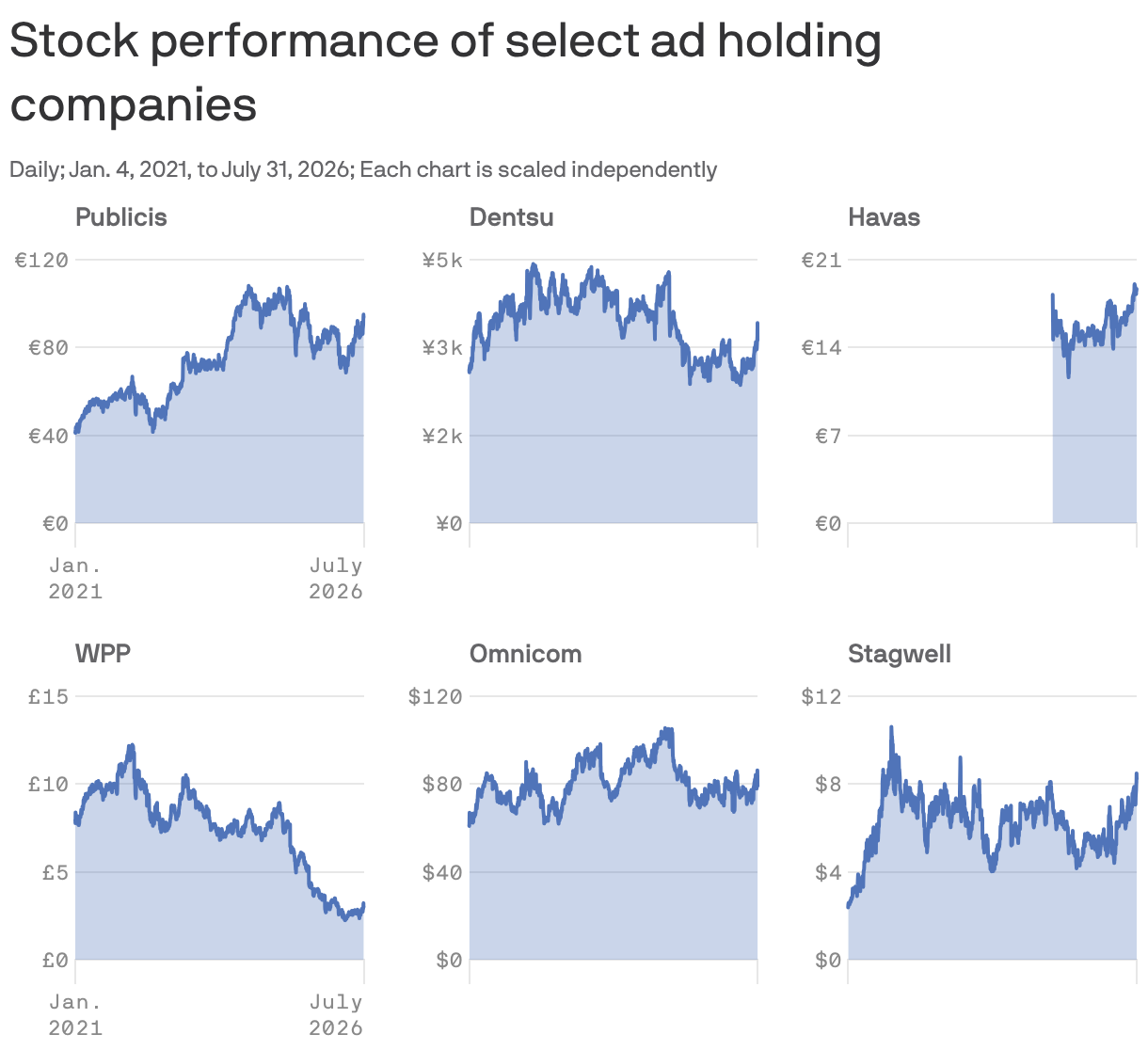
Holding companies are remaking themselves in the AI era, with Omnicom and WPP consolidating their structures, Publicis making big strategic bets and Havas pursuing a steady stream of bolt-ons.
Why it matters: Clients are demanding more specialized work without the high costs and complexities that have traditionally come with it.
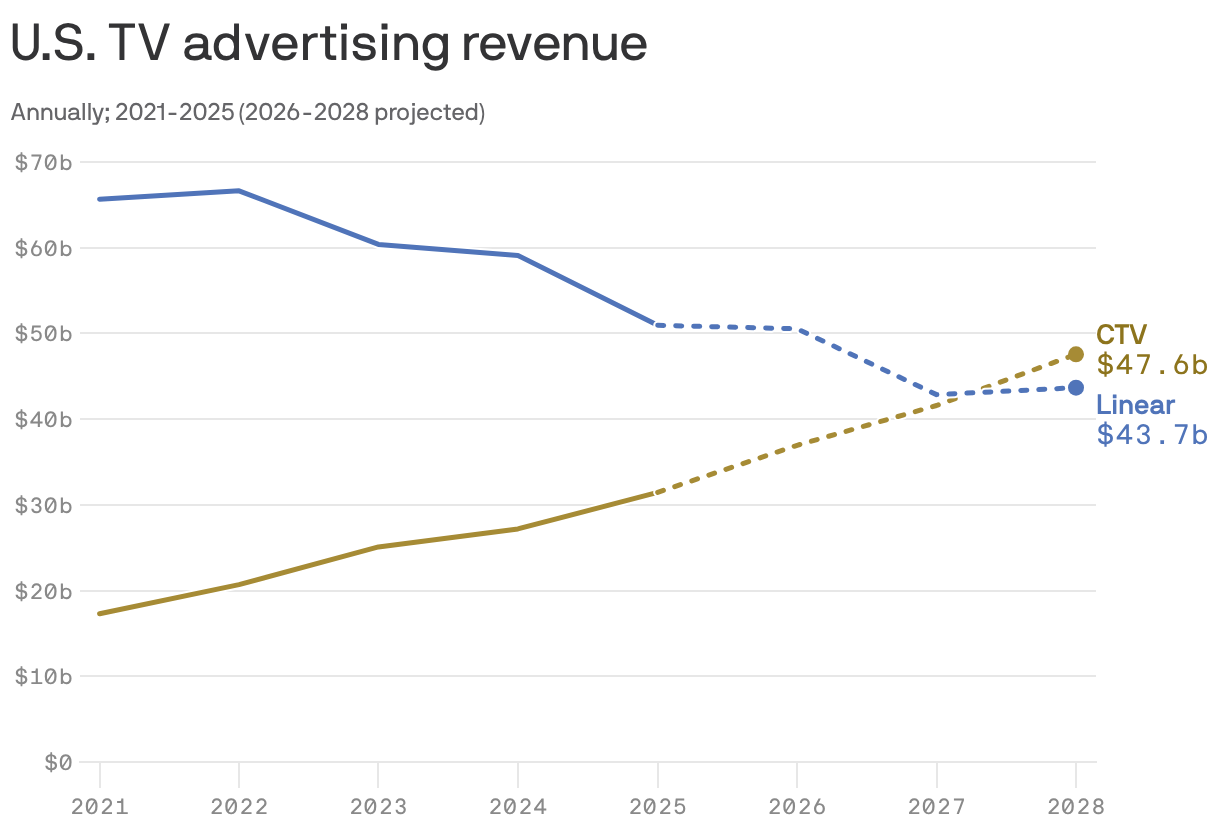
Connected TV is becoming a stronger performance advertising channel as streamers, smart TV makers and retailers make improvements to creative, targeting and measurement.
Why it matters: CTV ad spend is expected to surpass linear in 2028, per eMarketer, providing more incentive to prove those ads can drive sales.
U.S. families expect to spend nearly $1,000 on average on back-to-school shopping this year, according to a PwC survey.
Nearly half expect to spend more than they did last year.
State of play: Families in the Northeast, West and Midwest plan to outspend the national average of $922 — which includes clothes, tech, equipment for after-school activities, books, school supplies and other one-time purchases.
Inflation has been too high for too long, and the Federal Reserve should not count on it fading without further action.
That is the argument from the three Fed officials who dissented from the decision led by chairman Kevin Warsh to leave interest rates unchanged this week, preferring instead to raise them.
Why it matters: Together, the dissents lay out a blueprint for the Fed's hawkish wing, arguing that repeated supply shocks paired with resilient demand have made inflation too persistent to fade on its own without tighter monetary policy.
Concluding a busy week in central bank land, the Bank of Japan elected to leave interest rates unchanged overnight Thursday. But its communications were in sharp contrast to the Fed's from Wednesday.
Driving the news: The bank left its target policy rate at 1% as Bank of Japan governor Kazuo Ueda pledged that it will not fall behind the curve on its interest rate policy, one of several comments that signal more interest rate increases might be on the way.
It adds up to a sign that a rate hike in the months ahead is more likely.
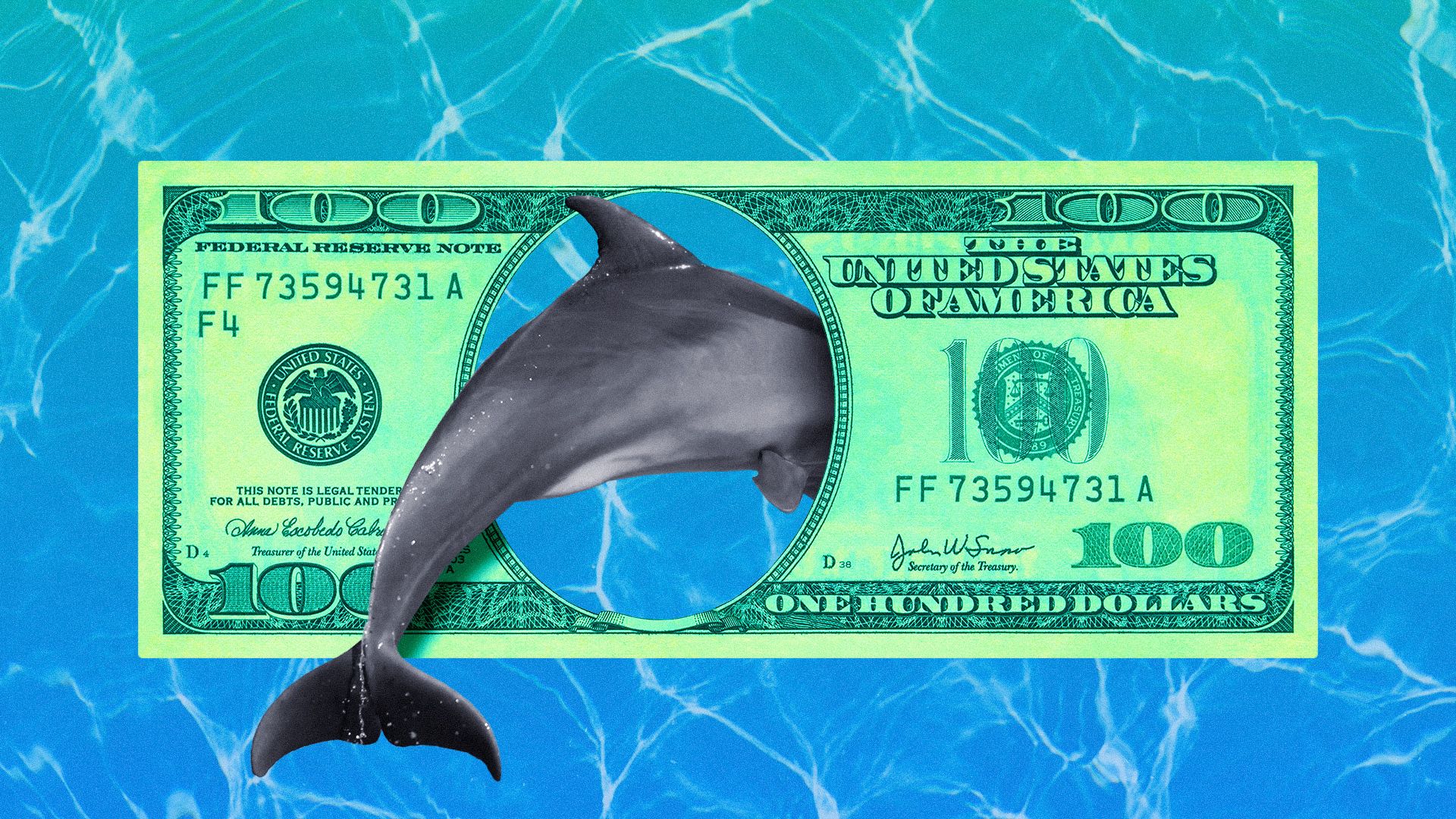
Delaware court fights over M&A are ordinary. Unless the parties are fighting over dozens of dolphins.
Driving the news: Creditors for The Dolphin Company, once one of the world's largest aquatic park operators, have asked a bankruptcy court judge for permission to sell its Mexican assets for $20 million to the company's current management.
Included would be 87 bottlenose dolphins, plus eight manatees, and six sea lions.
The data center boom is driving the earnings of staid industrial companies in addition to the makers of chips and servers.
Why it matters: The newfound importance of AI to producers of paint, asphalt and industrial cable, among others, mirrors the buildout's growing role as a driver of the "real economy."
The AI job apocalypse may need a rebrand — a new white paper finds that rather than triggering full-scale job losses, the new technology is slowing wage growth, especially among lower-paying occupations.
Why it matters: In other words, you get to keep your job, but you'll make less money doing it.
Microsoft had a great Thursday — its stock rose 16%, the biggest jump for the tech giant in nearly two decades.
The resulting surge in market cap — $450 billion — was apparently the biggest one-day gain in stock market history, per Bloomberg's analysis.
Between the lines: Investors were grooving on the company's latest earnings report and the powerful growth of the Azure cloud computing business — a sign that its AI investments are paying off.
The bottom line: The cloud business is making it rain over in Redmond, Washington.
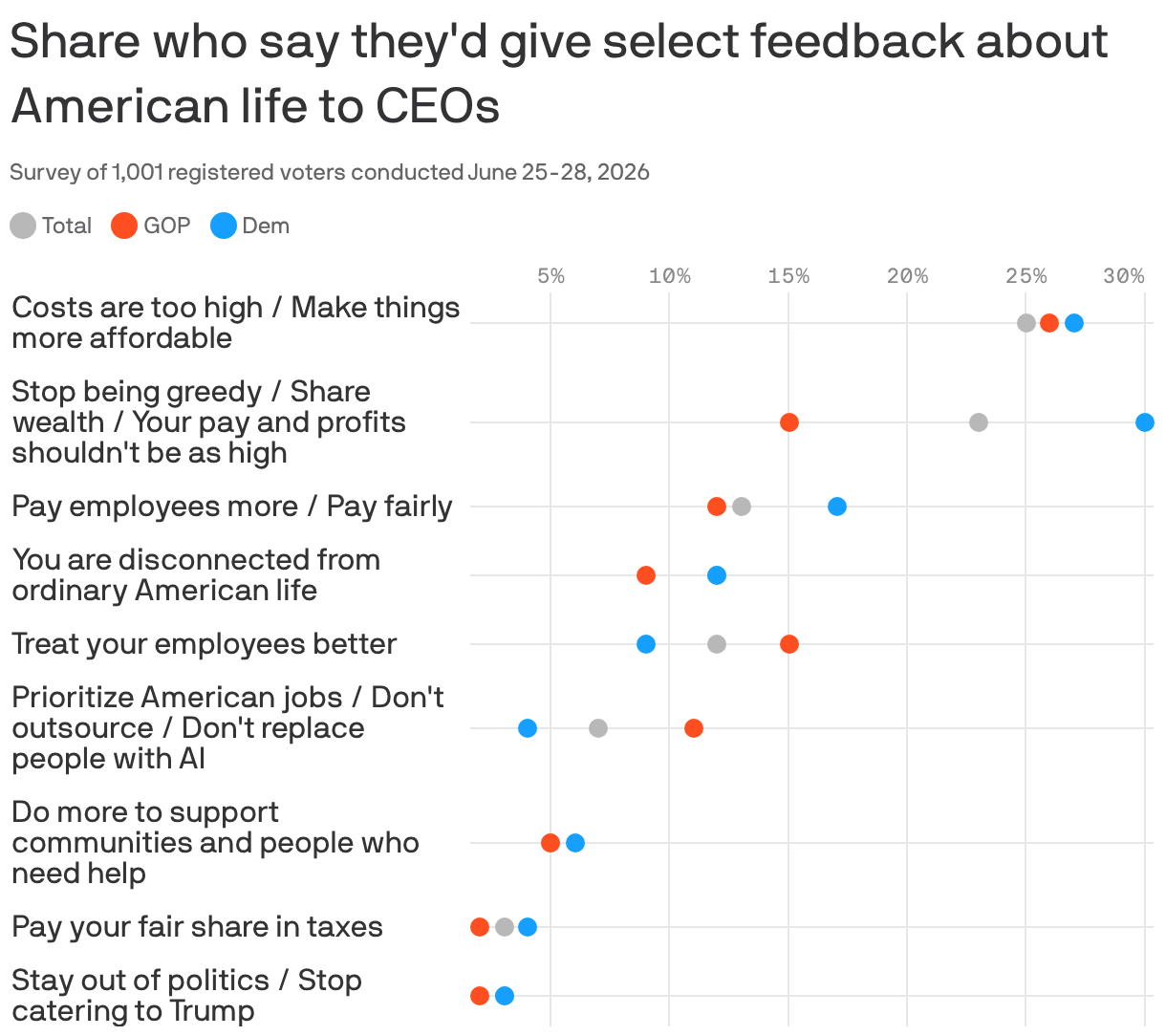
Data: Brunswick Group and Echelon Insights; Chart: Sara Wise/Axios
CEOs face an increasingly skeptical American public that's laser-focused on affordability and fairness, according to polling from the Brunswick Group and Echelon Insights provided first to Axios.
Why it matters: With the midterms less than 100 days away, the results show corporate leaders need to build trust through consistency and neutrality — rather than trying to chase political headwinds.