Why the bond market is doubting Fed chairman Warsh

Add Axios as your preferred source to
see more of our stories on Google.
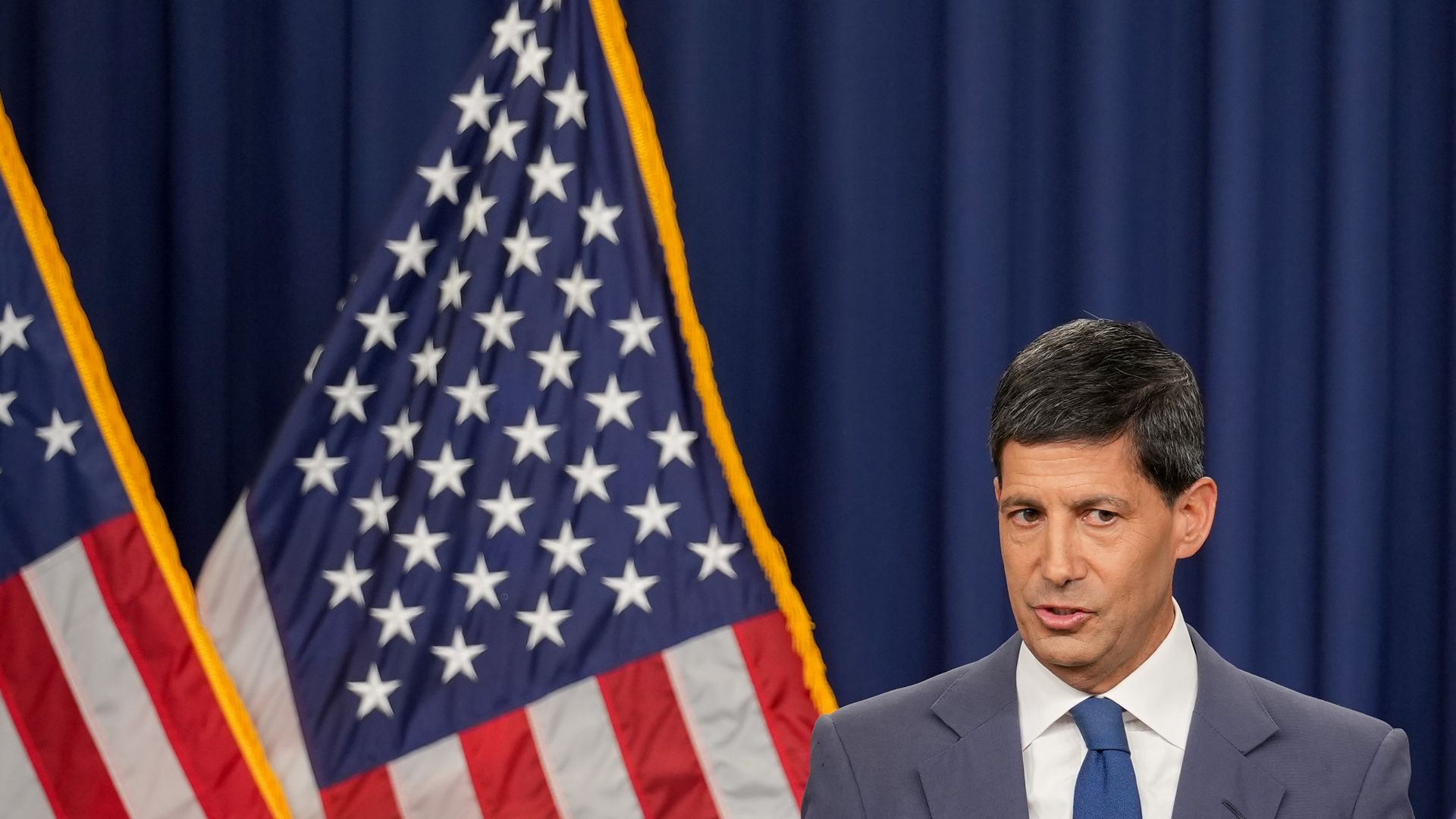
Fed chairman Kevin Warsh. Photo: Al Drago/Bloomberg via Getty Images
In his press conference Wednesday, Federal Reserve chairman Kevin Warsh started by asserting that the central bank will not waver in its pursuit of 2% inflation. Then, he repeatedly declined opportunities to connect that commitment to any concrete action.
- The result was a steep bond market sell-off, driving longer-term interest rates higher as global investors questioned the Warsh Fed's willingness to raise the short-term interest rates it controls.
The big picture: Warsh has long offered gauzy, high-level critiques of how the modern Fed operates. On Wednesday, he described candid discussions of the biggest conceptual issues for monetary policy. But he was elusive and vague on central banking basics.
- Specifically, does the Fed need to respond to inflation pressures by raising interest rates soon? Or, at a minimum, in what circumstances might it be time to tighten monetary policy?
- He has long rejected the concept of forward guidance — projecting future policy. But Wednesday, he seemed to go a step further and duck questions about the basic goals and mechanisms by which the Fed works.
Zoom in: Asked, for example, the Central Banking 101 question of whether the best remedy for stubborn inflation is rate increases, Warsh replied: "Is that the dominant remedy? If inflation continues to be elevated through the forecast period, interest rates could well be part of that solution, but I wouldn't say it's in isolation."
- When asked what inflation measure he is targeting, he began by offering the "proper, standard" answer that the goal is 2% inflation in the Personal Consumption Expenditures Price Index, before ruminating about "who knows" what may come after January.
- "I suspect the task forces might have something to add," he said, referring to the groups of experts he has commissioned to reevaluate the basics of how the Fed operates.
State of play: The market reaction was swift and clear. Traders cut back on their bets that a rate hike is on the way in September, now seeing it as a coin flip.
- Longer-term bond yields soared, with 30-year Treasuries reaching 5.21% on Thursday morning, the highest since 2007.
- Yet at shorter time horizons, where rates are determined by expected Fed policy more than long-term economic forces, yields were stable to down.
The intrigue: A paradox of central banking is that often the best way to get lower interest rates is to raise interest rates. That is, if you show willingness to take action on short-term rates to head off inflation, longer-term rates set by the market will behave themselves.
- Markets are reading the opposite signal from the Warsh Fed: seeing him as ambivalent about near-term monetary tightening, which in turn is a reason for longer-term bonds to price in more risk.
What they're saying: "In Warsh's press conference, he once again failed to specify how he intended to achieve his stridently asserted inflation resolve," Michael Feroli, chief U.S. economist at JPMorgan, wrote in a note.
- "He also cast doubt on whether PCE inflation will remain the Fed's inflation target in the medium run," Feroli added. "Both of these points raise questions about the new chair's credibility in delivering lower inflation."
Of note: Wednesday's press conference added new significance to a pithy line from Fed governor Chris Waller in the run-up to the meeting.
- "Sternly staring at inflation until it melts before our withering gaze is not an option," Waller said.
The bottom line: The bond market blowup that took hold at 2:30pm ET Wednesday is, in effect, saying the same thing.
