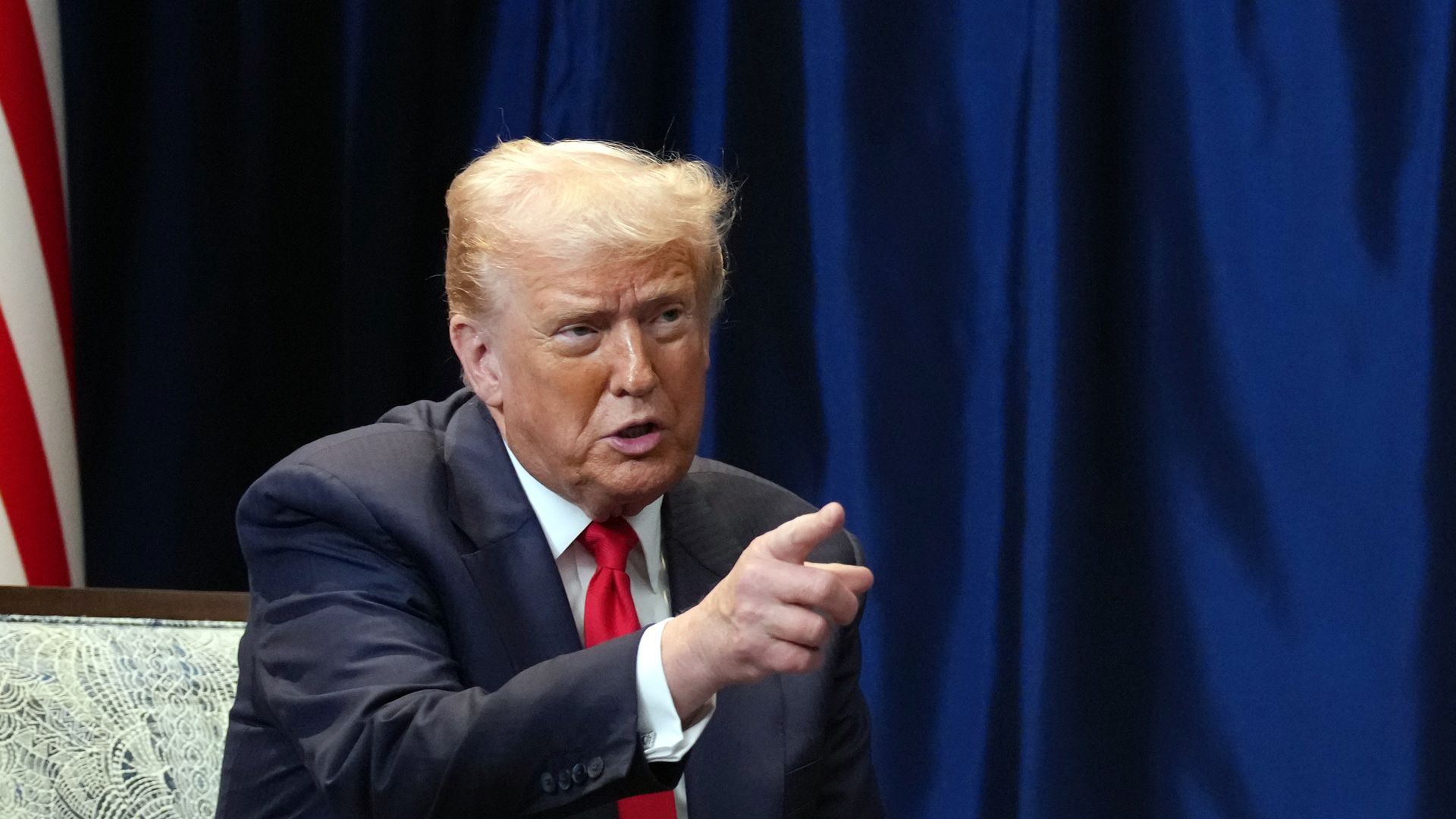
The Senate voted Tuesday to repeal President Trump's tariffs on Brazil, with five Republicans joining Democrats.
Why it matters: The vote serves as a symbolic rebuke of Trump's trade policies. House Speaker Mike Johnson (R-La.) will not hold a vote on the measure (nor would Trump sign it into law).
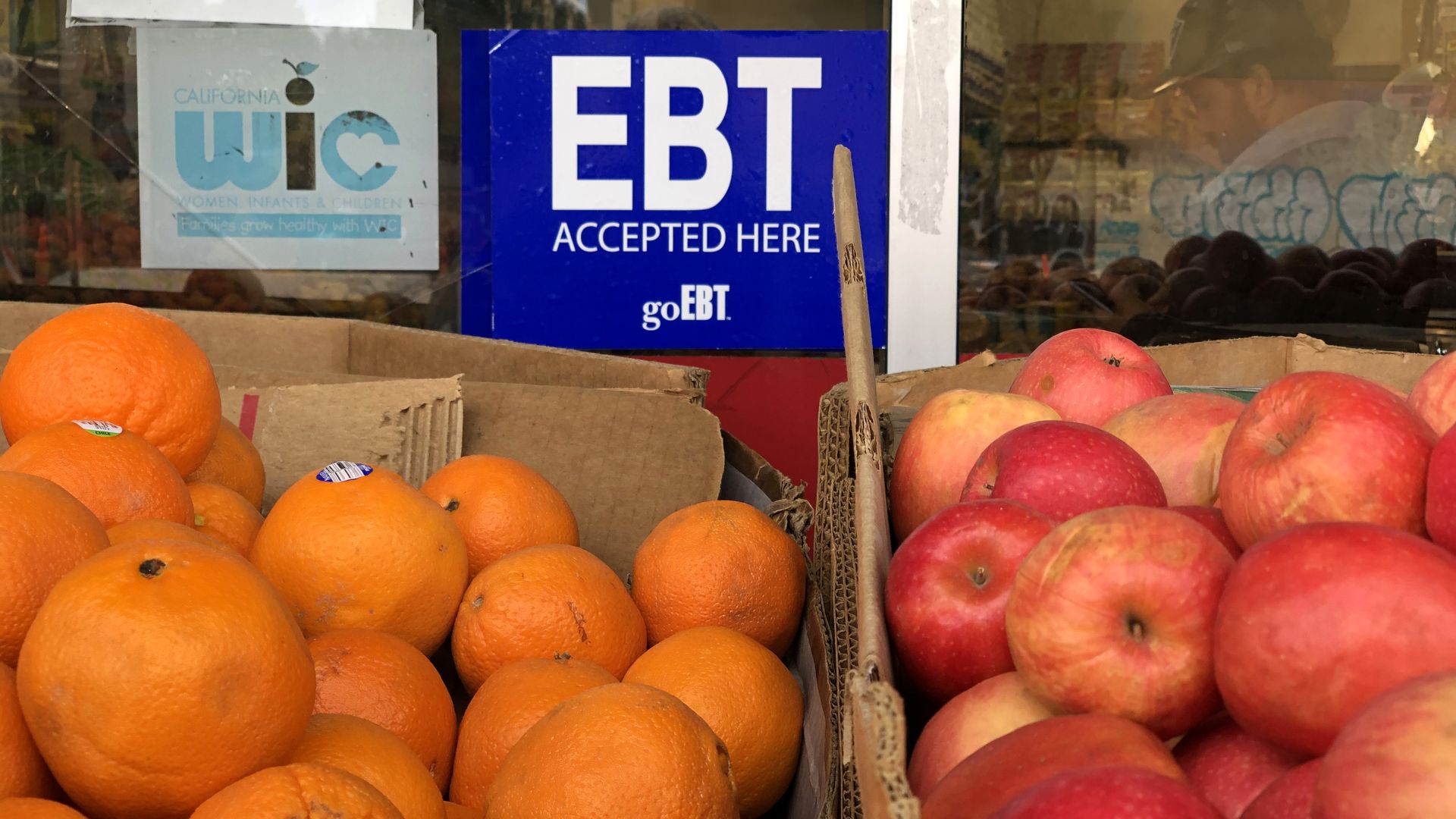
DHS officials recommend SNAP recipients keep their cards locked and secure to avoid losing funds.
What they're saying: "Your existing card will continue to work, but your regular payment will not appear," said Rep. Shontel Brown (D-Ohio) in a press release. "Keep your EBT Card active."
Mackenzie Libbey with Community Legal Services told CBS News: "That's money that's already been appropriated. It's been put on their card."
"So we definitely do not want people rushing out to try to use up their benefits at the end of October thinking they're not going to be able to buy anything in November."
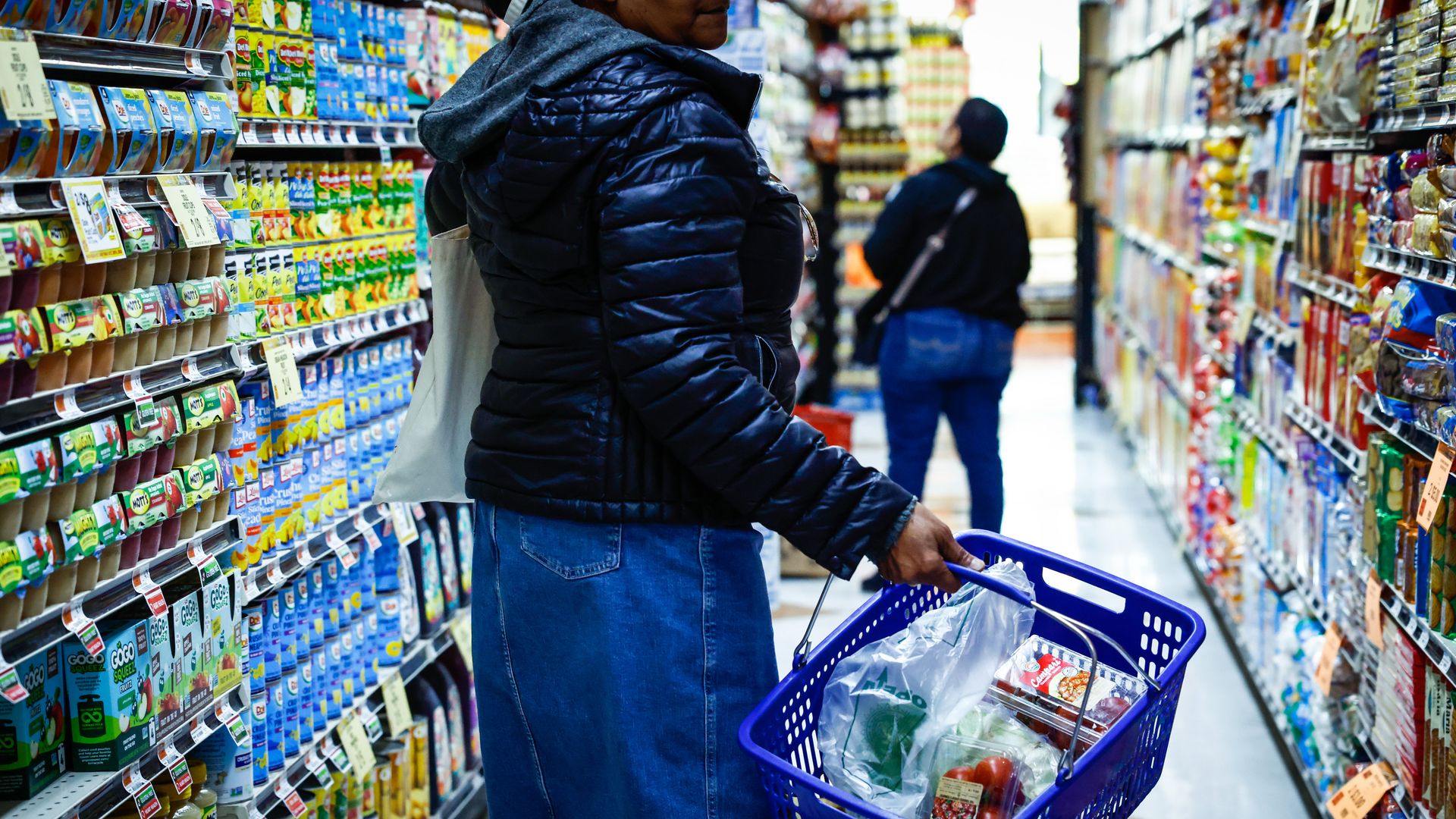
Yes, but: SNAP recipients often spend all of their benefits at once, or in the month they're issued, Axios' Emily Peck writes.
"About 80 percent of benefits are spent in the first two weeks and 97 percent by the end of the month," said Lauren Bauer of the Brookings Institution.
This spending becomes a key revenue driver for grocery stores, meaning a drop in SNAP benefits usage can lead to a broader decline in general spending, too, Peck writes.
States and SNAP benefits
The intrigue:Some states say they're unsure if EBT cards will still work in November and that families should plan ahead.
New Hampshire, for example, recommends beneficiaries use all of their funds before Oct. 31.
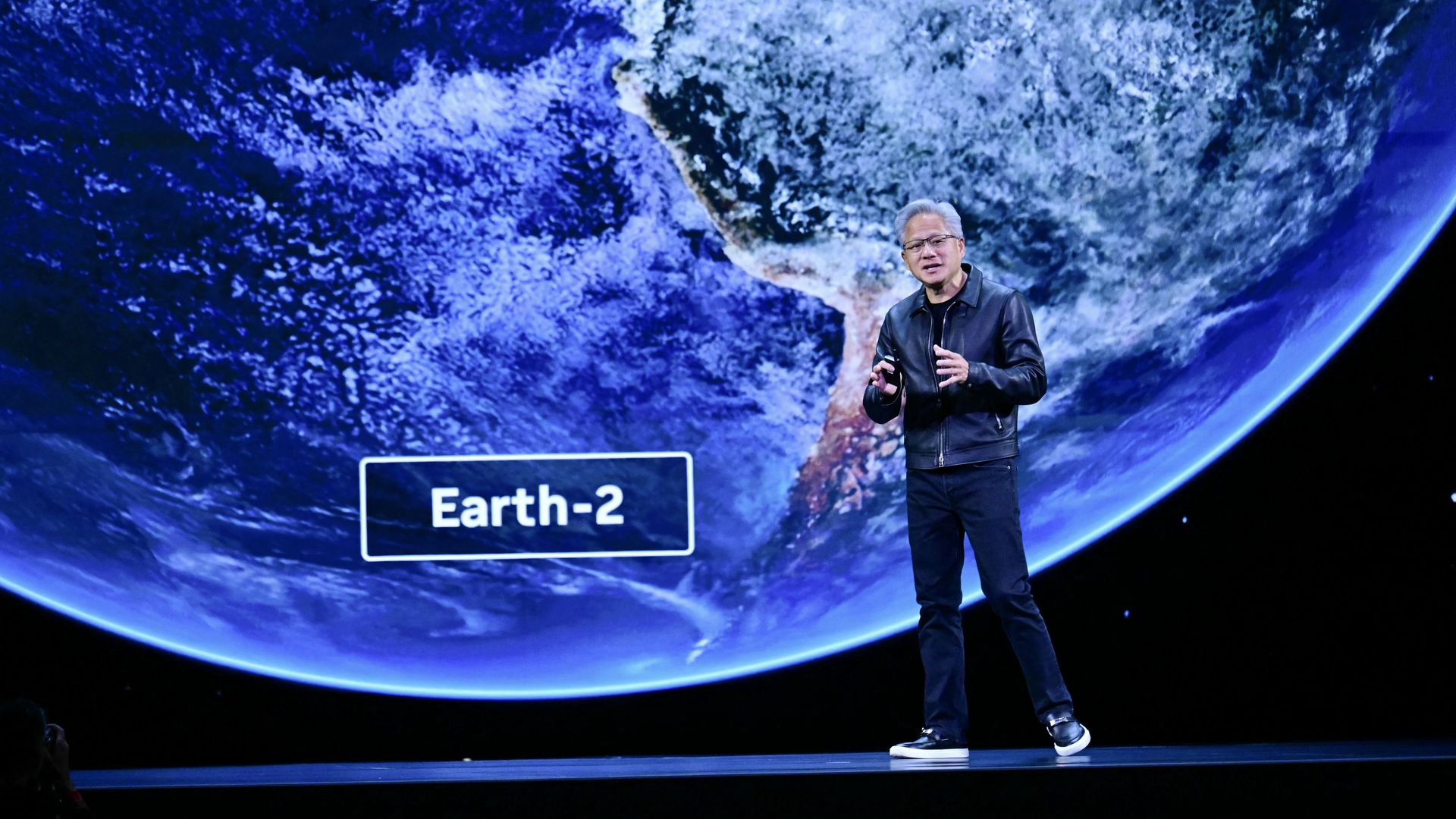
President Trump may be overseas, but his presence loomed large over an Nvidia conference in D.C. on Tuesday where CEO Jensen Huang lauded the administration's embrace of AI.
Why it matters: Huang has built a strong relationship with Trump, and Nvidia has been rewarded for it — from winning approval to export chips to China to preventing the National Guard deployment to San Francisco.
Nvidia on Tuesday revealed a new computing system designed to enable autonomous vehicle developers to accelerate self-driving cars — with Uber signed on as an early collaborator.
Why it matters: The "inflection point" for robotaxis "is about to get here," Nvidia CEO Jensen Huang said at the Nvidia GTC in Washington, D.C.
Federal funding to programs that millions rely on, from early education to food and utility bill aid have shut down, leaving families scrambling for help.
Why it matters: As the shutdown marks its fourth consecutive week with no end in sight, the pain of federal closures is spreading far past government employees.
The government shutdown is beginning to weigh on public opinion, new consumer sentiment data shows.
Why it matters: Public attitudes toward the nearly monthlong government shutdown are a crucial pressure point on lawmakers, adding incentive to negotiate a reopening — and up till now the public's been largely indifferent.
Twenty-five Democratic-led states sued the Trump administration on Tuesday to force it to resume food stamps payments as the government shutdown drags on.
The big picture: Roughly 42 million Americans rely on the Supplemental Nutrition Assistance Program (SNAP), and the Department of Agriculture has warned benefits will stop Nov. 1.
Payroll processor ADP said on Tuesday that private employers added an average of 14,250 jobs per week over the last four weeks, returning to net job growth after a weak spell.
Why it matters: It is the first release of a new report that will offer more finely grained, weekly updates on the health of the labor market.
A growing number of Americans are living paycheck to paycheck, just as the social safety net beneath them grows weaker.
The big picture: The current economy leaves little room for low-income Americans to lose out on those checks, given the domino effect that threatens their housing, food, and medical care.
The Federal Reserve could announce the end of a program that's been sucking money out of the financial system as soon as Wednesday, a bid to prevent chaos in the plumbing of said system.
Why it matters: Friction is emerging in the markets for overnight cash that is a crucial piece of global money markets.
SNAP payments are set to go dark this weekend, yanking billions from grocery aisles — with Walmart and other value retailers most exposed.
Why it matters: The shutdown will halt about $8 billion a month in federal food assistance, money that usually flows straight into grocery stores and big-box retailers.
Merger Monday is back, with U.S. traded companies announcing more than $80 billion worth of deals to kick off the week.
Why it matters: While the stock market continues climbing a wall of worry about a potential AI bubble and further policy uncertainty, dealmaking looks overwhelmingly positive.
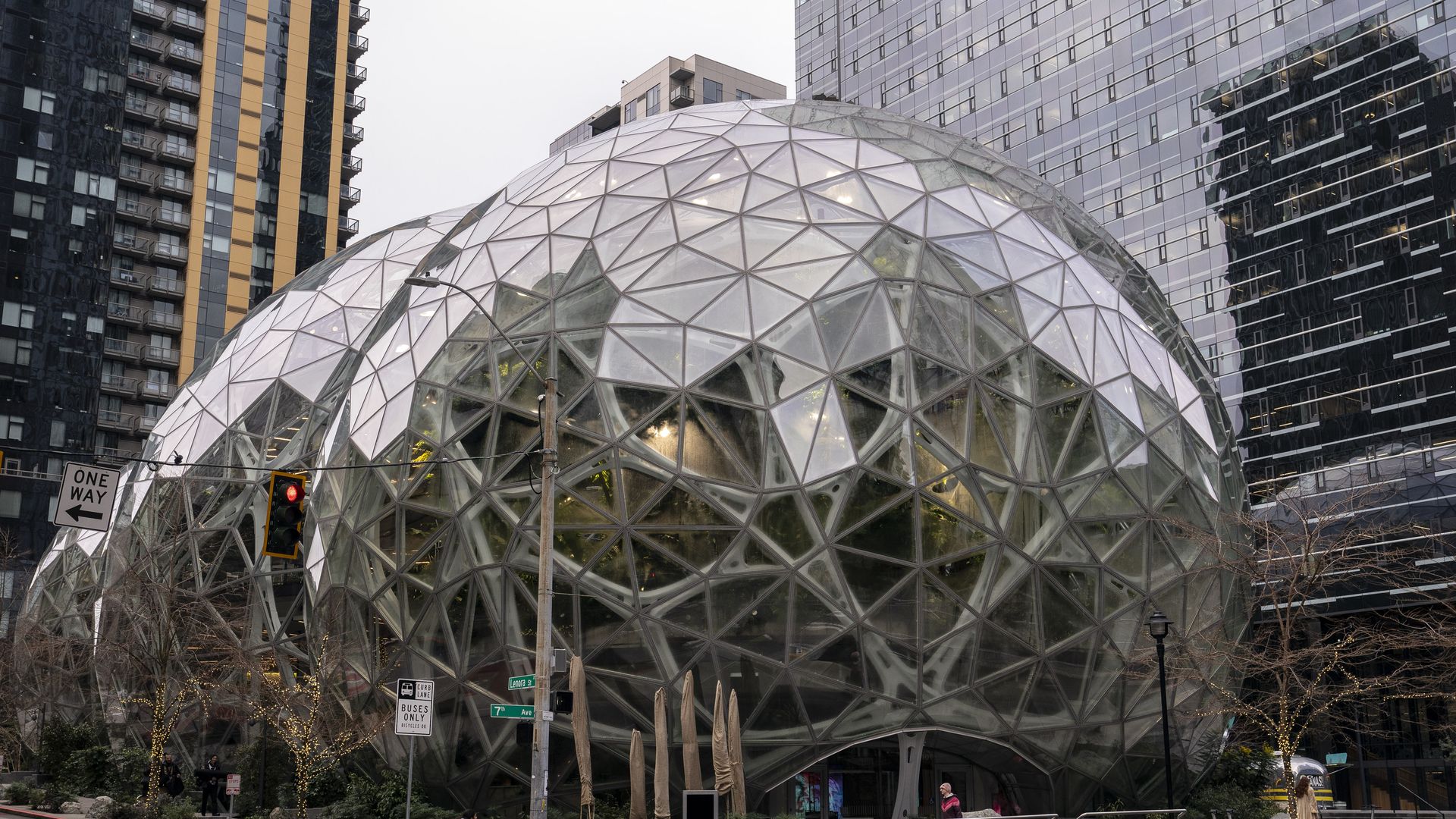
Amazon on Tuesday said it would cut 14,000 corporate roles, in an effort to thin out bureaucracy and be more flexible in an AI-driven era.
Why it matters: Big companies are starting to cut back headquarters positions in an uncertain economy, where AI is increasingly capable of supplanting many roles.
President Trump is asserting the right to unilaterally use the military wherever, whenever and be the sole judge and jury of his own actions.
Why it matters: Of all the unprecedented actions, these might carry the most sweeping consequences — not just now, but for future presidents.
The new precedent is being set in real time: The only real limit on Trump appears to be Trump himself. Neither the conservative Supreme Court nor the GOP-led Congress has shown much interest in limiting this executive.
As five of the Magnificent 7 report earnings this week, investors are looking for fresh ways to play the AI boom beyond those overbought Big Tech stocks.
Why it matters: Wall Street's shift of attention away from the Mag 7 is throwing a spotlight on three AI companies: Oracle, Broadcom and Palantir.
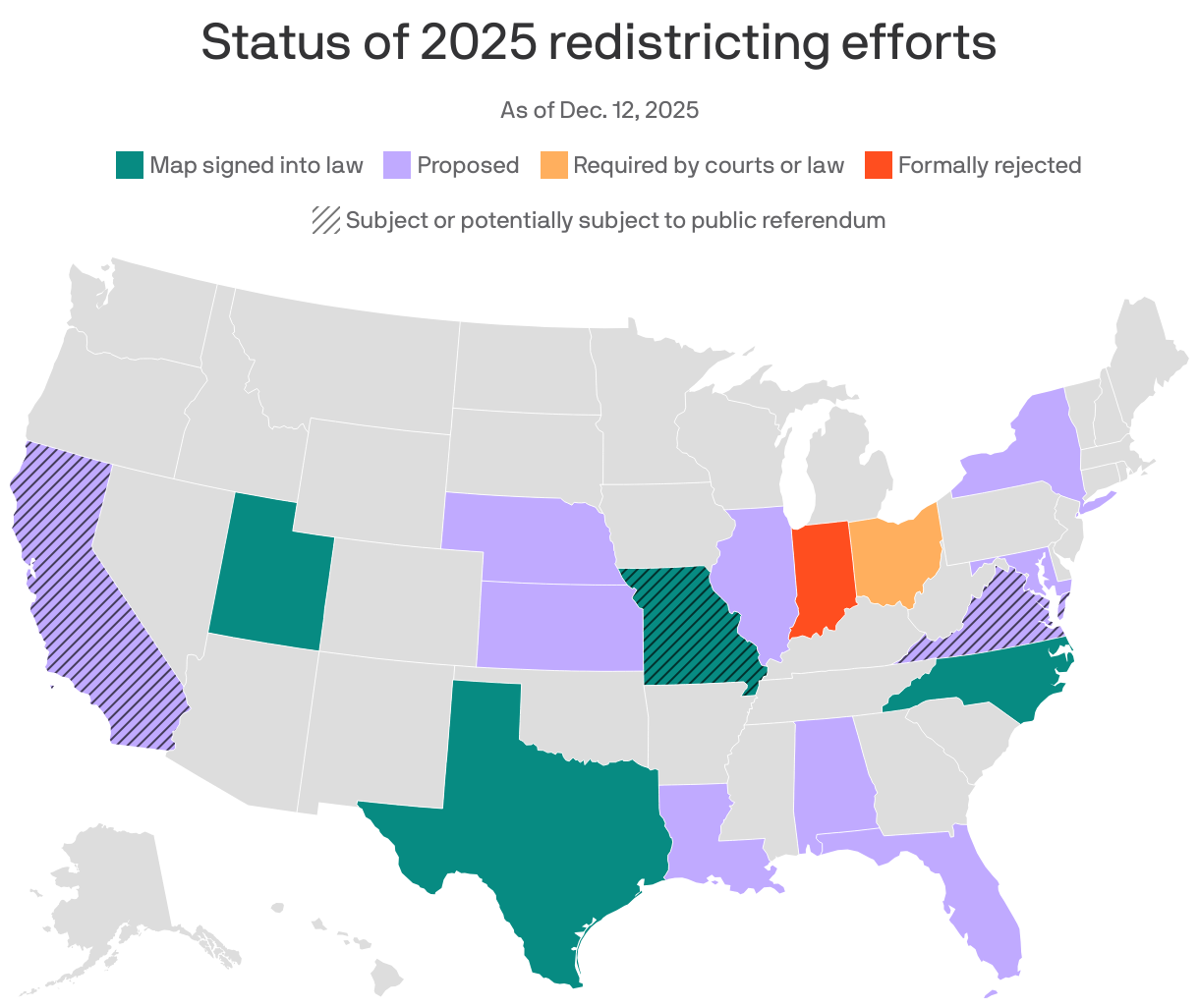
The national fight over redistricting is ramping up in this week, with several states taking new steps to redraw their congressional maps ahead of the 2026 elections.
Why it matters: These changes could have reverberations for years as Democrats and Republicans scramble to nullify each other's gains.
Tesla CEO Elon Musk's "polarizing and partisan actions" may have cost the EV maker over 1 million U.S. car sales, Yale researchers find in a new paper.
Why it matters: It puts huge numbers around what auto analysts and pollsters have directionally believed about the business effect of Musk's political arc.
By all accounts — even in the absence of government data — the U.S economy is growing strongly, driven by almost unfathomable levels of spending to build AI dominance.
Just one caveat: Don't bother looking for a job.
The big picture: Some of America's largest and most important employers say they don't need to hire to keep growing, as AI takes the place of many workers and drives more productivity out of others.