Hims & Hers shares soared today after Novo Nordisk said it would sell weight-loss drug Wegovy at a discount on the telehealth platform.
Why it matters: Hims is under pressure to offer GLP-1 drugs to its customers now that shortages are over and pharmacies are largely restricted from offering compounded versions of the medicines.
Driving the news: Novo will sell Wegovy on Hims, LifeMD and Ro via its direct-to-consumer platform NovoCare.
Imposing transaction fees to account for President Trump's tariffs might sound enticing to businesses, but it's a political risky endeavor that threatens to backfire quickly.
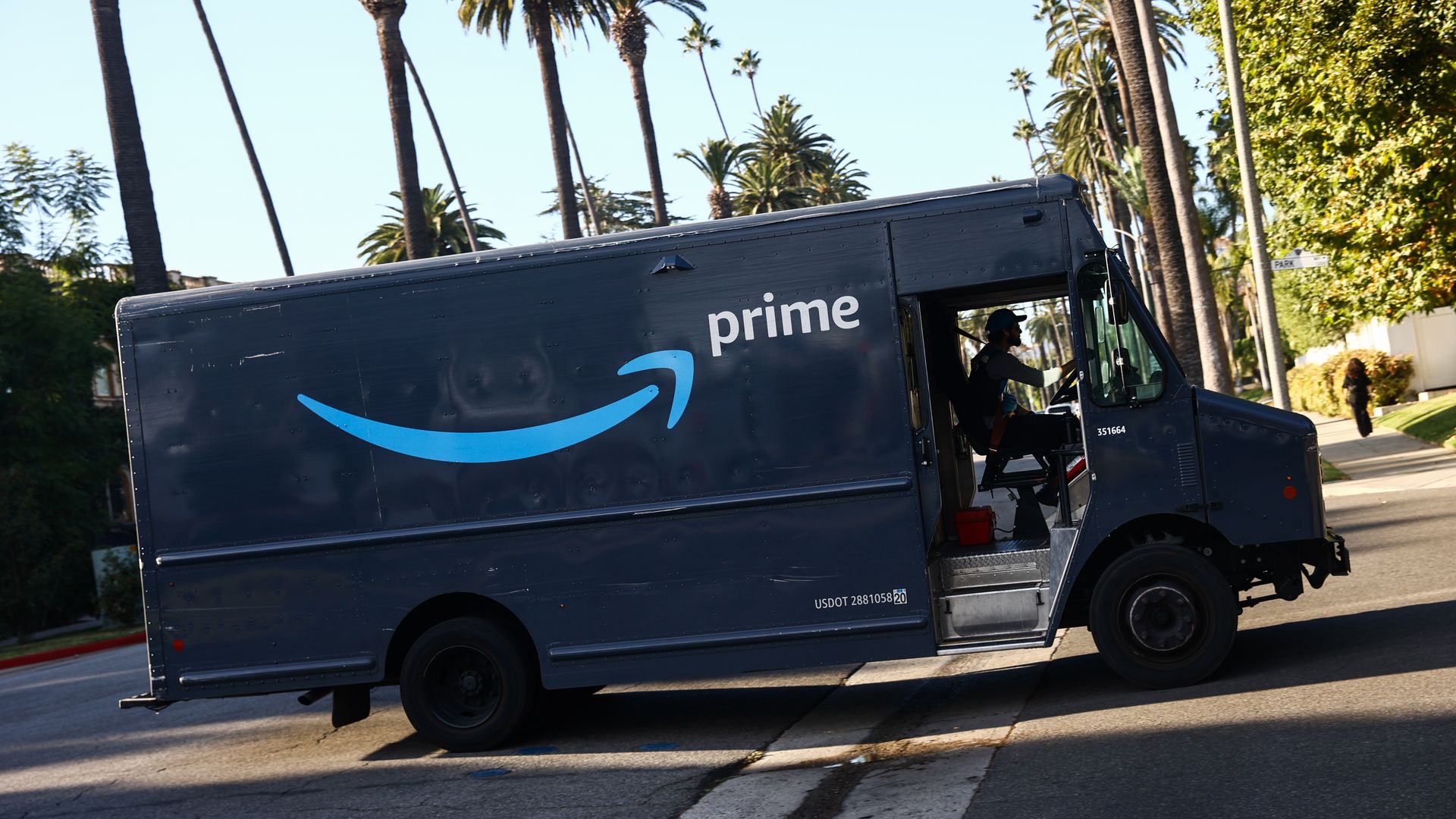
Zoom in: A report today that Amazon was poised to add a tariff surcharge to purchases in the U.S. triggered outrage in the White House, which condemned it as a "hostile and political act."
Soon thereafter, an Amazon spokesperson said it was briefly under consideration only for budget shopping site Amazon Haul. "This was never approved and is not going to happen," the spokesperson said.
We reached out to Walmart, the world's largest retailer, where a spokesperson told Axios' Kelly Tyko that the company does "not itemize what goes into the cost of goods on our website."
💭 Nathan's thought bubble: I guess they'll have to do price increases the old-fashioned way: by not telling people why.
China-based e-commerce vendors Shein and Temu have passed tariff costs along to their customers ahead of President Trump's tariff policies going into effect on Friday.
Why it matters: These increases could make the low-cost items unaffordable to American consumers.
Walmart on Tuesday rejected the idea that it would apply an itemized surcharge to purchases to account for President Trump's increased tariffs.
Why it matters: A report Tuesday that Walmart rival Amazon was poised to add a tariff fee to sales in the U.S. triggered outrage in the White House, which condemned it as a "hostile and political act."
Amazon's discount store — Amazon Haul — launched in November as the e-commerce giant's answer to bringing shoppers cheap goods from China and competing against Temu and Shein.
Why it matters: President Trump's aggressive tariffs and trade war with China have hit the low-cost Chinese retailers — and created confusion and angst for consumers.
Custody professionals showed up Friday at the SEC to urge the agency to create principled regulations around the business of safeguarding digital assets, while also urging it not to specify technological solutions.
Why it matters: Digital assets are bearer instruments, and the industry has had a lot of failures in terms of keeping those bearer instruments safe.
Between the lines: Custody is the core idea of cryptocurrency.
Before Bitcoin, there was no way for an individual to hold value digitally on their own.
The big picture: Very few investors want to hold these assets themselves, however. Especially gigantic, heavily regulated investors.
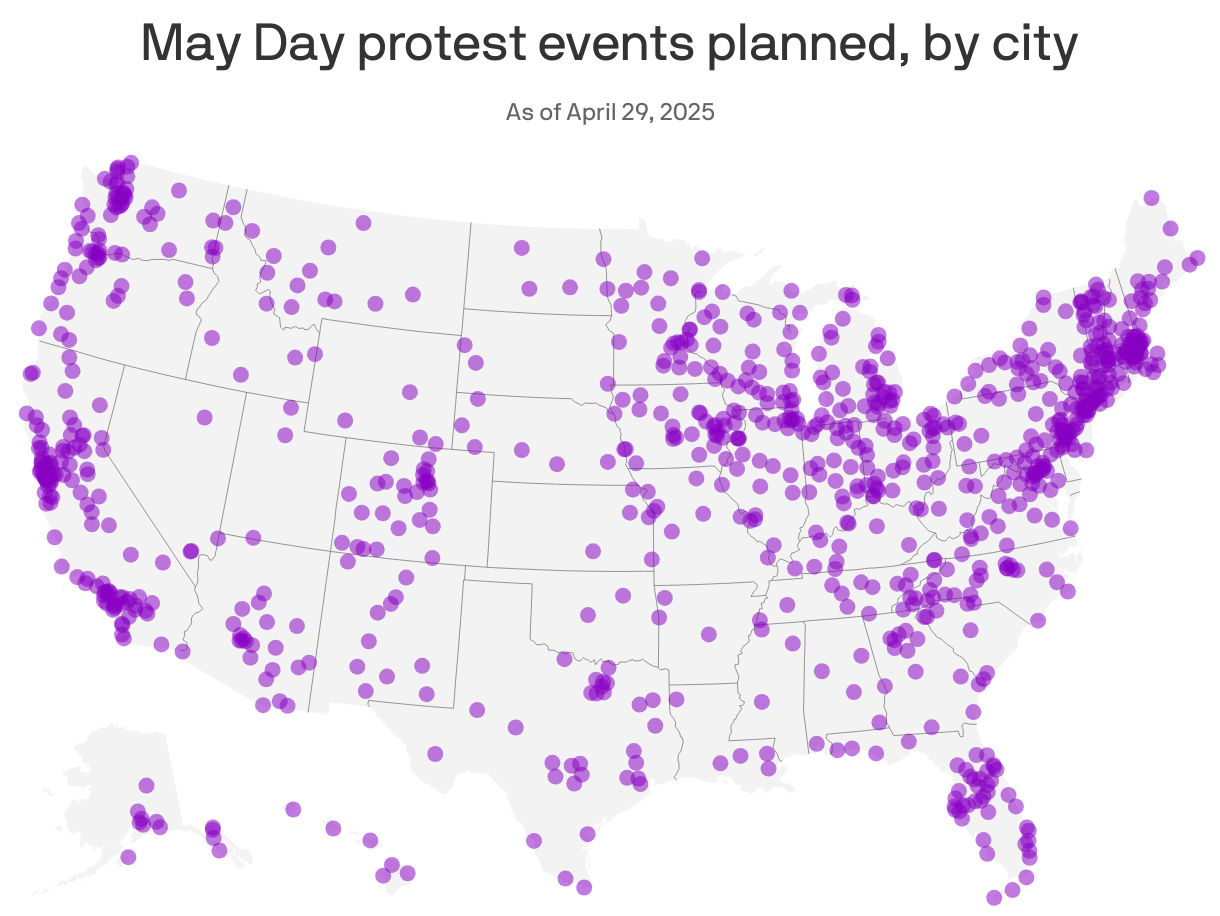
On International Workers' Day Thursday, tens of thousands of protesters across the U.S. will rally against what organizers call President Trump's "war on working people."
Why it matters: Protests against the Trump administration have built momentum as he faces sinking approval ratings and Americans increasingly witness the ramifications of his policies.
You might not even realize it, but before long you're going to be using stablecoins — because the old global payment systems will soon evolve, perhaps even being replaced, driven by stablecoins.
Why it matters: More and more industries, from traditional finance to fintechs, are betting that crypto pegged to real-world money will be a trillion-dollar market soon — the only question is how many trillions and how fast it gets there.
Stablecoins are the biggest success in the world of cryptocurrency, with one exception: the original cryptocurrency, bitcoin, is bigger than all the rest of the crypto market, including stablecoins, combined.
Why it matters: There are companies that believe the Bitcoin blockchain should also secure stablecoins — the tokens pegged to real-world money — which are being called the industry's killer app.
The Trump administration said on Tuesday that it will ease tariff pressure on automakers with reimbursements for taxes on foreign auto parts.
Why it matters: Senior administration officials say the relief came after conversations with domestic auto manufacturers, many of which have warned about the economic damage from the previously imposed 25% tariff rate.
Any Trump administration win on tax policy looks set to be overshadowed by the White House's tumultuous trade agenda.
Why it matters: Economic optimism across corporate America soared on hopes of tax cuts and deregulation, which some CEOs were sure would make up for any potential tariff pain.
President Trump is expected to deliver relief on some tariffs for the auto industry when he visits Michigan later Tuesday to celebrate 100 days in office, but automakers aren't in a partying mood.
Why it matters: Across the industry, carmakers remain in limbo, pulling back on capital investments and postponing product decisions while they wait to learn the latest twist in the president's trade policy.
Amazon now denies reports it planned to list how much tariffs increased products' prices after White House Press Secretary Karoline Leavitt slammed the move as a "hostile and political act."
Why it matters: The reported plan further suggests a growing rift between businesses and President Trump, who has made aggressive tariffs and a global trade war central to his economic agenda.
Americans now expect the job market and other measures of economic well-being to deteriorate in ways not seen since some of the darkest moments in recent economic history, per data out Tuesday morning.
The big picture: Tuesday's data tell the story of the U.S. economy this spring in a nutshell: Activity is holding up fine for now, but Americans have become deeply pessimistic about what is to come.
It's been one month since fashion tech company CaaStle told investors that they're likely victims of one of the largest financial frauds in U.S. history, with over $530 million up in smoke.
Now the lawsuits are beginning to fly, and the company is doubling down on its caginess.
Treasury Secretary Scott Bessent told reporters on Tuesday that President Trump's trade policy would not result in shortages of consumer goods, as some economists and CEOs have warned.
Why it matters: Triple-digit tariffs on Chinese imports make it hugely expensive for U.S. companies to bring over goods, with many scrambling to reconfigure supply chains to source the products from elsewhere.
Walmart is expanding support for American-made products through new programs to help small businesses, the retailer shared exclusively with Axios Tuesday.
The Trump administration just gutted a decades-old bedrock of anti-discrimination law in a little-noticed executive order last week, but the fallout could take years to untangle.
Why it matters: The order, called "restoring equality of opportunity and meritocracy," is the latest in a series of blows to longstanding civil rights protections from the White House.
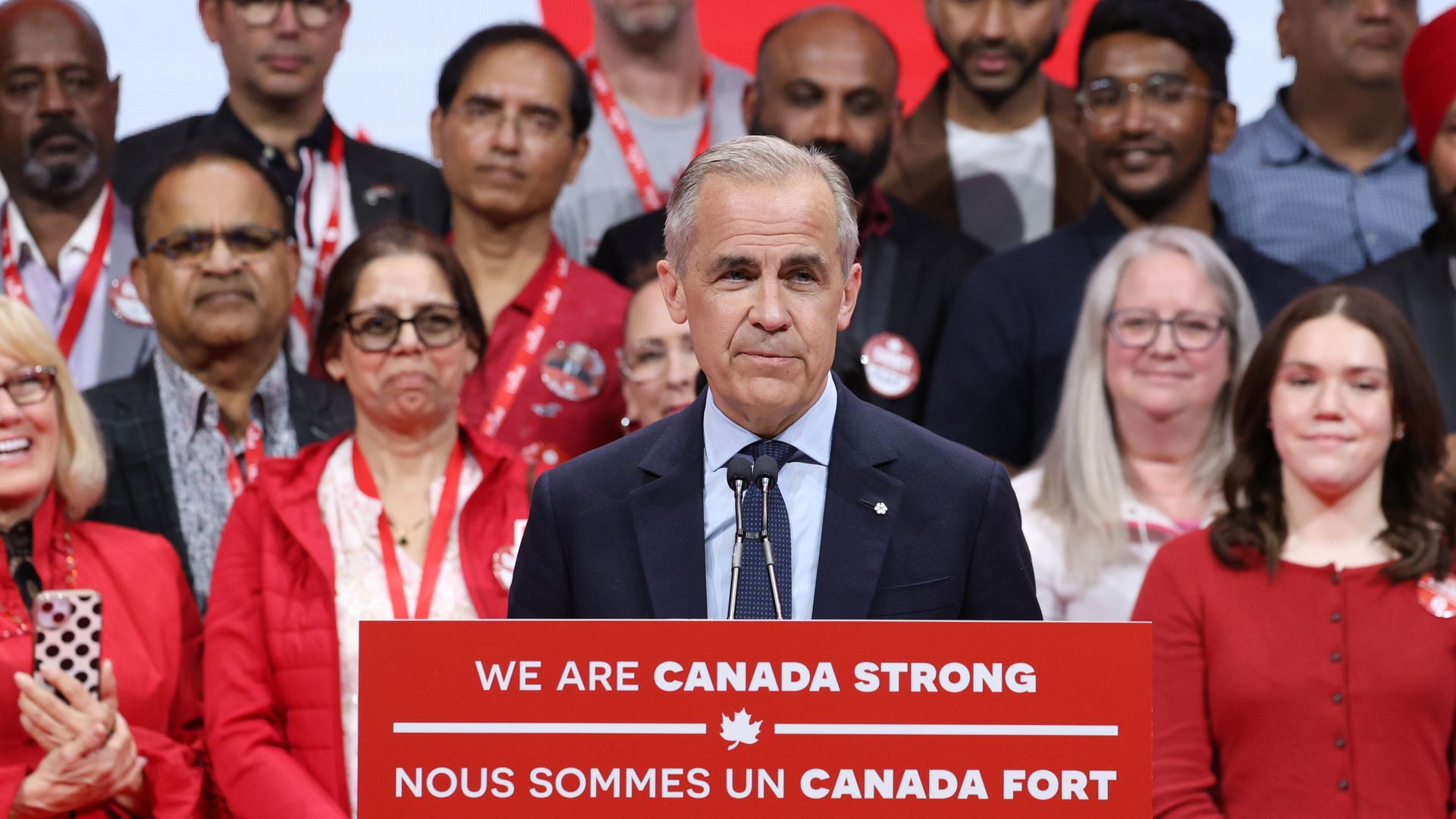
Canadian Prime Minister Mark Carney vowed to stand up to President Trump and his repeated threats against Canada as his Liberal Party claimed victory in Monday's federal election.
Why it matters: The Liberal Party looked on the verge of losing power for the first time in a decade, but it shored up support among voters after Trump's threats to annex Canada and his tariff regime targeted the longtime U.S. ally.
American Airlines announced Monday it's ended partnership talks with JetBlue and is now suing the company.
The big picture: Americanvice chair and chief strategy officer Steve Johnson said in a statement the Fort Worth, Texas-based airline made a "very attractive proposition" during the talks, but it transpired that JetBlue "was focused on different business priorities."
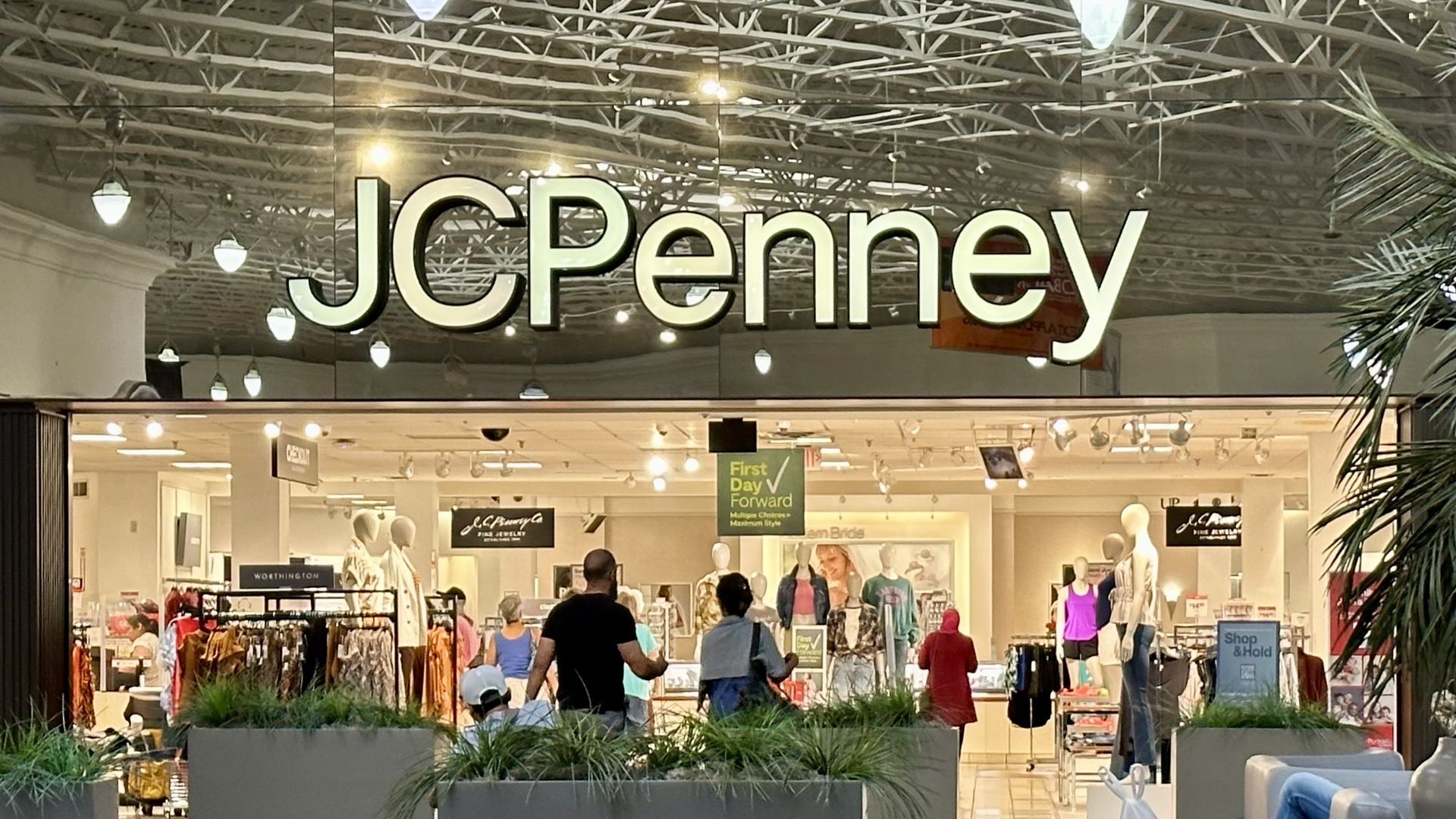
JCPenney is taking aim at fashion's size gap by partnering with model and entrepreneur Ashley Graham to launch a new plus-size clothing line.
Why it matters: The collaboration focuses on full-figured women and builds on the Texas-based retailer's "fashion for all" philosophy, JCPenney CEO Michelle Wlazlo told Axios.
President Trump will host on Wednesday top executives from companies including Nvidia, Johnson & Johnson, Eli Lilly, GE Aerospace and SoftBank, as promotes investment in the U.S., per the White House.
Why it matters: The White House regards investment policy as "critical" to U.S. national and economic security, but Axios' Courtenay Brown and Neil Irwin report Trump's tariffs threats have left the country's status as the top global investment magnet in doubt as businesses hit pause.