Canadian Prime Minister Justin Trudeau resigns as party leader


Add Axios as your preferred source to
see more of our stories on Google.
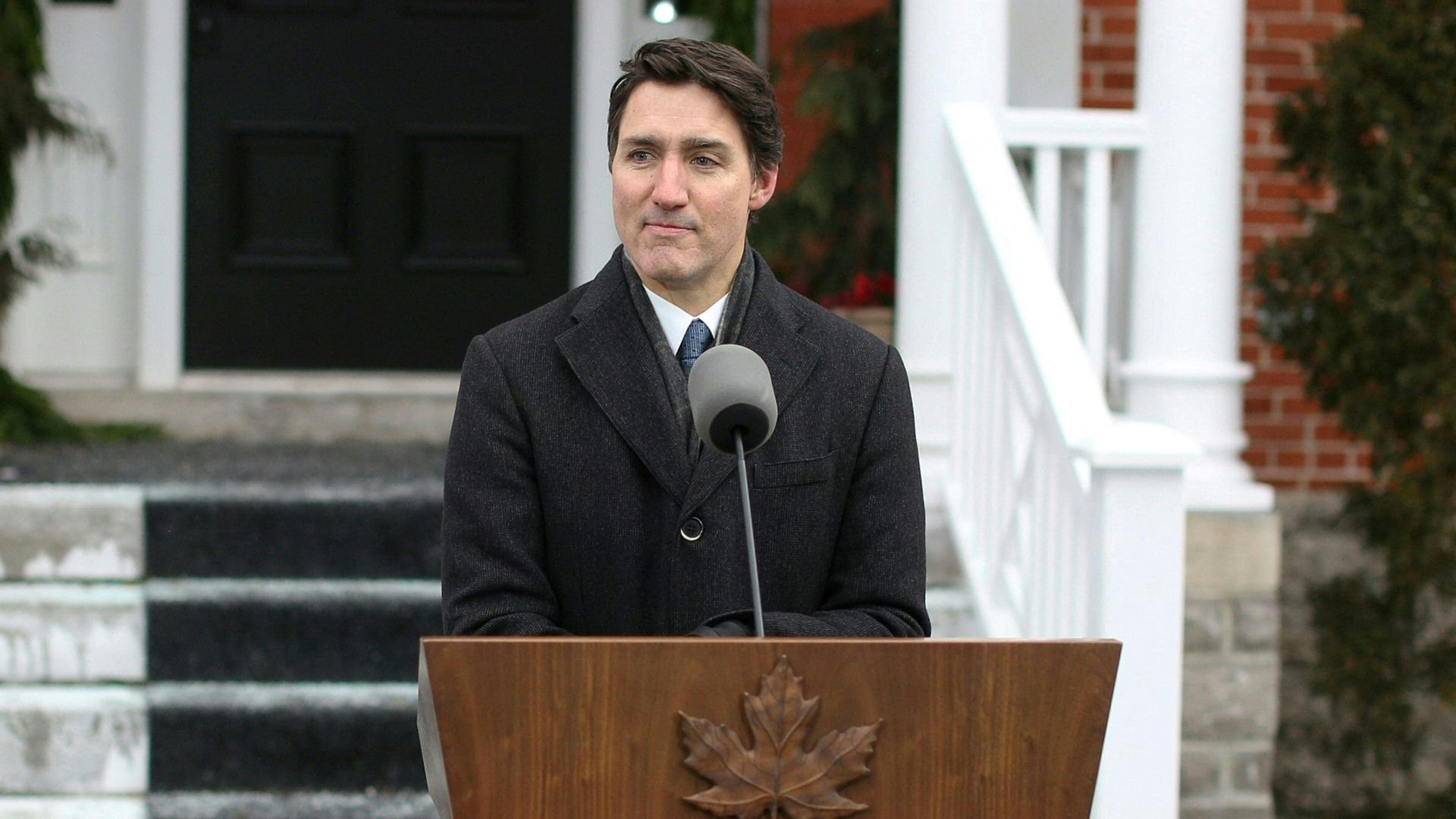
Justin Trudeau at a news conference at Rideau Cottage in Ottawa, Canada on Jan. 6. Photo: Dave Chan/AFP via Getty Images
Canadian Prime Minister Justin Trudeau resigned from his position as the leader of the Liberal Party on Monday.
Why it matters: The world's leading democracies are facing growing instability. Look to Germany, where Chancellor Olaf Scholz lost a confidence vote in parliament, or the unprecedented government collapse in France.
- His resignation came as polls indicated that the Liberal Party was set to be trounced by the opposition Conservative Party in the upcoming election, expected in or before October, Reuters reported.
- Trudeau's decision to leave the post amid his government's deepening unpopularity is a far cry from the popularity he enjoyed when he became prime minister, when polls showed he boasted approval ratings above 60%.
- Trudeau noted that the Canadian parliament will be prorogued — essentially, suspended — until March 24 while a new leader is chosen. He said it was "time for a reset."
Driving the news: "I intend to resign as party leader, as prime minister, after the party selects its next leader through a robust nationwide, competitive process," Trudeau announced at a press conference in Ottawa Monday.
- "It has become clear to me that if I'm having to fight internal battles, I cannot be the best option" in the next election, he added.
- "I've been inspired by the resilience, generosity and the determination of Canadians," Trudeau said.
- Trudeau also slammed Conservative opposition leader Pierre Poilievre's vision for Canada as "not the right one" for the country.
State of play: Trudeau has been the leader of Canada's Liberal Party for 11 years and the country's prime minister for nine.
- Recent polling has put the Liberals at a mere 16% support among decided and leaning voters.
- Trudeau's resignation also comes as members of the Liberal party are set to hold an emergency meeting Wednesday, per Reuters.
Between the lines: Trudeau's government has been running on fumes ahead of the elections.
- The prime minister is unpopular among many in Canada, especially as the cost of living has risen across the country and public concern has grown over immigration.
Another blow to Trudeau's future came last month when multiple members of his Cabinet resigned.
- Chrystia Freeland, Canada's former finance minister and deputy prime minister, resigned from the Cabinet last month. Freeland said she reached her decision after Trudeau asked her to resign as finance minister and take another Cabinet position.
- Sean Fraser, housing minister, also said last month that he would resign, per the New York Times.
The big picture: Trudeau was facing pressure to call for an election before a scheduled one in October as Canadians reckon with high inflation and President-elect Trump's tariff threat.
- Trump has threatened to impose tariffs on Canada and Mexico due to his concerns about the number of migrants and drugs coming into the U.S., which triggered fears of inflation and a trade war.
- After Trump and Trudeau met in November, Canadian officials have said they're stepping up border security "in a visible and muscular way."
- In her resignation letter, Freeland warned Canada must take the threat of tariffs "extremely seriously." She urged leadership to avoid engaging in "costly political gimmicks," likely in reference to Trudeau's recent policy announcements of a limited-time sales tax break and 250 Canadian dollar rebate for workers, CNN reported.
The intrigue: Justin Trudeau's father, Pierre Elliott Trudeau, also resigned as prime minister in 1984.
What's next: With Trudeau out as party leader, he will remain prime minister until a new leader is chosen. Once a new party leader is selected, that person will become the next prime minister, per the New York Times.
More from Axios:
- America's allies are in trouble
- Canada bolstering border security after Trump talks, Canadian official says
- Trump wildcard paralyzes global central banks
Editor's note: This story has been updated with additional developments.
