News of a potential tie-up between Japan's second and third largest carmakers continued to gain steam today, with Honda and Nissan both confirming talks around some sort of collaboration.
The big picture: It's being billed as a rescue of Nissan (its stock was down 40% this year in Tokyo before the news), but a deal could strengthen both companies' positions in a shaky global car market.
State of play: The combination would need the blessing of France-based Renault, Nissan's largest shareholder, which is reported to be receptive.
The combination would likely be probed closely by Japanese authorities, given the potential for job cuts, CNBC notes.
And in the U.S., President-elect Trump could seek concessions in exchange for approval, Reuters notes, citing auto industry officials.
The Congressional Budget Office estimates sky-high tariffs promised by President-elect Trump might improve the nation's fiscal outlook — but at the cost of higher inflation and slower economic growth than would otherwise be the case.
Why it matters: The nonpartisan agency's findings are the highest-profile estimates yet of how such trade policy could slam consumers, businesses and the broader economy.
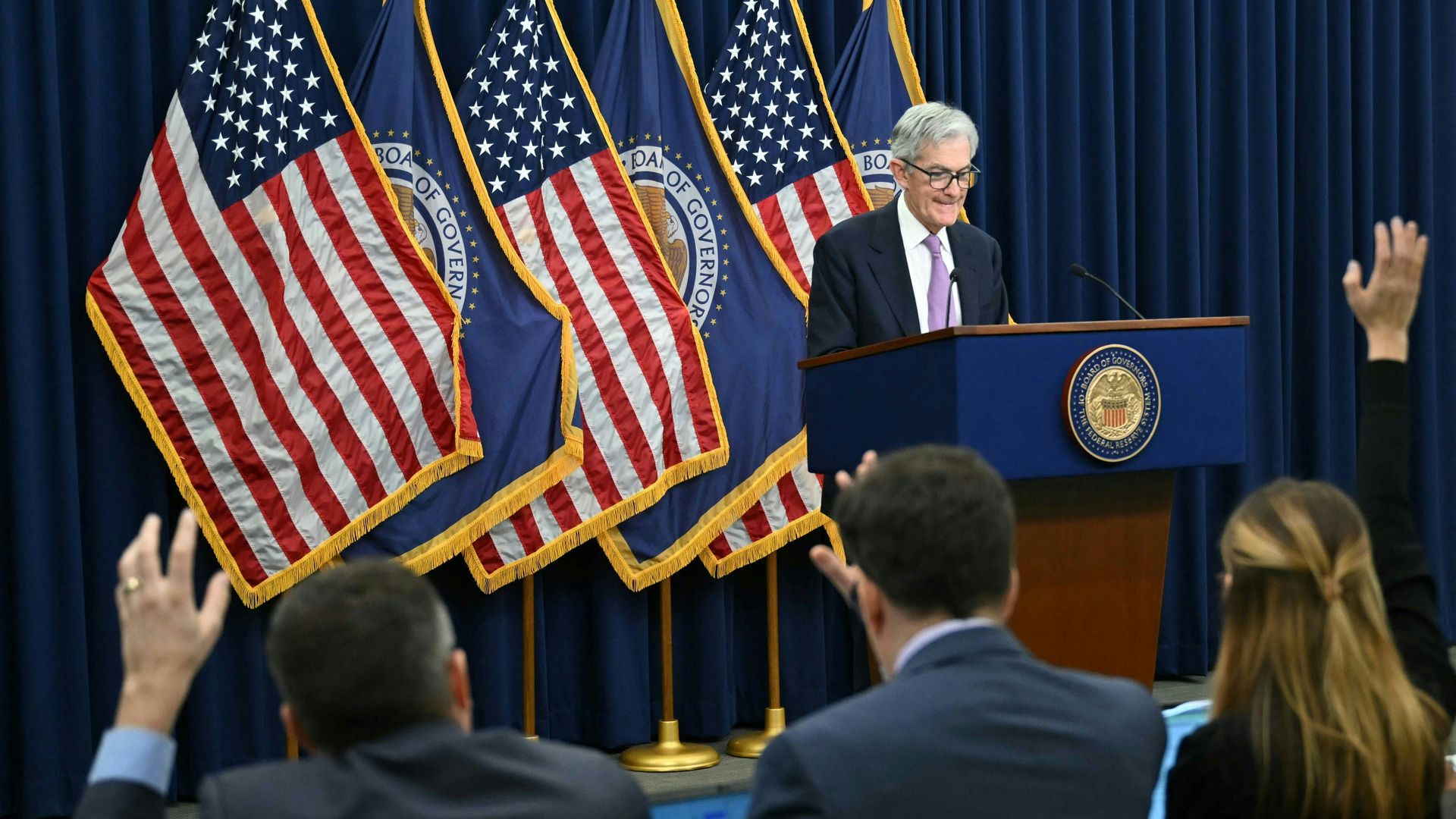
The Federal Reserve cut its target interest rate by a quarter percentage point Wednesday, while releasing new projections that signal less rate-cutting is on the way in 2025 than envisioned three months ago.
Why it matters: The Fed is entering a more cautious phase after cutting rates for three straight meetings, reflecting sluggish progress in bringing inflation down.
Grammarly, a writing assistant valued by VCs at $13 billion, agreed to buy productivity startup Coda, with Coda's CEO Shishir Mehrotra to take that position at Grammarly.
Why it matters: Grammarly is kinda/sorta one of the earliest AI agents, founded in 2009, but faces extinction-level competition from the GenAI class. Merging with Coda helps it expand from a one-trick pony into a productivity stable.
"We got a bargain" is notusually what you hear from a venture capitalist who just committed to a $10 billion round at a $62 billion valuation.
But it's what one told me yesterday as news broke of the big Databricks round. And I heard similar sentiments throughout the day, leading up to my Axios AI+ Summit interview with company co-founder and CEO Ali Ghodsi.
Why it matters: The incoming Trump administration is likely to overturn the waiver to California. But in issuing it, the EPA will make it harder to accomplish a reversal.
Why it matters:The survey includes the views of more than 300 global public company CEOs, plus 380 institutional investors representing approximately $10 trillion of company and portfolio value.
One reason CEOs are so keen on becoming Donald Trump's new besties: The incoming president could make their profits go poof.
Why it matters: The president-elect's proposed tariffs are so high they could entirely wipe out the annual profits of some large companies, per an analysis from consulting firm PWC.
While the world is focused on President-elect Trump's top-level appointments, the crypto industry might want to watch some government jobs farther down the ladder.
Why it matters: The people in lower profile positions often end up hammering out the crucial policy details that matter for years, or even decades.
Anthropic's new automated analysis tool provides some fresh insights into how the model operator weeds out malicious users trying to manipulate its Claude chatbot.
Why it matters: Distinguishing adversaries' queries from run-of-the-mill user inputs is the biggest challenge model operators face in their quest to identify and stop emerging threats.
While the world is focused on President-elect Trump's top-level appointments, the crypto industry might want to watch some government jobs farther down the ladder.
Why it matters: The people in lower profile positions often end up hammering out the crucial policy details that matter for years, or even decades.
We checked in with multiple legal and policy sources to see what positions were on their minds, and here are some that we heard about repeatedly as potentially having big implications for the blockchain industry.
Treasury's undersecretary for terrorism and financial intelligence. This one kept coming up. This person is responsible for the financial monitoring programs as they relate to national security threats, the sort of thing that caught up Tornado Cash.
One of the final major indicators of the year suggests a mixed narrative about consumer health during the holiday season: Spending is growing, but shoppers might be opening their wallets a bit more cautiously.
Why it matters: Consumer spending helped buoy the resilient economy in 2024, and any apparent slowdowns proved to be head fakes. But there is no guarantee it will continue in the months ahead.
The big picture: More than 119 million Americans are projected to travel during the Christmas and New Year's holiday period, narrowly surpassing the previous record set pre-pandemic in 2019, per AAA.
You can get an electric vehicle for very close to free.
Why it matters: The environmental benefits of EVs notwithstanding, demand for smaller vehicles remains muted — and regulations are causing some automakers to offer aggressive incentives to get them off the showroom floor.
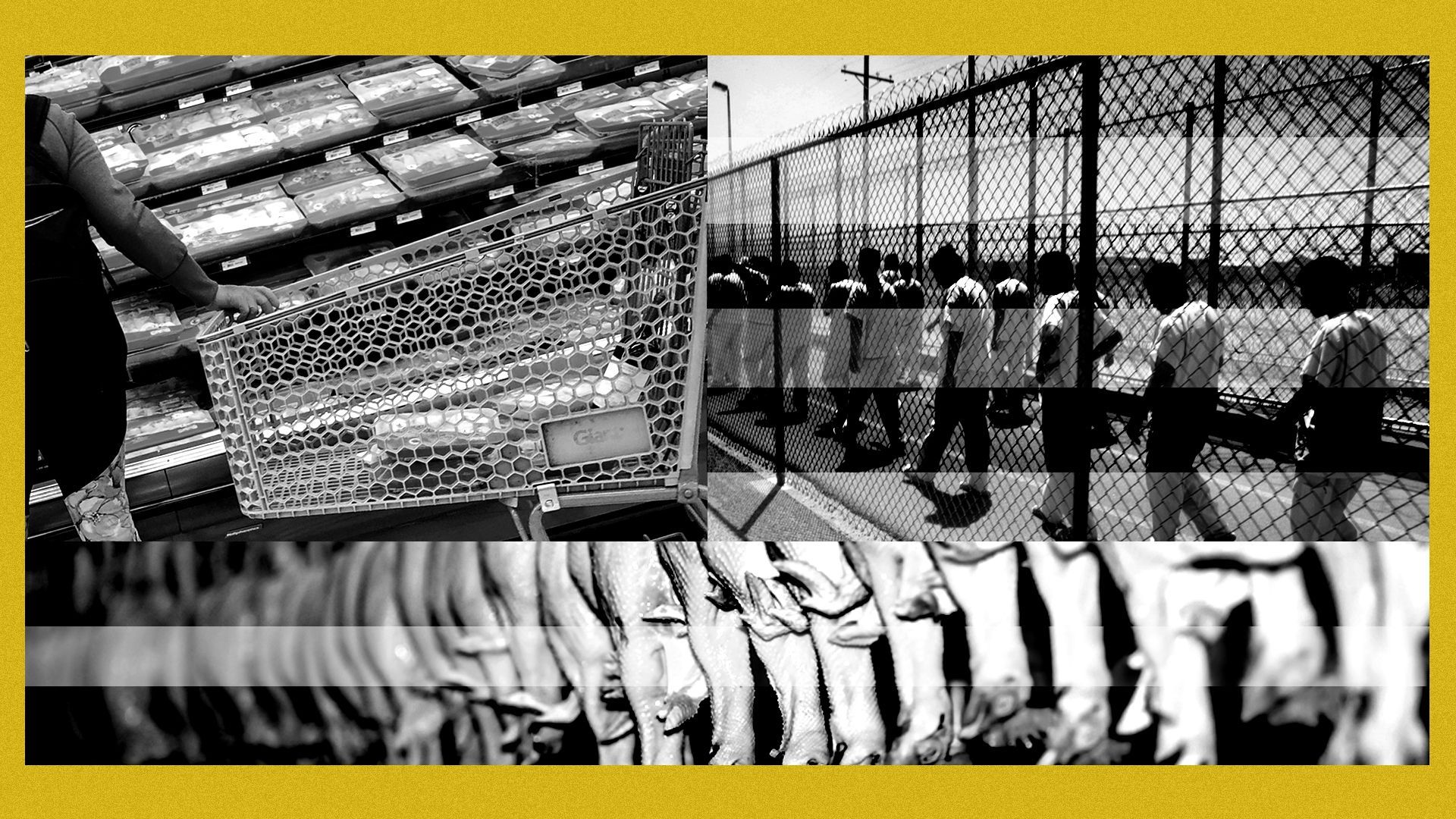
Many in the meatpacking industry were happy to see Donald Trump reelected — but are also fearful it won't be able to operate without the workers he may try to deport.
Why it matters: Meatpacking, more than almost any other industry in this country, relies on foreign-born labor, whether documented or not. It would face critical challenges if those workers disappeared due to mass deportations.









/2024/12/17/1734466083092.gif?w=3840)