Trump tariffs would cut deficits but hike consumer prices, CBO says

Add Axios as your preferred source to
see more of our stories on Google.
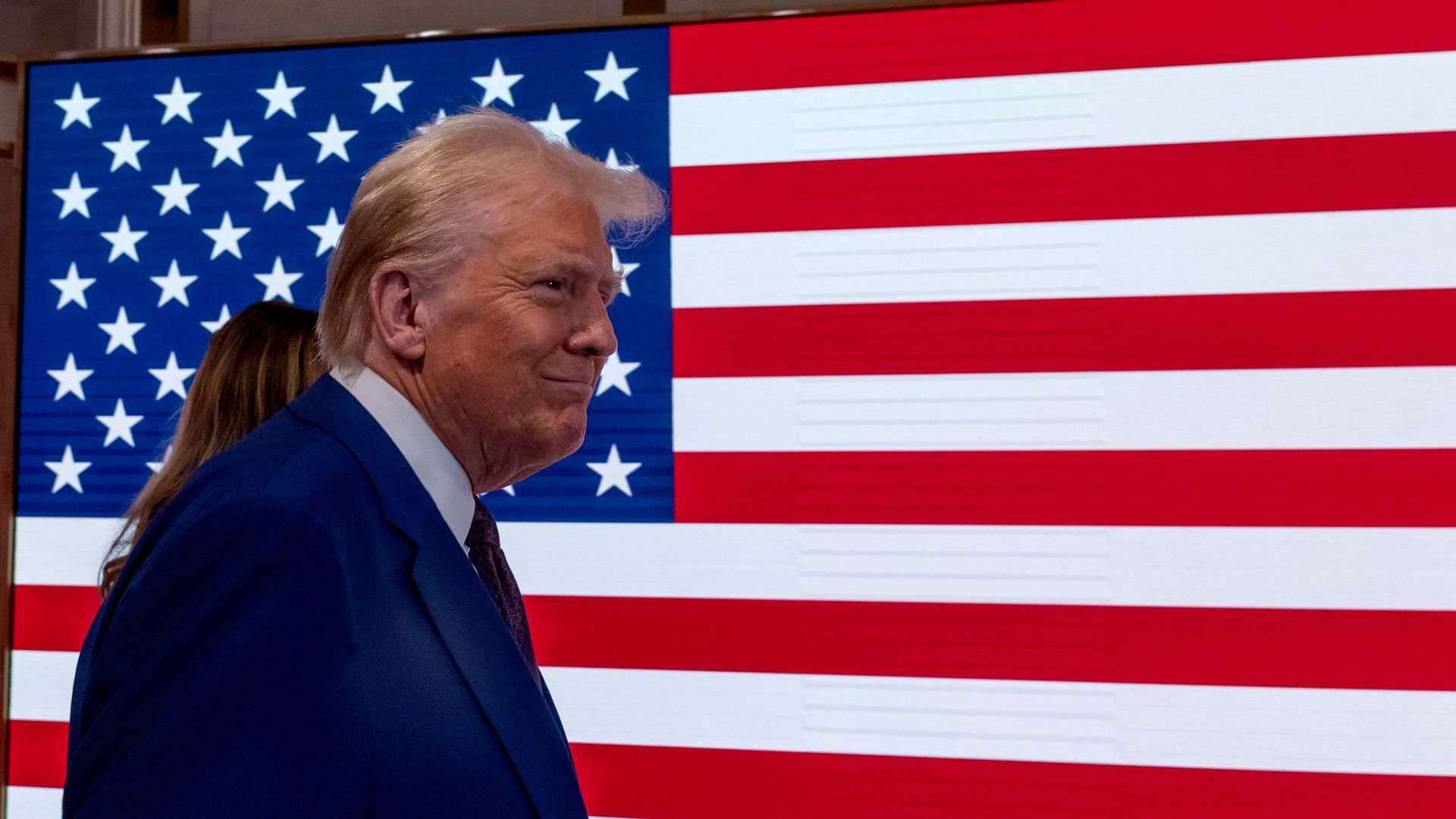
President-elect Trump walks onto the floor of the New York Stock Exchange after being named TIME's "Person of the Year" for the second time. Photo by Spencer Platt/Getty Images
The Congressional Budget Office estimates sky-high tariffs promised by President-elect Trump might improve the nation's fiscal outlook — but at the cost of higher inflation and slower economic growth than would otherwise be the case.
Why it matters: The nonpartisan agency's findings are the highest-profile estimates yet of how such trade policy could slam consumers, businesses and the broader economy.
The big picture: The CBO's estimates, released in a letter to lawmakers on Wednesday, came at the request of Senate Majority Leader Chuck Schumer (D, N.Y.), budget committee chair Sen. Sheldon Whitehouse (D, R.I.), and Oregon Sen. Ron Wyden, who leads the finance committee.
- The lawmakers asked the CBO to look at a range of scenarios, including the combined economic and budget effects of a permanent 60% tariff on all Chinese imports, and a 10% tariff on all other goods imported into the country — the same trade policies promised by Trump.
- The estimates assume other nations slap retaliatory tariffs of the same magnitude on U.S. exports.
By the numbers: The CBO estimates tariffs would spur price hikes on consumer goods, at least initially.
- Higher tariffs on Chinese goods and all other U.S. imports would increase the Personal Consumption Expenditures index, a gauge of inflation, by a full point by 2026 — a notable risk as the Federal Reserve is trying to keep inflation at bay.
- After 2026, however, the CBO says that the tariffs would not have any "additional significant effects on prices."
- The CBO also said that poorer households would experience the largest drop in purchasing power, given that cohort spends the largest chunk of their income on goods.
As for economic growth, the CBO estimates the tariffs would lower GDP by as much as 0.6% in the next decade.
Yes, but: The agency notes the hit to growth might be offset as consumers and businesses replace certain imported goods with those made domestically.
Taking into account the economic effects, the CBO estimates tariffs would lower the budget deficit by up to $2.7 trillion over the next 10 years.
- The reduction of deficits might free up funds available for private investment, which provides a "substantial offset" to how much the agency anticipates tariffs would slow the economy.
- Without that effect, the CBO says the effect on GDP would be almost twice as large as their estimate.
- Still, the uncertainty associated with the policies might cause businesses to "delay or forgo new investments," while supply chain adjustments might prove costly.
The bottom line: The CBO says its estimates are highly uncertain, with little historic precedent of what tariffs of this size might do to the economy.
