Barbados on Wednesday released the third draft of its ambitious multilateral overhaul that would free up more money at lower borrowing costs for developing countries in climate crises.
Why it matters: The Bridgetown Initiative, released at this week's UN General Assembly, has brought together many Global South countries that seek to bridge the financial gap — estimated in the trillions — in climate financing for the region.
Its central message is to make it cheaper for emerging and developing countries to borrow to build climate-resilient economies.
Boeing's headwinds grew stronger today as the head of the FAA told a U.S. Senate panel that the company must address its safety issues before the agency would lift a production cap on 737 Max production.
What he said: "They don't do that, they don't grow, and if they don't grow, they're not going be able to achieve profitability," FAA administrator Mike Whitaker said, per Reuters.
The big picture: The comments came as Boeing still finds itself in a standoff with striking machinists.
A slowdown at Hootersfirst noted over the summer now reportedly has the restaurant chain talking to advisers about how to address its $300 million debt load.
Between the lines: Hooters of America — known more for who serves its food than the food itself — is working with advisers who help companies navigate financial distress, Bloomberg reported today.
Its lenders, meanwhile, have reportedly tapped Houlihan Lokey, signaling that both sides are exploring options as the company's liquidity position worsens.
Flashback: In June, Hooters confirmed that it had closed a number of underperforming restaurants, blaming difficult market conditions. At least one report put that number at 40.
Americans are expected to "trade up" on online holiday purchases as retailers deepen discounts, data out Wednesday from Adobe Analytics suggests.
Why it matters: Trading up — or opting to buy a more expensive option of a product — is a reversal from the act of trading down, which is what many consumers have been choosing to do in light of high inflation.
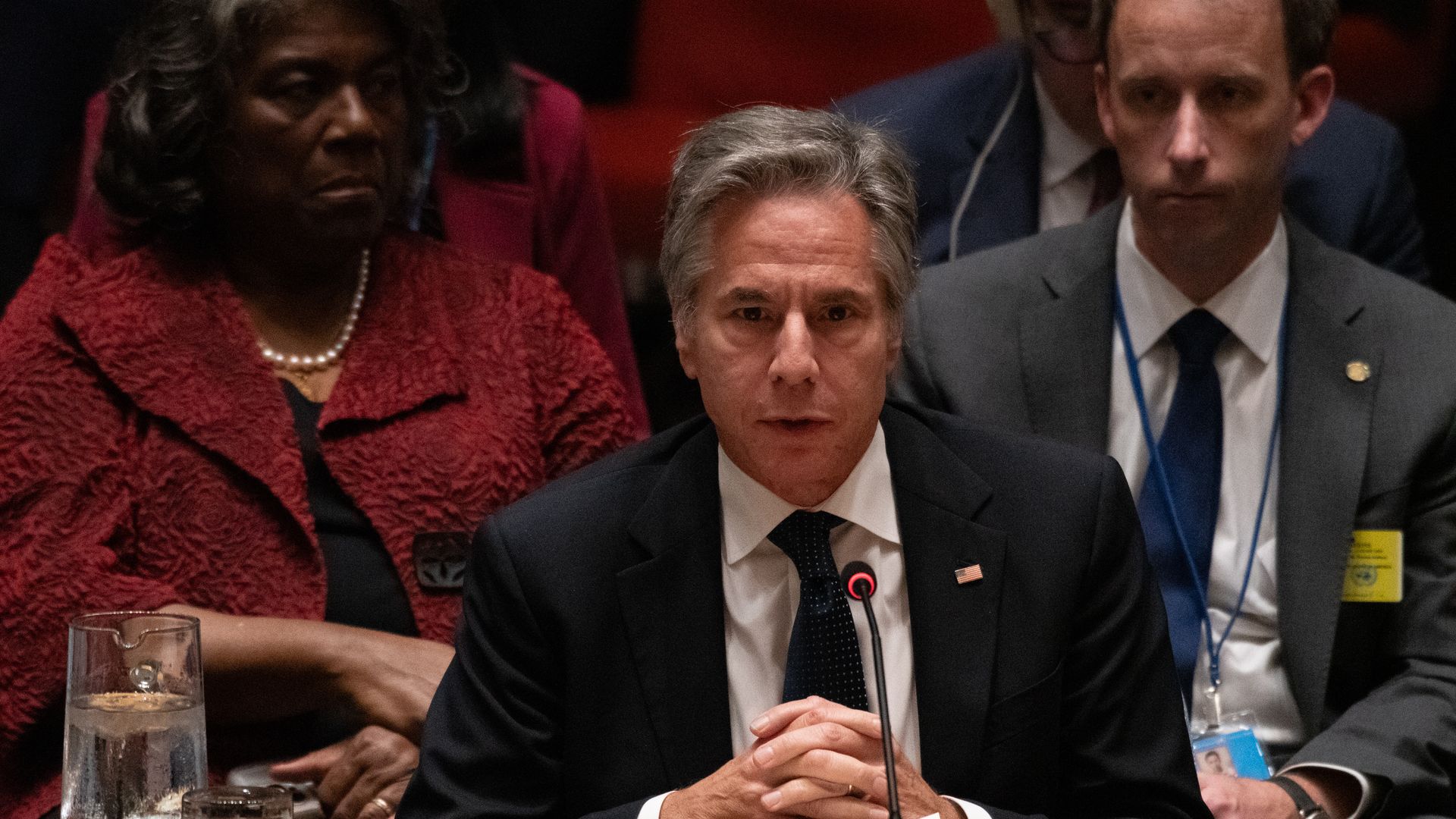
The U.S. is "intensely tracking" Iranian threats against current and former senior government officials, including former President Trump, Secretary of State Antony Blinken said on Wednesday.
Why it matters: Federal agencies have already said that Iran has worked to "undermine confidence" in U.S. elections, and violence has continuously manifested in the presidential campaigns.
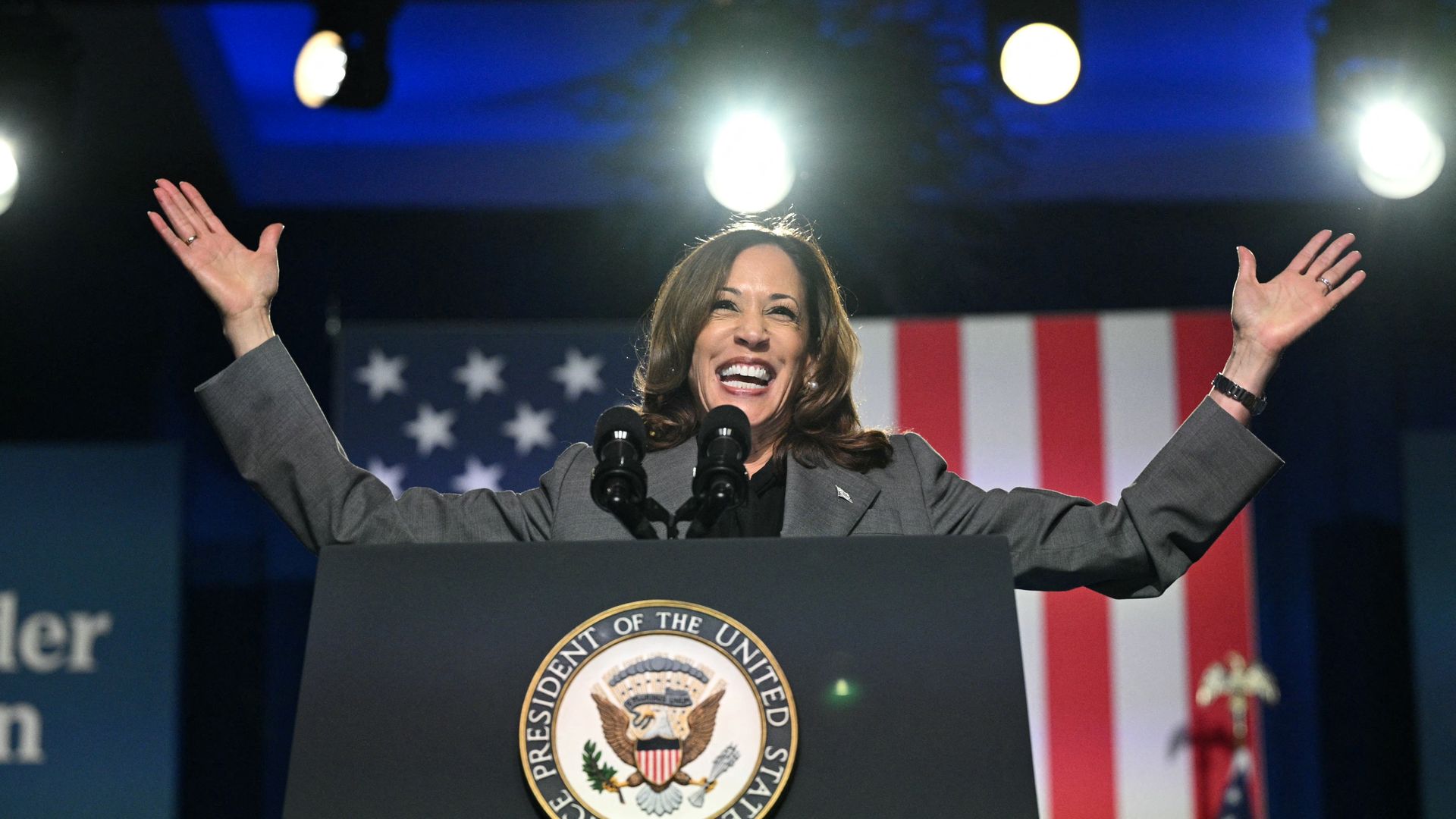
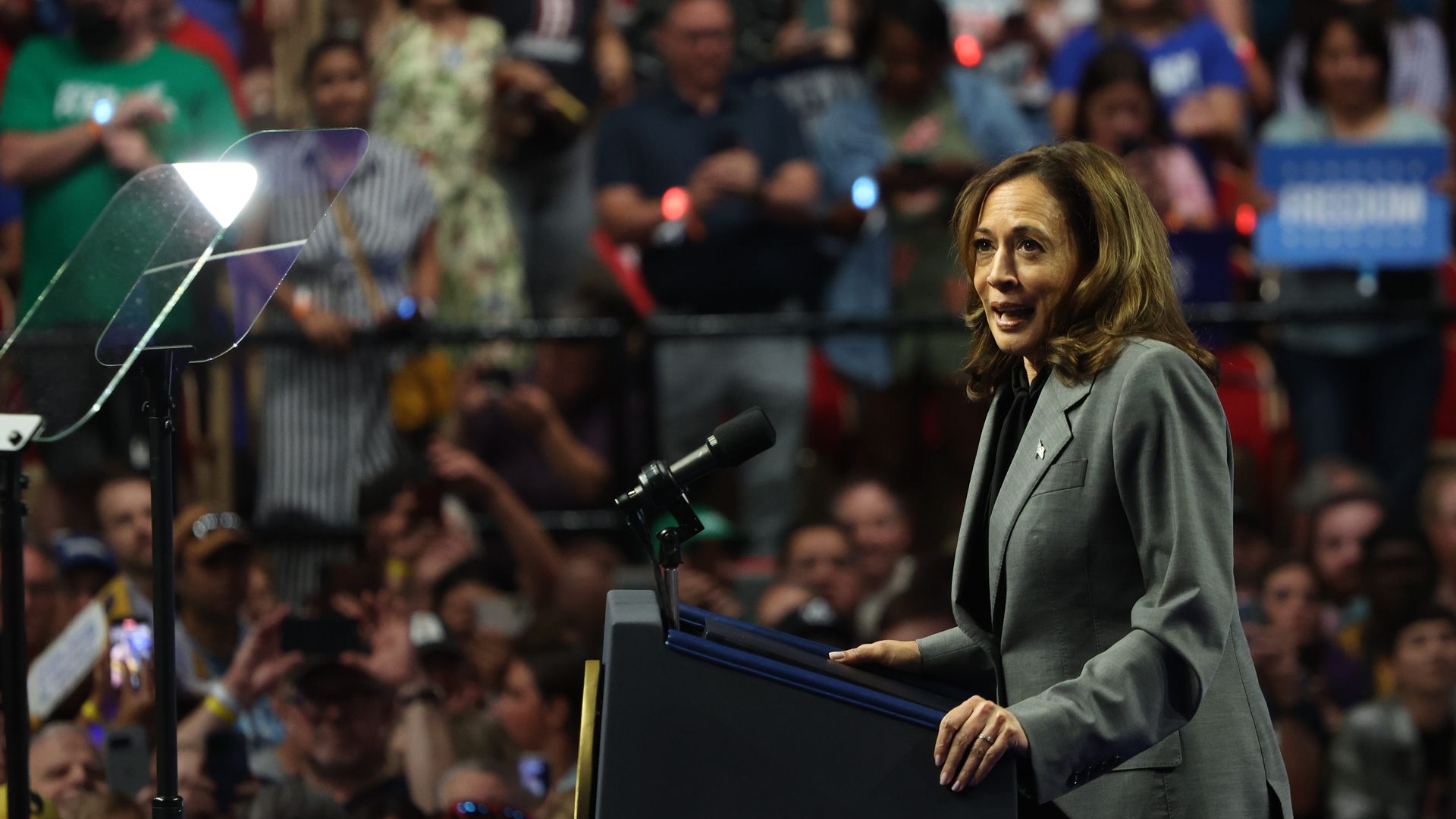
On Wednesday afternoon, Vice President Kamala Harris will seek to put some meat on the bones of her economic agenda, intending to convey that pragmatism will be her guiding economic principle.
The big picture: Her speech in Pittsburgh is aimed at assuring voters that she is no wild-eyed radical on economic issues, but rather a leader who embraces the strengths of capitalism while wanting to rein in its excesses.
French pharma giant Sanofi received binding offers for its consumer health business from private equity firms PAI Partners and Clayton Dubilier & Rice, with expectations that a deal would be worth at least €15 billion, per Bloomberg.
Why it matters: This would be the year's second-largest European private equity deal, behind KKR's deal for Telecom Italia assets, and largest in France.
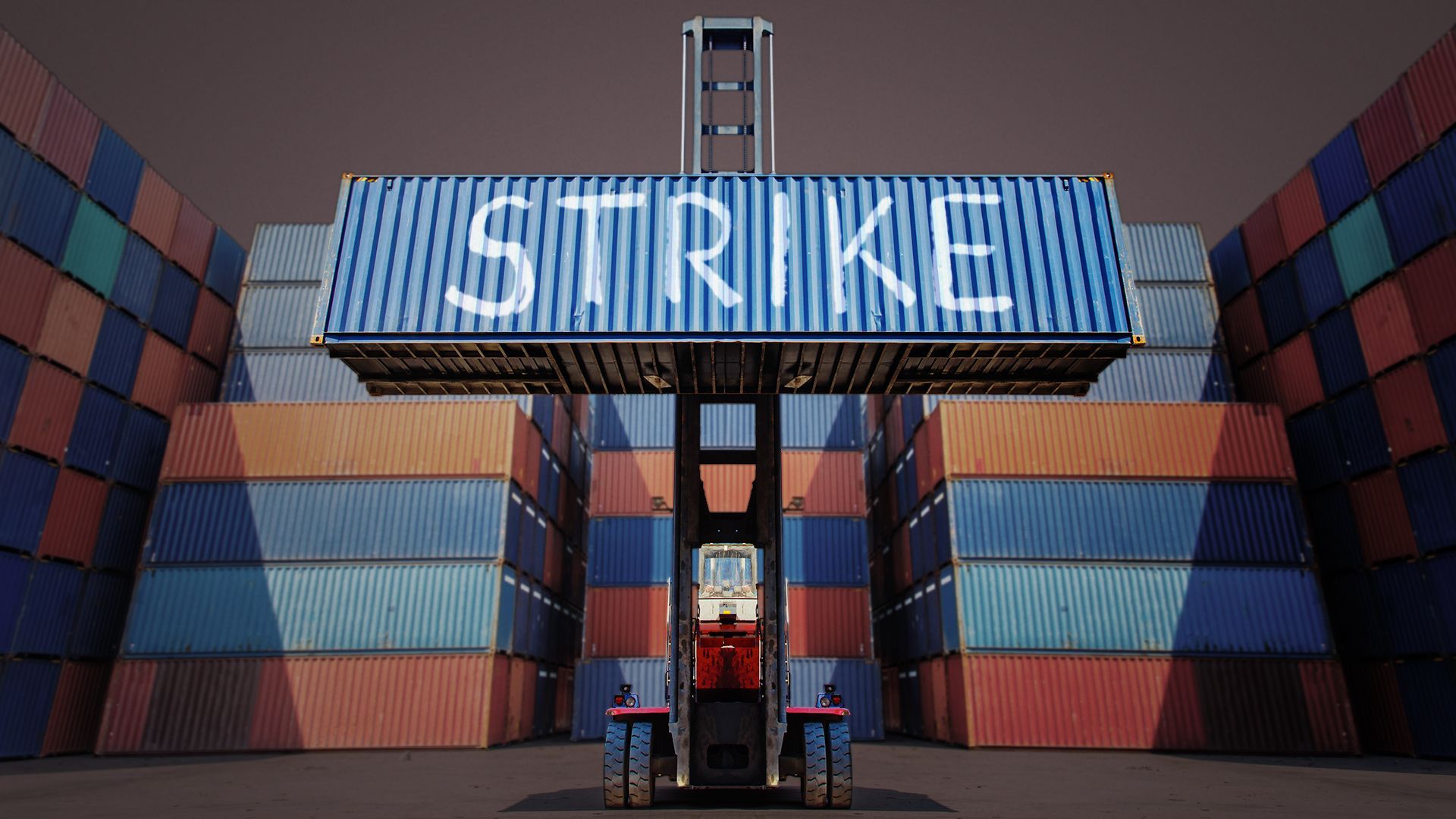
It's increasingly likely that thousands of dockworkers at major ports along the East and Gulf coasts will strike on Oct. 1, those close to the parties tell Axios.
Why it matters: Americans would feel this one. A strike would snarl the economy and presidential politics only weeks before the election.
Data: Federal Reserve; Chart: Erin Davis/Axios Visuals
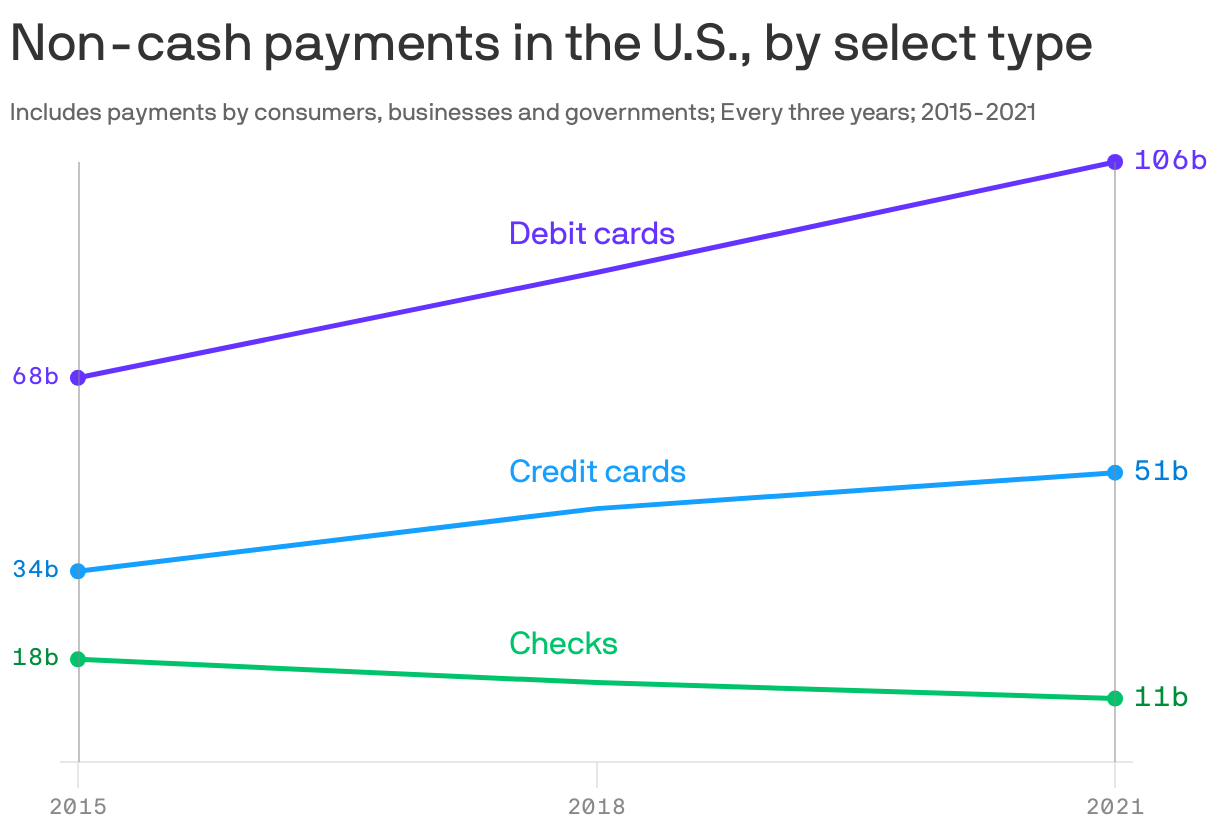
There are roughly 100 billion debit card transactions in the U.S. every year — and one company, Visa, processes more than 60% of them.
Why it matters: Visa charges "supracompetitive prices" for those transactions, per a DOJ complaint filed against the company on Tuesday.
That means its prices are significantly higher than would be seen in a truly competitive market — and indeed are significantly higher than the prices charged by its existing competitors.
Nevertheless, for various reasons outlined in the complaint, merchants continue to use Visa to process the majority of their debit-card transactions.
For the record: "This lawsuit is meritless, and we will defend ourselves vigorously," Visa general counsel Julie Rottenberg said in a statement.
By the numbers: The number of debit card transactions in 2021 grew by 20 billion over 2018, per the Fed's triennial payments study. Over the same period, credit card transactions grew by only 6 billion.
How it works: More than 45% of debit card transactions have to use Visa — they're "non-contestable," in the jargon, which means that because either the issuing bank or the merchant's bank doesn't accept the mandated Visa alternative, Visa is the only option.
Because Visa has a 100% monopoly on those transactions, it can set an exorbitant "rack rate" on them. The only way for merchants to pay a lower price is to agree to route all or nearly all of their debit transactions to Visa.
Follow the money: "Visa charges over $7 billion in network fees on U.S. debit volume annually, earning Visa $5.6 billion in net revenue," says the complaint.
"In 2022, Visa earned more revenue from its U.S. debit business than from its U.S. credit business, and more from its debit business in the United States than its debit business in any other region in the world."
The bottom line: Debit is a lot bigger than you probably thought it was.
Vice President Kamala Harris will outline her economic vision to grow the middle class during a Pittsburgh speech Wednesday, as she seeks to draw clear contrasts between her policies and those of former President Trump.
Why it matters: The Harris campaign believes this speech could help define the Democratic presidential nominee as a champion of the middle class and Trump as being for billionaires, as she emphasizes her middle-class upbringing and his more prosperous start to life.
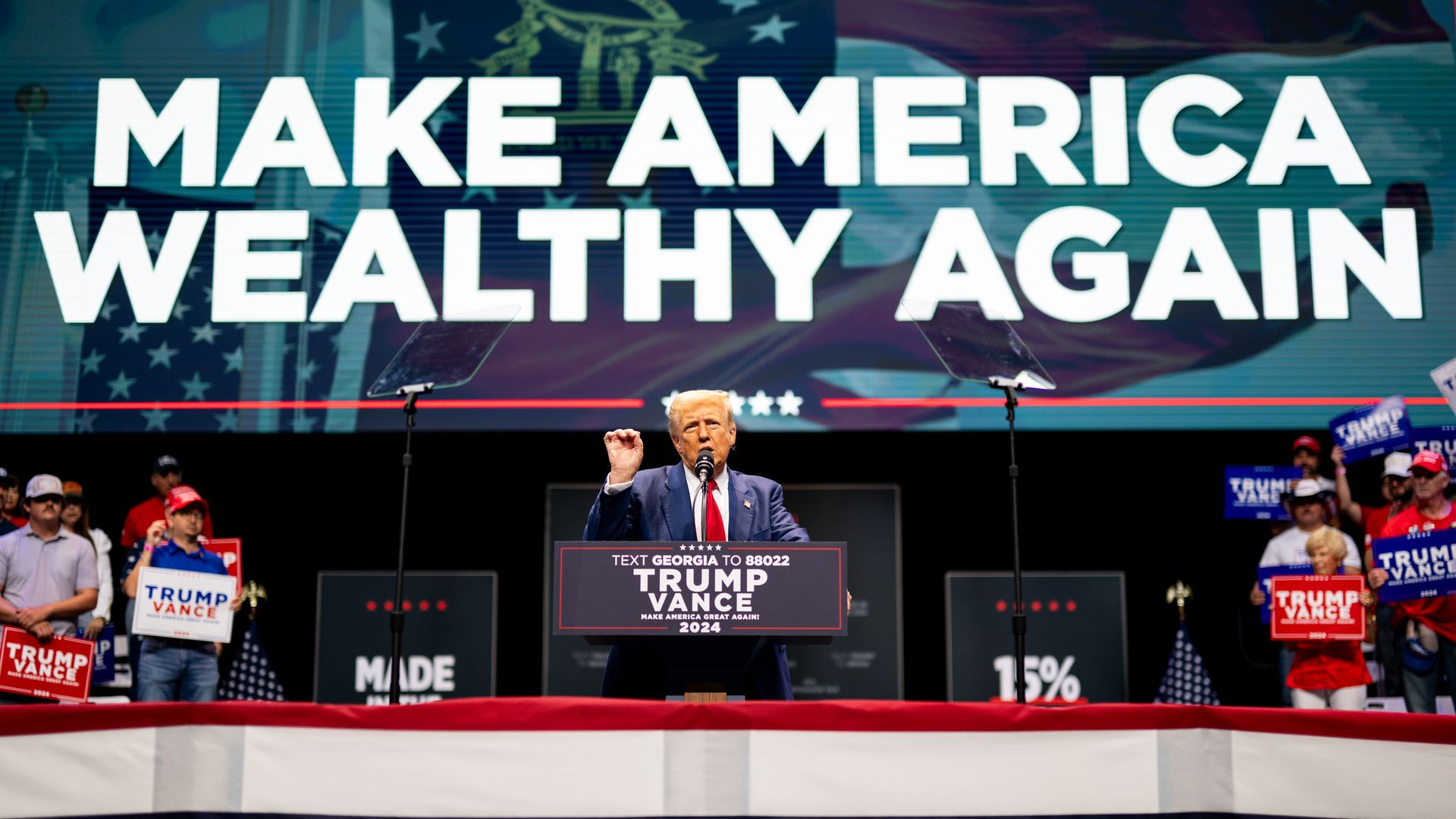
"Tariffs are the greatest thing ever invented," the former president declared at a town hall in Michigan last week.
Why it matters: The impact of Trump's plan to impose massive tariffs — with or without the support of Congress — has become the single biggest economic question of the 2024 election.










/2024/09/25/1727273254657.gif?w=3840)