Dockworkers along the East Coast are threatening to strike in October

Add Axios as your preferred source to
see more of our stories on Google.
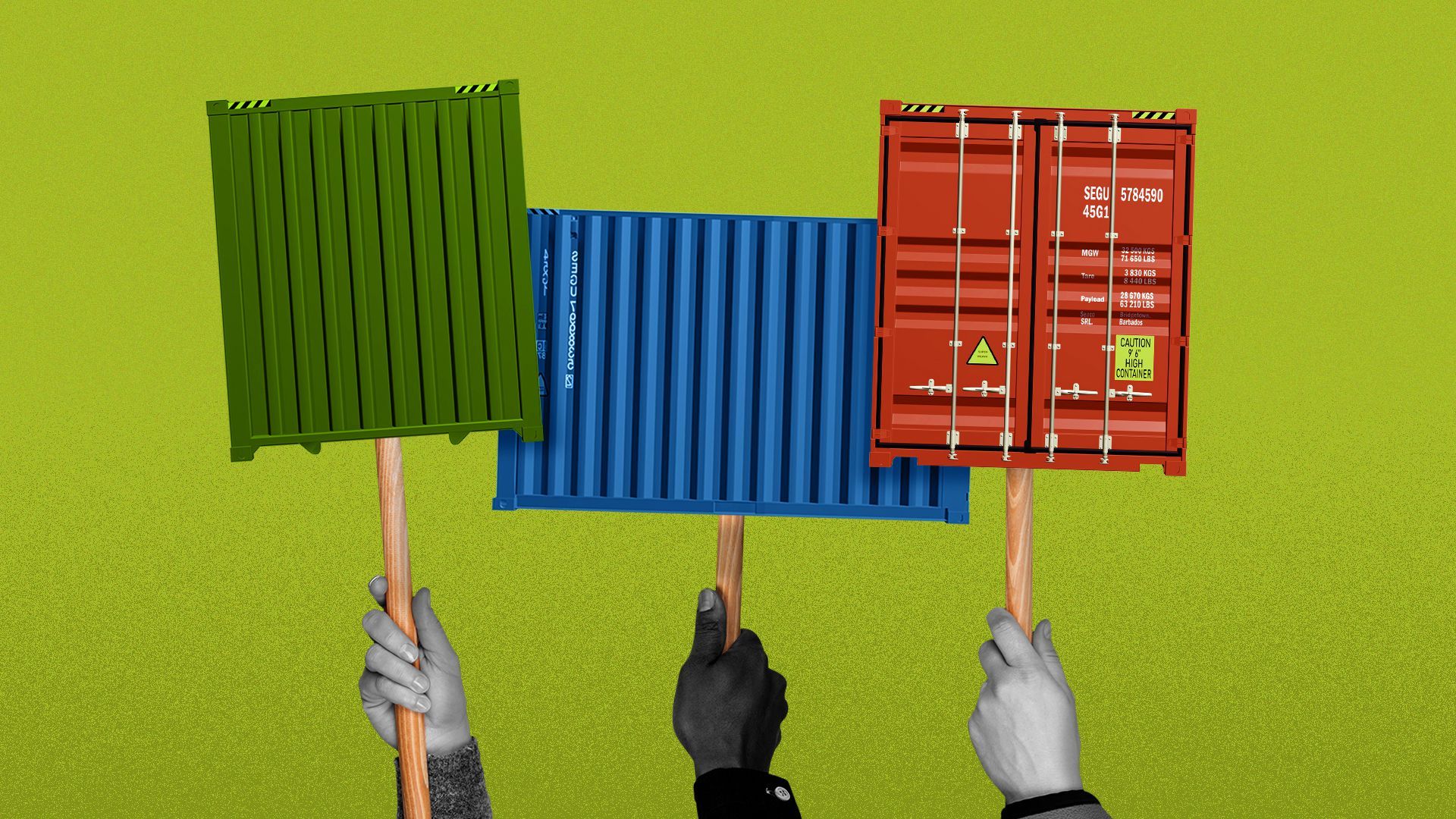
Illustration: Allie Carl/Axios
Of all the laborers critical to the smooth flow of goods around the planet, unionized dockworkers find themselves among those with the most power and best pay.
Why it matters: Port workers along the East and Gulf coast are threatening to strike in October — alarmingly close to Election Day.
The big picture: As Peter Goodman of the New York Times writes in his new book, "How the World Ran Out of Everything," the unions that represent port workers, particularly on the West Coast, have masterfully leveraged their ability to grind the supply chain to a halt.
- Full-time registered longshore workers on the West Coast, which had its own share of unrest last year, earned an average of nearly $200,000 a year in 2022, according to an estimate from the shippers — some of the best-paid industrial workers in the world.
- Their numbers have dwindled as the industry moves to automation. That's been a sticking point in negotiations, as we previously explained.
State of play: The current drama is playing out on the East Coast with the International Longshoremen's Association, the largest maritime union in North America.
- More than half of the cargo shipped to the U.S. from around the world comes through these ports.
- At this point, a strike is still unlikely, says Moses Kopmar of Moody's Ratings.
Zoom out: The drama comes at a time of increased turmoil in the shipping industry.
- Shipping rates have been driven up this year not only by drought conditions at the Panama Canal but also by the ongoing crisis in the Red Sea, which has diverted container ships away from the Suez Canal.
Zoom in: Talks are stymied between the union, which represents about 85,000 workers across 36 ports, and the U.S. Maritime Alliance, which represents employers including terminal operators and global shipping companies.
- Companies are already starting to either divert shipments away from the East Coast or, if possible, move up shipments early to avoid any autumn surprises, says Jess Dankert, vice president for supply chain at the Retail Industry Leaders Association.
- Meanwhile the negotiating drama is playing out through dueling public statements.
For the record: The union is saying it won't work past the Sept. 30 expiration of its contract. "[W]e are very far apart, particularly on the economic issues. In fact, we are at an impasse," per a statement from union president Harold Daggett a few days ago.
Between the lines: Observers tell Axios that wages are the big sticking point. East Coast workers want a better deal than the one their peer union on the West Coast negotiated last year.
- Acting Labor Secretary Julie Su ultimately helped hammer out that deal. Observers say the East Coast union doesn't want any help.
- The White House is monitoring the situation but so far letting negotiations play out on their own.
Reality check: Even if a strike happens, disruptions won't come close to the crisis at the ports brought on by the pandemic.
What to watch: The union is planning a big meeting early next month to pull together its "final contract demands" and prepare to strike, it said in a statement.
