The Federal Reserve cut interest rates by half a percent last week, playing catch-up to adjust policy for a world in which inflation has receded and the economy may be slowing. New data out Friday morning should make them glad they did.
Why it matters: The latest data on inflation, consumer spending and incomes affirm the outlook that undergirded last week's rate cut, that prices are converging toward the Fed's 2% target and consumers are becoming more cautious.
The Federal Reserve's favorite inflation gauge showed mild price increases for yet another month as incomes held steady and consumers pulled back on spending, the government said on Friday.
Why it matters: Inflation kept receding in August, confirming the trend that convinced the central bank to lower interest rates earlier this month. Other details of the report suggest a cooling — though not collapsing — economy.
Southwest Airlines just delivered its "most transformational plan" ever to investors, promising to juice its profits over the next three years.
Driving the news: Southwest predicts the three-year plan will add $4 billion to its earnings before interest and taxes in 2027.
It's built around new revenue streams, such as charging for perks and new partnerships with international carriers, and new ways to lower and manage costs.
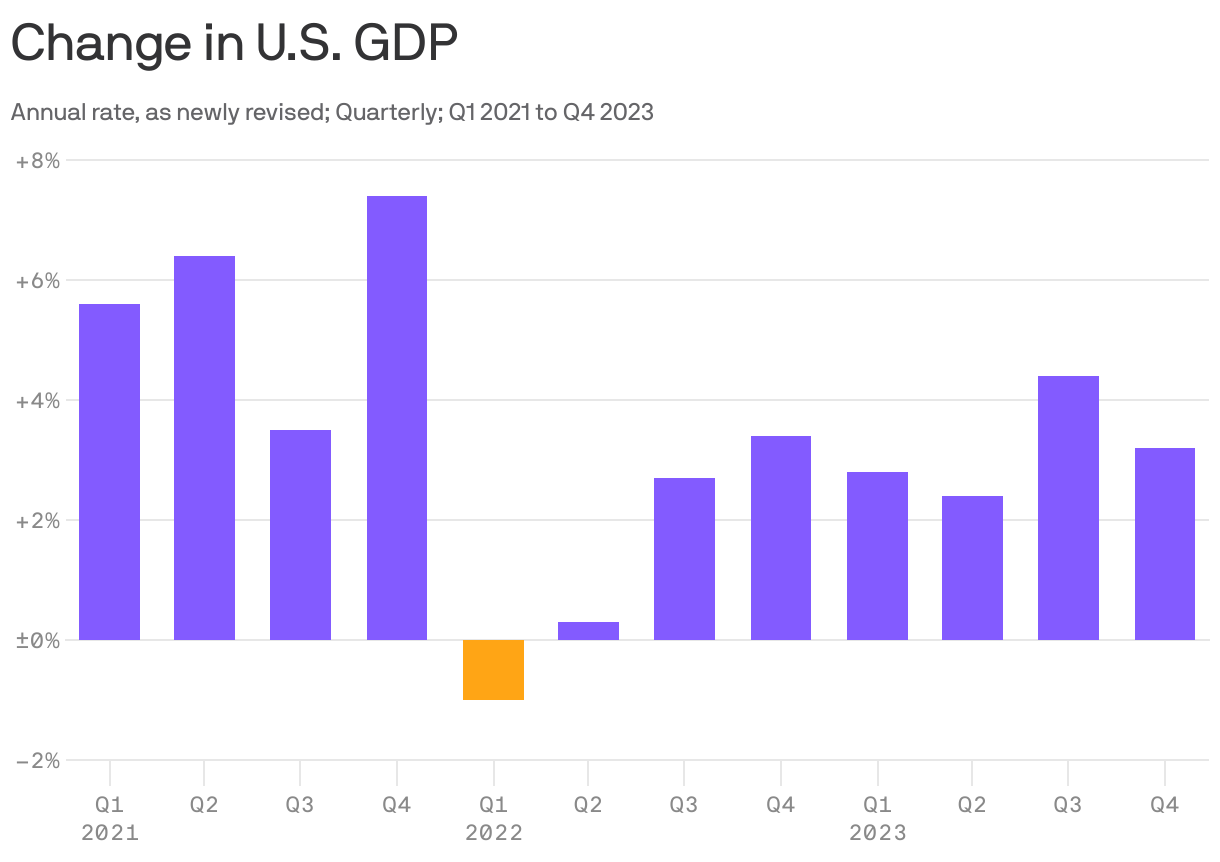
Remember two years ago,when GDP was reported as having shrunk for two consecutive quarters, and there was an entire exhausting discourse about whether it qualified as a recession? Turns out it was a statistical illusion.
Why it matters: It is a reminder, as we get caught up in debates over how to interpret economic data, of how much we don't really know in real time about the inner workings of the economy.
NEW YORK – Efforts to decarbonize key industries are underway but solutions are not scaling fast enough.
Axios host/editor Niala Boodhoo and Sara Kehaulani Goo, executive editor of Axios Live, moderated conversations with National Climate Advisor Ali Zaidi, Delta Air Lines chief sustainability officer Amelia DeLuca and Bridgetown Initiative director and special advisor to the Barbados Prime Minister on climate resilience Pepukaye Bardouille at Axios House for Climate Week and UNGA, which was sponsored by PAGE.
Why it matters: Building out infrastructure for renewable energy is a key aspect of accelerating energy transitions in the U.S. and globally.
What they're saying: "One of the big things that we try to focus on is just blocking and tackling on the ground to get things built, and that's a big focus for us in these last few months," Zaidi said of the Biden administration's energy priorities for the rest of his term.
Zaidi said the Biden administration has tried to focus "sector by sector" when it comes to decarbonization.
For the power sector, the top priority is building more transmission lines and finalizing the tech neutral tax credits for the Inflation Reduction Act, he said. For transportation, it's building up more momentum for heavy duty and freight decarbonization.
Scaling sustainable aviation fuel is a key part of the aviation industry's decarbonization strategy. "Sustainable aviation fuel is the real challenge. It's not scaling as fast as it needs to, and that is the single most important lever that we have to pull," DeLuca said.
What we're watching: Climate finance has been a key focus of international conversations on the need to speed up global energy transitions.
A lack of adequate funding for developing economies to move away from fossil fuels and improve climate resilience is a big challenge.
"But I think when financing institutions and development partners really kind of look at the numbers and expressly realize that for every dollar that you invest in adaptation, you save between $4 and $7 in reconstruction, then it's actually pretty good value for money," Bardouille said.
Sponsored content:
In a View From the Top sponsored segment, EQT president and CEO Toby Z. Rice emphasized the importance of growing energy production in the United States but also noted that it has never been more difficult to do so.
"It's never been a more important time to produce energy in the United States, whether that is fueling our allies with our LNG and meeting the growing demand of our allies overseas, or powering this AI revolution that's taking place in our shores. But unfortunately, it's never been more difficult to produce energy in this country."
The issuers of the stablecoin TrueUSD (TUSD) were not honest about what was backing it, according to a complaint that preceded a settlement with the SEC, which was announced Tuesday.
Why it matters: Stablecoins that say they are based on 1-to-1 backing with U.S. dollars need to have those dollars on hand.
Friction point: TrueUSD was not, the SEC alleges, backing its tokens with dollars, at least not entirely.
Instead, it was heavily investing deposits into some kind of commodity fund, presumably to earn profits for the issuer.
But that's not how the complaint says it represented the backing to its customers.
"Mr. Chairman, before the end of this year, I want us to strike a grand bargain on stablecoins and other long overdue bills. ... Since 2022, we have been working for hours on end to reach an agreement and have each made concessions."
— Rep. Maxine Waters (D-Calif.) during maybe the last hearing of the House Financial Services chaired by Rep. Patrick McHenry (R-NC)
We all thought stablecoin legislation was coming any day in 2022, but then... 🦗🦗🦗.
Homeowners who took out mortgages at the height of the Federal Reserve's rate-hiking campaign are rushing to shrink their monthly payments.
Why it matters: This is one intended effect of easing monetary policy — and the housing sector is a key transmission mechanism. The mini refinance boom puts more cash in consumers' pockets to spend elsewhere.
Throughout my conversations at Axios House and in various meetings with chief communications and corporate affairs officers this week, not once did the words "press release," "media relations" or "social media" come up.
Instead we discussed public policy decisions, looming regulatory hurdles, amicus briefs, stakeholder management, corporate impact, sustainability and DEI strategies.
Why it matters: These conversations show where most communicators are spending their time, energy and resources.
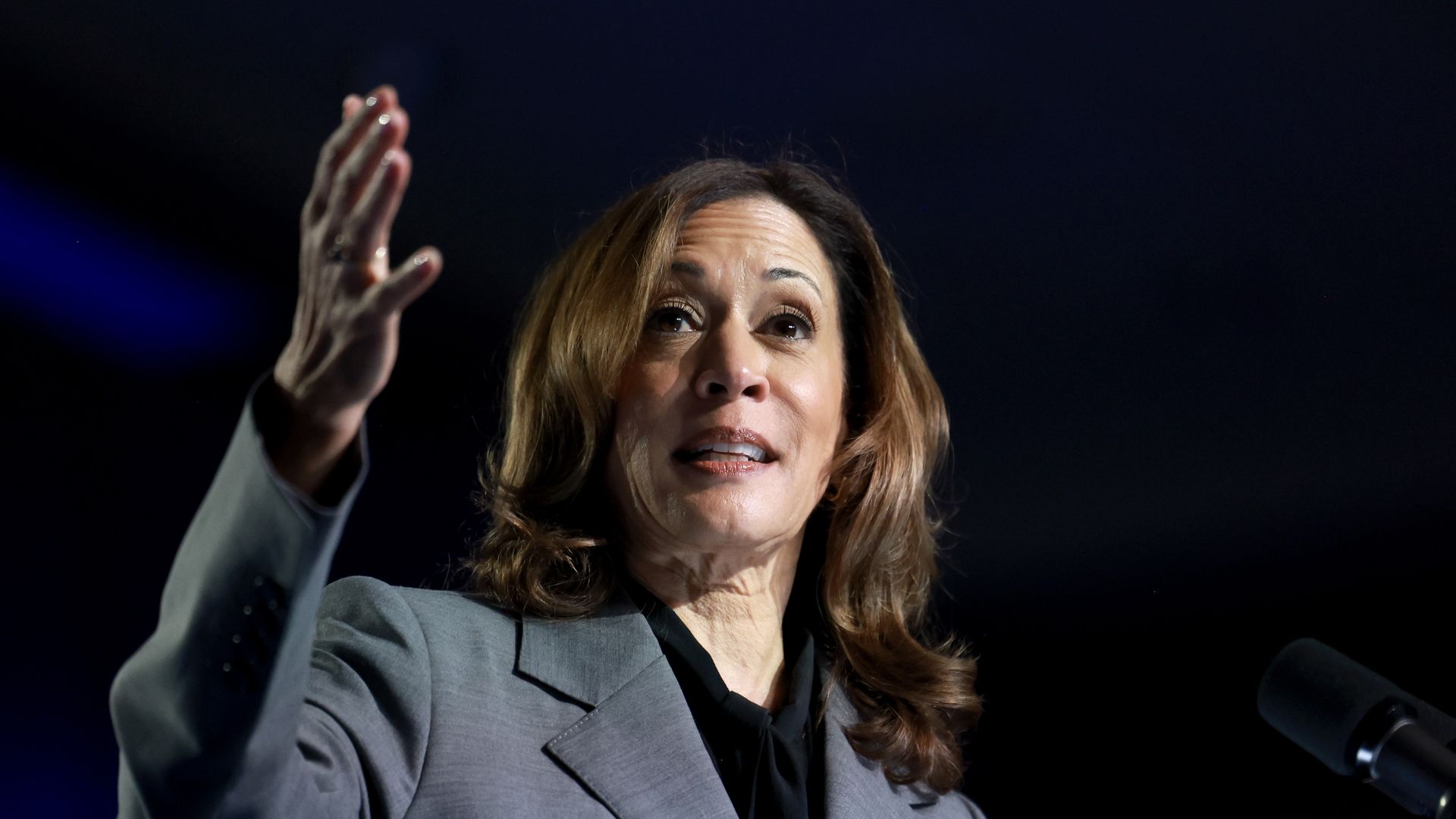
Vice President Kamala Harris offered some clarity to what her anti-price gouging proposal means, in an 82-page economic policy paper that her 2024 campaign released Wednesday.
Why it matters: The Democratic presidential nominee had been vague on what her promised crackdown on price gouging would look like, leading to wild speculation about "communist" price controls.
The push to electrify urban taxi and rideshare fleets has created a new issue: not enough charging infrastructure in cities like New York and San Francisco.
Why it matters: While government funding is directed primarily to highway charging spots, dense urban centers stand to benefit the most from the shift to electric cars, trucks and buses — provided they have a place to charge.
About a year ago, advocates warned that the U.S. was about to fall off a "child care cliff," when pandemic-era funding ran out.
Why it matters: So far the situation doesn't look quite as dire as predicted, but it's deteriorating, according to a new report from the Century Foundation, a progressive think tank.
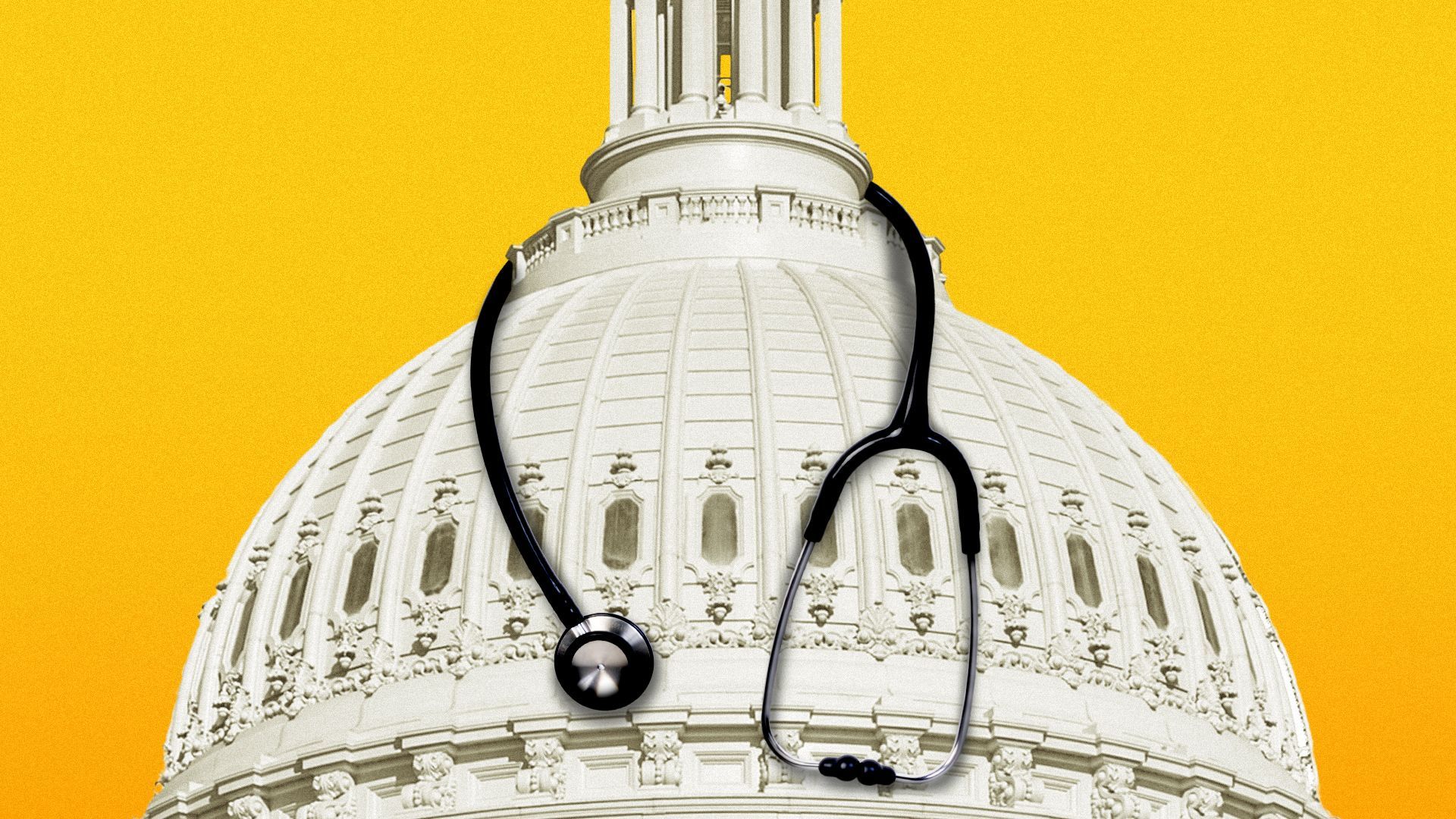
A decision by Congress to let enhanced Affordable Care Act subsidies expire next year could leave 2 million people with chronic conditions uninsured, a new analysis from consulting firm Oliver Wyman shows.
Why it matters: The fate of the subsidies is shaping up to be one of the biggest health care issues facing the next Congress.
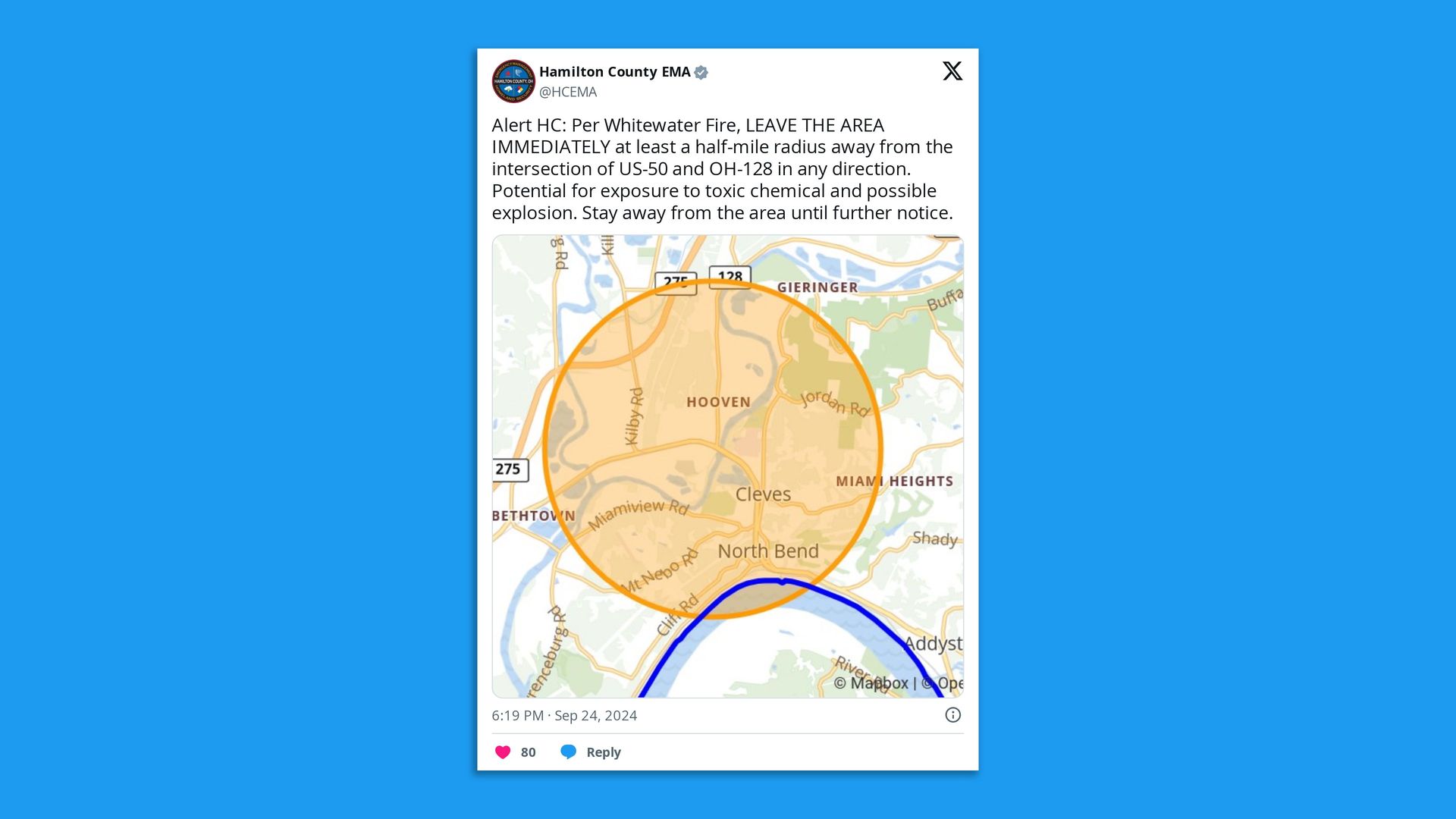
A chemical leak from a train car in Whitewater Township, near Cincinnati, prompted Ohio officials to issue evacuation orders on Tuesday due to concerns about a potential explosion.
The latest: Hamilton County officials said Wednesday evening that evacuation and shelter-in-place orders were lifted after the leaking train car was removed from the scene.
The United States Postal Service said it intends to hike the price of stamps five times through 2027 after punting on an increase that would've gone into effect in January.
Why it matters: A record price hike could be in play for July 2025 when stamp prices are next slated to increase.