What's next after the Fed's big rate cut

Add Axios as your preferred source to
see more of our stories on Google.
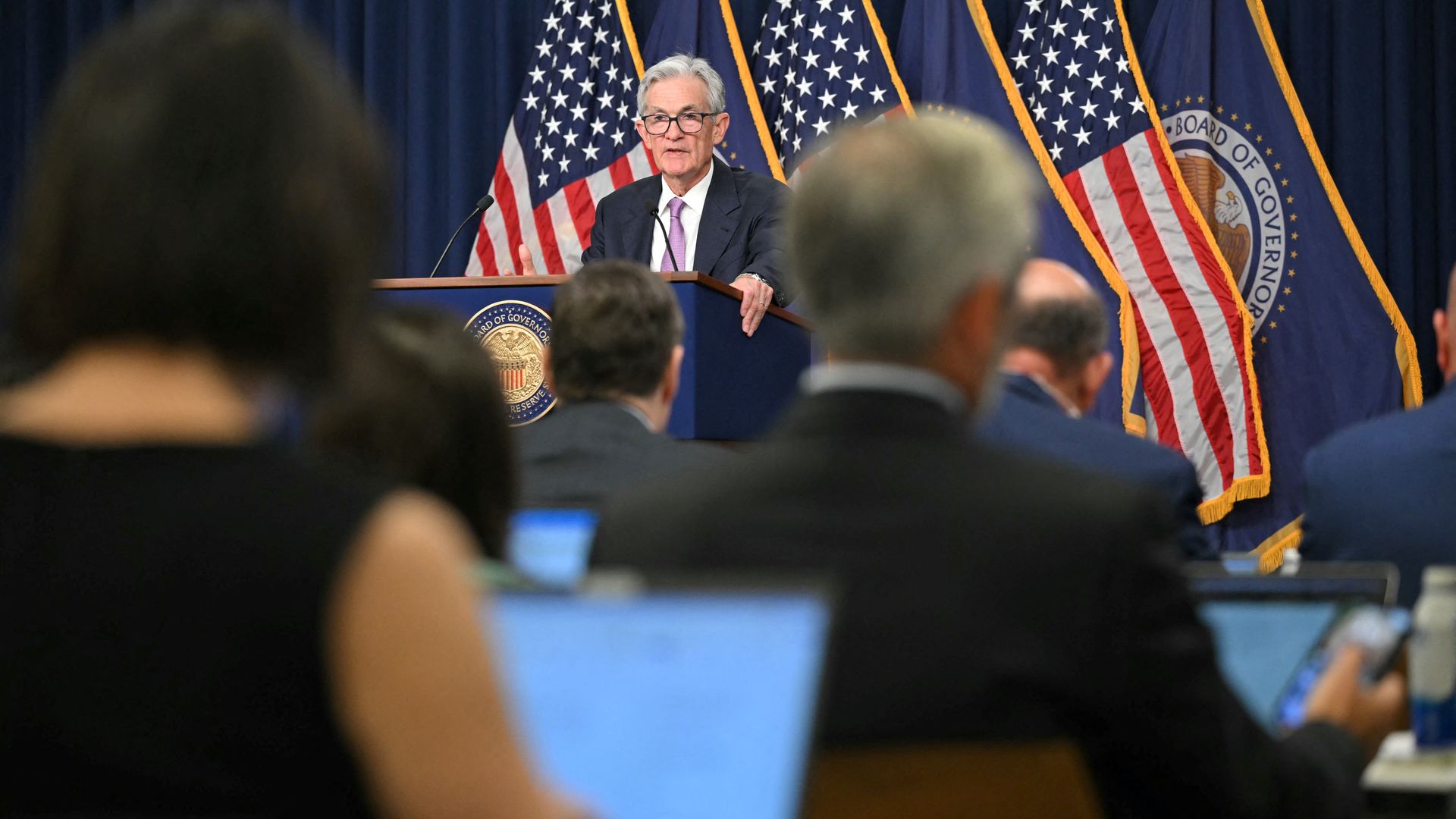
Federal Reserve chair Jerome Powell at last week's news conference. Photo: Mandel Ngan/AFP via Getty Images
First, there was the cutting, now the talking. Fresh comments from several top Fed officials shed new light on why the central bank went with a large rate cut last week and what that portends for the future.
Why it matters: The comments point to a conviction among Fed decision-makers that the economy is basically sound and that continued expansion is likely — but that signs of a deteriorating labor market over the last couple of months have gotten their attention.
- That means they will probably shift to a more gradual pace of rate-cutting from here on out, while also standing ready to move more aggressively if their rosy outlook proves too optimistic.
State of play: There are two basic theories of the case for rate-cutting. One is simply that, with inflation now nearly down to the Fed's target, it is no longer necessary or appropriate to have rates set at elevated levels designed to crimp demand.
- The second theory is that the labor market has been steadily worsening for months now, so the Fed needs to take action to prevent it from sliding further.
- The latest round of Fedspeak suggests that the first story created the impetus to cut rates last week, while the second story is the reason they moved with an aggressive half-point cut.
What they're saying: "In my judgment, cutting the policy rate by 50 basis points last week was the right decision," Minneapolis Fed president Neel Kashkari wrote in an essay published Monday morning, that "reflects both the substantial progress we've made in lowering inflation and also the softening of the labor market."
- "Inflation has fallen faster than I had expected, and the most recent data solidify my conviction that the US economy is indeed sustainably on the path back to price stability," said Atlanta Fed president Raphael Bostic in a speech Monday morning.
- "On the employment side of the ledger, clearly the red-hot job growth coming out of the pandemic is cooling," Bostic added. "That said, the labor market is weakening but is not weak, slowing but not slow."
Of note: Even the official who formally dissented from last week's decision, governor Michelle Bowman, made clear in a statement released Friday afternoon that she agreed it was time to cut rates, but saw reason to move more cautiously.
The bottom line: Policymakers think the economy is basically holding up fine, which would mean more judicious quarter-point reductions from here. But if they're wrong, they're ready to react.
