The pace of U.S. home prices continued to cool in July.
Between the lines: National home prices hit another all-time high in the month, but rose only 0.18% on a seasonally adjusted basis from June, according to the S&P CoreLogic Case-Shiller Index.
What they're saying: The "muted" increase "adds to the sense that the housing market is cooling amid weak buyer demand and growing supply," Capital Economics North American economist Thomas Ryan wrote today.
Caroline Ellison was sentenced on Tuesday to two years in prison by a federal judge in New York, for her role in the FTX cryptocurrency scandal.
Why it matters: Ellison arguably was the most important witness in the prosecution of FTX founder Sam Bankman-Fried, and her relatively lenient sentence reflected her cooperation.
Why it matters: As high grocery prices continue to burden American consumers, those enrolled in SNAP could see their maximum allotments tick upward next week — but not by a lot.
Schools across the U.S. have been rocked by a spate of false threats of violence in recent weeks, forcing them to evacuate or temporarily close.
Why it matters: Threats of bombs, shooters and other dangers disrupt learning and stir community-wide anxiety about school safety. Responding to them can also be expensive and time-consuming for local governments and law enforcement.
Based on Axios Crypto'strip to D.C. last week, it's clear to me that folks who care about blockchain policy are thinking about the lame-duck session.
Why it matters: The next Congress and White House are a horizon right now. No one can see over it, which makes it impossible to reliably envision how anything gets done in that not-so-distant future.
State of play: House Financial Services Chair Patrick McHenry very much wants to pass crypto legislation before he leaves Congress at the end of this term.
Sen. Majority Leader Chuck Schumer is working to build industry support for Vice President Kamala Harris before the election, and is interested in passing some kind of legislation — if for nothing else so that advocacy group Stand With Crypto will credit congressional Democrats with something.
Vice President Kamala Harris spoke on cryptocurrency for the first time last weekend.
Why it matters: Crypto has now been acknowledged by both sides in the highest race in the land.
Driving the news: "We will encourage innovative technologies like AI and digital assets, while protecting our consumers and investors," Harris said Sunday at a Wall Street fundraiser.
What they're saying: "This is a major step forward, but these comments from a closed-door forum stop short of the context needed to understand her presidential intentions," Rashan Colbert, head of policy at the decentralized finance firm Dydx said on X.
New testimony has come out in the bankruptcy of Silvergate Bank, one of the two banks that was primarily serving the cryptocurrency world, and it supports the narrative that the bank was never insolvent.
Why it matters: If the testimony is accurate, that would mean Silvergate was effectively choked off by banking regulators, much as former Rep. Barney Frank said its peer bank, Signature, had been.
Silvergate had become a boutique bank devoted to serving the crypto industry.
One of its most important lines of business was running a 24/7 operation that allowed high-profile exchanges to send each other dollars.
Consumer confidence plunged by the most in three years this month as more Americans adopt increasingly negative perceptions of the current and future economy.
The big picture: The Conference Board's Consumer Confidence Index fell almost 7 points to 98.7 in September — the biggest monthly drop since September 2021.
Why it matters: It's not just monetary policy officials who are worried about a labor market slowdown. Consumers became more pessimistic about the economy this month than in years past — largely because of a darkening outlook on employment.
The People's Bank of China unleashed a fusillade of measures aimed at arresting the nation's economic malaise Tuesday morning.
Why it matters: The world's second-largest economy faces a popping property bubble, inadequate consumer demand and the risk of spiraling deflation. The new actions show the government's resolve to get growth back on track — but also the limits of the policy tools it is willing to use to achieve that goal.
Hiring platform Greenhouse wants to make job hunting less frustrating for workers by spotlighting companies with good recruiting manners — such as not ghosting applicants and showing up prepared to interviews.
Why it matters: The job search process for both employees and employers has become more difficult amid a rise in spam applications, job posting scams aided by AI, and an explosion in AI-generated candidates and resumes.
The last full-size Kmart store in the continental U.S. is set to close in October, marking the end of the line for the retailer once known for its "Blue Light Specials."
Why it matters: After the Bridgehampton, New York store closes, there will be a small Kmart in Miami and a handful of stores in Guam and the U.S. Virgin Islands.
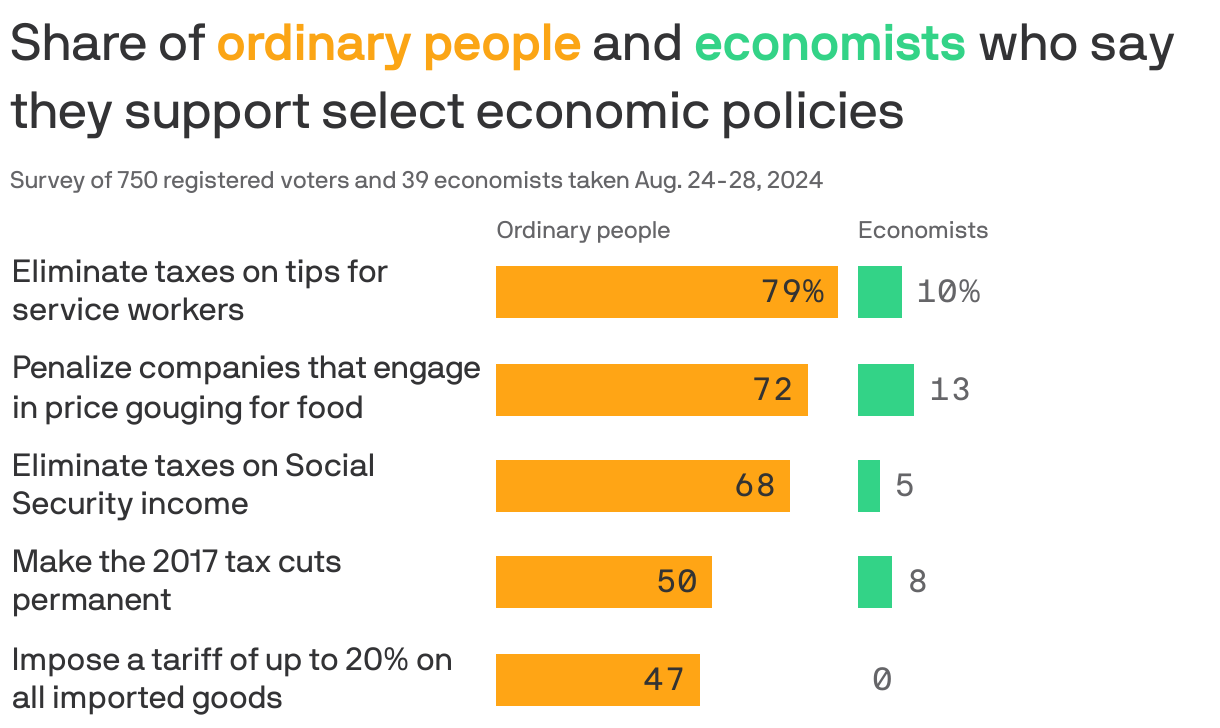
Data: Wall Street Journal poll; Chart: Axios Visuals
There's another big divide emerging in this election. This time it's between voters and economists, finds new polling from the Wall Street Journal.
Why it matters: In their presidential campaigns, both Kamala Harris and Donald Trump are proposing economic policies that are really popular with voters. Mainstream economists, meanwhile, find these ideas "appalling," the Journal notes.
Buying secondhand items is "becoming a norm and mainstream," Eileen Fisher CEO Lisa Williams told Axios on Monday.
Why it matters: After years of "revenge spending" in the aftermath of the pandemic, some Americans say they've been turning away from overconsumption and focusing more on sustainability.
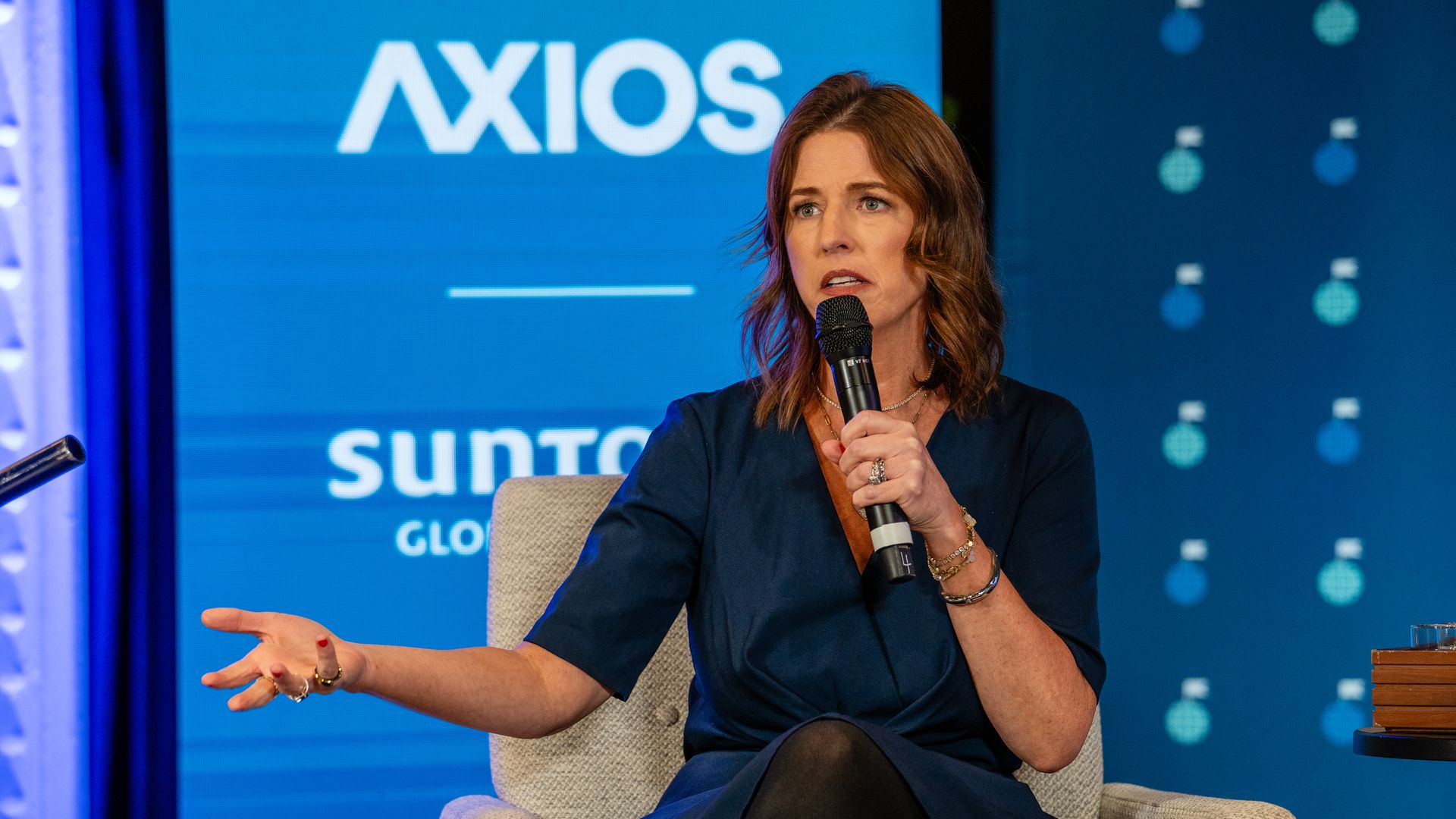
Amazon is striving to decarbonize parts of its business globally in an effort to progress its climate goals, chief sustainability officer Kara Hurst told Axios' Niala Boodhoo at Axios House Climate Week/UN General Assembly in New York City on Monday.
Why it matters: The company runs one of the biggest logistics and transportation networks in the world.