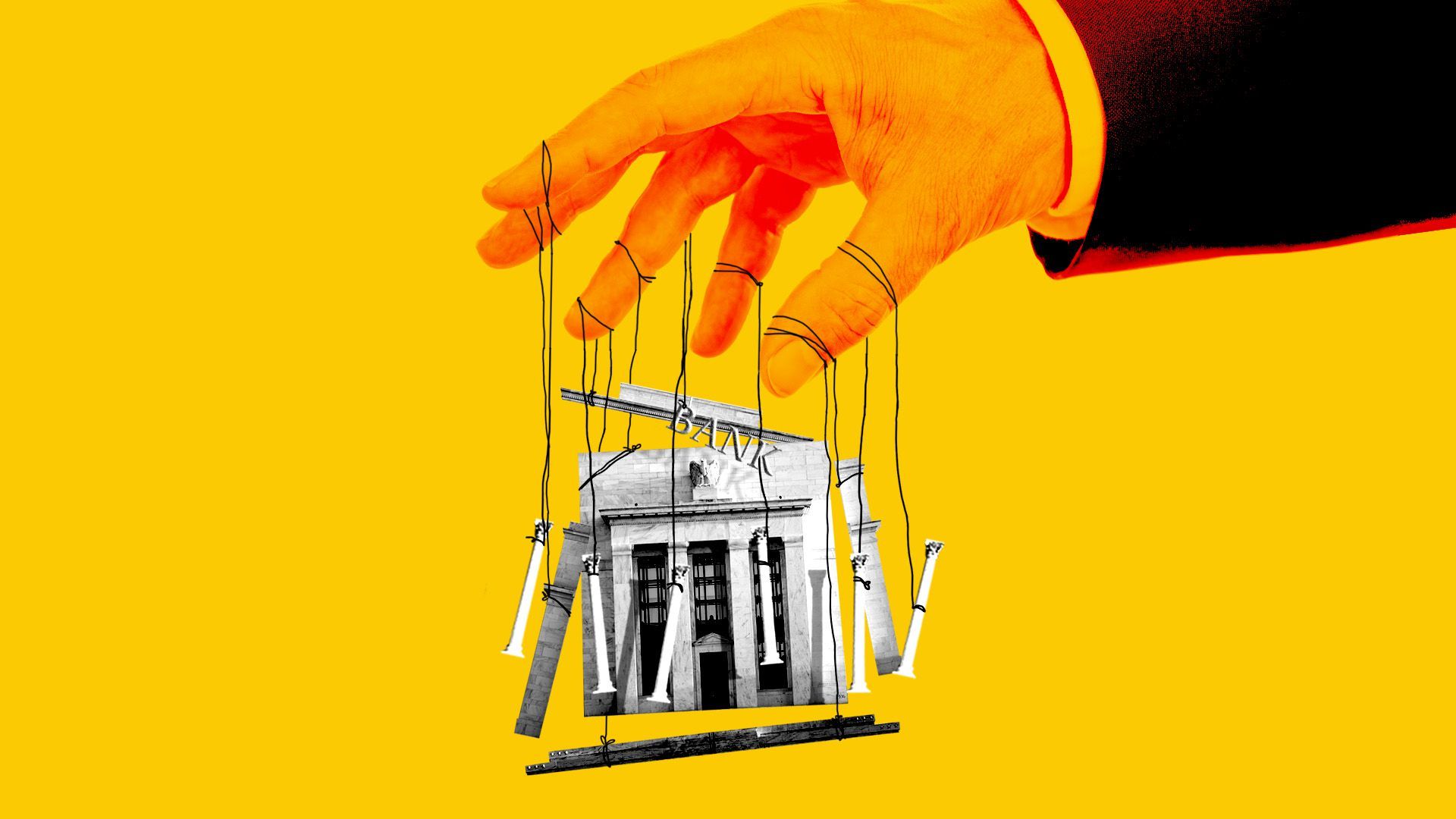
If your economy is broken, you can try to fix it — or you can essentially just throw it in the trash and try to build something new from scratch.
Why it matters: The latter is, broadly, the plan of anarcho-capitalist Argentine president Javier Milei, while the former is the plan of Zambian president Hakainde Hichilema.
Morgan Stanleyhas agreed to pay $250 million after it emerged that the head of its block trading desk, Pawan Passi, had tipped off hedge funds to large upcoming sales — after explicitly promising his clients that he wouldn't do so.
Why it matters: The case sheds a tiny bit of light on how far the government will go when it's investigating a bank.
Zoom in: Organizers set "rebuilding trust" among leaders as the theme of this year's annual meeting of the World Economic Forum. It's a worthy one given the threat of geopolitics on business. However, AI took center stage.
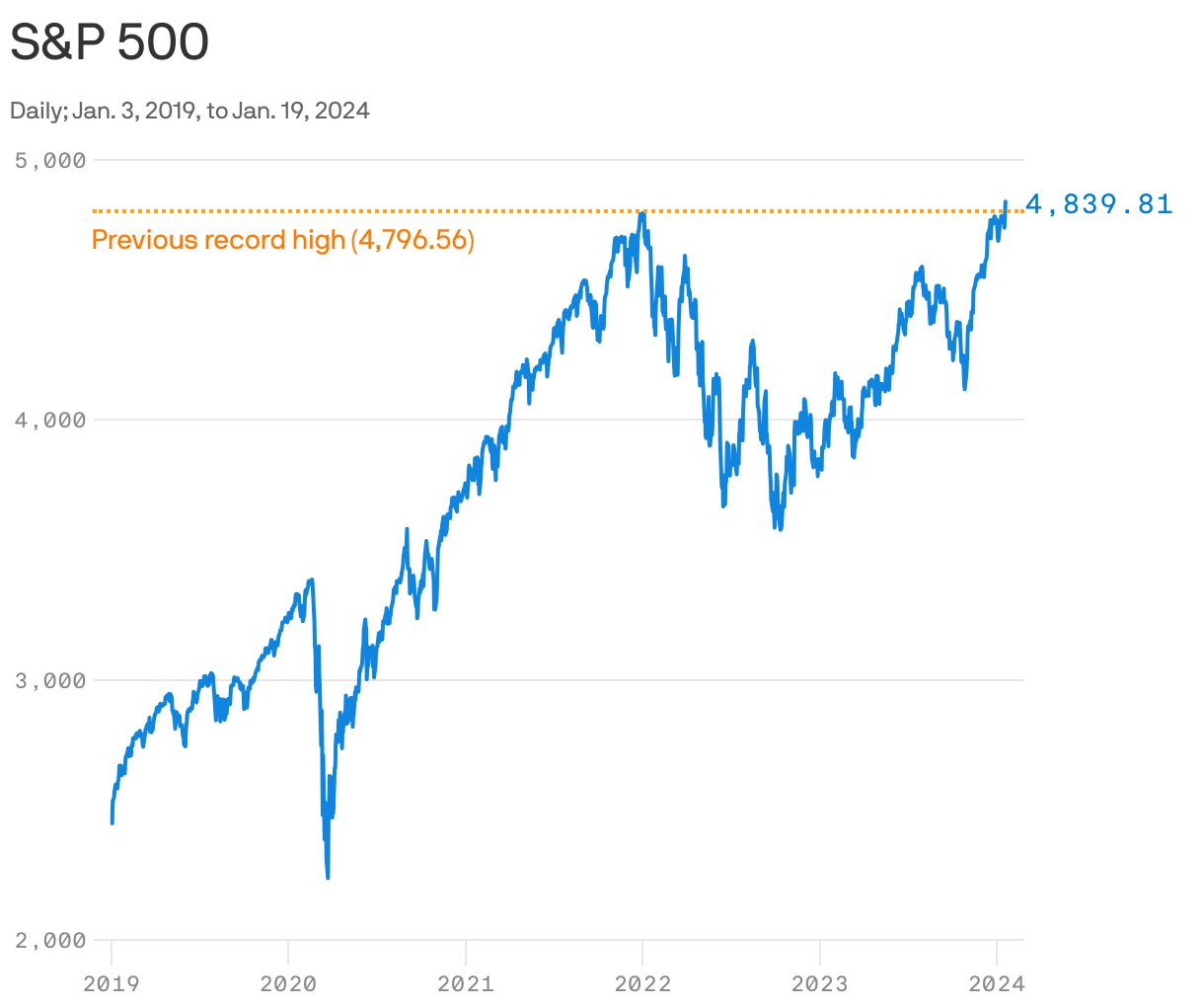
The S&P 500 closed at a new all-time high on Friday.
Why it matters: Reaching a new high-water mark confirms that we are indeed in a full-on, horns-out, snorting bull market, at least according to the conventional definition long used on Wall Street.
Bitcoin ETFs have picked up billions since their launch last week.
Why it matters: In just four trading days since listing on exchanges, investor flows in some of 10 are stacking up to broad-market funds, according to Bloomberg Intelligence data.
There is a large chunk of the recently converted GBTC spot bitcoin ETF that will be forcibly sold, if it hasn't been already.
Why it matters: GBTC is one of 10 spot bitcoin exchange traded funds vying for new dollars since receiving the milestone nod from the SEC to list last week.
In the last couple months, Americans' sour sentiment has grown a lot sunnier.
Why it matters: Since the pandemic, U.S. consumers have consistently reported depressed economic sentiment, despite that fact that America's economy has staged a better recovery from COVID than the rest of the world's rich nations have.
Wall Street regulators' attempt to toughen bank rules has resulted in a surprising alliance of opponents, prime-time television commercials and an unprecedented legal threat that's shocked even the most seasoned policymakers.
Why it matters: Top regulators, including at the Fed, proposed new rules that seek to bring America more in step with international peers and safeguard the financial system after last year's banking turmoil. But it now looks like the final rule won't be as harsh as what was initially proposed.
Here's a quick update on the world's most well-telegraphed credit market problem — office loans.
The big picture: The WFH wars are over — hybrid work won. And the departure of roughly a quarter of white-collar workers from offices will continue rattling through the $20 trillion private commercial real estate market for the foreseeable future.


/2024/01/19/1705686394539.gif?w=3840)