Data: Pollstar via The New Consumer; Chart: Axios Visuals
Taylor Swift and Beyoncé togetherfetched as much in concert ticket sales in 2023 as the next five artists combined, according to Pollstar data compiled by the New Consumer.
State of play: The music superstars collectively took in $1.6 billion through the Eras Tour and Renaissance World Tour, Nathan writes.
Bruce Springsteen, Coldplay, Harry Styles, Morgan Wallen and Ed Sheeran collectively pulled in the same amount.
💭 Nathan's thought bubble: And that doesn't even count merchandise.
Corporate pensions are starting to look like a viable option for employers to give to their workers — but companies aren't exactly ready to rewind the clock.
Why it matters: With one in two Americans feeling like they aren't able to save for retirement, the steady and predictable income from pensions could be a welcome proposition.
BlackRock, the world's largest asset manager, on Tuesday announced that it will lay off around 600 people, or 3% of its global workforce.
Driving the news: In an internal email reviewed by Axios, BlackRock CEO Larry Fink and president Rob Kapito wrote that 2024 presents a "distinctly different landscape" requiring "businesses across the firm ... to reallocate resources."
The global economy of the 2020s will be more bleak — with sluggish economic activity, less trade growth and crushing borrowing costs — than the decade that preceded it.
Driving the news: This is the new warning from the World Bank Tuesday morning that says the global economy so far had its weakest performance in more than 30 years.
New survey data from the New York Fed suggests Americans' expectations for inflation in the years ahead fell precipitously in December — back, roughly speaking, to pre-pandemic levels.
Why it matters: That's great news, if you believe — as many economists do — that high inflation expectations can be self-fulfilling.
The Biden administration announced a final rule on Tuesday that makes it harder to classify workers as independent contractors — a victory for gig workers that could shift the business models of companies that rely on them.
Why it matters: The rule, which takes effect in March, requires businesses to extend the benefits and protections offered to employees to other workers that may no longer fit the status of a contractor.
Office vacancies hit a record high in the fourth quarter of last year, surpassing previous peaks last reached in 1991 and 1986, according to data from Moody's Analytics out Monday.
Why it matters: Office buildings are emptying around the U.S., as companies continue to adapt to the new norms of remote and hybrid work by shrinking their physical footprints.
Bitcoin ETFs could gain regulatory approval as soon as Wednesday, with more than one fund preparing to launch trading Thursday morning, three people close to the matter tell Axios.
Why it matters: The 10-year wait for approval of spot bitcoin ETFs in the U.S. could come to an end this week.
Ali Wong won a Golden Globe for best actress, respectively, in a limited TV series for her performance in Netflix's "Beef" on Sunday evening.
Why it matters: Wong is the first actress of Asian descent to win in her category.
The Globes initially declared that Steven Yeun was the first Asian actor to win in his category but later said that was wrong and that Darren Criss had been the first, in 2019.
America's labor marketis coming off a boil, but one unexpected corner of the jobs market is white-hot: construction.
That's not what you would expect, based on historical experience, at a time of sky-high interest rates and weak demand for commercial real estate.
Why it matters: The construction hiring boom points to one way in which the economy so far has very different trends than in decades past.
Demographic shifts, big federal investment in manufacturing and a shortage of housing supply have kept the sector humming, helping stabilize overall economic activity.
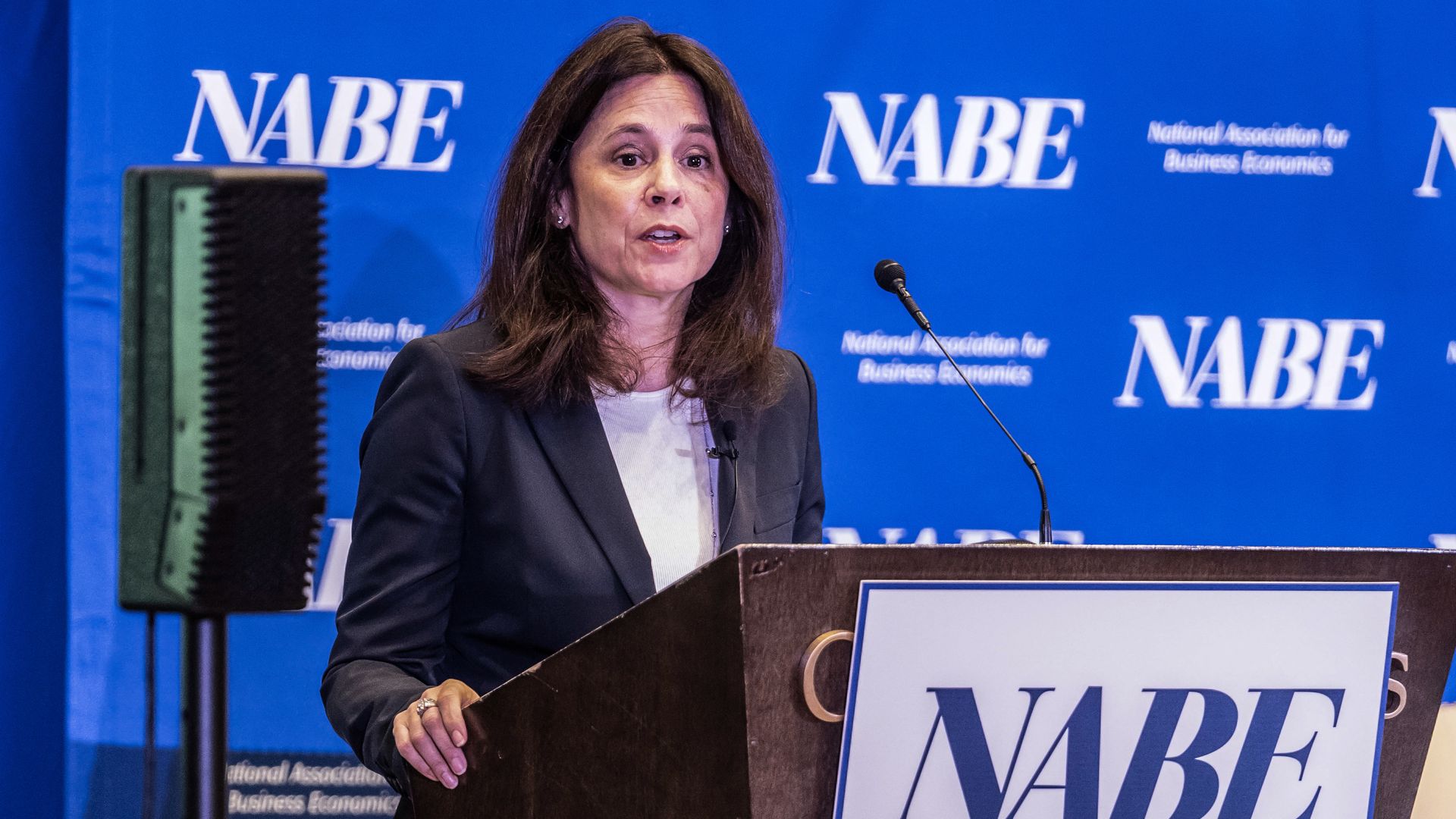
A new speech from the head of the Federal Reserve Bank of Dallas offers hints of when the Fed might be done with "quantitative tightening."
Why it matters: The Fed has shrunk its securities holdings by $1.3 trillion and counting, essentially draining that amount from the financial system at a clip of $95 billion a month, in order to reverse its crisis-era quantitative easing. That has contributed to a bumpy couple of years for asset prices.
If the Fed soon decides to wind down those policies, it would reduce that stress.
What they're saying: "In my view, we should slow the pace of runoff" of the Fed's securities holdings as usage of the "overnight reverse repo facility" — which provides short-term liquidity to the marketplace — approaches a low level, said Dallas Fed president Lorie Logan at the American Economic Association.
Uptake of the reverse repo facility, as it is known, has declined rapidly from $2.4 trillion a year ago to $900 billion last week.
"Normalizing the balance sheet more slowly can actually help get to a more efficient balance sheet in the long run by smoothing redistribution and reducing the likelihood that we'd have to stop prematurely."
Of note: Logan's comments on the Fed's balance sheet strategy carry extra weight. She was formerly head of the New York Fed's markets desk — carrying out the quantitative easing program that is now being reversed.
What's next: The question now is when Logan and her colleagues on the Federal Open Market Committee will judge that this threshold has been met.
Bank of America economists now predict the central bank will begin tapering the QT program at their March meeting before ending it this summer. The Fed-watchers at Evercore ISI put it later, with the taper starting this summer and QT ending near year-end.
Fresh disclosures from 10 Bitcoin ETF hopefuls including BlackRock and Fidelity on Monday show the race to zero on fees is already well underway.
Why it matters: With some dozen fund issuers primed for the SEC to fire the starting gun this week, this early battle for dollars may be pivotal for which ETFs stand the test of time.
President Biden's alliessee an opening: Americans are now getting a real pay boost, even after inflation.
Why it matters: Though the president's broader Bidenomics messaging has fallen flat among some voters, his team sees opportunity in fresh data showing Americans' real earnings are beating inflation once more.
The number of employees in child care services crept up by a few thousand to 1.023 million in December — but employment in the sector still isn't back to where it was in February 2020, according to data out Friday.
Why it matters: It's somewhat surprising because there is a record share ofparents — mothers, more specifically — in the job market. And their kids need child care.
If you're looking exclusively at public companies to assess the health of U.S. businesses, you're missing a big piece of the puzzle.
Why it matters: By many measures, public companies came out of the pandemic financially stronger than they were going into it; that paints a rosy picture of what's happening in the economy.