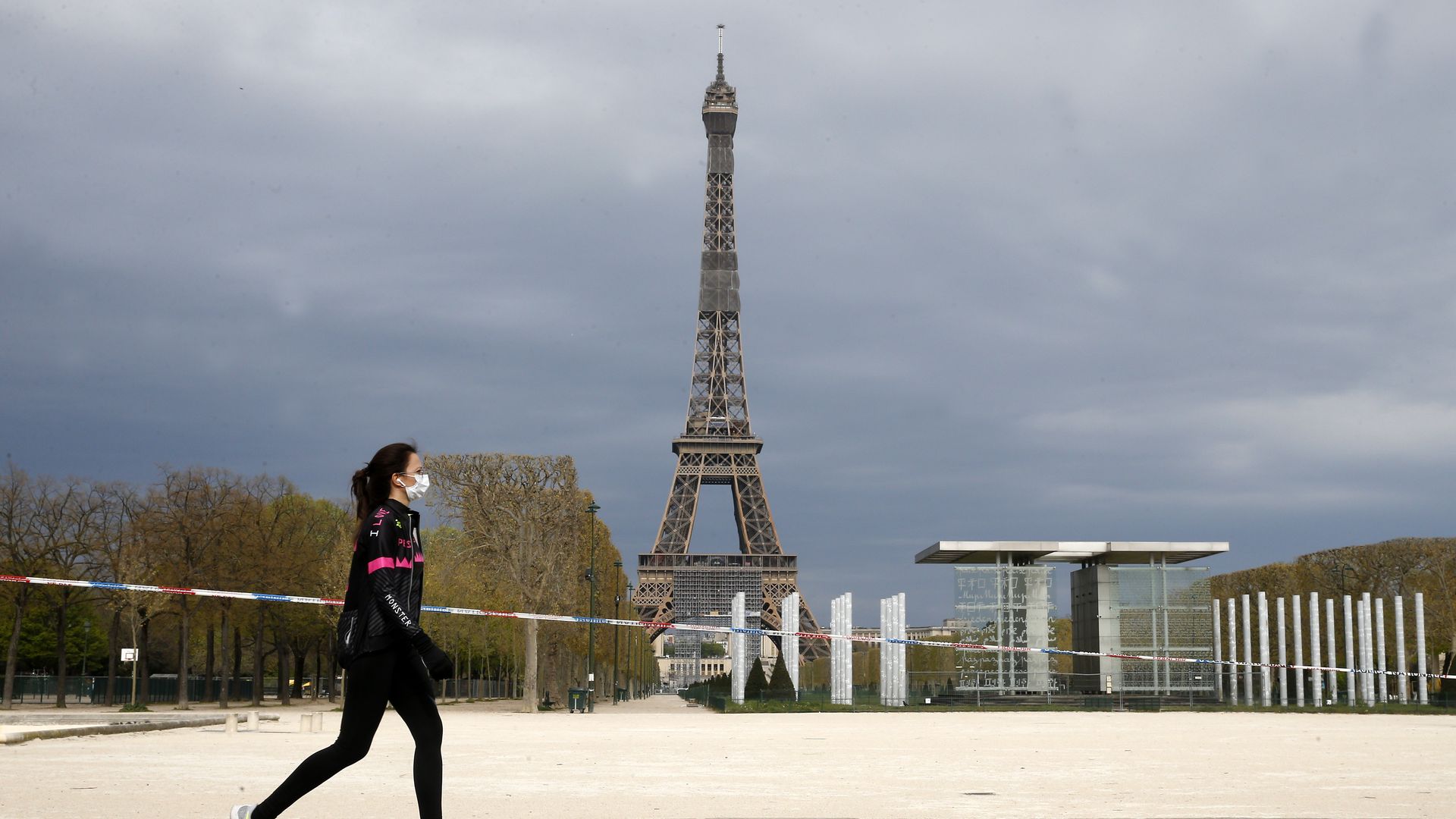
France is cutting it's GDP growth forecast to 5% from 6% as the country enters a four-week national lockdown aimed at slowing a recent surge in COVID-19 cases, Bloomberg reports.
Why it matters: The lockdown, France'sthird since the start of the pandemic, comesamid a surge in new COVID-19 cases across much of Europe that has seen some countries reimpose restrictions.
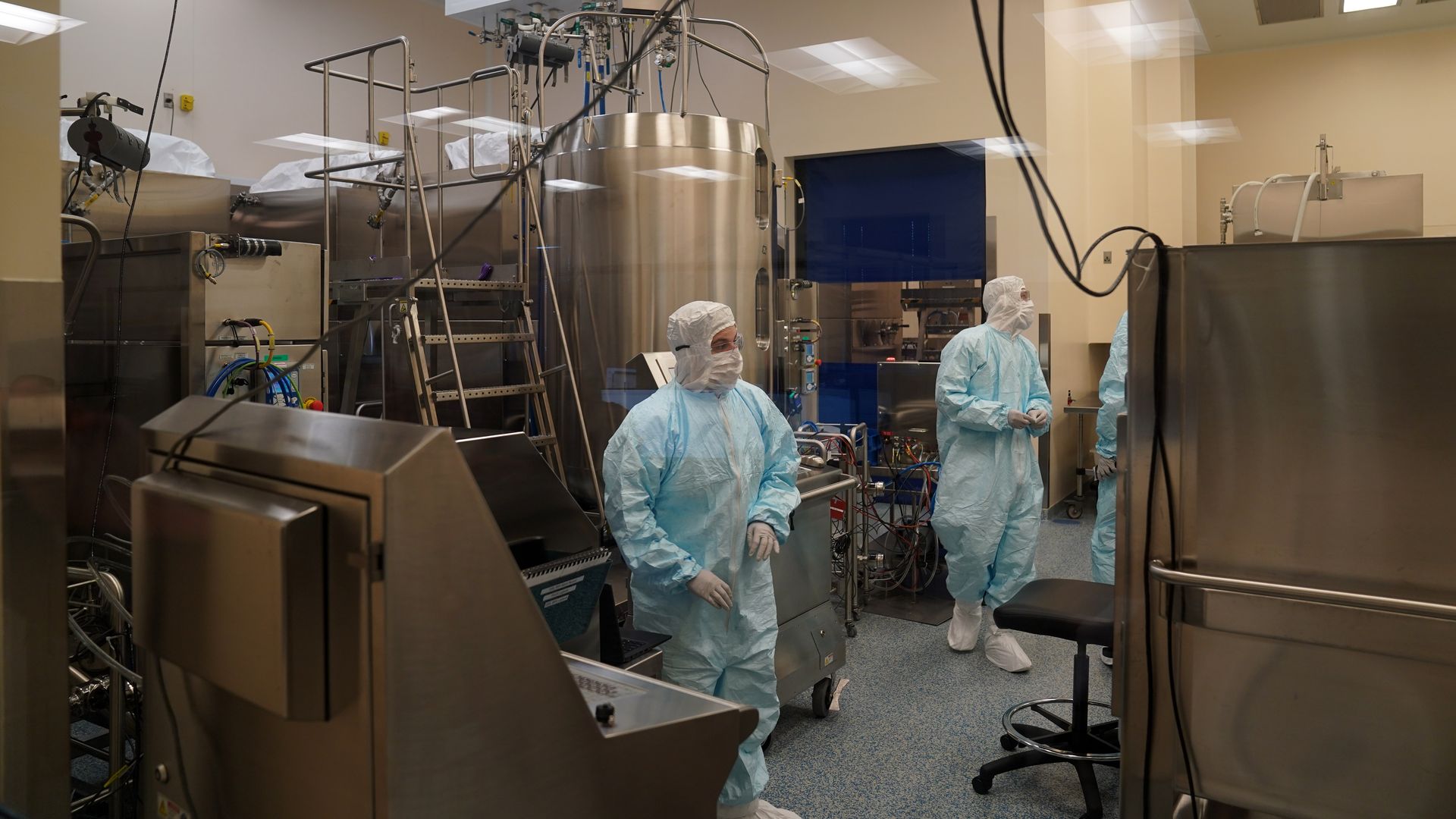
Johnson & Johnson announced late Saturday that it's "assuming full responsibility" for manufacturing its COVID-19 vaccine at a Baltimore plant where 15 million doses were ruined last week.
Of note: AstraZeneca said Saturday night it is in "full cooperation with the U.S. government" moving production from the facility, run by Emergent BioSolutions, which been producing both vaccines.
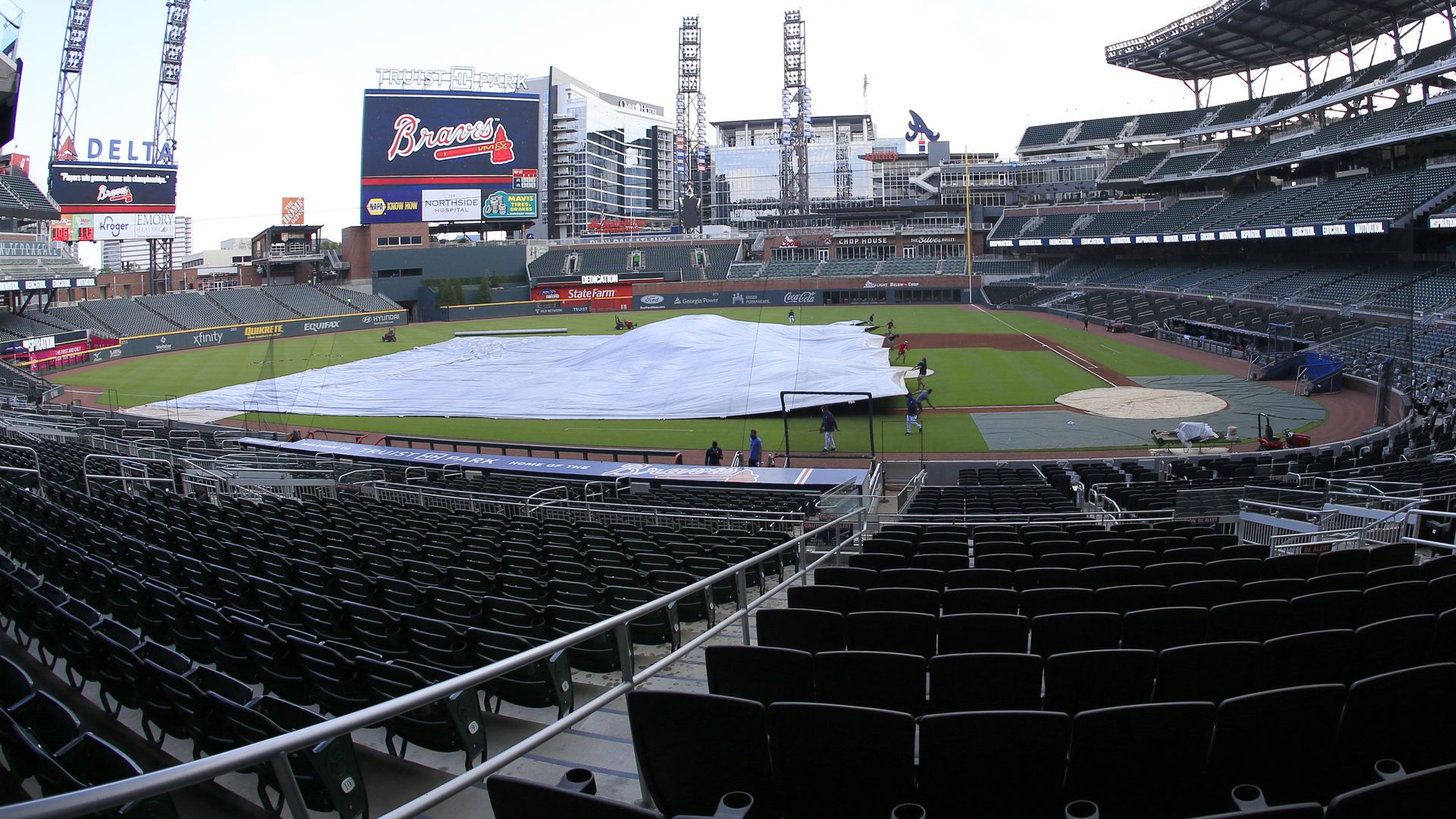
The "estimated lost economic impact" of Major League Baseball's decision to move its All-Star Game out of Georgia over the state's voting restrictions is more than $100 million, a tourism industry official told CNN Saturday.
What they're saying: Cobb Travel and Tourism chief Holly Quinlan told a news conference Friday that the game "would have been a big boost to Cobb businesses and help with recovery efforts after the COVID-19 pandemic."
Egypt held a 5-mile procession of 22 ancient mummies in Cairo, as they were moved from a museum where they'd been for over a century to the new National Museum of Egyptian Civilization Saturday night.
For the record: Organizers "deliberately" hid from view working-class neighborhoods during the nationally televised event celebrating Egypt's past, locals told the New York Times. Urban planner Ahmed Zaazaa noted to the NYT, "The government says they are making reforms, but the vast majority of people in Cairo who live in working-class neighborhoods are excluded."
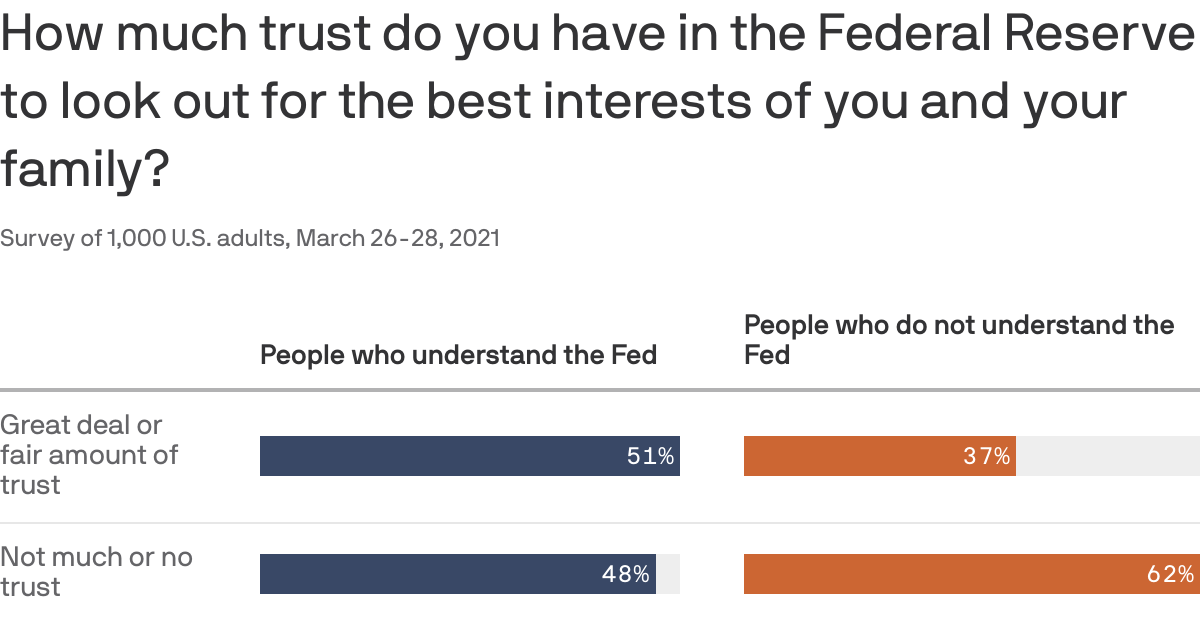
For all it's impact on the U.S. economy, more than three-fourths of Americans say they know "a little" or less about how the Fed operates and what it does, according to a new Ipsos poll conducted for Axios.
Why it matters: People who say they do not understand the Fed are more likely to say they don't trust what the Fed is doing. A breakdown of trust could lead to more politicization of the agency.
Federal Reserve watchers eager to know what President Biden has planned for the agency's top job will likely haveto wait until at least this summer since Jerome Powell's current term as chair does not expire until early 2022.But how Biden fills other open positions on the board will offer clues about the direction he will take.
State of play: While some say reappointing Powell is a logical choice, other reported possible picks include board member Lael Brainard or Raphael Bostic, who leads the Atlanta Fed bank.
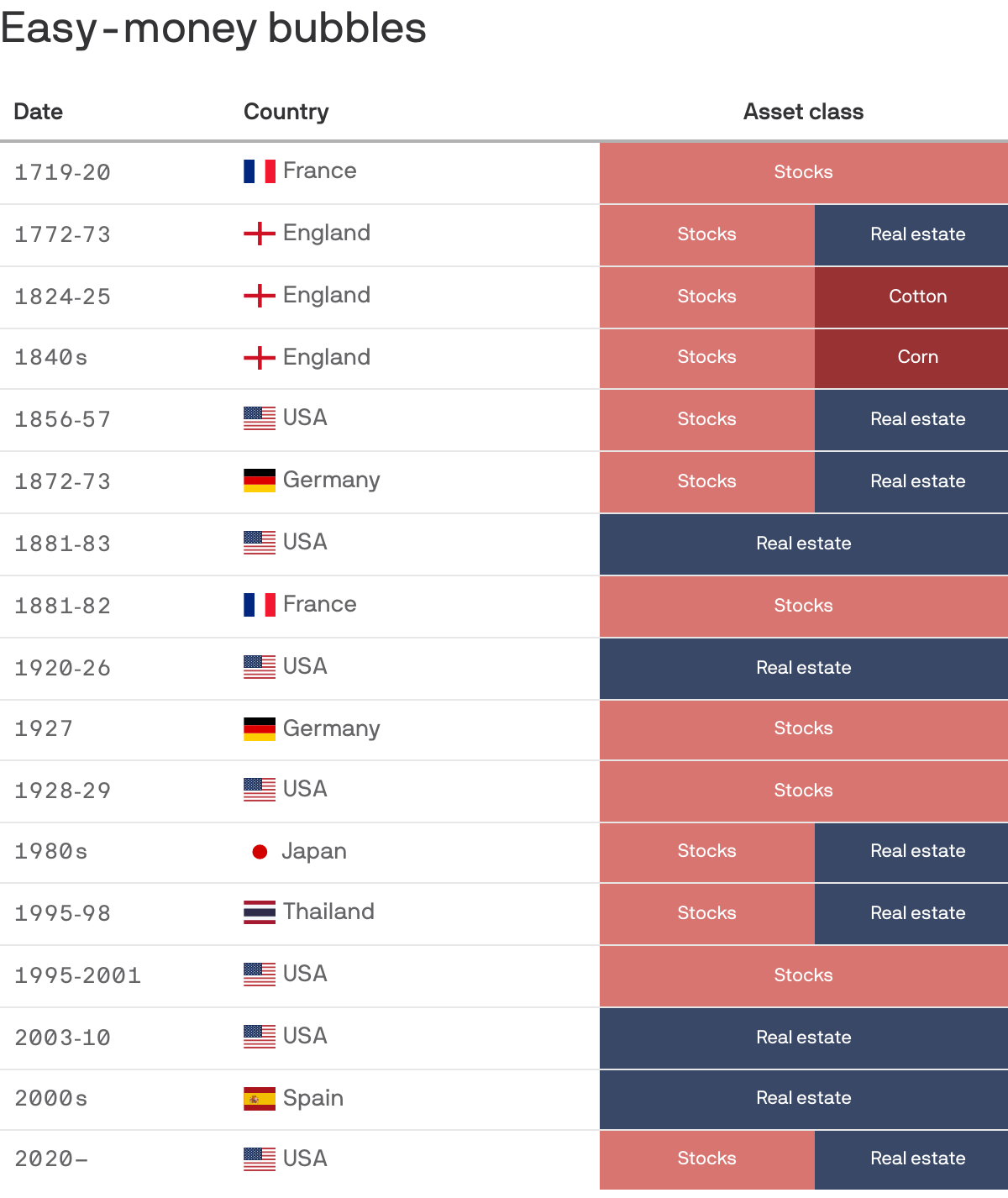
Not all instances of easy money cause asset-price bubbles — but all asset price bubbles for the past 250 years have been associated with loose monetary policy.
Flashback: The first bubble to be inflated at least in part by expansive monetary policy was probably the Mississippi bubble of 1719.
France's Banque Royal issued abundant currency to finance the purchase of shares in Compagnie des Indes, the company controlling trade in Louisiana and elsewhere.
Share prices spiked sharply, as did inflation, until John Law, who controlled the company, stopped printing money and managed to deflate the share price.
Central bankshave fueled dozens of subsequent bubbles.
In fact, it's almost impossible to find a bubble since 1770 that isn't associated with lax monetary policy.
The current run-up in both stock prices and real estate has many observers diagnosing a bubble. If that's the case, it's entirely in line with previous episodes where interest rates were kept extremely low for an extended period.
The big picture: Not all bubbles end in crises, although many do — at which point the very central banks that fueled the bubble are generally tasked with cleaning up the mess.
What they said: "The central bank cannot effectively directly target stock or other asset prices," said Fed Chair Alan Greenspan in 1999. "It is the job of economic policymakers to mitigate the fallout when it occurs and, hopefully, ease the transition to the next expansion."
Historicallyuntouchable issues — like climate change and race — are now on the table for the Federal Reserve, as it wades further into uncharted territory.
Why it matters: The about-face has implications for how one of the world’s most influential economic bodies steers policy and regulates the nation's banks.
We're not in the throes of a "Greater Depression," and we're not facing a tsunami of bankruptcies. In fact, the stock market is hitting new record highs, while employment is rising fast. For all of these things, thank one institution above all others: the Federal Reserve.
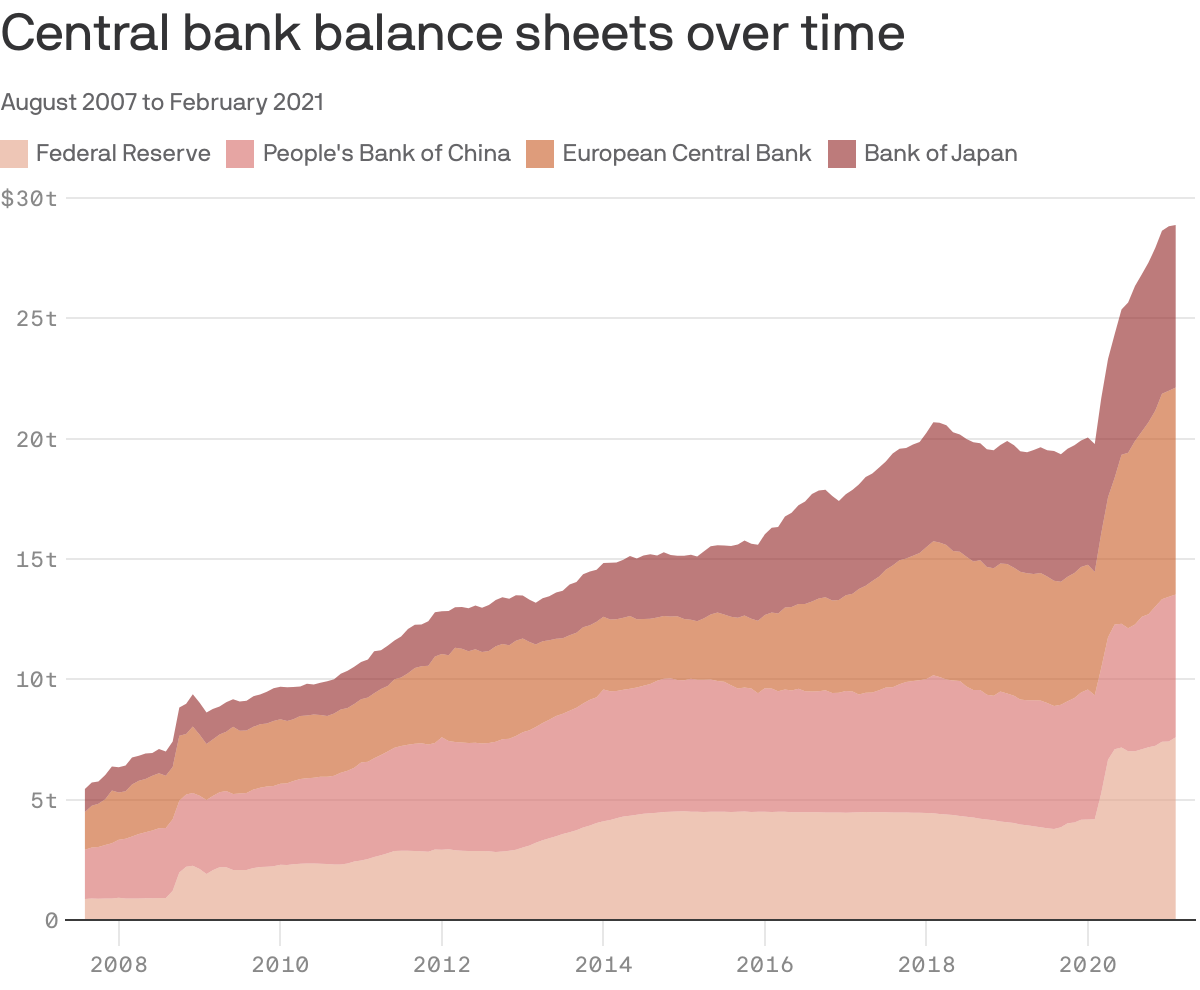
Why it matters: The coronavirus crisis has made abundantly clear the awesome power of central banks in general and of the Fed in particular.
The modern Fed is designed to operate free of political pressures, as codified in a 1951 agreement with the U.S. Treasury Department. That gives monetary policy to the Fed and fiscal policy to Treasury.
Reality check: The president nominates Fed chairs and governors, who don't have lifetime appointments like Supreme Court justices, so politics has always maintained some influence.
"For central banks, I don’t think there is any alternative to what they’ve been doing until now, namely vastly significantly support the economy," former European Central Bank president Mario Draghi told Axios in December. "Support, in my view, will continue for quite a long time."
It's not just Georgia: Corporate America is under growing pressure to put its muscle behind voting rights.
Why it matters: Big businesses have taken on a bigger role in social political issues, but got involved in Georgia's voting-rights fight too late to block it. And the fallout is raising the stakes for similar legislation in other states.
In a few years, it might be possible to fly from Washington, D.C., to Paris in four hours — instead of eight — or from San Francisco to Tokyo in just six hours aboard a new crop of supersonic jets.
Why it matters: High-speed air travel promises to shrink the planet, putting far-away vacation destinations within closer reach and enabling business travelers to attend meetings on another continent and return the same day.