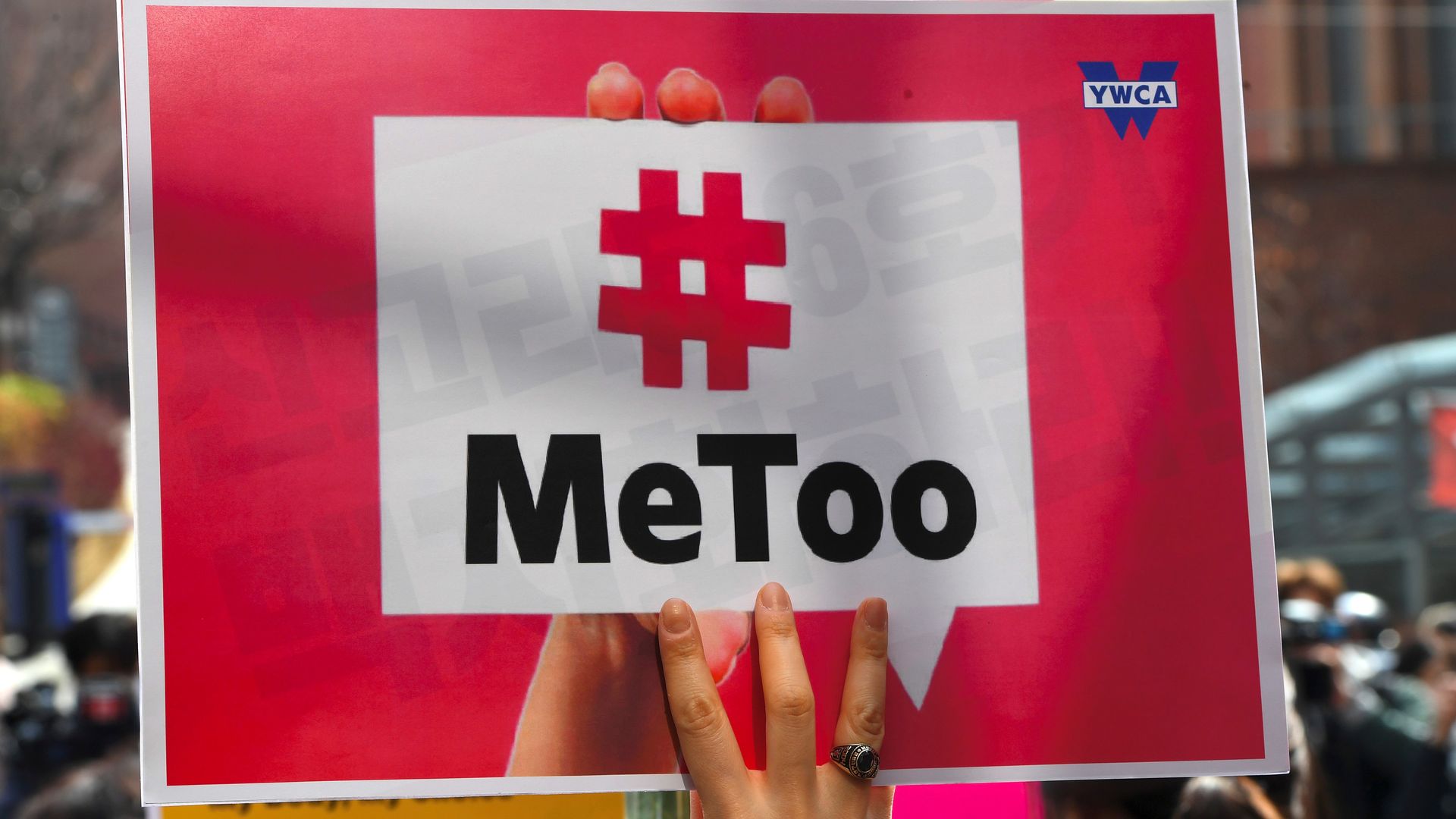
The #MeToo movement has put a spotlight on the media and entertainment industry's treatment of women, but the fallout doesn't appear to have convinced a lot of viewers to boycott the entertainers who have been accused of misconduct.
Where it stands: A Morning Consult survey looked at 20 entertainers and asked whether the allegations against them would make people less likely to watch their work. Only two — Kevin Spacey and Louis C.K. — were significantly hurt by the allegations, with more people saying the allegations would affect their decision to watch (compared to those who said their decisions wouldn't be affected.)
We're entering a new, robot-fueled tech boom that is already disrupting the world's balance of power, and is changing how we fight wars, stay alive, drive, work, shop and do chores.
The future is now: We keep talking about what's coming, but we're already on the leading edge of a profound global change that will create tremendous opportunity for new power and wealth.
The last few months have seen a rash of studies on a coming automation apocalypse, and analysts are moving to a few targeted worries about the jobs future:
Their big picture: There may be a long, deep economic disruption lasting decades and taking millions of jobs. The economy will eventually come out of it. But wages for most jobs may be too low to sustain a middle-class lifestyle.
Truck drivers will be some of the first people to lose jobs as automation technology spreads.
A push by companies like Uber to automate heavy trucks through a combination of artificial intelligence and robotics raises questions for millions of drivers brought into the profession by the promise of a steady job. Will they be employed behind the wheel five years from now? Or will robots be doing it instead?
And if you think this is a niche problem, think again. The impact of self-driving trucks would be felt in communities around the country — especially Trump country.
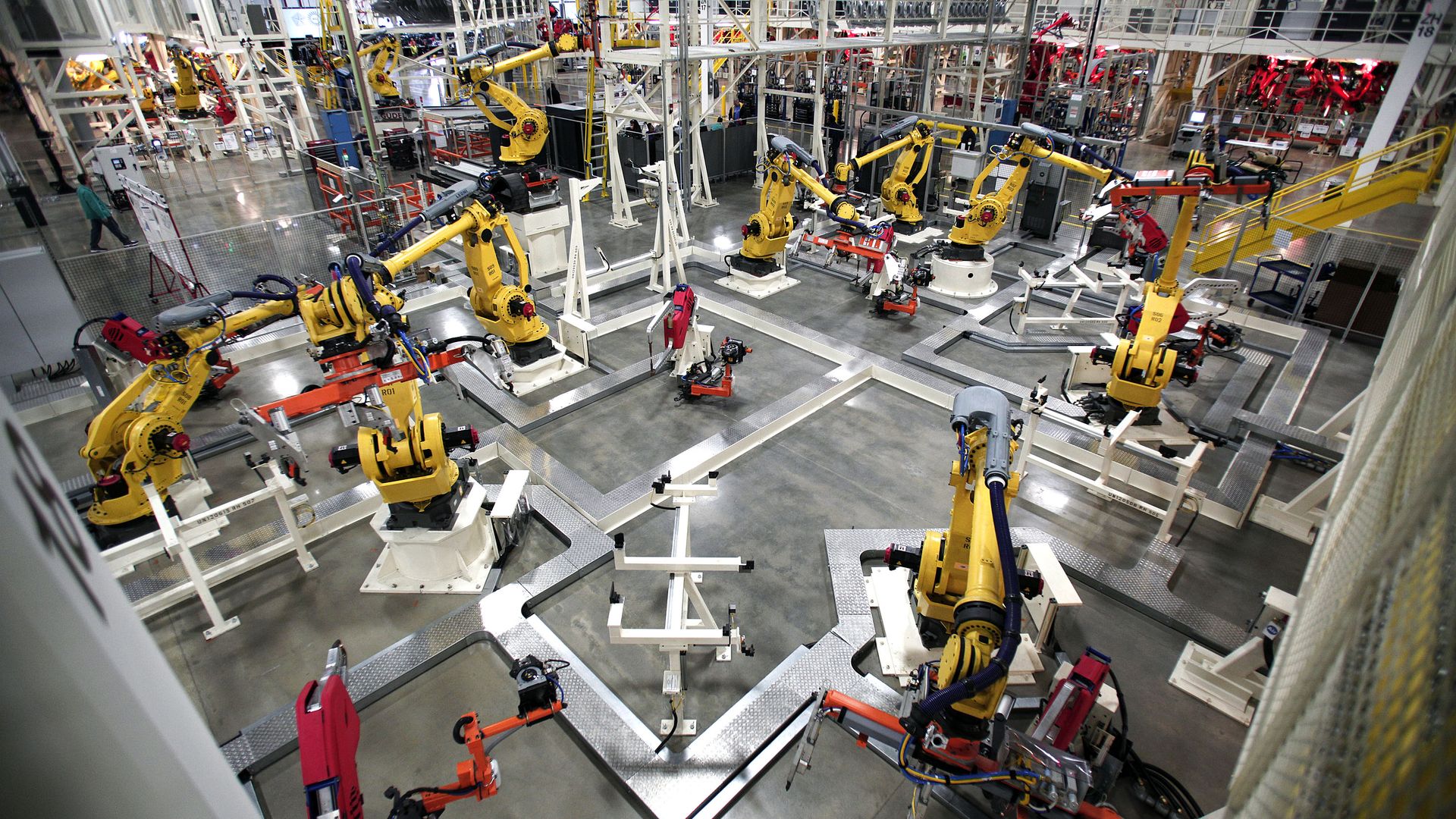
Congress and the Trump administration have yet to create a coherent policy response to a widely forecast social and economic tsunami resulting from automation, including the potential for decades of flat wages and joblessness. But cities and regions are starting to act on their own.
What's happening: In Indianapolis, about 338,000 people are at high risk of automation taking their jobs, according to a new report. In Phoenix, the number is 650,000. In both cases, that's 35% of the workforce. In northeastern Ohio, about 40,000 workers are at high risk.
The new age of automation is almost always discussed as a future problem, but a new report says it's already the subtext for much of what ails the West, from stuck wages to populist politics.
Quick take: The report, released yesterday by the Council on Foreign Relations, says that, if the U.S. does not figure out how to retrain workers displaced by automation, politics are sure to grow even uglier than now.
The most successful training courses through the decades have been organized by companies finding smart people, then skilling them up for specific positions. But this tradition is long passé — despite a yawning worker shortage, American companies today are only rarely prepared to spend the money to train their own workers. Instead, they want fully formed workers to show up at the door.
Scientists expect people to live routinely to 100 in the coming decades, and as long as 150. Which also suggests a much longer working life lasting well into the 70s, 80s, and even 100, according to researchers with Pearson and Oxford University.
Quick take: Thinkers of various types are absorbed in navigating the age of automation and flat wages, but their challenge will be complicated by something few have considered — a much-extended bulge of older workers.
It's been two months since Spotify went public via a direct listing, and its stock price remains above both its reference point price and where it closed its first day of trading.
Why it matters: Other private tech companies were closely watching Spotify’s approach, for which price stability was a major test. It passed.
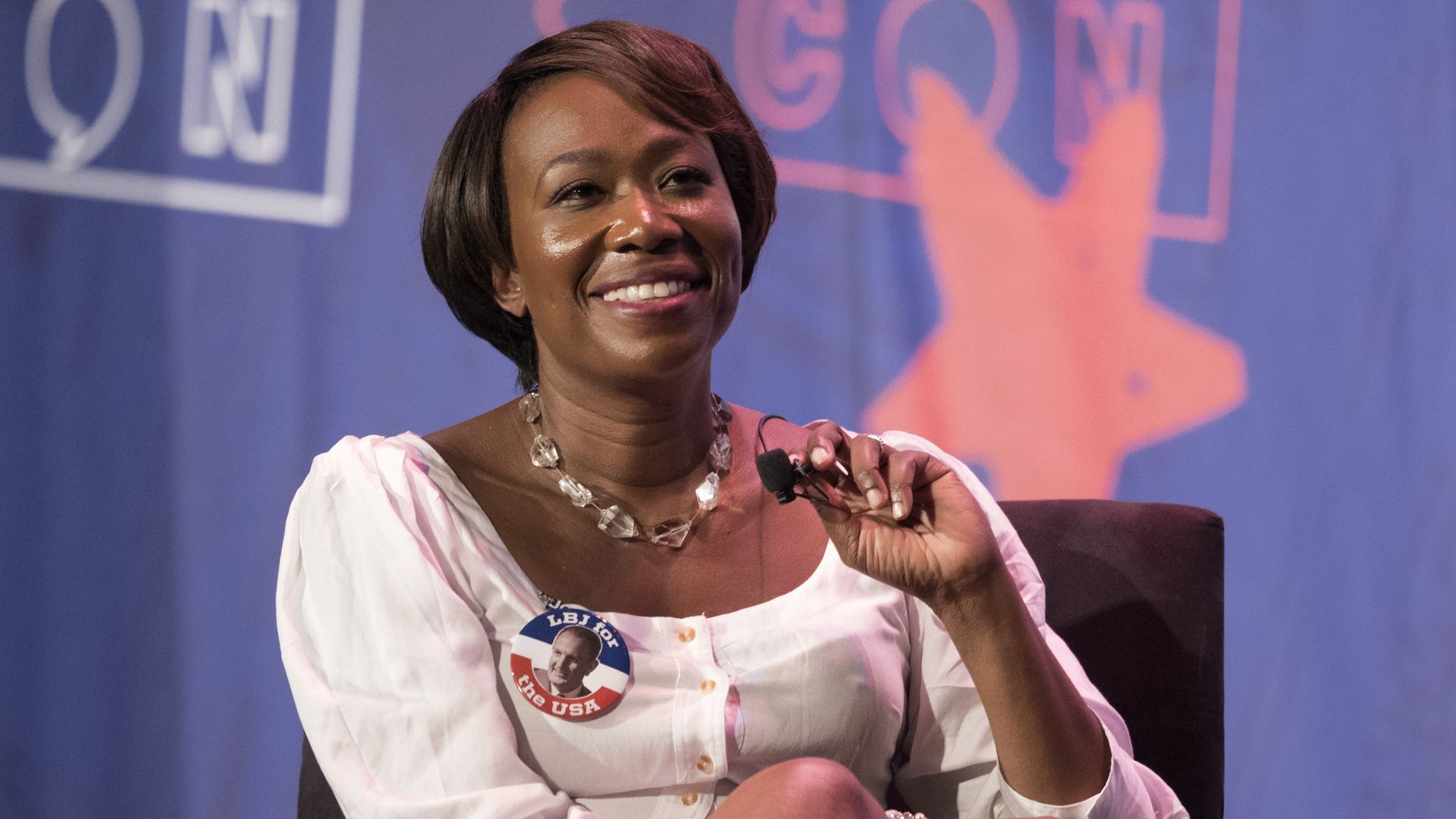
Joy-Ann Reid has responded to criticism for homophobic blog posts and others that dive in to 9/11 conspiracies and criticism of Sen. John McCain, under her name at her former blog explaining that "[t]here are things I deeply regret and am embarrassed by, things I would have said differently and issues where my position has changed. Today I’m sincerely apologizing again."
MSNBC released a statement soon after saying "Some of the things written by Joy on her old blog are obviously hateful and hurtful. They are not reflective of the colleague and friend we have known at MSNBC for the past seven years. Joy has apologized publicly and privately Joyand said she has grown and evolved in the many years since, and we know this to be true."
Canadian Primer Minister Justin Trudeau said that an ultimatum made by Vice President Mike Pence knocked down months of intense negotiations between his country, the U.S. and Mexico to revamp the NAFTA trade agreement, reports the Washington Post.
The backdrop: Trudeau said he was prepared to travel to Washington this week in an effort to renegotiate the NAFTA deal, which President Trump demanded as a precursor to exempting Canada and Mexico from planned steel and aluminum tariffs. However, after Pence stated that such a meeting would only occur if a “sunset” provision, which mandated that any NAFTA deal expire automatically in five years, was in place, the meeting fell through.
MSNBC host Joy-Ann Reid has come under fire for homophobic blog posts under her name at her former blog, although she denies writing them and claims she's the victim of hacking.
The big picture: Reid faced similar criticism in December for different posts, and ultimately apologized. But this time, she's bringing in the FBI.
The U.S. added 223,000 jobs in May, up from 164,000 jobs added in April and 135,000 in March. The unemployment rate edged down to 3.8% from 3.9% in April.
Economists on Wall Street estimated that the economy added 190,000 jobs last month, and that the unemployment rate would remain unchanged at 3.9%.
Data: Bureau of Labor Statistics; Chart: Axios Visuals
White House deputy press secretary Raj Shah on Thursday criticized a campaign ad from a Democratic House candidate in Virginia that compares President Donald Trump to Osama bin Laden as “nothing short of reprehensible.”
"Leaders from across the political spectrum — starting with Leader Pelosi — must swiftly condemn this abhorrent message."