Democrats on the House Intelligence Committee released examples of Facebook ads paid for by Russian actors during this afternoon's hearing with Facebook, Google and Twitter. Ads were displayed in the hearing room to drive home their concern about foreign governments "weaponizing" social media content.
The details: According to the metadata attached to the ads, they targeted both Republicans and Democrats and were paid for in rubles. The ads were intended to stoke discord on divisive issues such as religion, racial issues and immigration.
Facebook's chief lawyer said Wednesday afternoon that the company had not found overlap between the targeting used by Russian trolls meddling in the 2016 election and the Trump campaign. His remarks were in response to questions at the third hearing of the last 48 hours for Facebook, Twitter and Google on how Russia-bought ads and content spread on their platforms.
"We have not seen overlap in the targeting that was relatively rudimentary used in the [Russian troll farm Internet Research Agency] ads that we've disclosed and any other advertiser that's been operative on the site, including the Trump campaign," said Facebook General Counsel Colin Stretch. Twitter and Google didn't provide definitive answers.
Go deeper: Politico breaks down the individual ads with corresponding specifics of when they ran, where they were targeted, and how many people saw them and clicked on them.
What's next: Lawmakers have pushed the companies to make more information about the foreign-bought ads public. House Intelligence Committee leaders plan to release the Russian-bought ads that appeared on Twitter and Google. The companies said they would benefit from the government sharing information with them as well in order to effectively identify inappropriate content and ads.
Shoppers at Sears can no longer find Whirlpool appliances or women's Levi Strauss jeans and now the Wall Street Journal reports they are low on one of the holiday season's hottest toys — the L.O.L. Surprise — because its manufacturer is questioning Sears' financial health.
Why it matters: Sales at Sears accounted for roughly 1% of U.S. GDP in the 1960s, but decades of competition with big-box retailers and online merchants, combined with recent mismanagement by CEO Eddie Lampert, have whittled down Sears' financial position thoroughly. Now suppliers are reducing shipments, tightening financing terms, or refusing to work with the retailer altogether out of fear of being stiffed if Sears is forced into bankruptcy, the WSJ reports.
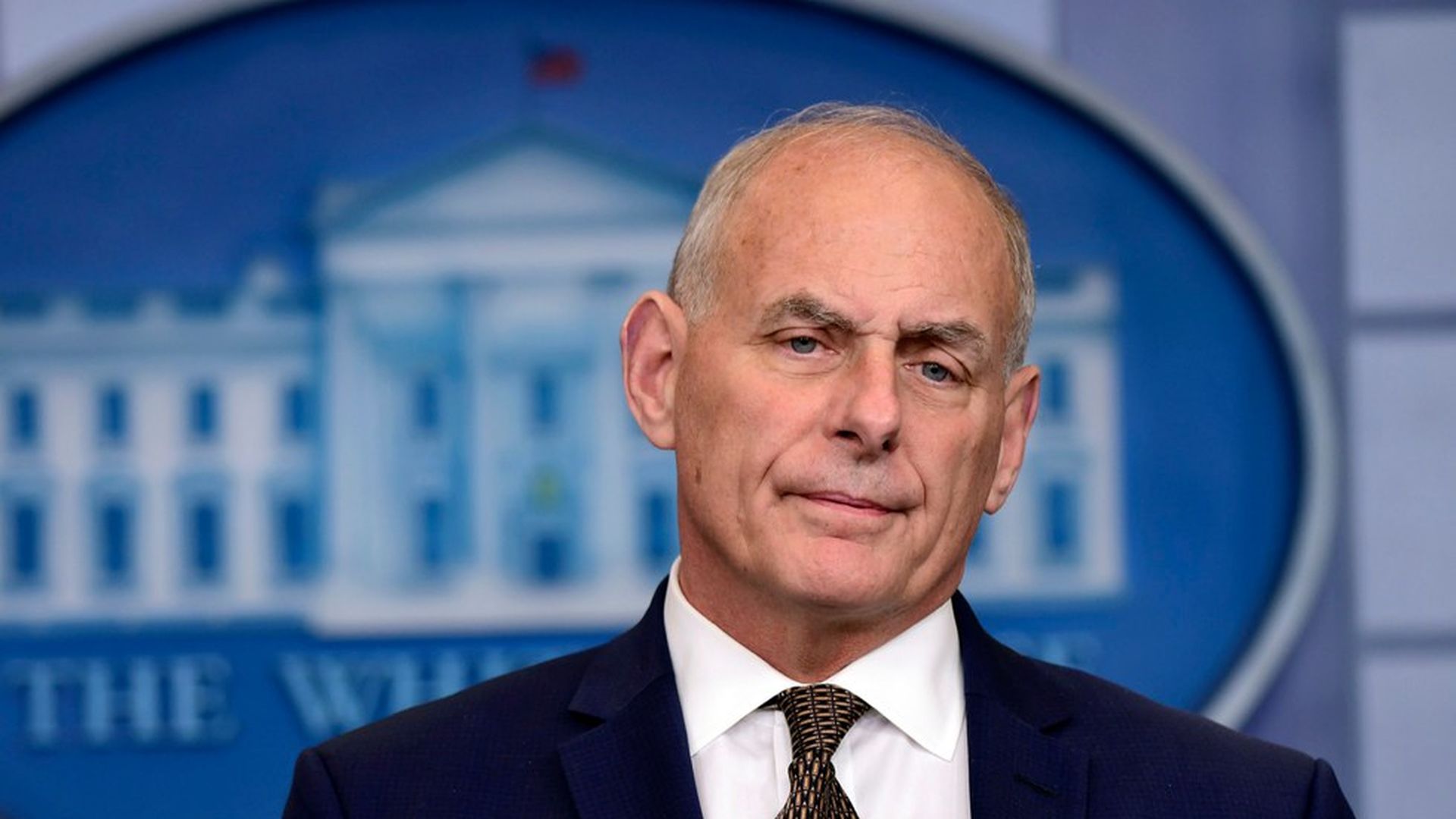
Upon his ascension to White House chief of staff, Gen. John Kelly was widely viewed as a moderating force for the Trump administration. But, like any good soldier, he stepped straight into the breach for President Trump in the culture wars this week, branding Robert E. Lee as "honorable" and refusing to apologize to a Gold Star widow in an interview with Fox News' Laura Ingraham.
What we're hearing: Credibility is currency, especially in Washington, and Kelly is already seeing his portrayal in the media change after he took a very public, partisan stance that undermined his authority as Trump's voice of reason.
NPR News Chief Michael Oreskes announced Wednesday that he is resigning amid allegations of sexual harassment and misconduct. NPR initially placed Oreskes on leave yesterday after The Washington Post reported that two women accused him of abruptly kissing them while working with him at the New York Times.
His statement: "I am deeply sorry to the people I hurt. My behavior was wrong and inexcusable, and I accept full responsibility," Oreskes said in an internal memo obtained by CNN.
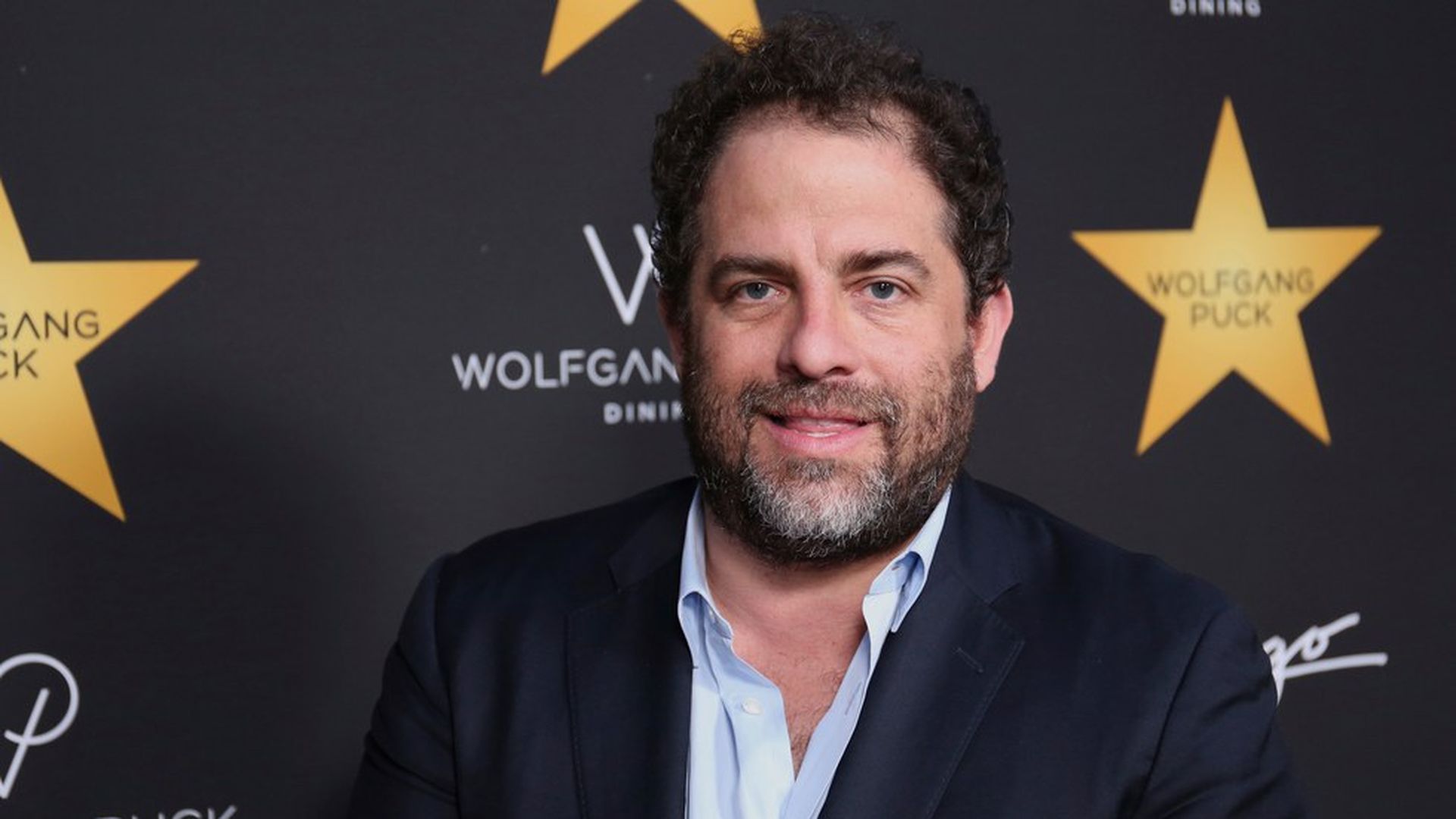
Six women, including actresses Natasha Henstridge, Olivia Munn and Jaime Ray Newman, have accused famous Hollywood filmmaker Brett Ratner of sexual harassment or misconduct on movie sets, industry events and private homes, per the LA Times. Ratner's lawyer Martin Singer has denied every account.
Why it matters: The accusations against Ratner highlight the awakening that has swept through Hollywood since Harvey Weinstein and other media moguls' years of inappropriate behavior years were put under a microscope.
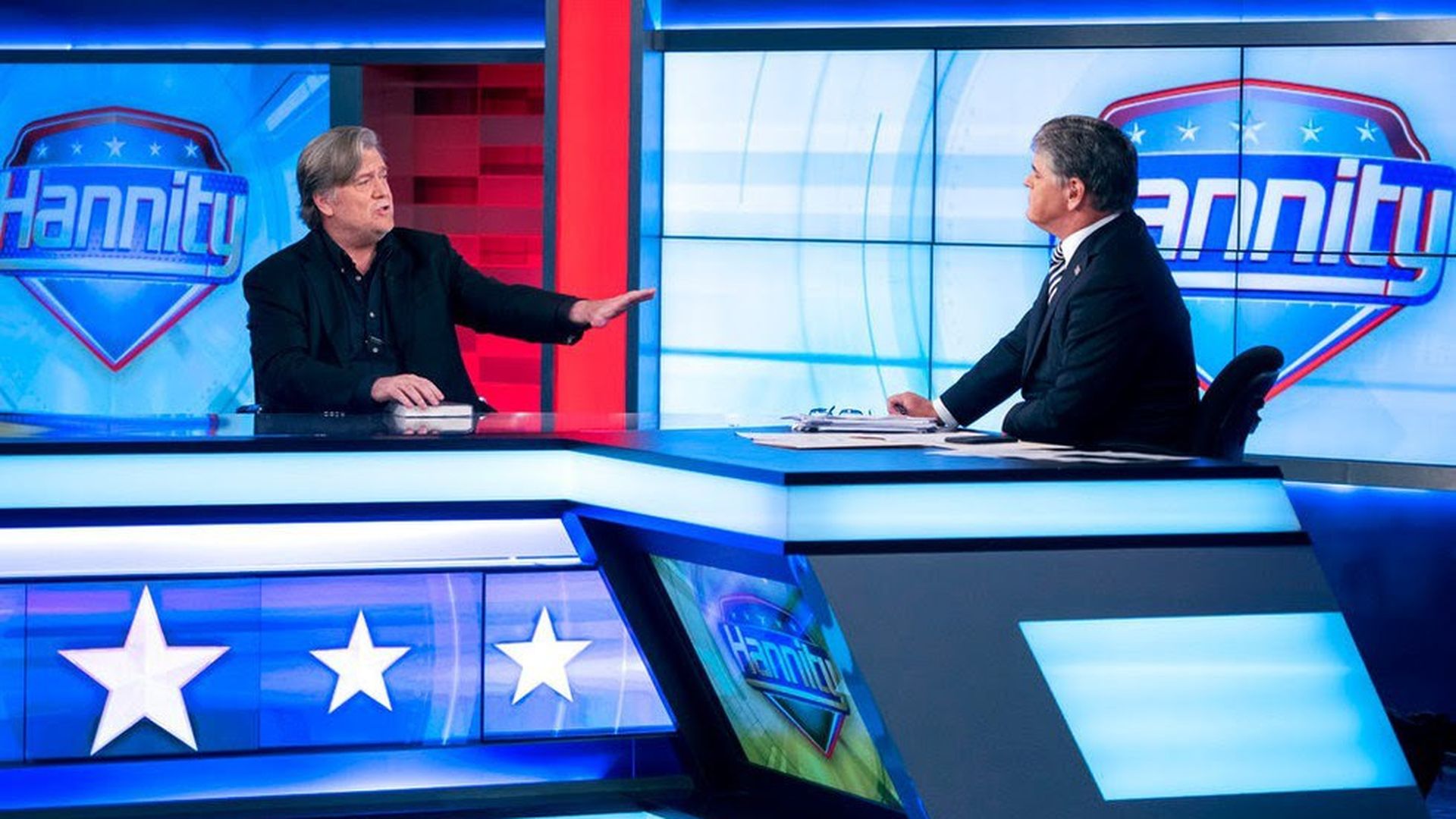
Shot — CNN's Oliver Darcy: "Some employees at Fox News were left embarrassed and humiliated by their network's coverage of the latest revelations in special counsel Robert Mueller's investigation ... 'I'm watching now and screaming,' one Fox News personality said in a text message ... 'I want to quit.'"
Chaser — AP: "After the summer of Rachel Maddow, Fox News Channel's Sean Hannity ascended to the top of the cable news mountain. Hannity's move to the 9 p.m. timeslot paid immediate dividends for the network. President Donald Trump's biggest cable news backer averaged 3.2 million viewers in October, topping Maddow's 2.5 million ... Fox's Tucker Carlson, in an earlier time slot, had 2.8 million viewers."
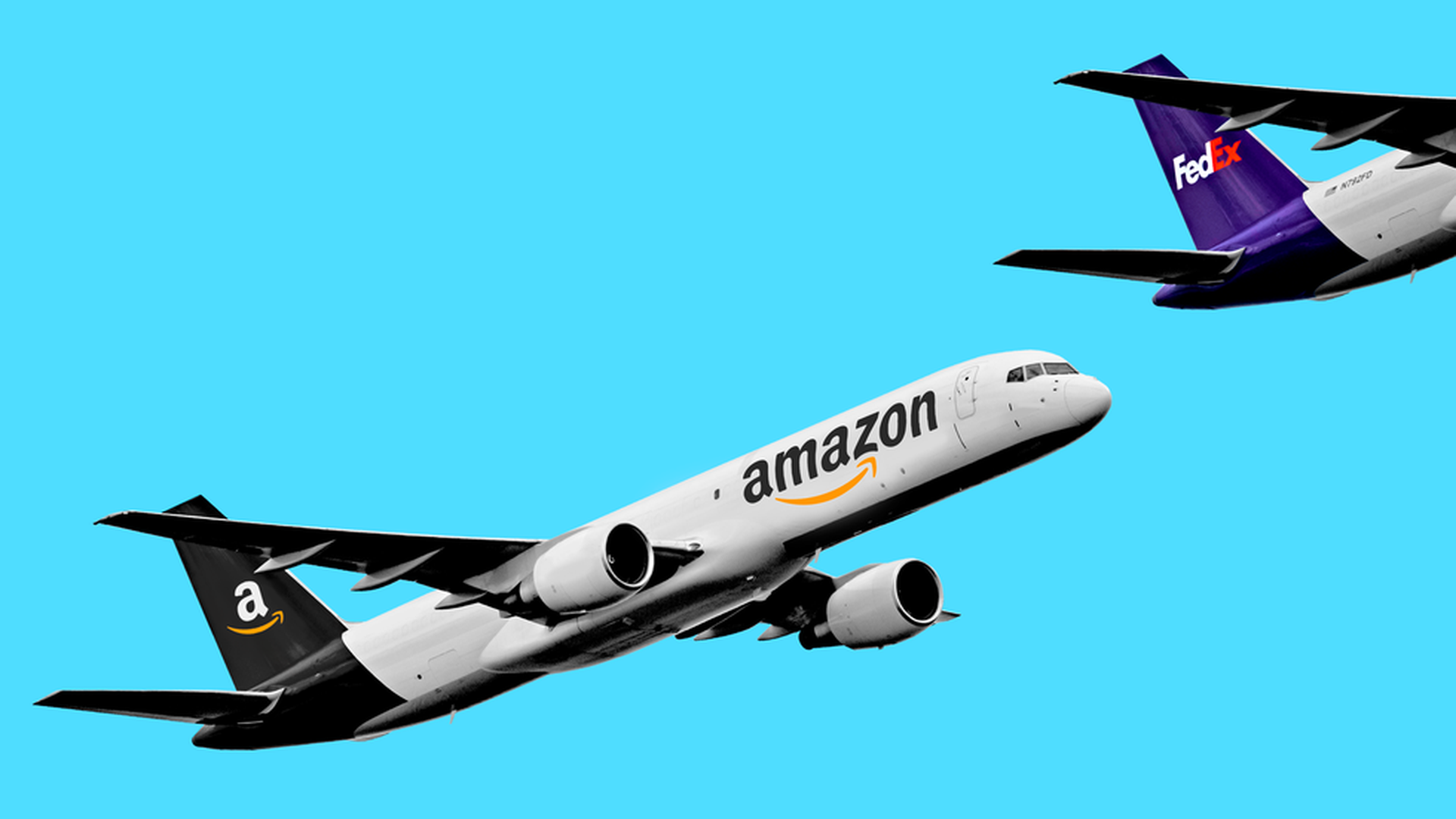
Amazon has gotten so good at moving merchandise that it now accounts for 43 cents of every dollar spent online in the U.S., according to eMarketer. An ebullient Wall Street last week sent the company's share price soaring after a record-breaking third quarter, and made CEO Jeff Bezos the richest man in the world.
What's next: Lost in this torrent of news are indications that Amazon's revenue formula is fundamentally changing: from a reliance on retail and cloud services, the e-retailer appears likely to power future growth with fulfillment and shipping services to third-party sellers.
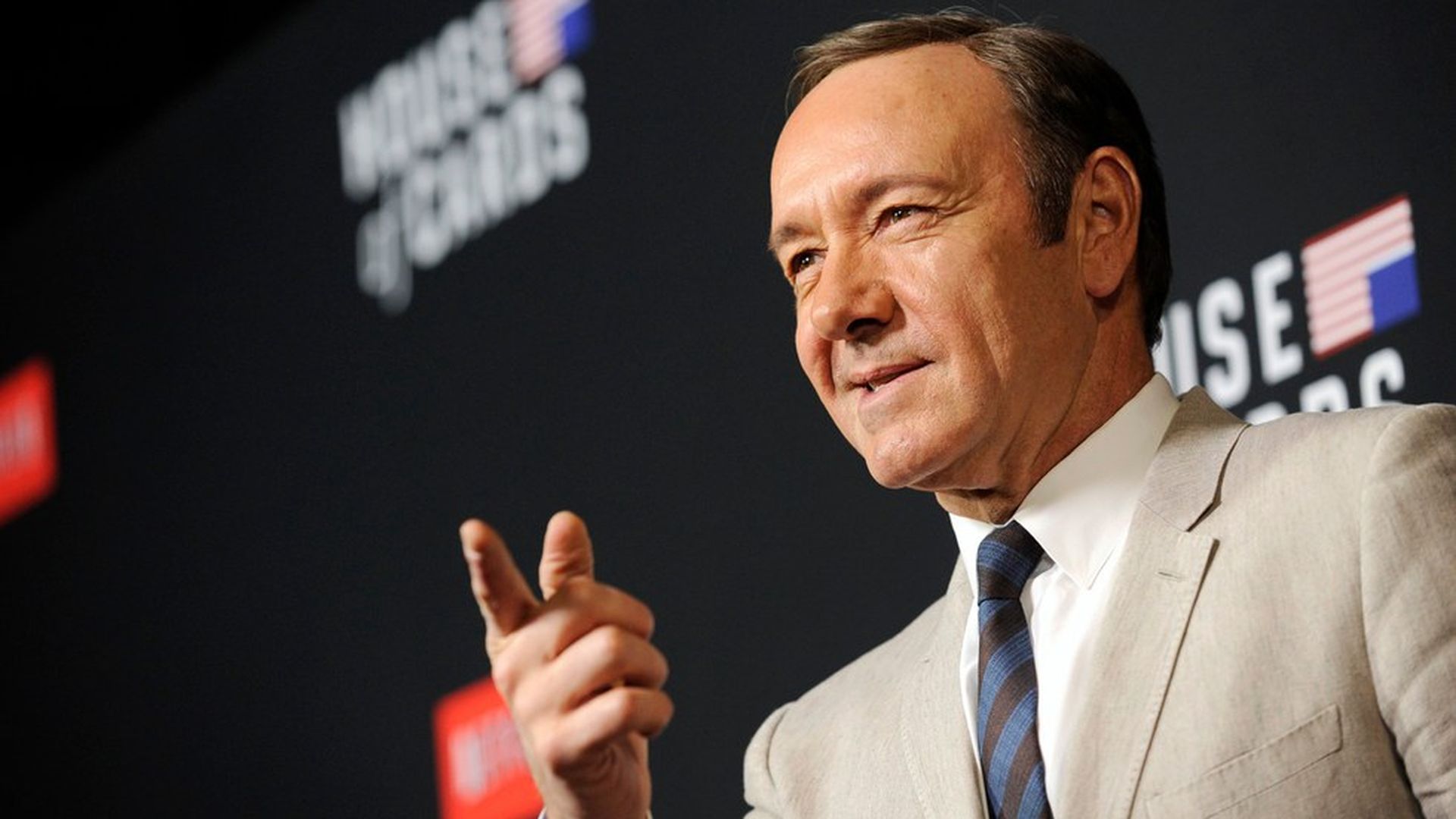
Production has been suspended on the sixth and final season of House of Cards "until further notice," according to a press release issued by Netflix and Media Rights Capital, the studio that produces the show. The decision comes after actor Anthony Rapp accused Kevin Spacey of making a sexual advance against him at age in 14 in 1986, prompting Spacey to come out publicly as gay in a statement that drew widespread criticism.
That didn't last long: Netflix and MRC had announced yesterday that House of Cards' sixth season had been ordered and was in production but that a decision had been made "months ago" before the Spacey allegations for the season to be the show's last.
More than 70% of Americans believe technology has had a positive or somewhat positive effect on society, according to an Axios/ SurveyMonkey poll, and most Americans are optimistic about the impact of technology on the future. But that doesn't mean they trust tech companies — 78% thought it was a "bad thing" that tech companies are able to collect so much information about their users.
Data: SurveyMonkey poll conducted from Oct. 23 to Oct. 26. Poll data. Poll methodology; Chart: Axios Visuals
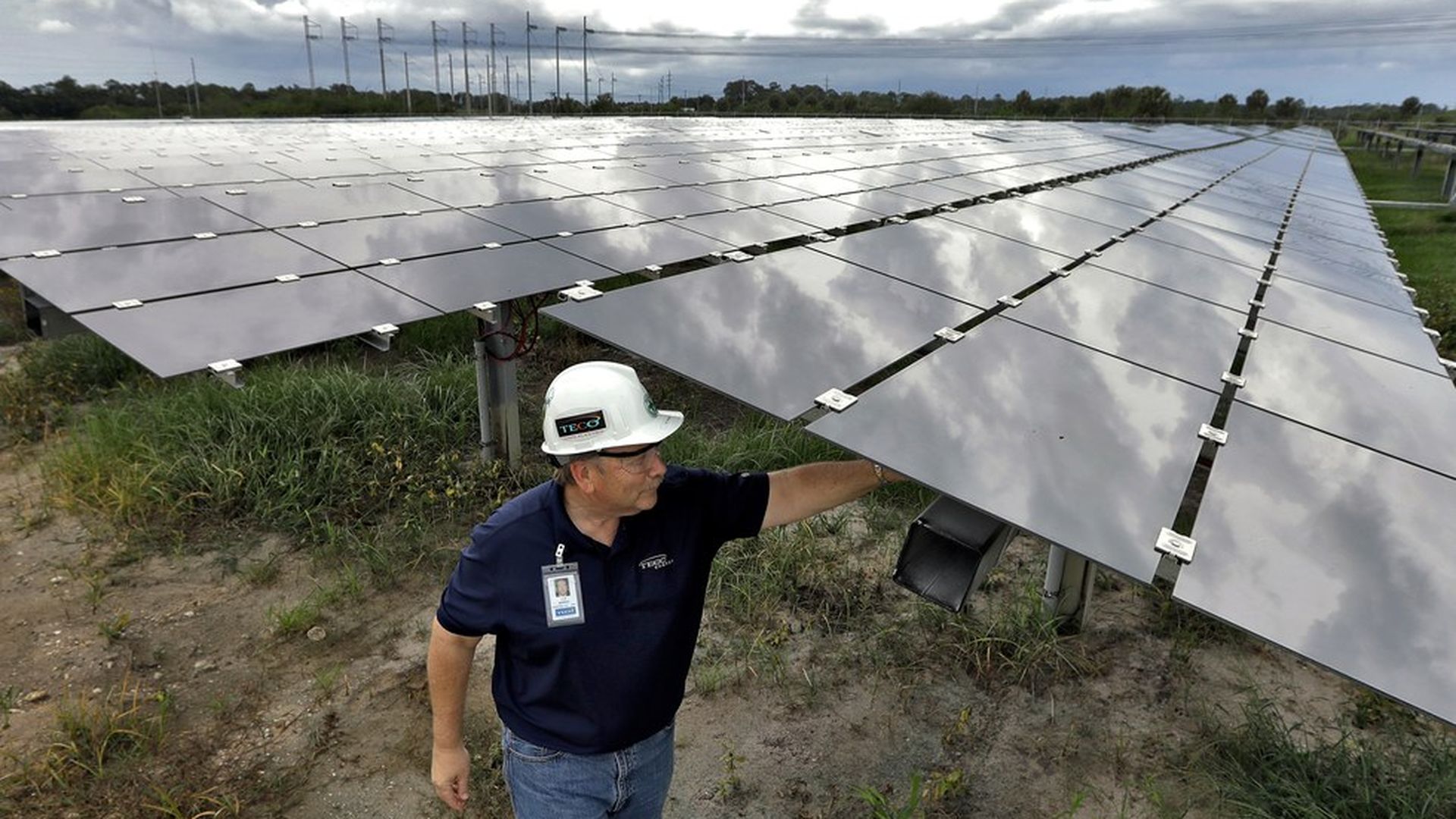
The International Trade Commission is recommending imposing tariffs up to 35% on solar module imports, shortly before the commission is due to make recommendations to Trump on the dispute, Bloomberg reports. Trump himself is to make the final call on tariffs.
Breaking that down: The winners here would be Suniva, which brought the case, along with SolarWorld. They're both foreign-owned. Much of the solar industry opposes tariffs, since they say inexpensive foreign panels have led to more jobs and enabled wider growth of solar power.
Google and its employees have contributed $1.09 million to 52 of the 55 lawmakers on the Judiciary Senate Intelligence and House Intelligence committees since 2009. Facebook and its employees have given more than half a million to 40 of those lawmakers, and Twitter and employees almost $12K, Politico reported. Today, the tech giants will testify in front of those committees on Russian interference and manipulation during the election.
Why it matters: The donations since 2009 totaled $1.6 million, which is relatively small. But still, as John Wonderlich, executive director of the government transparency group Sunlight Foundation, told Politico: "When lawmakers oversee or regulate their donors, this represents, at minimum, a complication in their incentives."