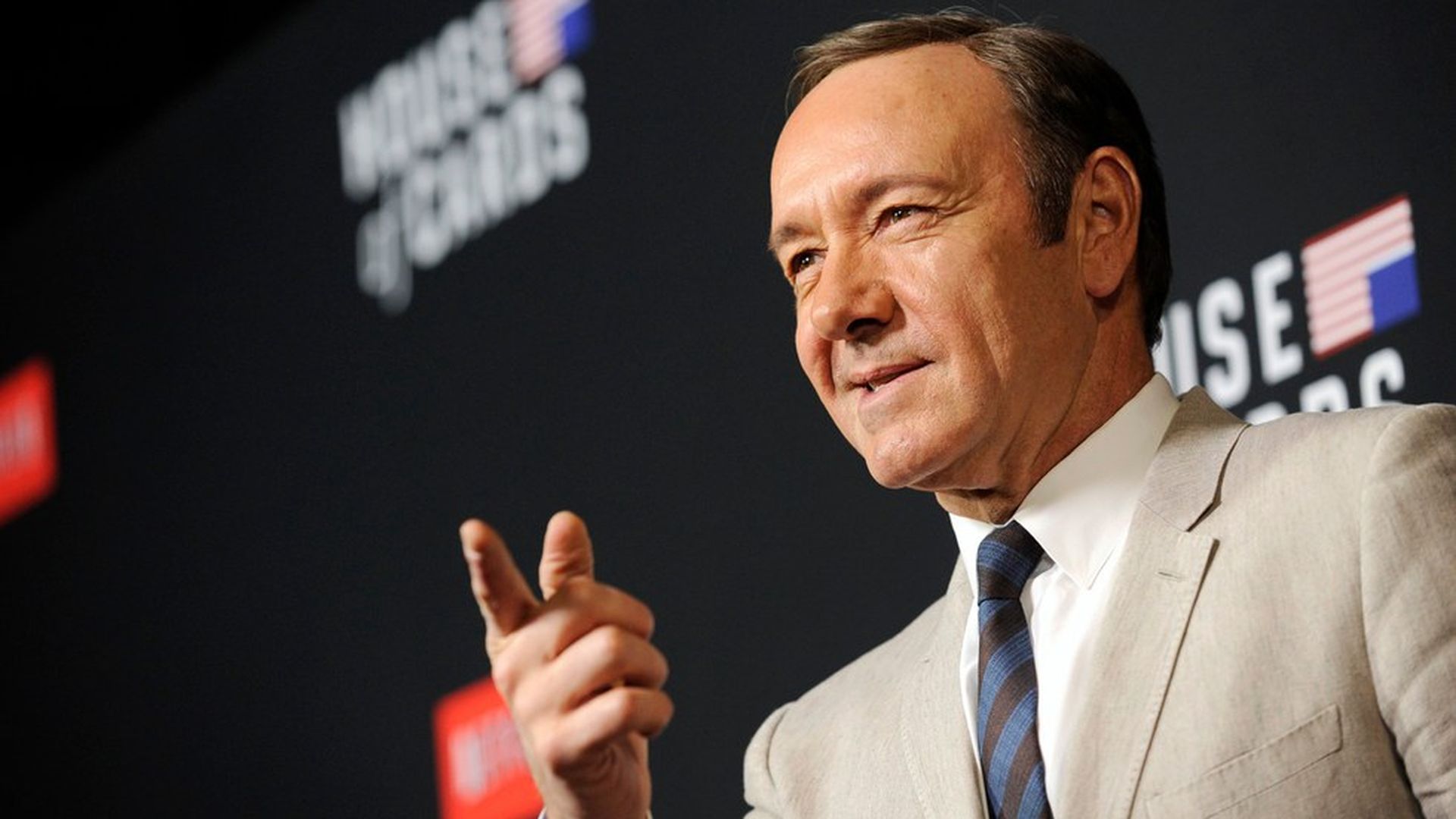
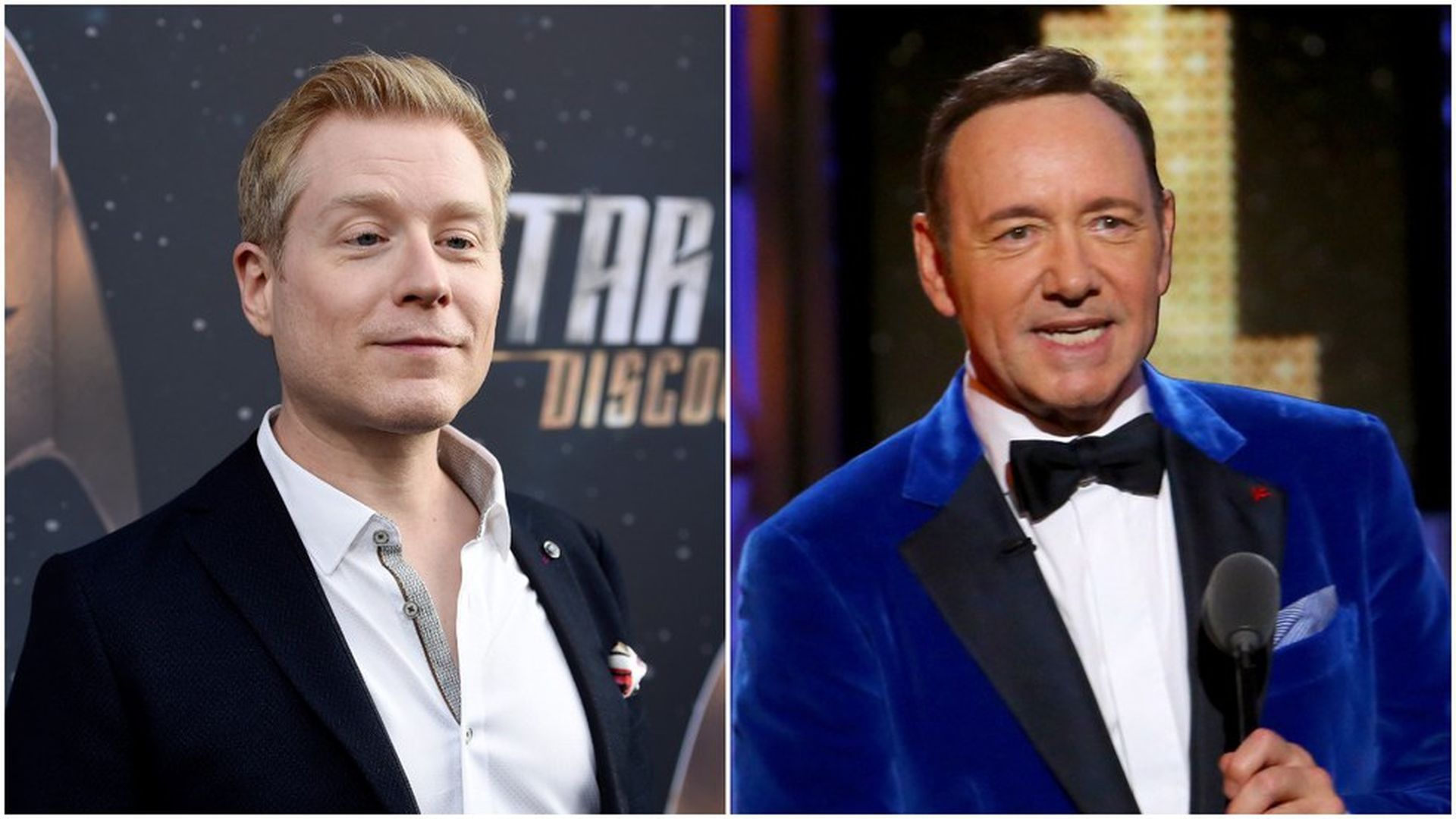
Production has been suspended on the sixth and final season of House of Cards "until further notice," according to a press release issued by Netflix and Media Rights Capital, the studio that produces the show. The decision comes after actor Anthony Rapp accused Kevin Spacey of making a sexual advance against him at age in 14 in 1986, prompting Spacey to come out publicly as gay in a statement that drew widespread criticism.
That didn't last long: Netflix and MRC had announced yesterday that House of Cards' sixth season had been ordered and was in production but that a decision had been made "months ago" before the Spacey allegations for the season to be the show's last.
More than 70% of Americans believe technology has had a positive or somewhat positive effect on society, according to an Axios/ SurveyMonkey poll, and most Americans are optimistic about the impact of technology on the future. But that doesn't mean they trust tech companies — 78% thought it was a "bad thing" that tech companies are able to collect so much information about their users.
Data: SurveyMonkey poll conducted from Oct. 23 to Oct. 26. Poll data. Poll methodology; Chart: Axios Visuals
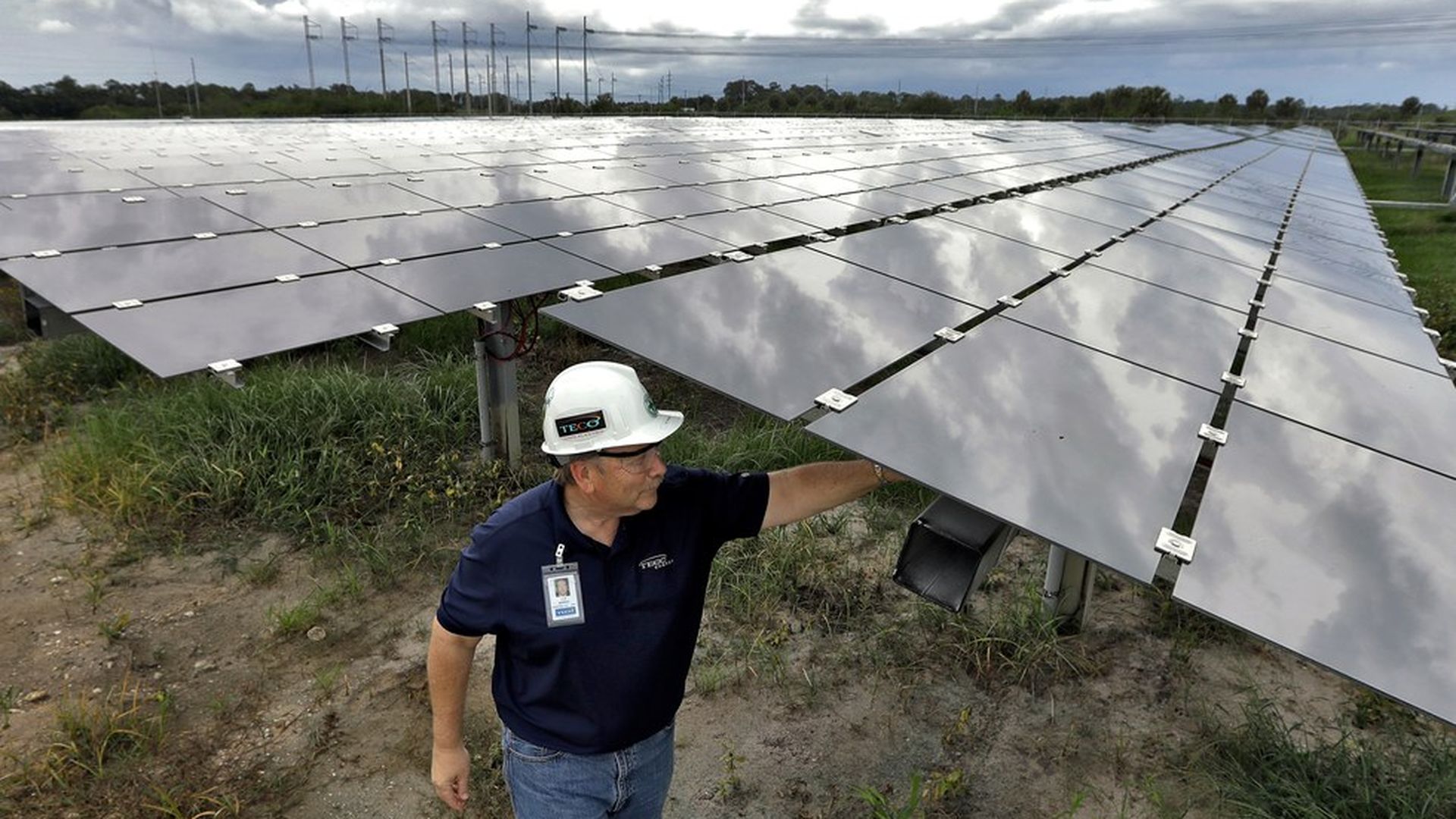
The International Trade Commission is recommending imposing tariffs up to 35% on solar module imports, shortly before the commission is due to make recommendations to Trump on the dispute, Bloomberg reports. Trump himself is to make the final call on tariffs.
Breaking that down: The winners here would be Suniva, which brought the case, along with SolarWorld. They're both foreign-owned. Much of the solar industry opposes tariffs, since they say inexpensive foreign panels have led to more jobs and enabled wider growth of solar power.
Google and its employees have contributed $1.09 million to 52 of the 55 lawmakers on the Judiciary Senate Intelligence and House Intelligence committees since 2009. Facebook and its employees have given more than half a million to 40 of those lawmakers, and Twitter and employees almost $12K, Politico reported. Today, the tech giants will testify in front of those committees on Russian interference and manipulation during the election.
Why it matters: The donations since 2009 totaled $1.6 million, which is relatively small. But still, as John Wonderlich, executive director of the government transparency group Sunlight Foundation, told Politico: "When lawmakers oversee or regulate their donors, this represents, at minimum, a complication in their incentives."
More than half of the Facebook's users in the United States were exposed to Russian attempts to sow discord before and after the 2016 presidential election, a company executive will tell lawmakers Tuesday, while arguing that the reach of the campaign was still limited given the platform's massive scale. Google and Twitter will also disclose that the Russian influence campaign stretched beyond what they've previously discussed publicly.
Why it matters: It demonstrates how Facebook's mechanics allowed the Russian operatives to reach far beyond just those people who followed their fake pages and account. Significantly, for lawmakers, it underscores that the roughly 3,000 ads that Facebook disclosed in September from the Russian pages were just one small piece of the puzzle.
Actor Anthony Rapp alleges Kevin Spacey invited him to his apartment and made a sexual advance toward him in 1986, per BuzzFeed News. Rapp was 14 at the time. Spacey had befriended Rapp while they were performing on Broadway.
Spacey responded to the allegation on Twitter, claiming that he does not remember the encounter, "But if I did behave then as he describes, I owe him the sincerest apology for what would have been deeply inappropriate drunken behavior and I am sorry for the feelings he describes having carried with him all these years."
During the election, Facebook broke down the U.S. into 14 political segments, spanning from left-leaning youth to pro-gun rights Tea Partiers, and gave the information to political advertisers to help them better target their ads, according to a sales pitch obtained by Alex Kantrowitz of BuzzFeed News. There were also broader buckets ranging from "very liberal" to "very conservative."
Why it matters: It's not clear how this particular pitch played out with advertisers. But more broadly, many Americans are just now getting a behind the scenes look at how online political advertising works.
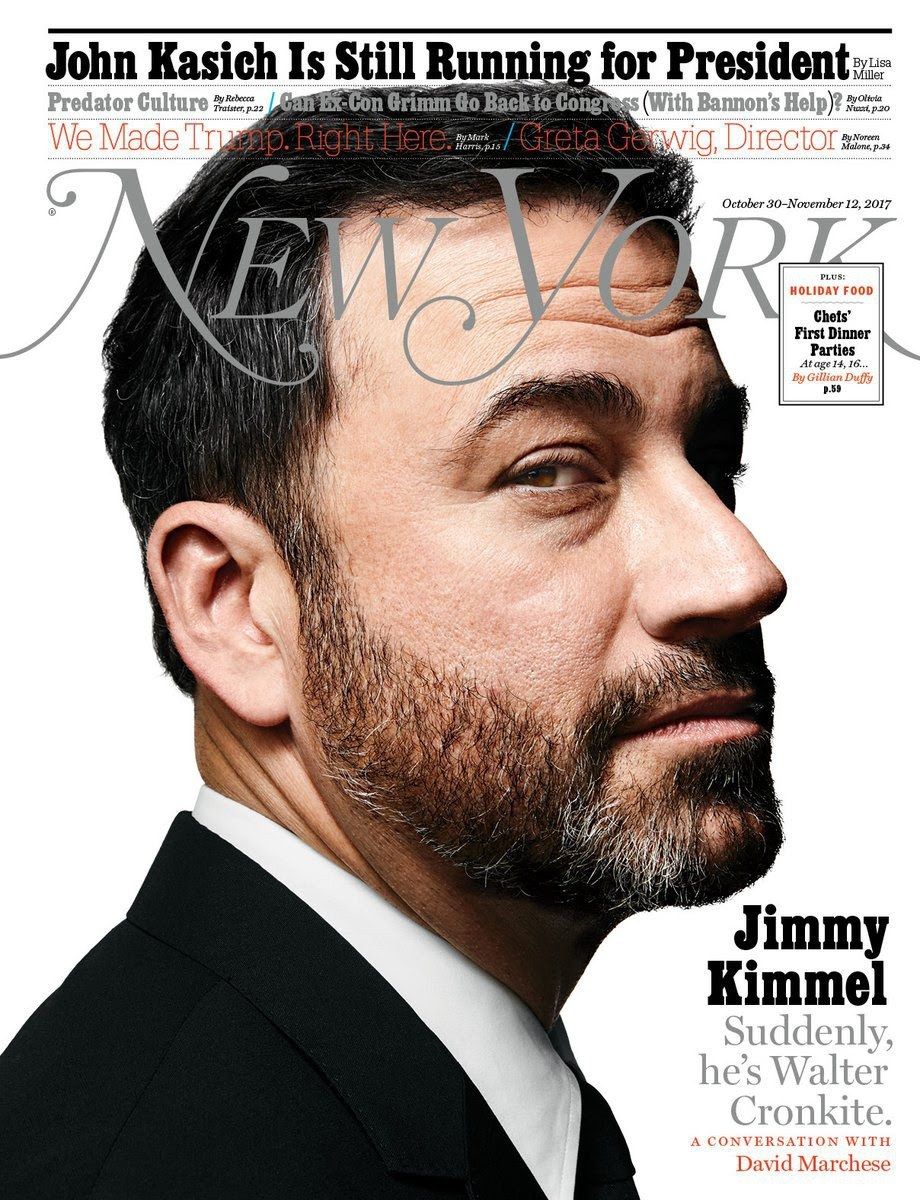
Jimmy Kimmel talks to New York magazine about his star turn in protesting the Senate Republicans' health-reform plan:
"[T]he closest thing I can compare [Trump's election] to is when O.J. got acquitted. It never occurred to me that it might happen. There was so much overwhelming evidence that O.J. was guilty, and you believe in the American judicial system. You believe that, for the most part, if somebody did it, they're going to prison for doing it. We're in a similar situation."
Adam Sharp has a rare view into how we got to this week, with Facebook, Google and Twitter set to appear before three congressional committees over Russian election meddling. He led Twitter's strategy for the 2016 and 2012 elections (part of a six year career at the company) before leaving in December.
Why it matters: The congressional hearings about social media and the 2016 election start this week with a public that's deeply divided on the issue of Russian interference, according to an Axios/SurveyMonkey poll. The companies say they're open to required disclosures for paid political advertising — but Sharp argues even that may not be enough. Axios' spoke with Sharp via email over the weekend.