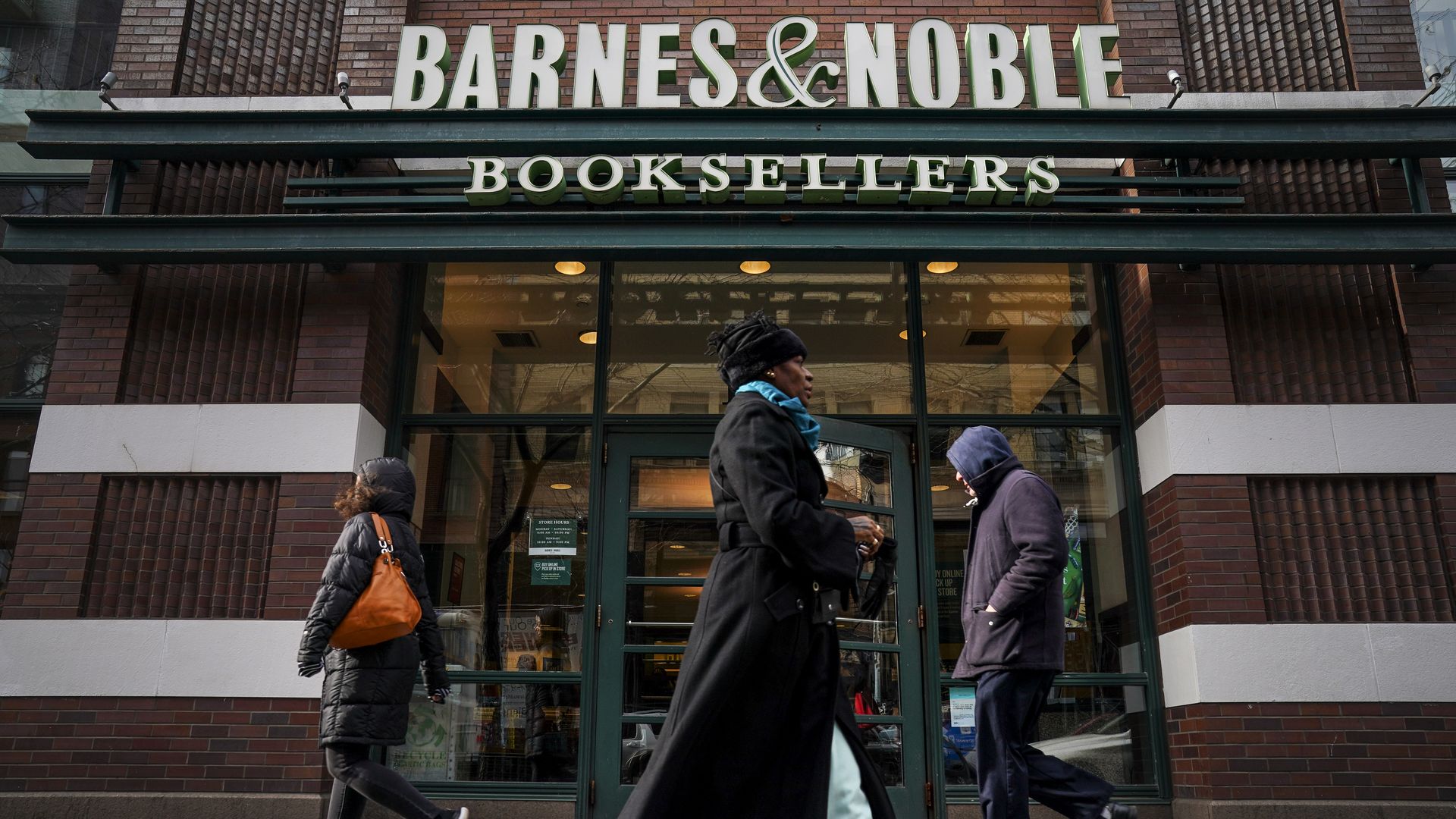
The trick to being a big-box bookseller is to not be a big-box bookseller.
Driving the news: So says Barnes & Noble CEO James Daunt, who's been credited with engineering a turnaround for the bookstore chain, in an interview with Axios.
TikTok will try to help younger people limit their time on the app to one hour of daily activity, the company announced today.
Details: TikTok, one of the top downloaded apps in the world, will prompt teens under 18 years of age to enter a passcode in order to continue watching beyond 60 minutes — “requiring them to make an active decision to extend that time,” TikTok head of trust and safety Cormac Keenan said in a post.
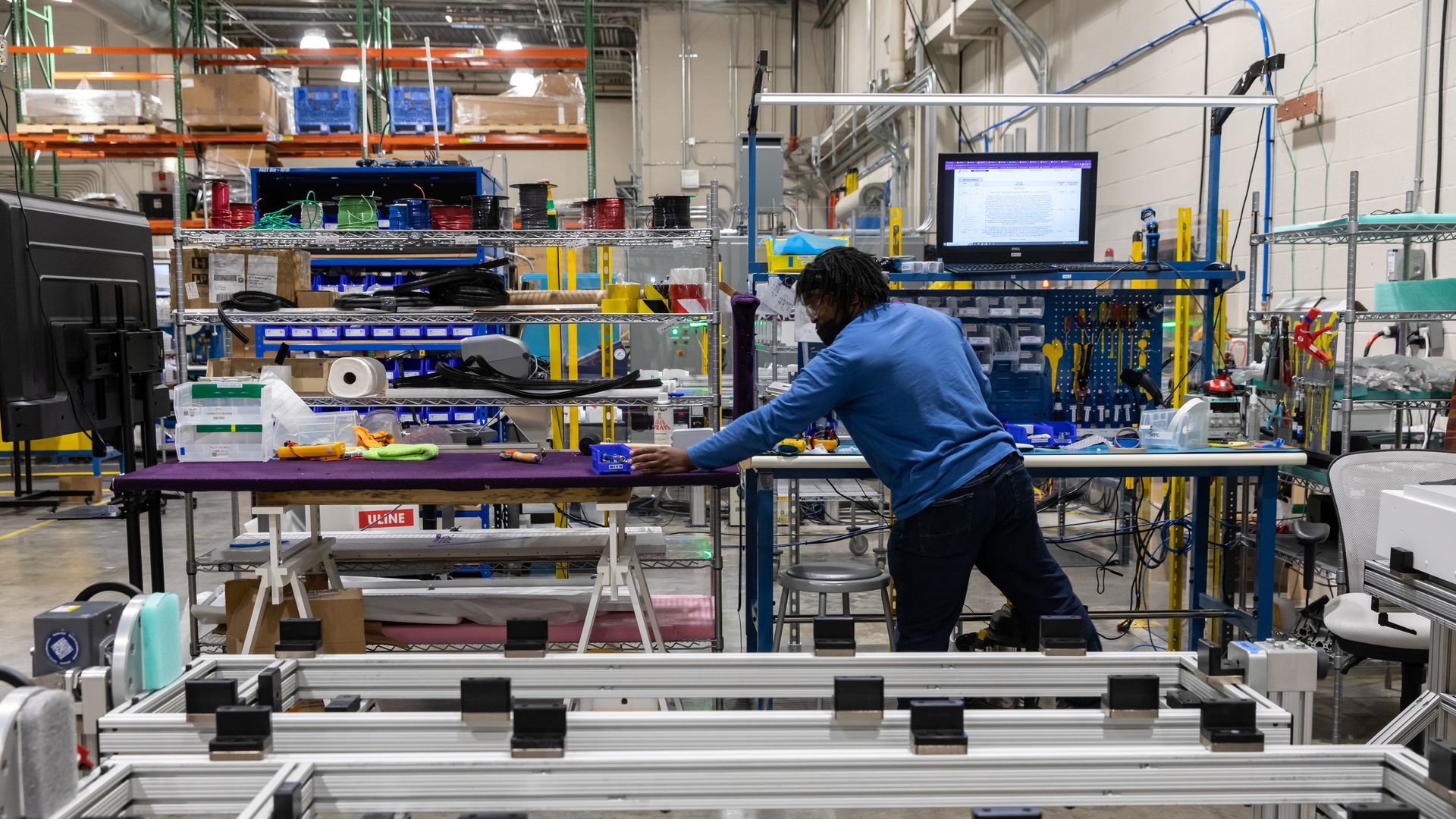
For those lookingfor more signs that January's economic rebound extended into February, a closely watched manufacturing survey showed activity continuing to contract, though at a slower pace.
There were also some early signs of rebounding demand — and hope that this demand would accelerate later this year.
Details: Overall, the Institute for Supply Management's Purchasing Managers' Index remained in territory that suggests contracting output (47.7%) — only a marginal improvement from January's level (47.4%).
Between the lines: America's factories saw increased demand, with the new orders index jumping by 4.5 percentage points (though it remains in contraction). A smaller share of industries reported that activity was contracting at a strong pace; meanwhile, prices increased at a faster rate.
Yet manufacturing employment did cool relative to January, at least according to the survey. A sub-index that gauges hiring activity dipped into contraction territory (49.1%), following two months of expansion.
What they're saying: Manufacturers "continue to indicate that they will not substantially reduce head counts, as sentiment is positive about the second half of the year, though slightly less so compared to January," ISM's Timothy Fiore said in a release. (A final reading of manufacturing activity in February by S&P Global released today showed employment improving for the month.)
What's next: ISM will release results for February data for the services sector, which accounts for a far larger share of the U.S. economy than manufacturing, on Friday.
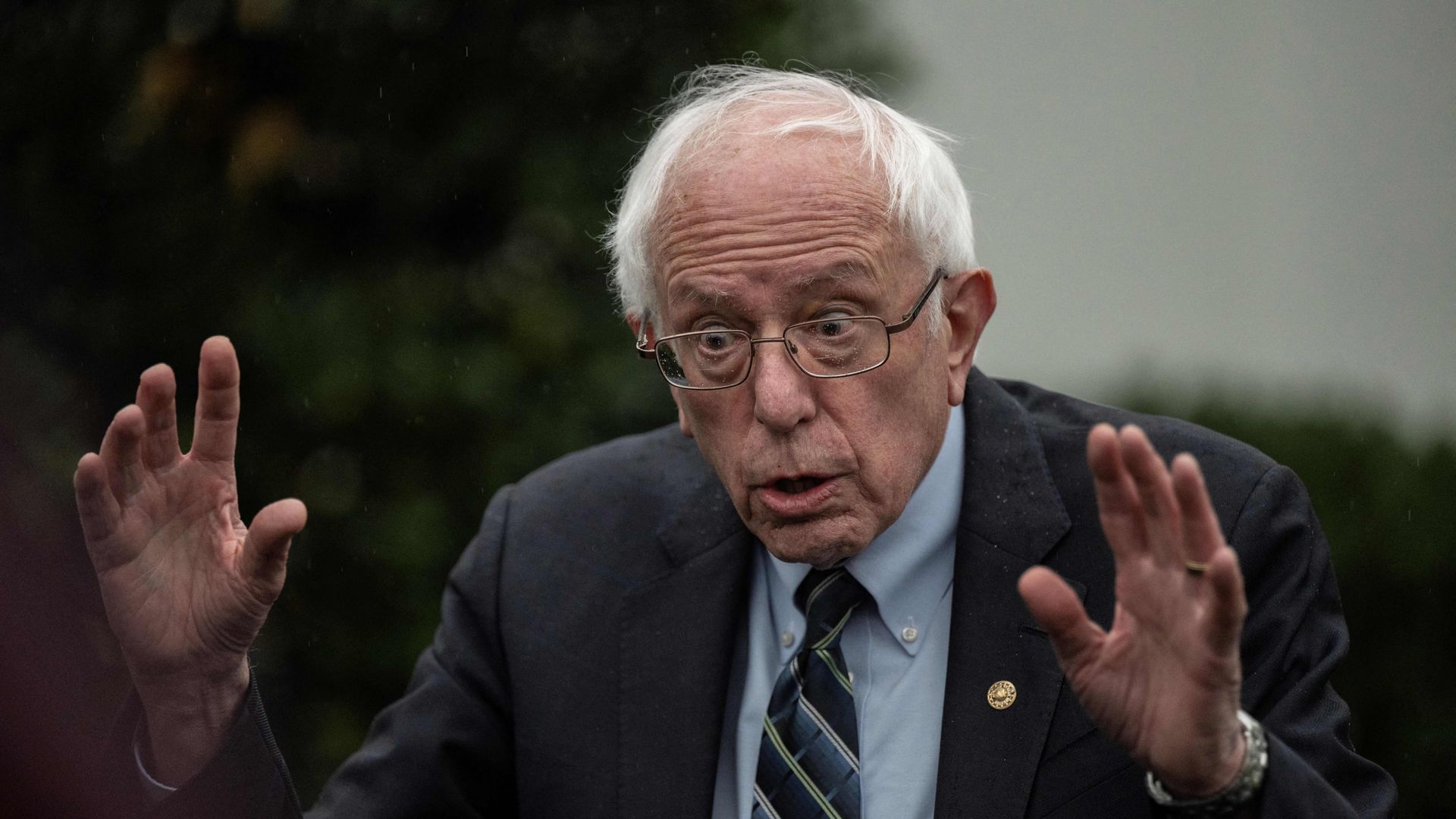
Sen. Bernie Sanders (I-Vt.) says he is moving to subpoena Starbucks interim CEO Howard Schultz to testify about the company's "lack of compliance with labor laws."
Why it matters: The Starbucks unionization efforthas become one of the most high-profile labor battles in the country, and while hundreds of stores have voted to unionize, they've so far been unable to land a first contract.
Aviation officials are investigating two more alarming recent near-misses two weeks after the Federal Aviation Administration announced a "safety call to action" following several other concerning incidents.
Driving the news: In the most recent incident, a business jet took off without clearance at Boston Logan International Airport on Monday, forcing an incoming JetBlue flight to go around.
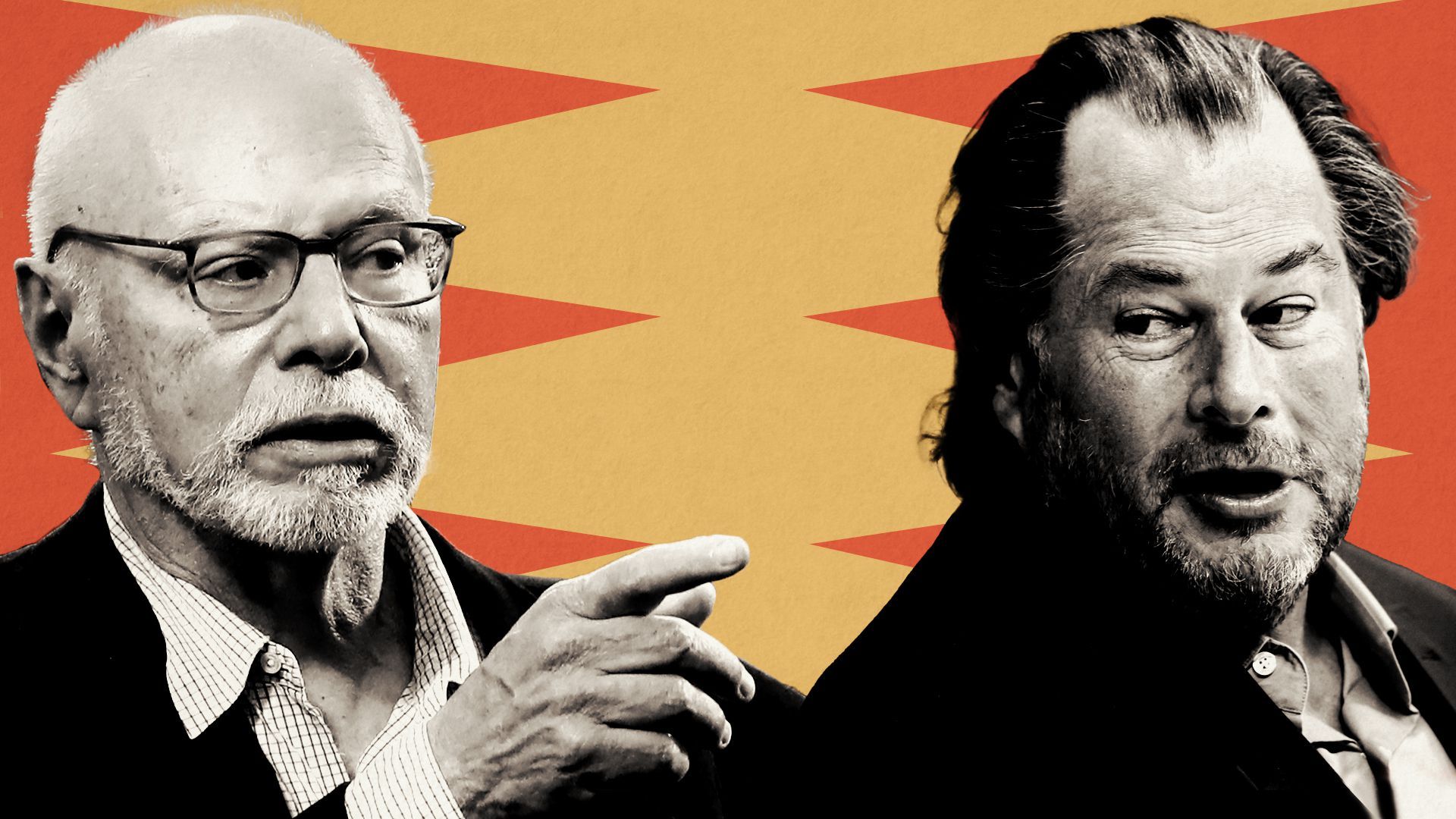
Elliott Management notified Salesforce within the last few weeks that it is officially running a slate of directors to replace existing board members, according to a person familiar with the matter.
Why it matters: Elliott's director nominations put added pressure on Salesforce to show that it's committed to a turnaround and pushing forward major changes to improve its performance, or risk a board shakeup.
Details: The size and makeup of Elliott's slate remains unclear. CNBC said that the size likely was two to three director nominees, and that Elliott managing partner Jesse Cohn was one of the candidates.
Zoom in: If Elliott proceeds with a proxy fight and wins board seats, that would be the biggest threat to Salesforce CEO and co-founder Marc Benioff's leadership to date.
Yes, but: Pressure on Benioff and the company could be dramatically reduced if it produces strong earnings today (after the close) and lays out specific, strategic goals that placate Elliott.
Of note: Elliott and Salesforce could reach a legal settlement or some kind of agreement that avoids a proxy fight and still keeps the activist investor engaged with the company in its campaign for changes.
What we're watching: Salesforce's earnings numbers, additional cost cuts and strategic moves, and whether Elliott delivers a statement of support, as it did when it pressured AT&T, or if it remains frustrated, and ramps up a full-on proxy fight.
Elliott and Salesforce did not immediately return requests for comment.
Eli Lilly is slashing prices on its most-prescribed insulins and capping out-of-pocket costs for patients amid pressure from consumers and the Biden administration.
Driving the news: After years of price hikes on insulin, Lilly on Wednesday said people with diabetes would see 70% reductions on its most common versions.
Home foreclosures have ticked back up over the past four months, according to data provider Black Knight. But don't be alarmed — they're still well below pre-2020 levels, and nowhere in the vicinity of the foreclosure crisis of 2008.
Why it matters: This is a return to the before times. Pandemic-era housing assistance programs are winding down. Folks who hadn't been paying their mortgage are either working out new arrangements with lenders, selling their homes or going into foreclosure.
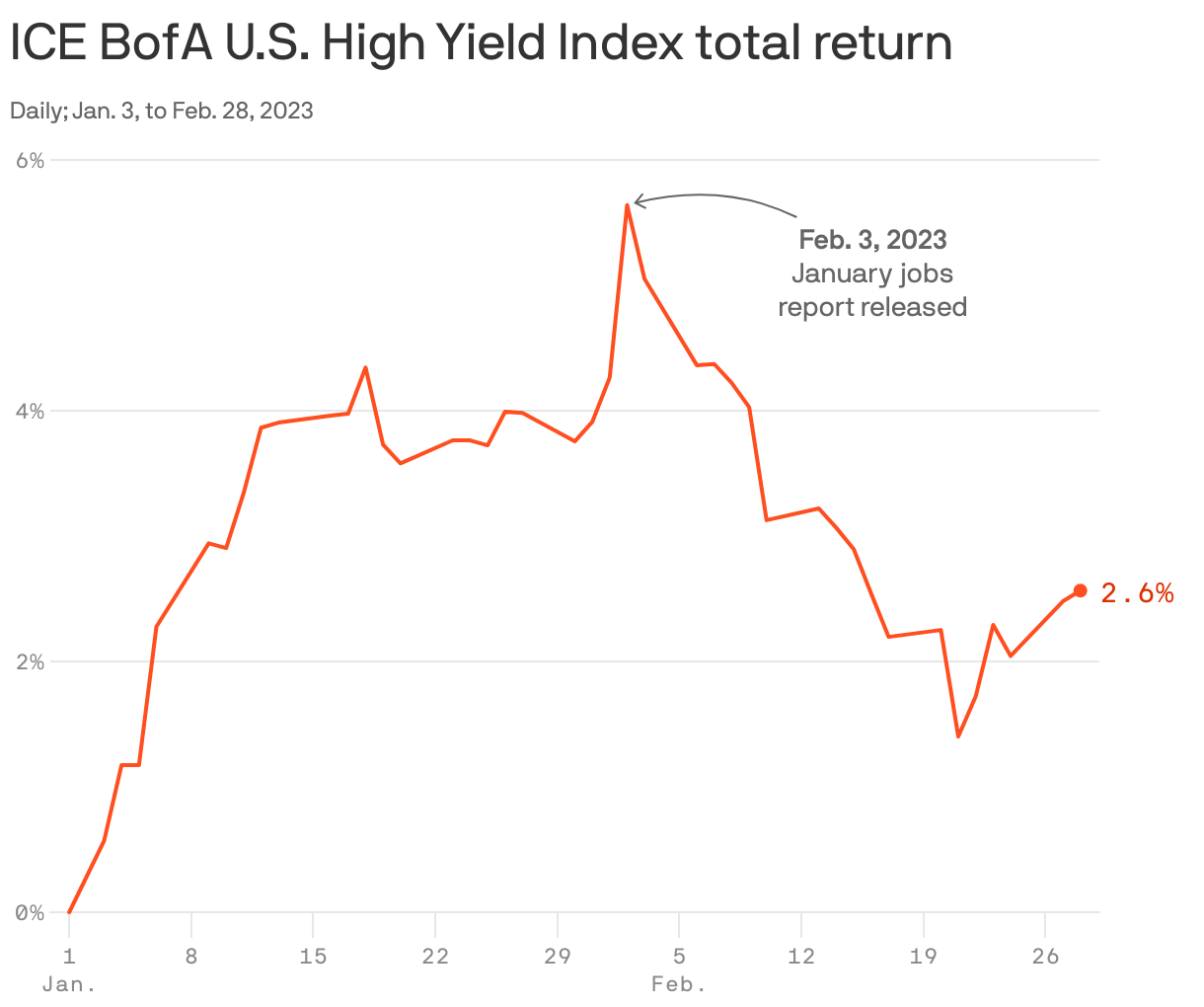
The S&P 500 dropped sharply in February, as a decline in healthcare and energy shares offset a solid showing for tech stocks.
The big picture: After notching gains of 6% in January, February's stumble suggests that investors' path to recouping last year's ugly losses may not be straightforward.
Consumers with low credit scores are falling behind on their auto loans at a record rate.
Why it matters: The upsurge shows that despite the strength of the job market, cash-strapped American households are under pressure from two years of cost-of-living increases and the end of pandemic-related benefits.
Long before the Feb. 3 Norfolk Southern derailment exposed East Palestine to hazardous chemicals, residents suffered from a series of devastating rail car derailments that destroyed businesses, ruined local infrastructure and often left the city stuck paying for the damage.
Why it matters: Earlier generations urged stricter railroad oversight to prevent a major disaster like the one with which their community now reckons.
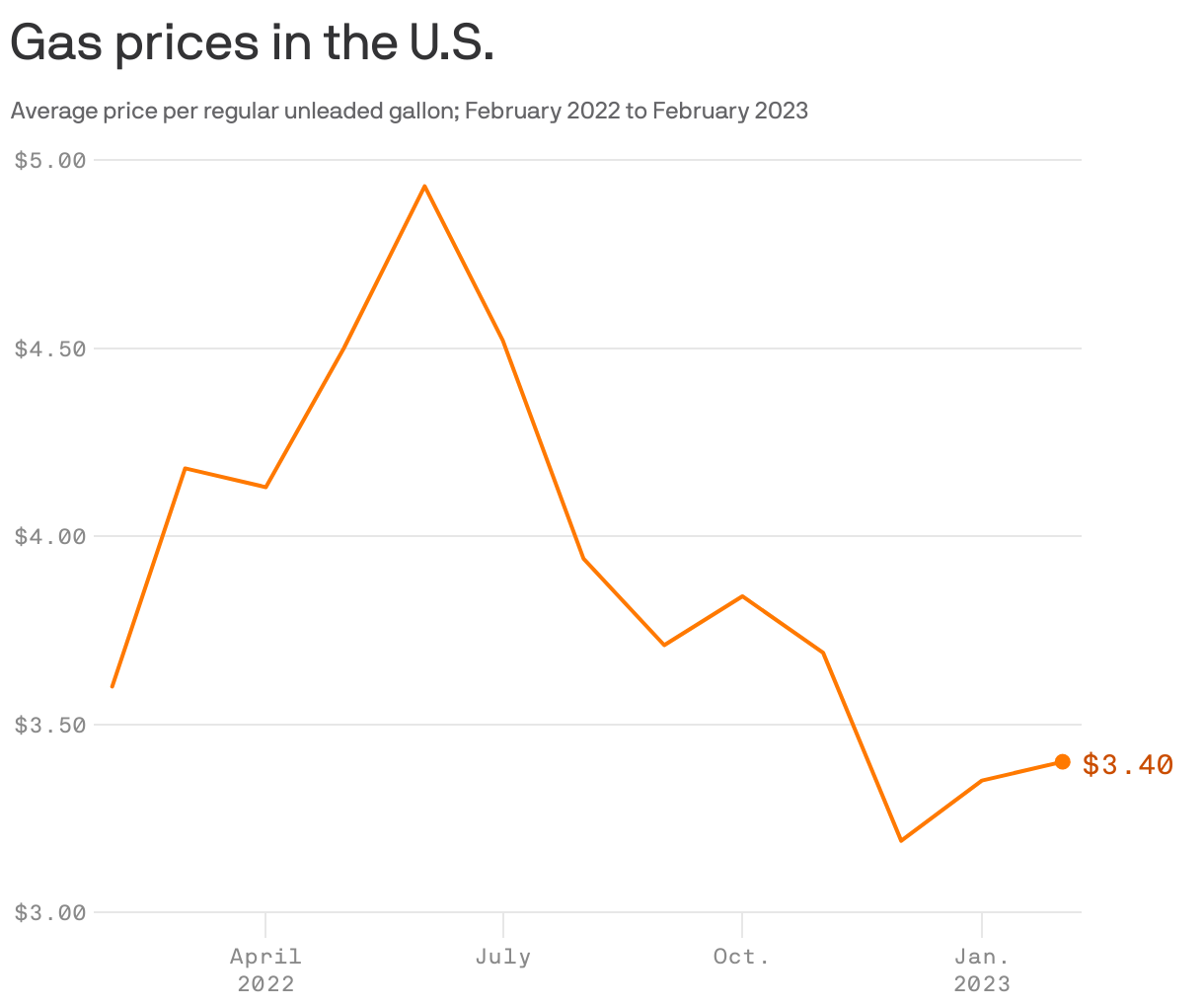
Data: GasBuddy. Note: Price as of the 1st of each month; Chart: Axios Visuals
U.S. drivers spent an average of about $3.40 for every gallon of gas in February, per GasBuddy data. That's down 6% year over year, but up 2% from January.
The big picture: Cheaper gas is good news for American consumers, especially commuters.
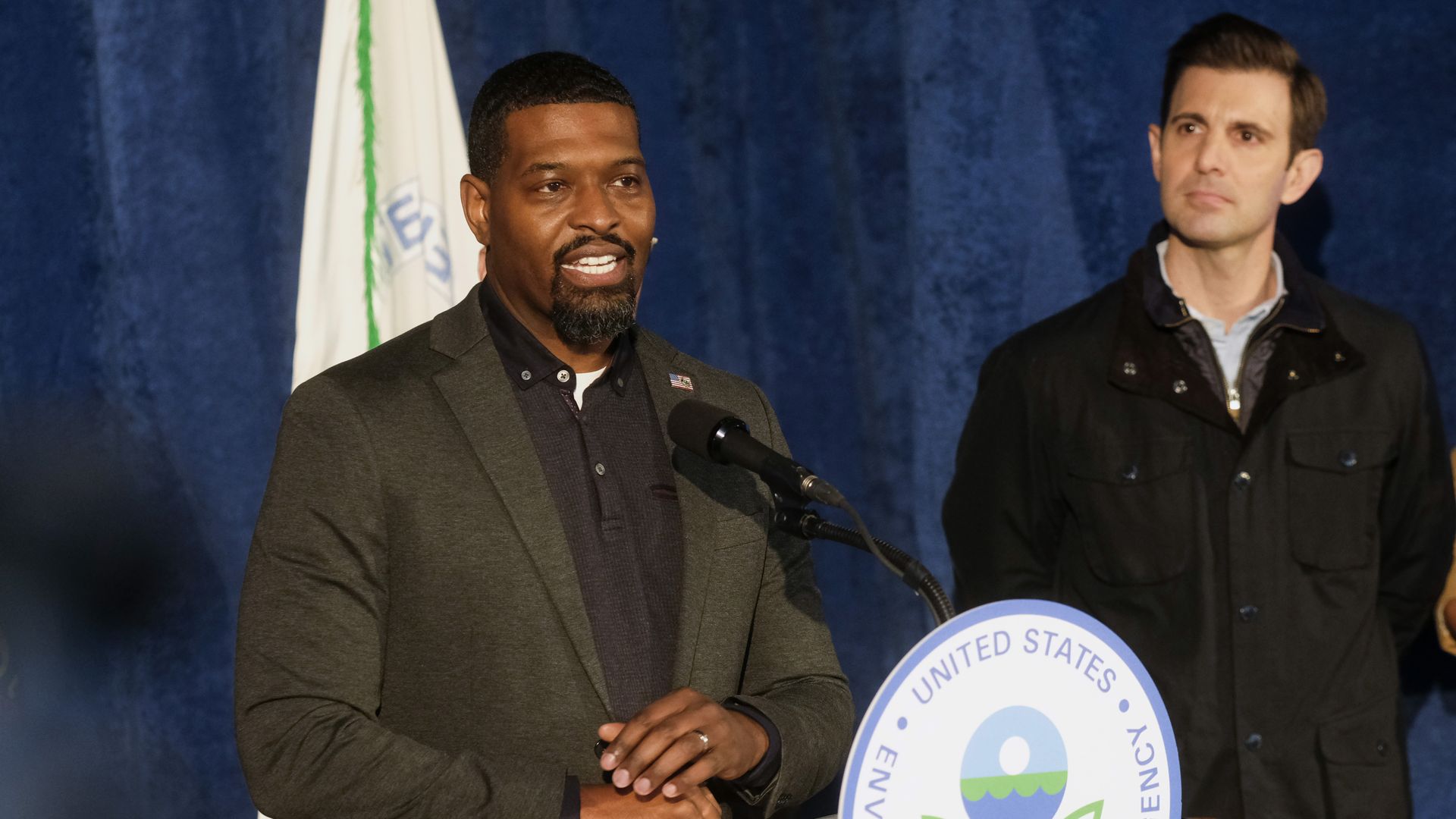
The Department of Justice announced Tuesday that it has filed a lawsuit against a chemicals manufacturer in Louisiana over hazardous emissions from its manufacturing facility and their threat to public health in the nearby majority-Black community.
Driving the news: The plant operated by Denka Performance Elastomer LLC is heightening cancer risks by producing high levels of chloroprene emissions, alleges the complaint, which was filed on behalf of the Environmental Protection Agency (EPA).