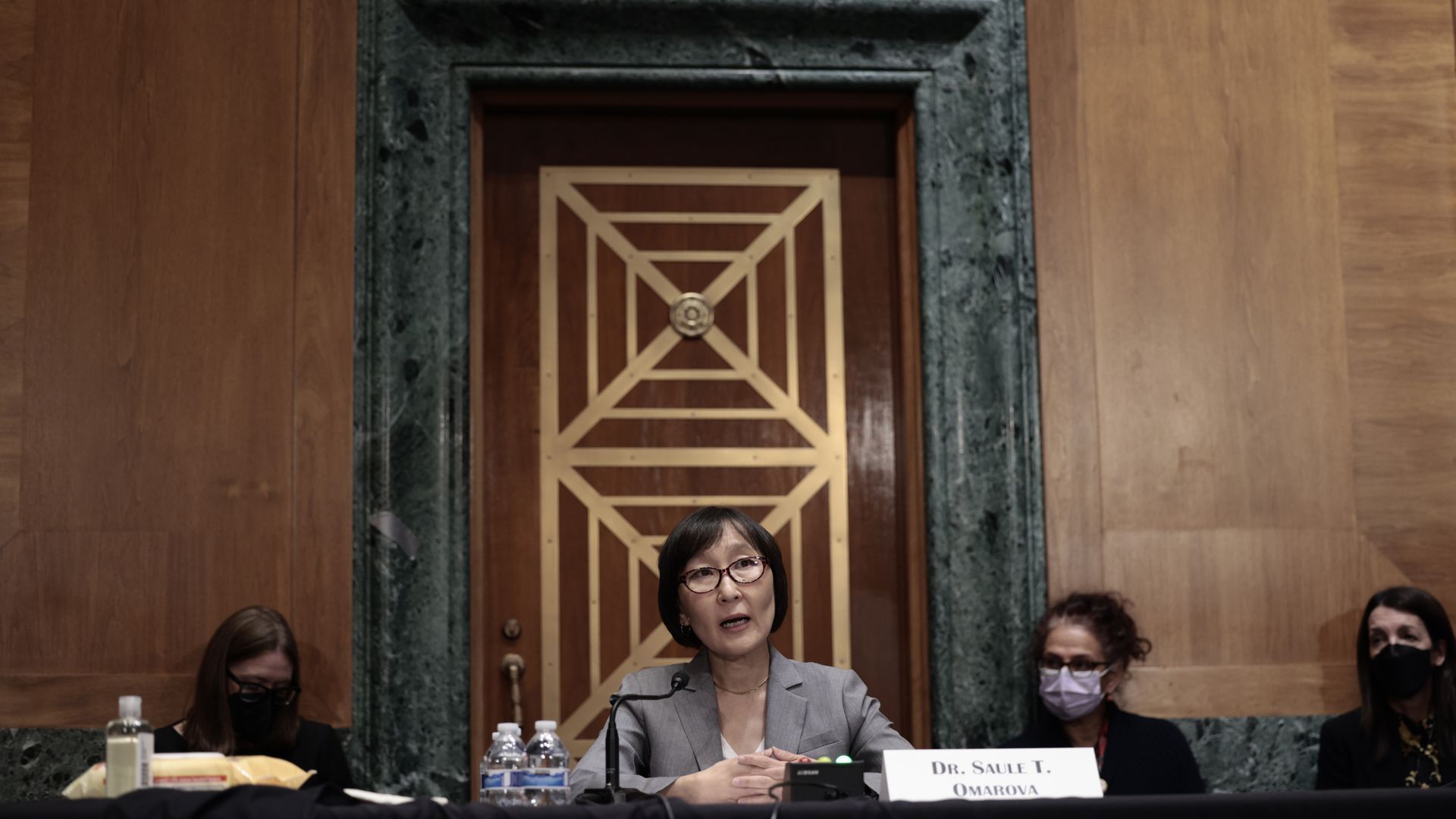
President Biden's pick to head one of the country's most powerful banking regulators is dropping out of consideration for the post, according to a statement from Biden that accepted the withdrawal.
Why it matters: Saule Omarova, nominated to lead the Office of the Comptroller of the Currency, faced a tough path to confirmation — with opposition from Republicans and moderate Democrats.
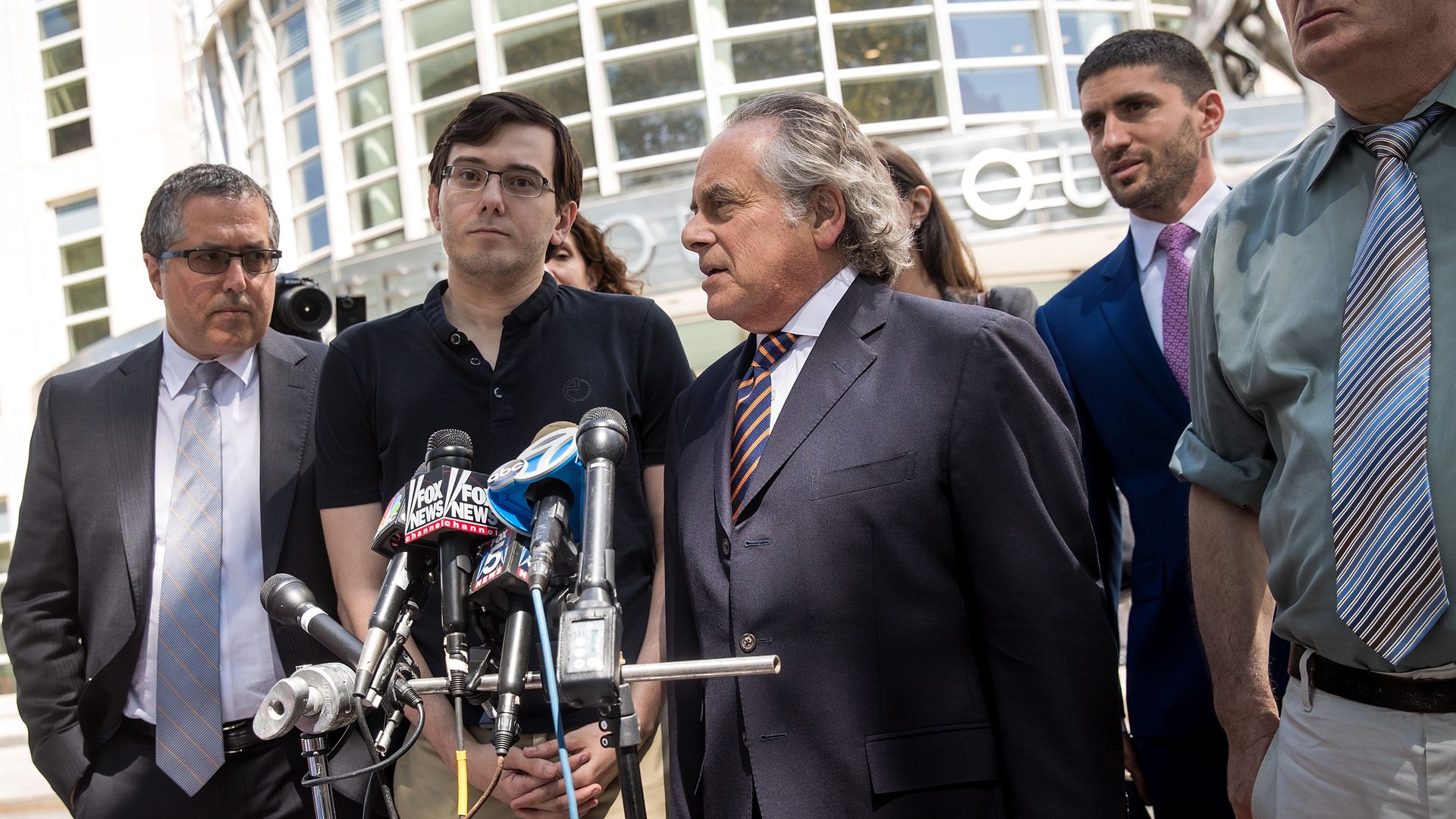
The big picture: The FTC and seven states accused Vyera along with former CEO and "Pharma Bro" Martin Shkreli of violating antitrust law when he raised the price of Daraprim by 4,000%.
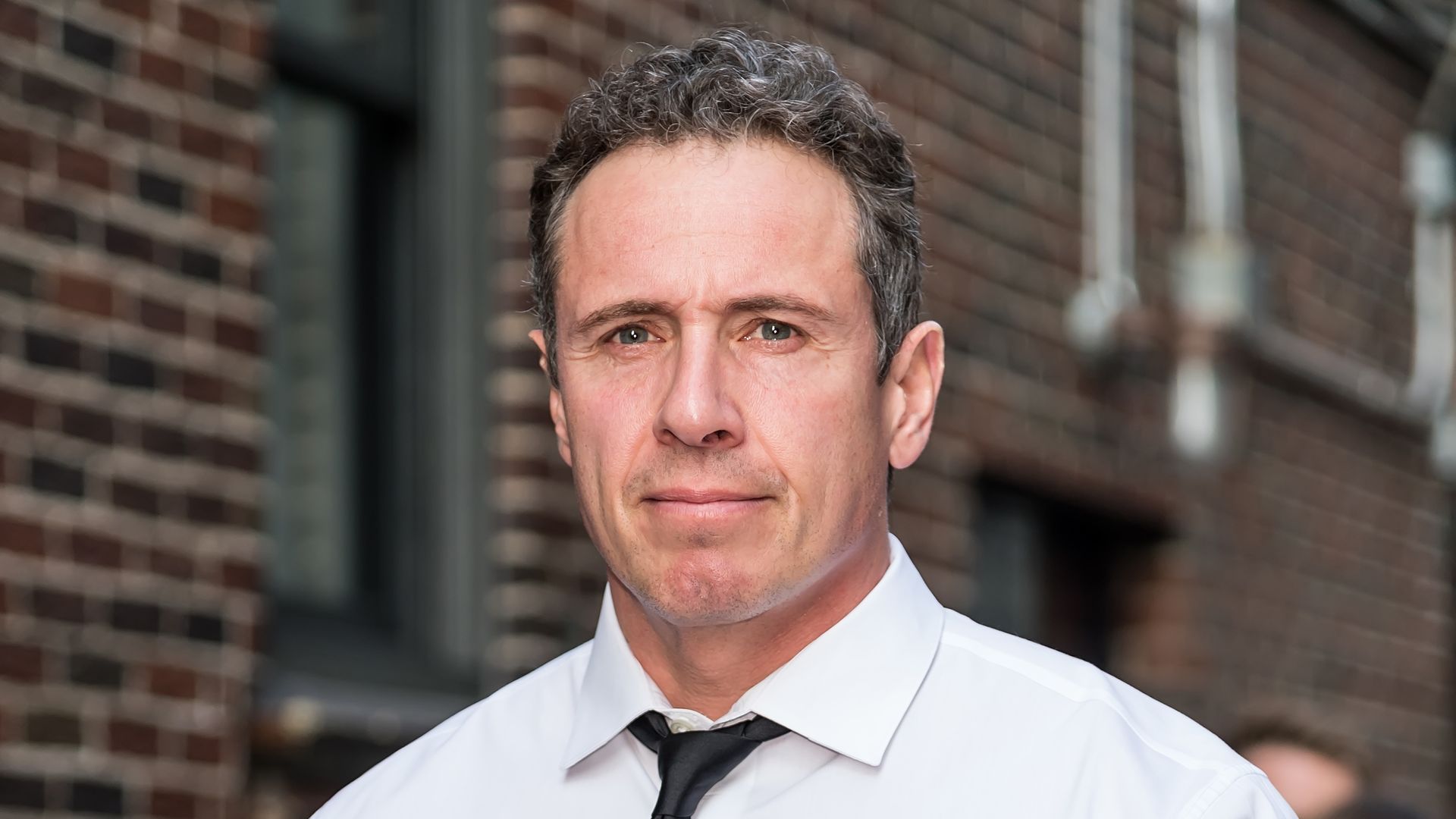
HarperCollins said Tuesday that it would no longer publish an upcoming book by Chris Cuomo, who was fired by CNN over his involvement in his brother's sexual harassment scandal, the New York Times reports.
Why it matters: The book, titled "Deep Denial," was slated to be released next year and had been described by the publisher as an analysis of "harsh truths" that emerged during the pandemic and former President Donald Trump's term.
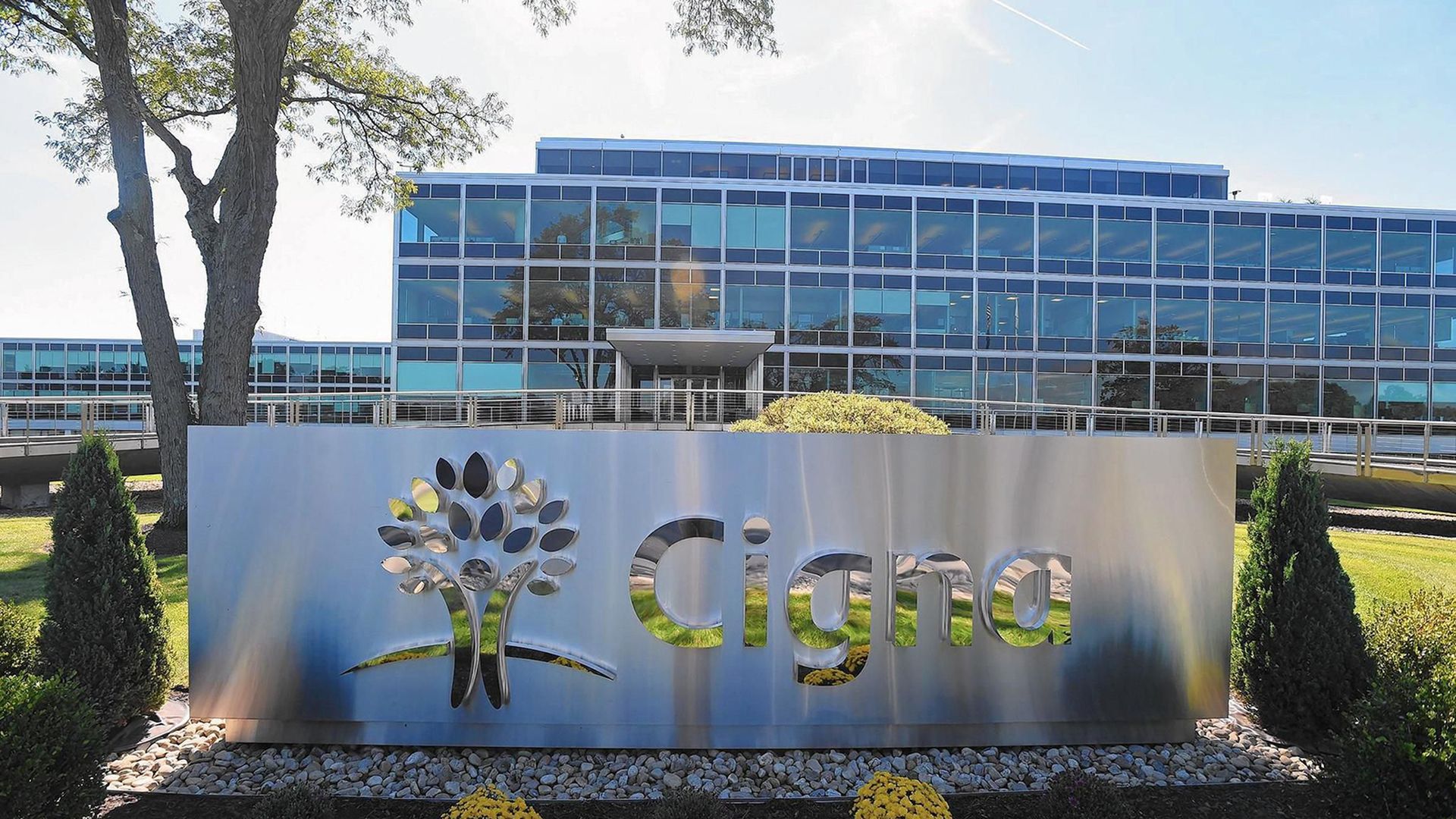
Bright Health, the parent company of a health insurer and physician clinics, has raised $750 million from Cigna's venture capital arm — a new investor for the company — and longtime investor New Enterprise Associates.
Why it matters: Cigna, one of the largest national health insurers, is putting a lot of money into a company that is a competitor but also a possible purchaser of Cigna's extra health services.
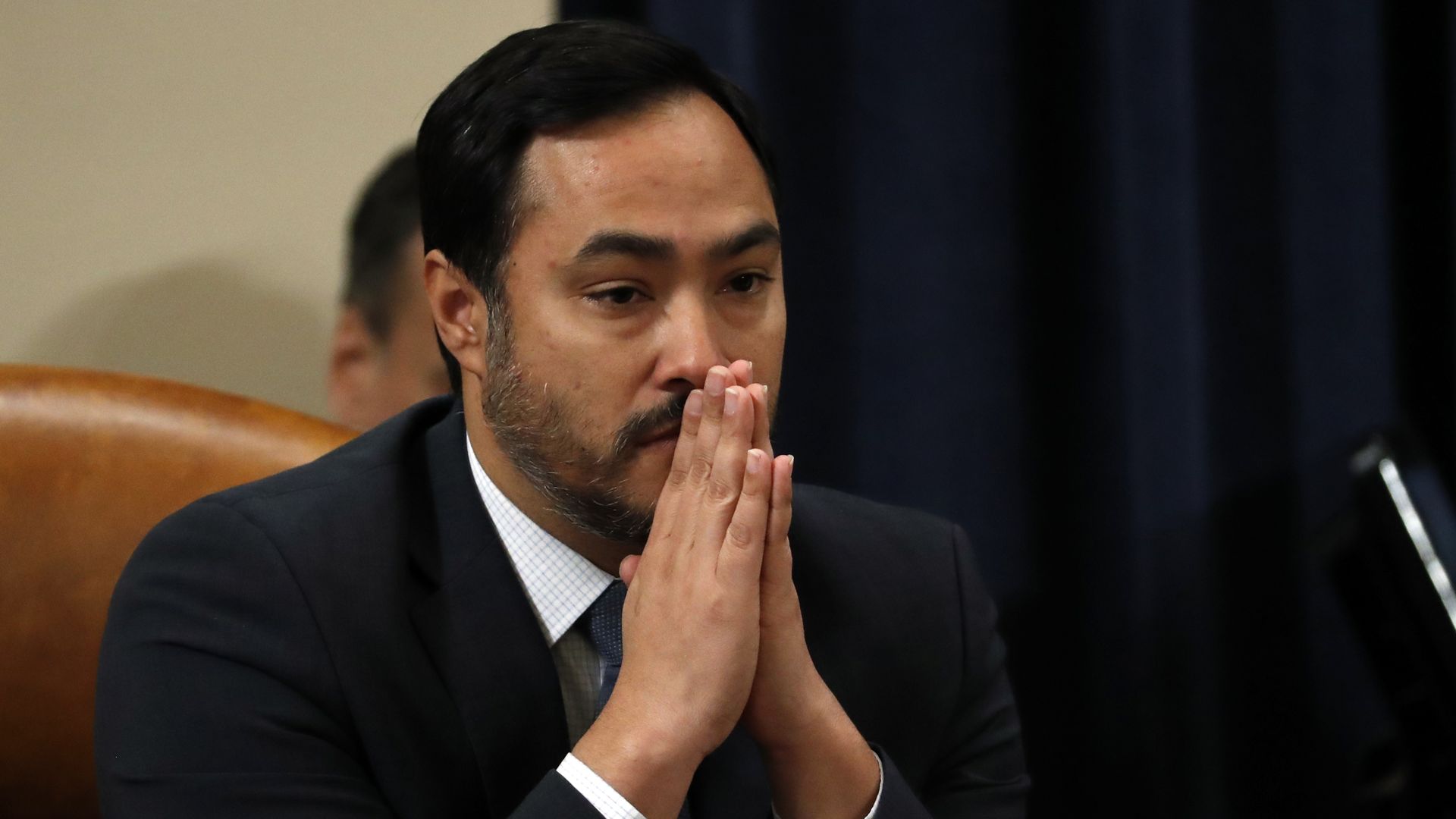
Rep. Joaquin Castro (D-Texas) and Sen. Elizabeth Warren (D-Mass.) want the Justice Department to review closely a proposed merger of WarnerMedia and Discovery over concerns it could limit programming and opportunities for Latino creators.
Why it matters: Castro has been leading a campaign to pressure media companies to hire more diverse staff and produce more programming with people of color. Media mergers could make that more challenging.
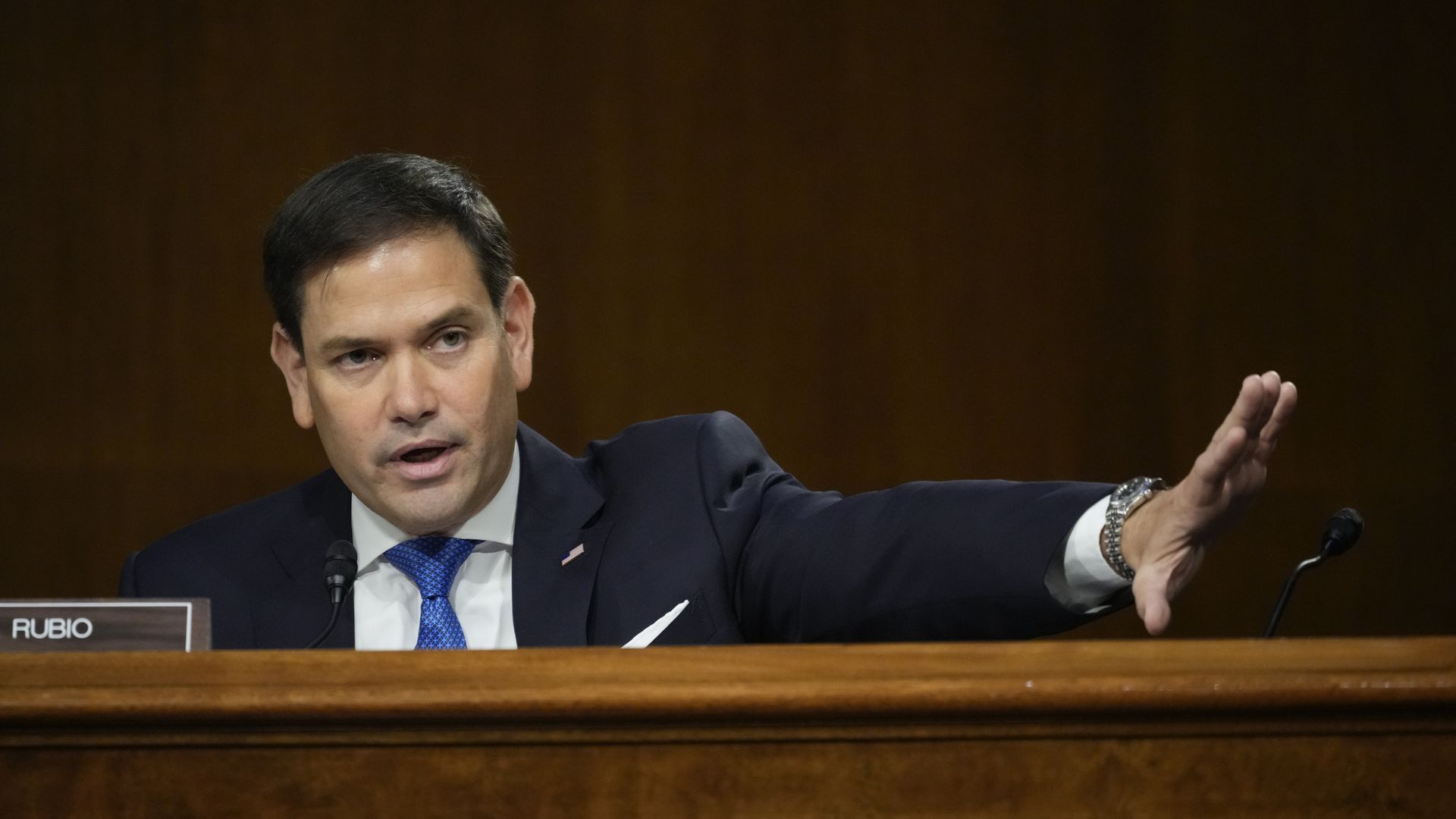
Sen. Marco Rubio (R-Fla.) sent a letter to Airbnb on Tuesday demanding that the company de-list more than a dozen rentals on land owned by a Chinese paramilitary organization sanctioned by the U.S. for complicity in genocide.
Why it matters: The letter comes in the wake of an Axios investigation that revealed 14 Airbnb listings on land owned by the Xinjiang Production and Construction Corps, which operates some facilities in Xinjiang where more than 1 million Uyghurs and other Muslim minorities are believed to have been detained since 2017.
The Wall Street Journal and its parent company Dow Jones are making big changes to its polling strategy ahead of the midterms, executives tell Axios.
Why it matters: The company had partnered with NBC News for the past three decades on polling. Now, it's launching a new polling operation without media partners and it's bringing on campaign experts to help, the Journal’s executive Washington editor Jerry Seib told Axios.
Genesys, an SF-based cloud call center software provider led by former Skype CEO Tony Bates, raised $580 million led by Salesforce Ventures at a $21 billion valuation.
Why it matters: Investors love call centers and the software that drives them, even if they drive the rest of us to despair. Among those investors is Zoom, which recently failed to buy Genesys rival Five9, after its $14.7 billion offer was rejected by Five9 shareholders.
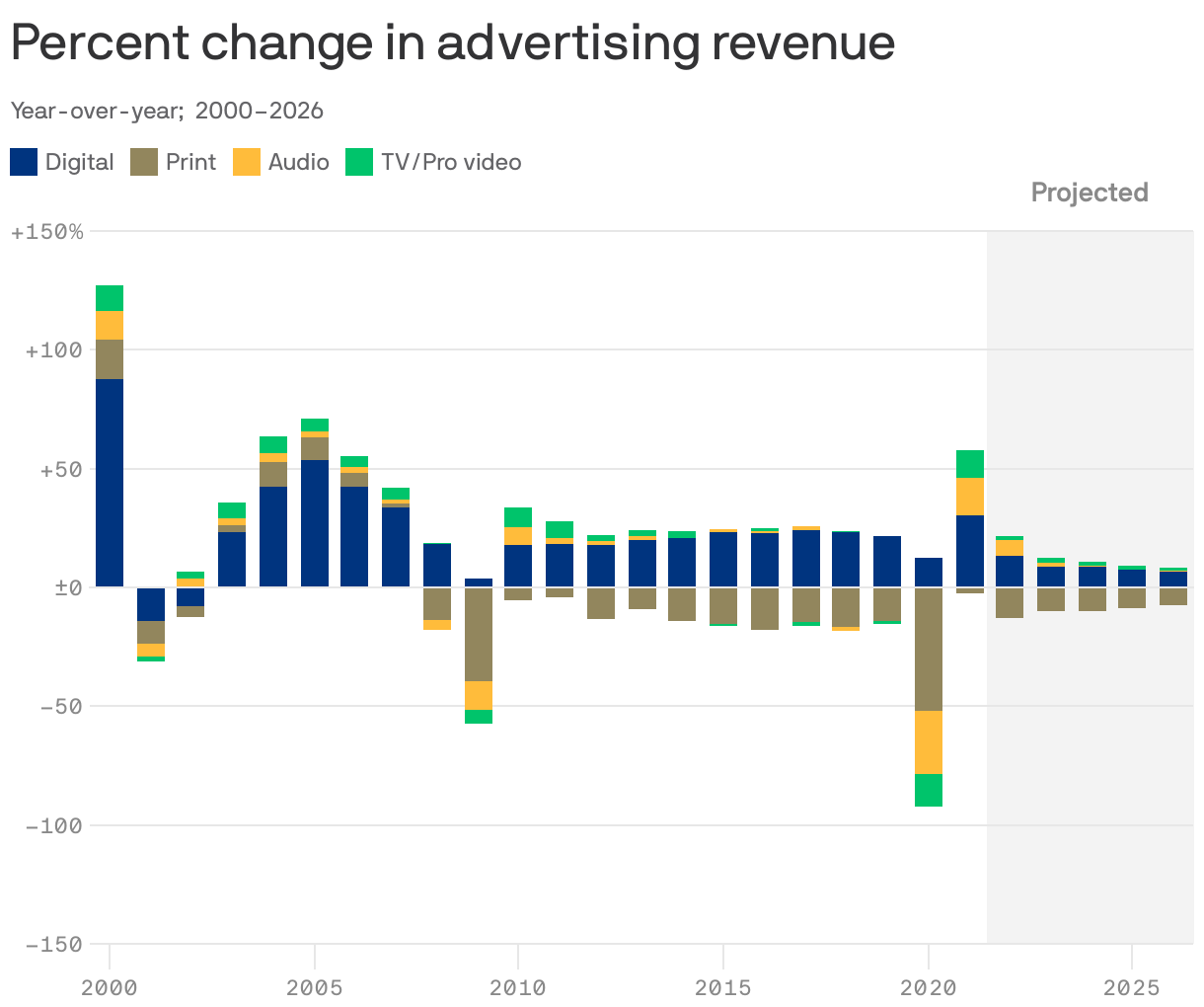
New estimates suggest the advertising industry grew faster this year compared to any point in recent history.
Why it matters: The sector's success has long been tied to the health of the global economy. But new growth opportunities driven by the pandemic, like e-commerce, have allowed the industry to flourish despite wider economic constraints from the pandemic.
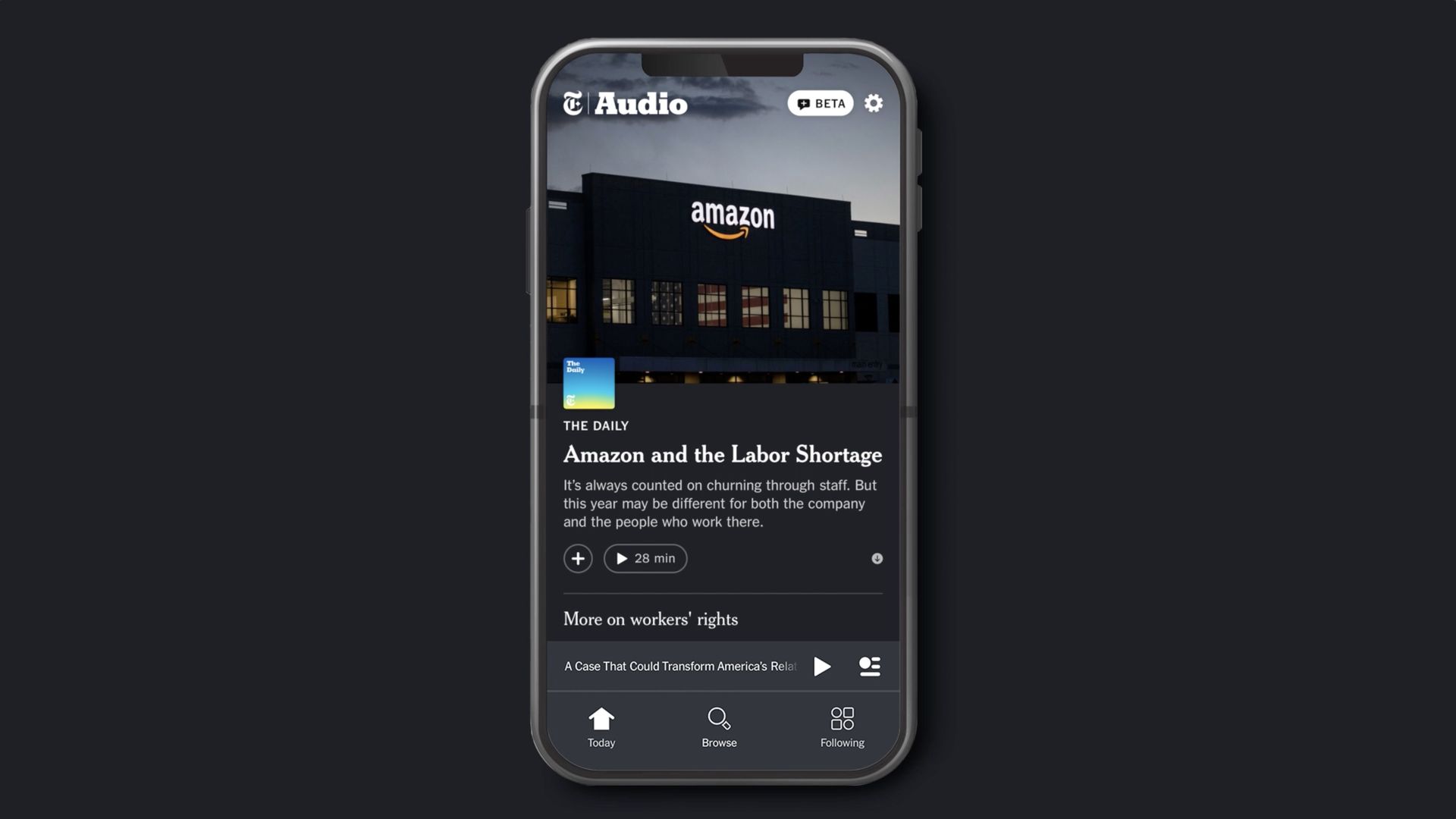
The New York Times on Tuesday will open up its new audio app to beta testers ahead of a public launch next year.
Why it matters: The Times has built an audio empire, acquiring audio companies and investing heavily in new podcasts. But they're mostly distributed on apps like Apple and Spotify, limiting the ways The Times can experiment with new audio features for journalism.
Snapchat on Tuesday will launch "523," a new content accelerator program for small, minority-owned content companies.
Why it matters: Many accelerators at social media companies are designed to bolster individual creators. The 523 program is focused on media companies creating premium shows for Snapchat's content arm, Discover.
The pandemic, natural disasters and response to other tragedies spurred giving in 2021, according to GoFundMe's annual report.
Why it matters: The crowdfunding platform says one donation is made every second to help people across the globe. One in three fundraisers is started for someone else.
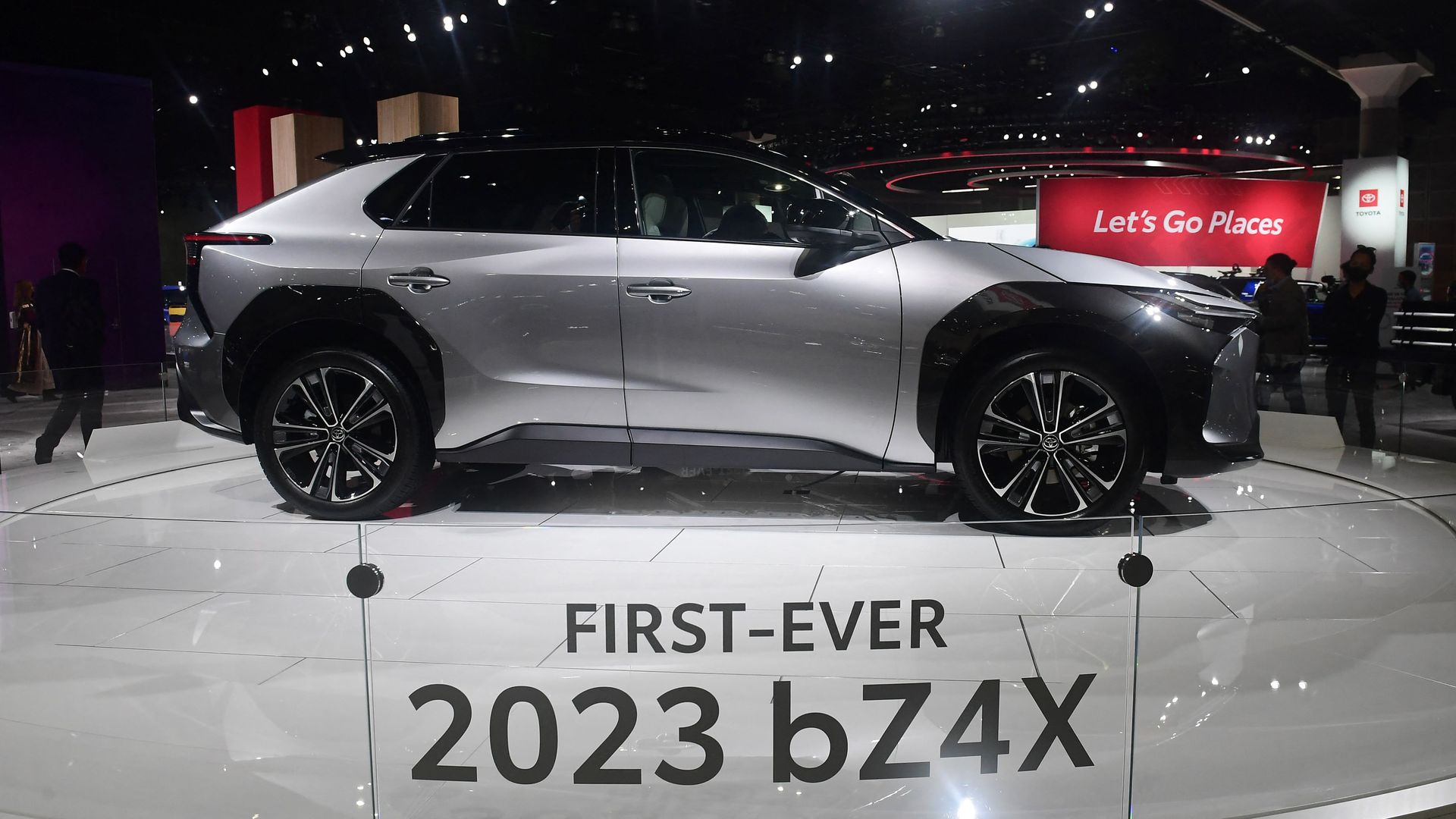
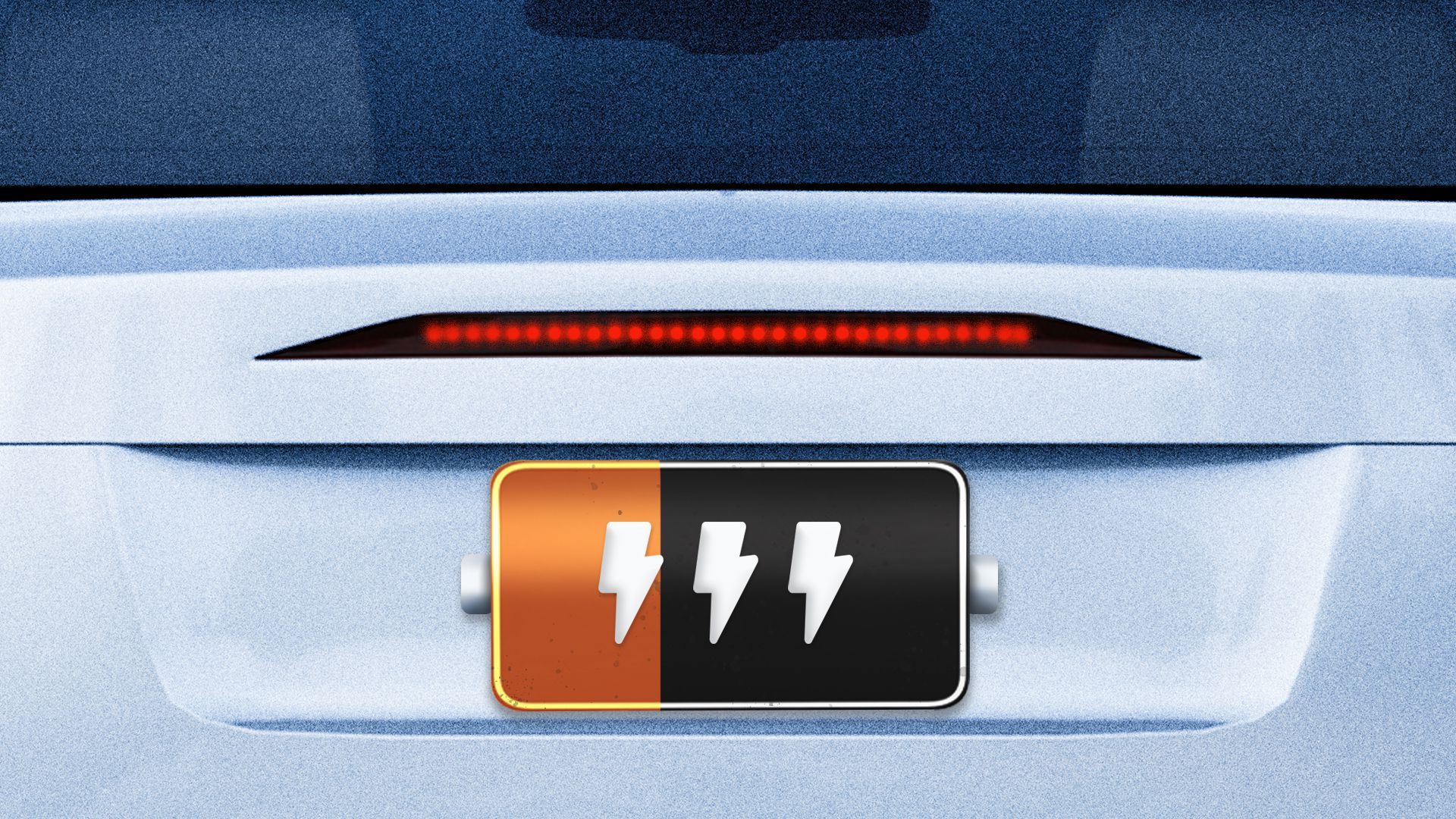
Toyota's plan to build a manufacturing plant in North Carolina for EV batteries is the latest move by auto giants, startups and suppliers to set up shop in conservative or swing-y states.
Driving the news: On Monday, the company said it's building a $1.3 billion plant in the Greensboro area to produce batteries for hybrid and electric vehicles.
Port congestion in Southern California appears to have changed little over the last week.
Driving the news: The total number of container ships at anchor or loitering within 40 miles of Los Angeles and Long Beach dropped to 35 Monday, down from a peak of 86 on Nov. 16, according to data from the Marine Exchange of Southern California.
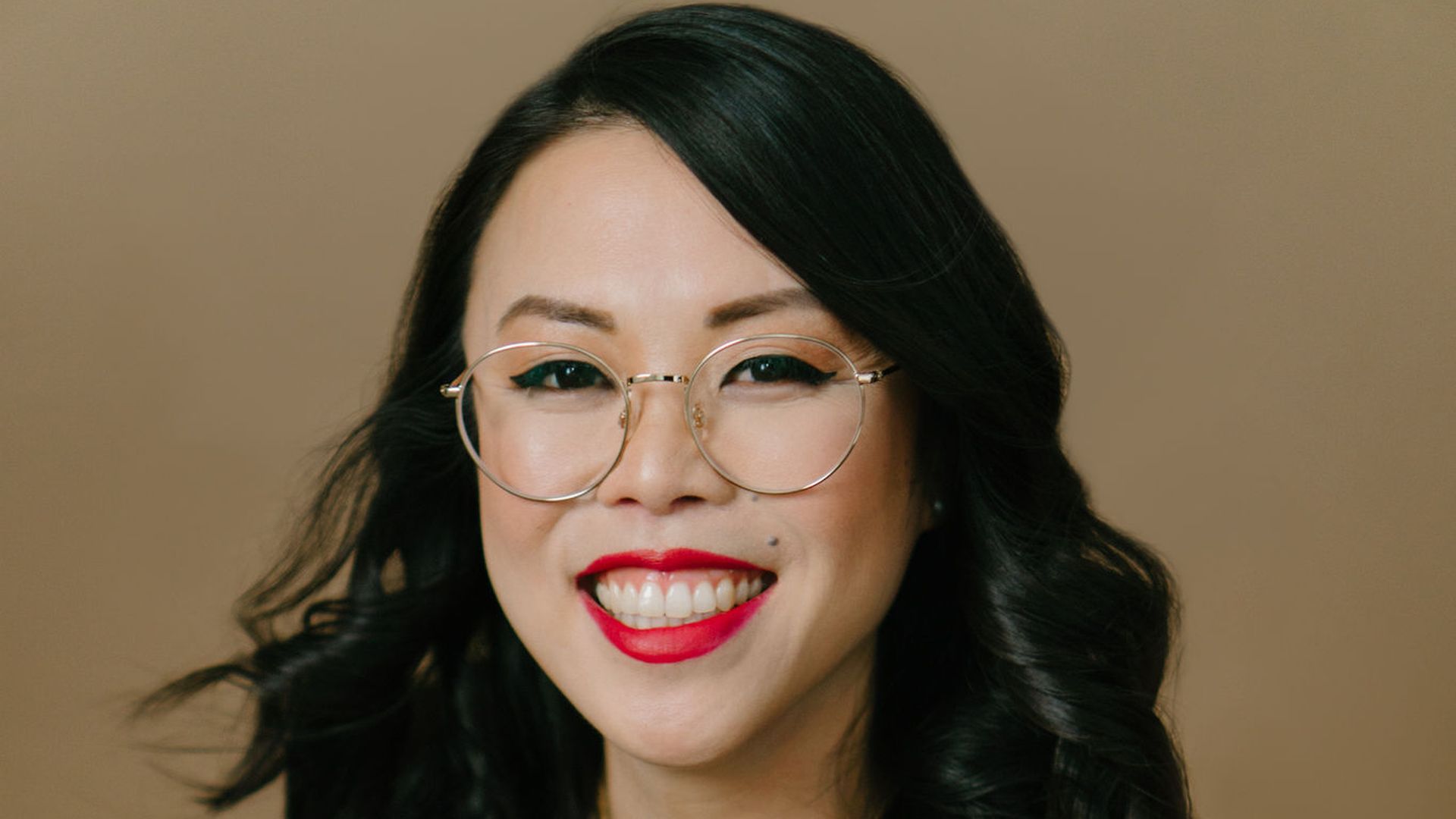
The 19th has hired Julia B. Chan as its new editor-in-chief, effective Jan. 10, executives tell Axios.
Why it matters: Chan's hiring comes as The 19th looks to establish itself beyond Washington. She fills the editor-in-chief role left vacant by Andrea Valdez, who left the company for The Atlantic in May.
Investors have been fleeing the high yield bond market — where the riskiest corporates borrow cash — over the last two weeks. Money managers are closely watching asset flows for signs that the loose money available to U.S. companies could start to tighten.
Why it matters: The Federal Reserve is in the early stages of removing stimulus, and investors' reshuffling around a new normal is just beginning. Chair Jerome Powell amped up expectations for earlier rate hikes last week when he said that the Fed could speed up the tapering of bond purchases — a prerequisite to liftoff.
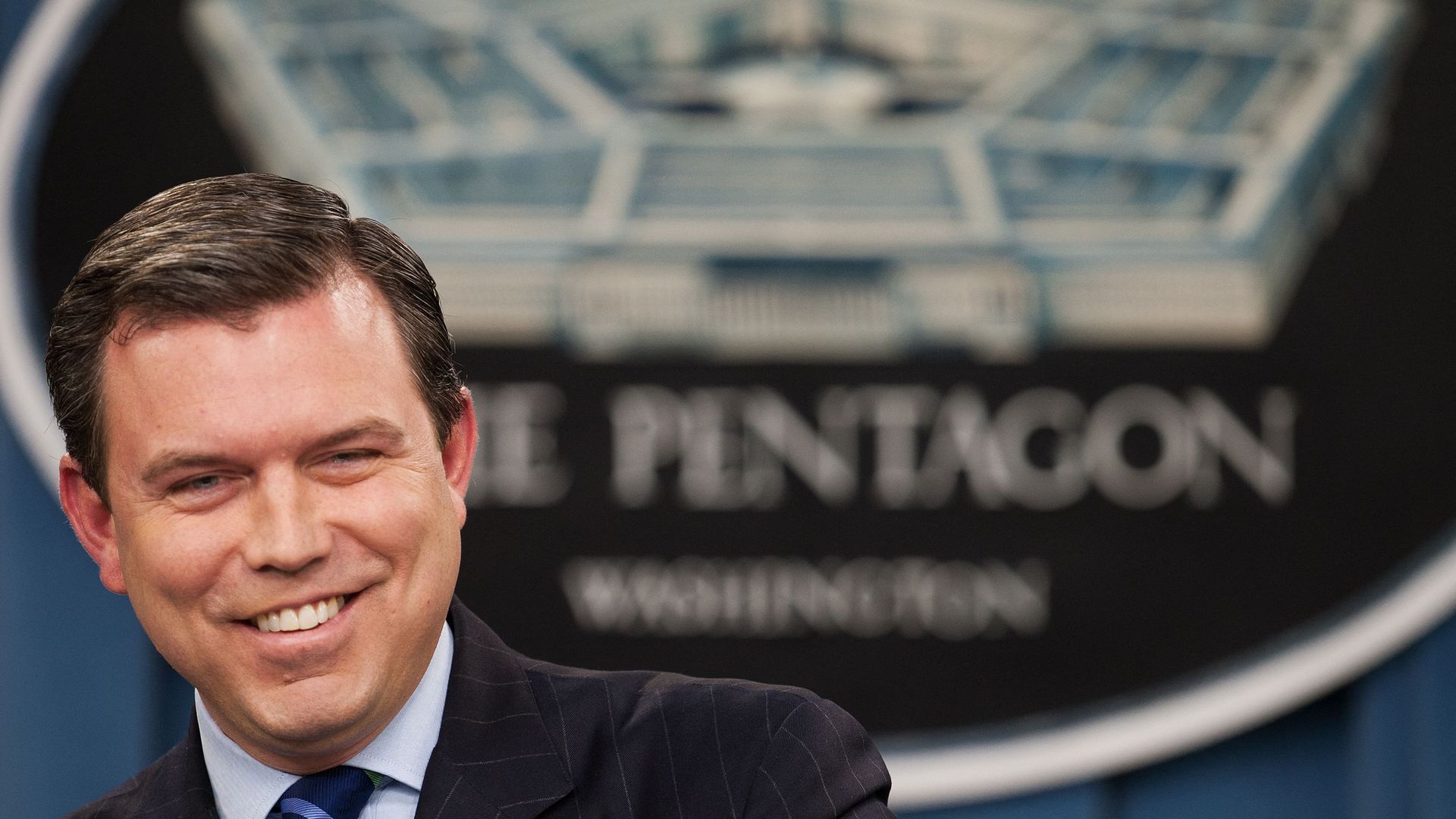
Geoff Morrell, a former Pentagon press secretary now in London for BP, will join the Walt Disney Co. early next year in the new position of chief corporate affairs officer, reporting to CEO Bob Chapek, Axios has learned. The announcement is expected on Tuesday.
The big picture: Morrell, 53, will oversee communications, global public policy, government relations, corporate social responsibility (CSR) and environmental, social and governance (ESG) teams.
The super-rich are getting stupid rich: New data out today shows the share of global wealth held by the richest slice of humanity swelled by almost a full percentage point during the pandemic.
Driving the news: The top 0.01% of individuals now hold about 11% of the world's wealth, compared to just over 10% in 2020, according to the "World Inequality Report 2022," written by Lucas Chancel, Thomas Piketty, Emmanuel Saez and Gabriel Zucman.
Newspapers all over the country have been quietly filing antitrust lawsuits against Google and Facebook for the past year, alleging the two firms monopolized the digital ad market for revenue that would otherwise go to local news.
Why it matters: What started as a small-town effort to take a stand against Big Tech has turned into a national movement, with over 200 newspapers involved across dozens of states.
BuzzFeed's stock spiked 45% in the first moments of its public debut, before falling to 11% below its initial share price at market close on Monday.
Why it matters: Volatility for a smaller company like BuzzFeed on its first day of trading isn't unusual, but the drama leading up to its public debut suggests investors are wary of how a digital media company like BuzzFeed will fare on a public market.
Newspapers all over the country have been quietly filing lawsuits against Google and Facebook for the past year, alleging the two firms have monopolized the digital ad market.
Below is a list of newspaper groups and newspapers that have filed complaints and/or retained legal services to file an antitrust complaint in the near future.
Americans are still avoiding downtown travel in many cities, a sign that COVID-19 continues to affect when, where and how people move.
The big picture: Traffic congestion is returning to many U.S. cities, but has yet to match pre-pandemic levels, according to new data from INRIX, a mobility research firm. One reason: people aren't making as many trips downtown.
What's happening: Many employees continued to work remotely in 2021.
San Francisco (-49%), Detroit (-41%) and Washington, D.C. (-38%) continued to see significant reductions in downtown trips compared to February 2020.
Downtown trips were close to normal, however, in San Antonio (-5%), Tampa (-6%) and Phoenix (-7%).
Of note: The data includes trips downtown for sporting events, shows and restaurants, not just work commutes.
Nationwide, downtown trips have decreased 22% compared to pre-COVID levels.
The bottom line: The average American driver spent 36 hours stuck in traffic in 2021 — worse than last year — but far below 2019 levels, when drivers wasted nearly 100 hours in traffic.
Office occupancy rates remain deflated across industries, but one type of workplace is in high demand: labs.
The big picture: A number of trends — in public health, American demographics and venture capital funding — are colliding to supercharge the life sciences industry.
Donald Trump's social media startup is under investigation by federal securities regulators, before it's even launched a product, and every new disclosure seems to invite new questions.
Why it matters: Trump Media & Technology Group was always bound to be controversial, but it's inviting extra scrutiny by keeping basic details secret and making wild promises.
Toyota announced Monday it's investing $1.3 billion to construct an electric vehicle battery "megasite" near Greensboro, North Carolina, set to open in 2025.
Why it matters: The Greensboro-Randolph Megasite will employ 1,750 people and have four production lines, each capable of delivering enough lithium-ion batteries for 200,000 vehicles when it opens, per a Toyota statement.
























/2021/12/07/1638838959571.gif?w=3840)