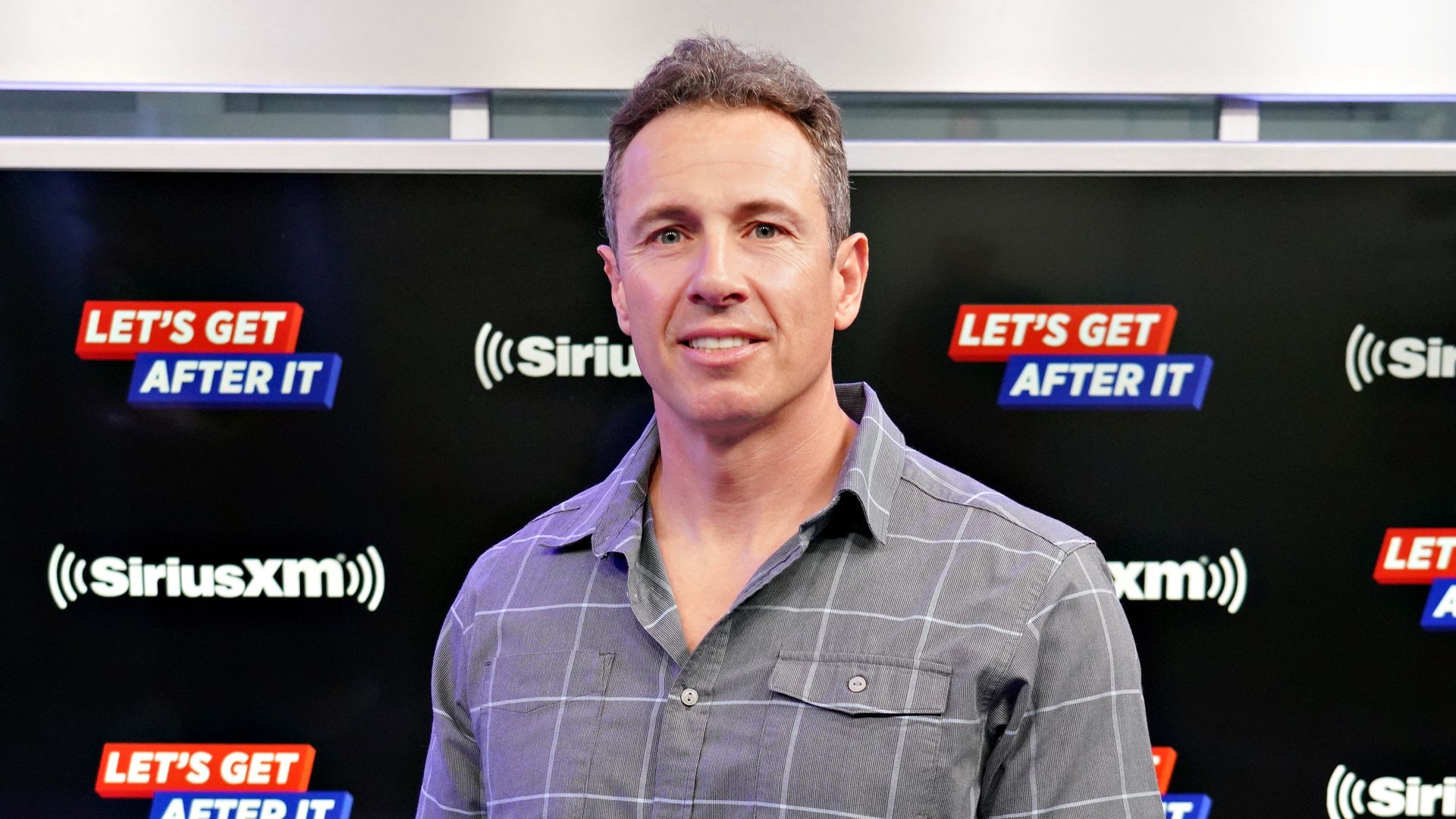
Chris Cuomo on Monday announced that he is stepping away from his SiriusXM radio show, citing difficulties brought on by new revelations about his involvement in the management of his brother's sexual harassment scandal.
State of play: CNN fired Cuomo last week after reviewing documents that showed that the star news anchor used his contacts to garner information about the women accusing his brother, former New York Gov. Andrew Cuomo, of sexual harassment.
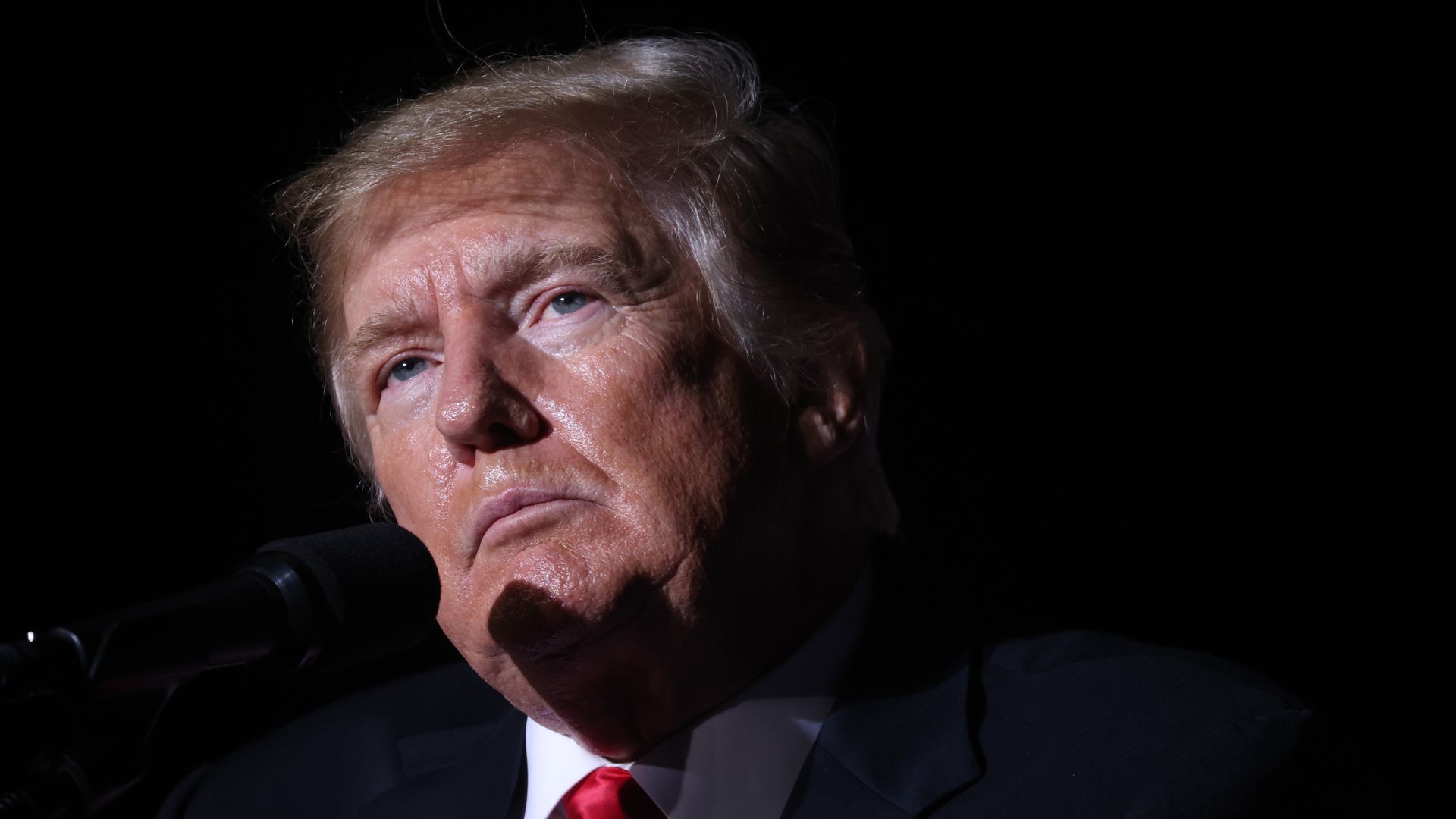
Regulators are investigating the planned merger between Digital World Acquisition Corporation and former President Trump's social media business, according to a recent filing by the SPAC.
Driving the news: The Securities and Exchange Commission and the Financial Industry Regulatory Authority are looking into the trading of Digital World's shares, while the SEC is investigating communications and documents between Digital World and Trump Media Technology Group.
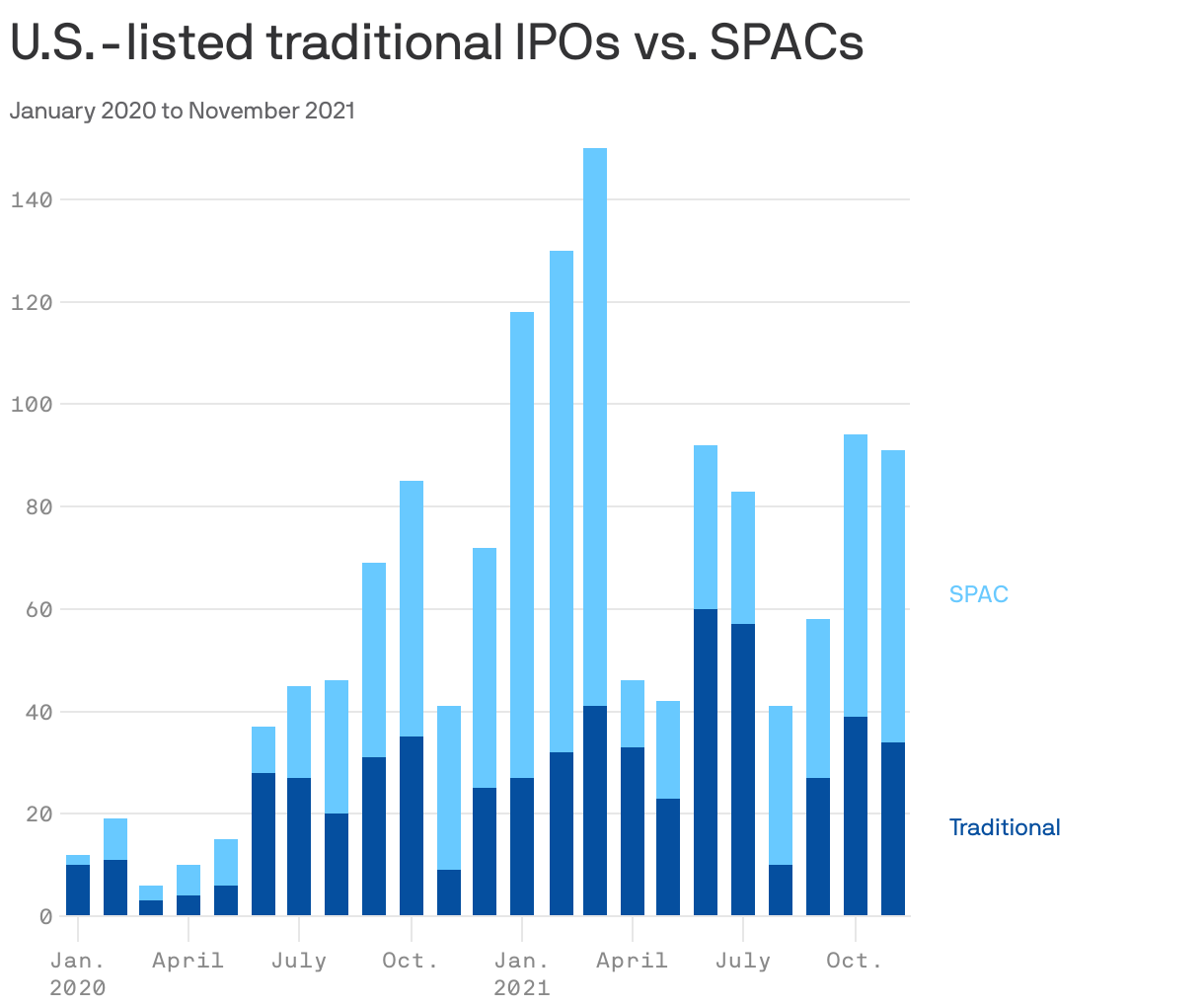
SPACs are outpacing traditional IPOs in 2021, according to data from Dealogic.
By the numbers: 562 SPACs went public on U.S. exchanges between January and November, compared to 373 regular companies. SPACs raised $151 billion in their IPOs, while traditional issuers raised $148 billion.
Kohl's (NYSE: KSS) is under pressure from activist investor Engine Capital to sell or spin off its e-commerce business. Engine holds around a 1% stake in the Wisconsin-based department store chain, although Kohl's has several other activists on its cap table.
Why it matters: Omnichannel is falling out of favor among some department store investors, with Kohl's being asked to follow the recent examples of Saks Fifth Avenue and Macy's. The basic argument is that shareholders can get more defined access to the faster-grown business, and the legacy companies more cash to transform their physical properties.
America's supply chain crisis is a series of intersecting bottlenecks, including insufficient labor and warehouse space, all driven by surging U.S. consumer behavior. But one piece has gotten short-shift on the attention meter: Chassis, the steel frames on which trucks carry shipping containers.
Driving the news: Apollo Global Management is seeking a buyer for Direct ChassisLink, the largest U.S. intermodal chassis provider, as first reported by Bloomberg and confirmed by Axios.
DoorDash is making a foray into the ultra-fast grocery delivery market with a small pilot in NYC's Chelsea neighborhood.
Why it matters: Delivering purchases within 10-15 minutes is the latest trend in grocery delivery, so it's no surprise that established companies like DoorDash are trying to keep up.
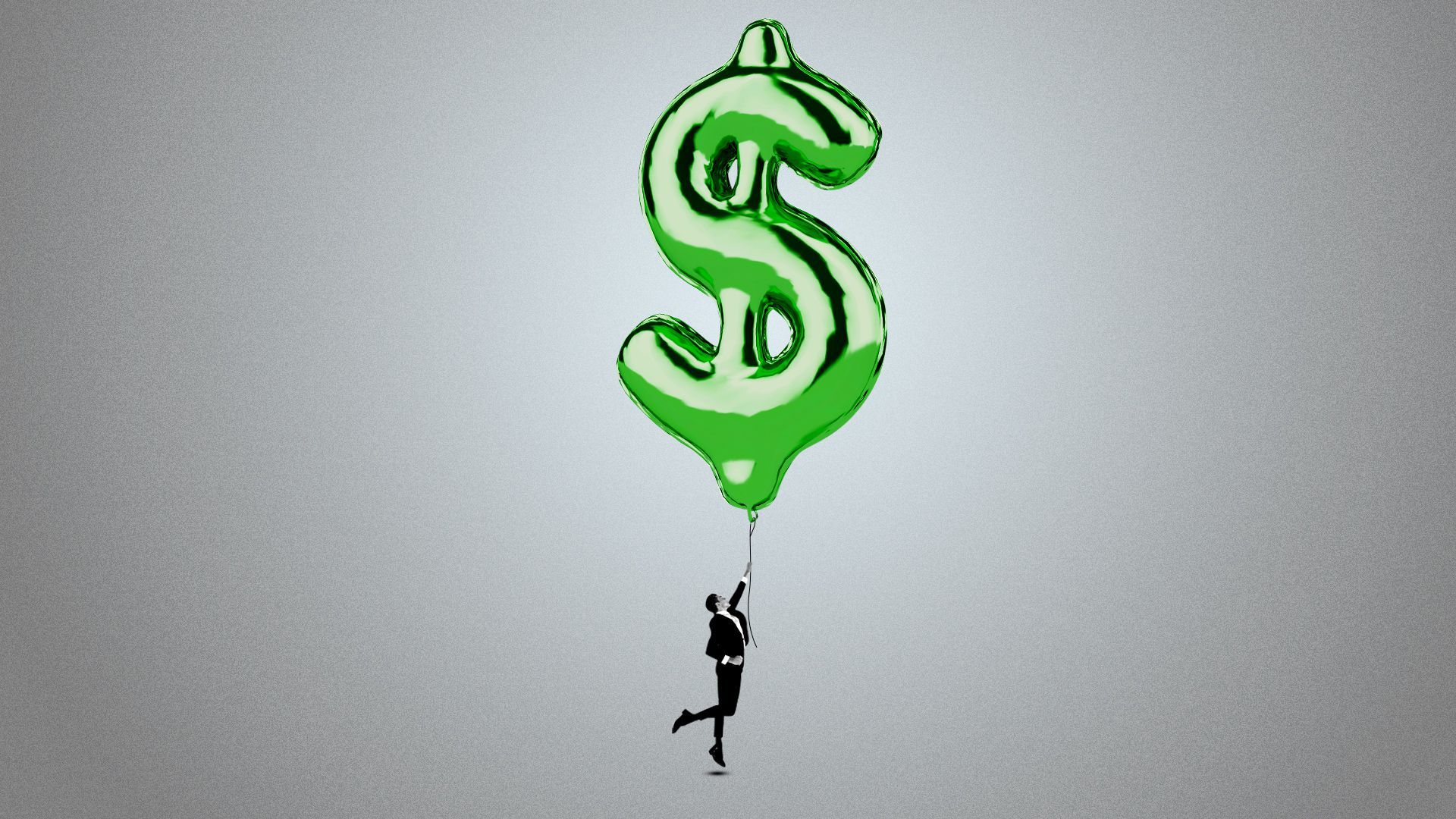
The latest measure of inflation is set for release Friday, as market watchers continue to process last week’s confusing jobs report and try to game out the economic impact of the latest coronavirus variant.
Why it matters: Americans, politicians, and regulators are laser-focused on price gains picking up steam and impacting the overall economic recovery.
The machinery of U.S. markets is — eventually — going to move a lot more quickly, with settlement times getting slashed in half from two days to one day. But it's going to take a while to get there.
Why it matters: The current plan is for the new settlement cycle to go live in the first half of 2024.
Driving the news: 562 SPACs (special purpose acquisition vehicles) went public on U.S. exchanges between January and November, compared to 373 regular companies, according to data from Dealogic.
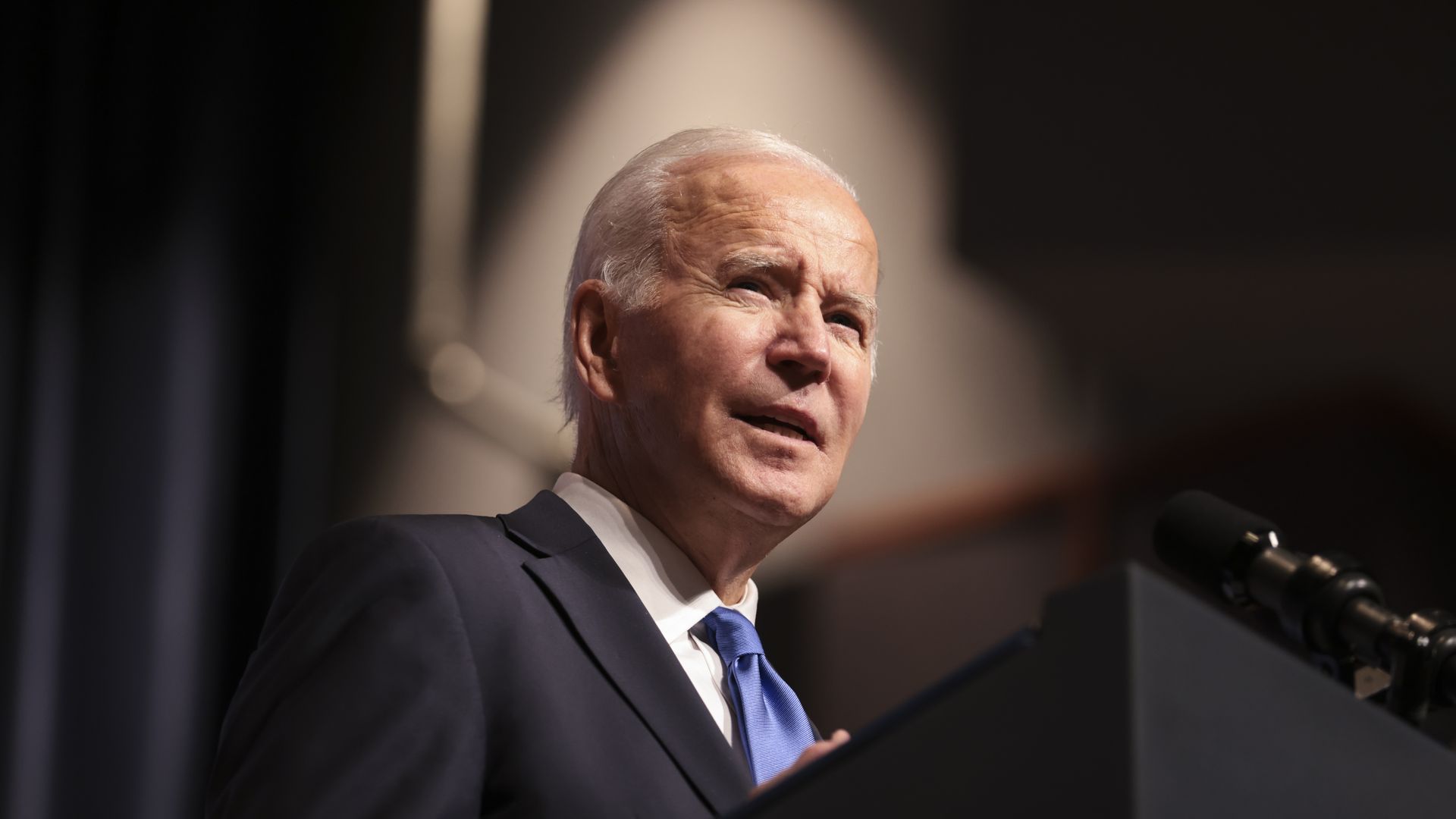
The Biden administration on Monday released the first-ever U.S. government strategy for countering corruption, kicking off a week of policy initiatives pegged to the inaugural "Summit for Democracy" on Dec. 9-10.
Why it matters: Joe Biden is the first president to establish the fight against corruption as a core national security interest. Critics say corruption not only robs a nation of its core resources but discourages citizens from believing in the rule of law.
Autonomous vehicle companies are exploring the use of a common language — standardized light patterns or sounds — that would help driverless cars communicate their intentions to humans.
Why it matters: Autonomous vehicles will share the road with human-driven vehicles, pedestrians and cyclists for a long time. The development of a standard communications method could build trust and reduce traffic accidents.
Unlike today's drivers, AVs can't make eye contact with other road users or gesture to indicate it’s OK to cross the road.
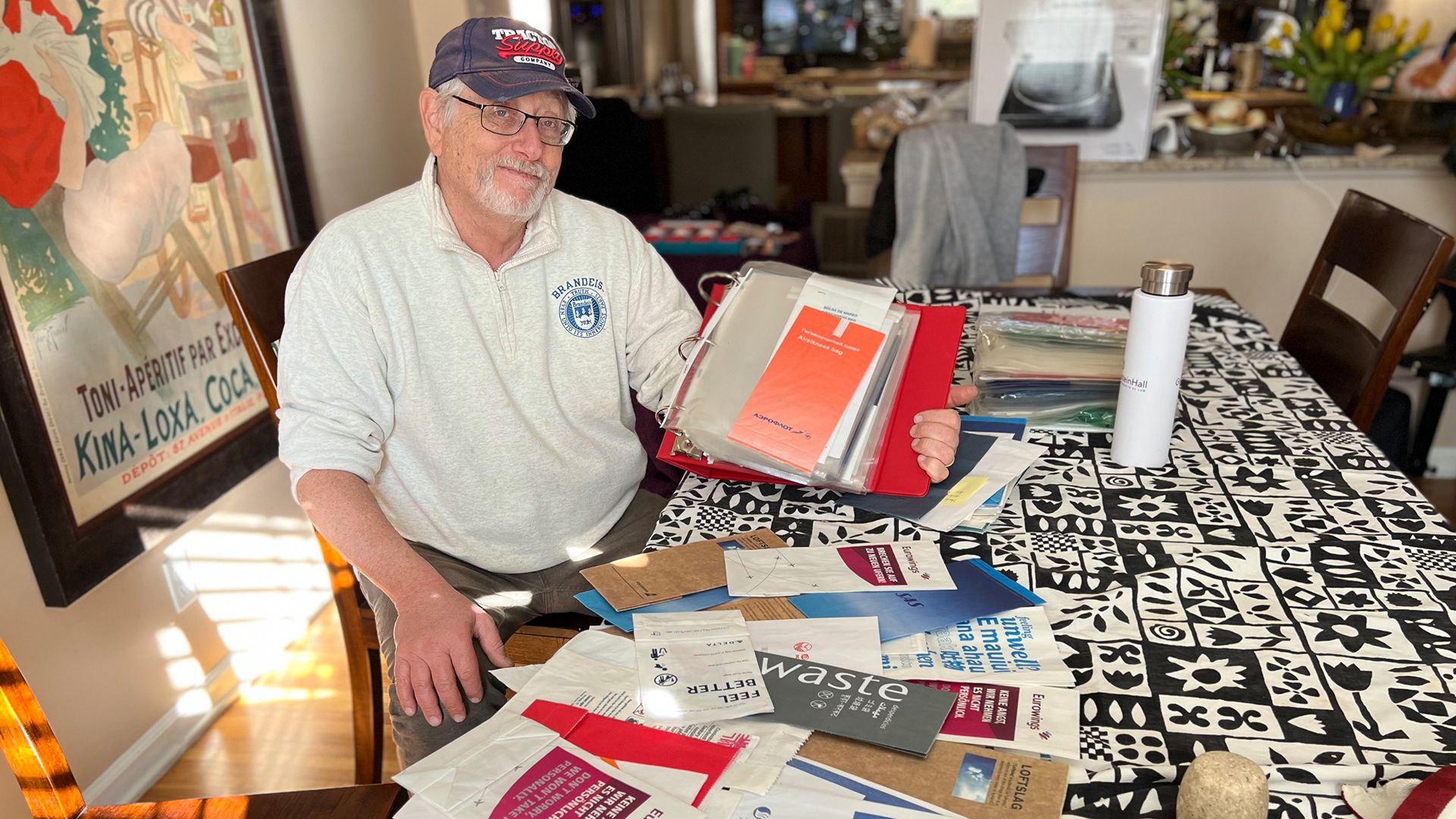
Air sickness bags have been disappearingfrom the seatback in front of you for years, but the pandemic has made them vanish almost entirely — to the particular disappointment of people who collect them.
Why it matters: "Baggists," as collectors are sometimes known, have been known to pay as much as $500 for a prized barf bag, which usually comes from a long-defunct airline.
There are online clubs in which members trade the bags like baseball cards.
"Collectors prize bags for their humor, such as a Finnaviation bag depicting a reindeer throwing up ice cubes, or a bag from former German airline Hapag-Lloyd stating: 'Thank you for your criticism,'" a Wall Street Journal article noted.
Where it stands: Slate reports that vomiting in airplanes seems to have grown less common, with fewer passengers "joining the bile-high club."
What they're saying: "It's a very easy collectible," says Lloyd Sobel of Centennial, Colorado, who started picking them up decades ago when he was traveling frequently for business.
Sobel, a middle school science teacher, keeps his bags in photo albums with plastic sleeves, organized alphabetically by airline.
Friends and relatives who know of his hobby often give him bags from obscure airlines when they travel overseas.
Sobel's prized bags include one from Aeroflot, the Russian carrier, and Eastern Air Lines, which used to connect New York to Boston and Washington, D.C.
One airline he's missing? The Trump Shuttle, which operated for about four years, ending in 1992.
U.S. markets stand to lose $2 trillion in value if D.C. and Beijing drift further apart.
Why it matters: Political chasms are showing up in new securities regulations that put companies and investors in a bind. The rules are also another reflection of how much relations between the world’s largest economies have cooled, even as they remain economically interdependent.
American businesses spend hundreds of billions of dollars a year on prescription drugs, and the bills keep getting bigger. But some of the companies promising to help rein in those costs prevent employers from looking under the hood.
Why it matters: Documents provided to Axios reveal a new layer of secrecy within the maze of American drug pricing — one in which firms that manage drug coverage for hundreds of employers, representing millions of workers, obscure the details of their work and make it difficult to figure out whether they're actually providing a good deal.










/2021/12/05/1638728723166.gif?w=3840)