Even more "back-to-office" callbacks are being postponed amid a surge in COVID-19 infections.
Why it matters: It feels like March 13, 2020, all over again. When businesses sent all their workers home, it was an early big hint the pandemic was going to upend our lives.
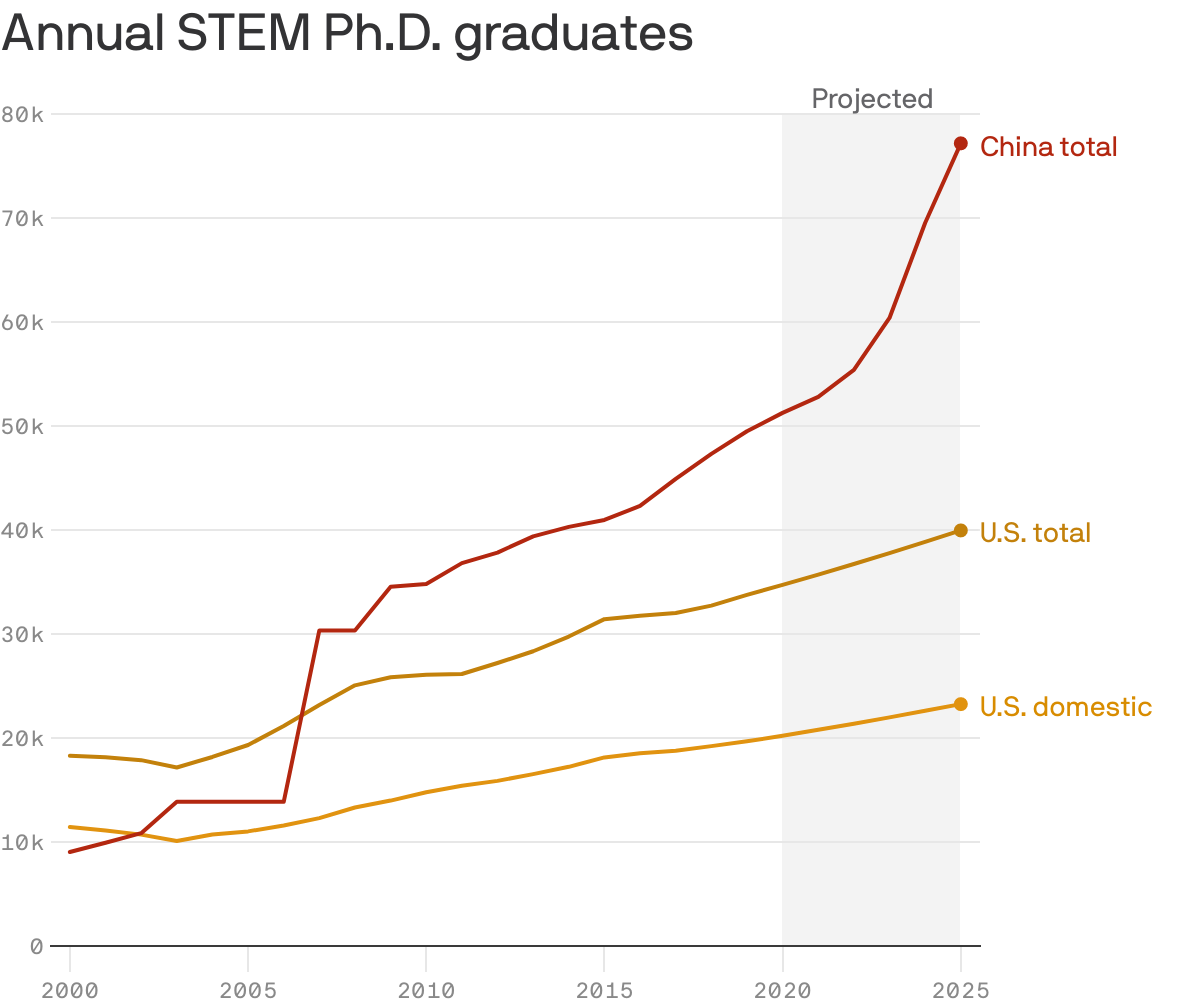
A new report finds universities in China are producing more STEM doctoral students than those in the U.S. — and the gap is projected to only widen.
Why it matters: Creating pipelines of STEM-trained workers, including Ph.D.-level experts, is a national priority for both the U.S. and China as they compete in artificial intelligence, quantum computing, biotechnology and other fields.
One definition of a meme stock is this: Any publicly listed company whose stock becomes a speculative vehicle beloved of retail investors armed with small-dollar Robinhood accounts.
Driving the news: To no one's surprise, Robinhood itself has now become one of those stocks, just a few days after going public last week.
The financial services industry ranks dead last in terms of Americans' perception of how well it's doing in addressing racism, according to a new Edelman study shared exclusively with Axios.
By the numbers: Just 33% of Americans think the sector is doing well in addressing racism. No industry does particularly well, but sports does best, with 44% thinking it's doing well.
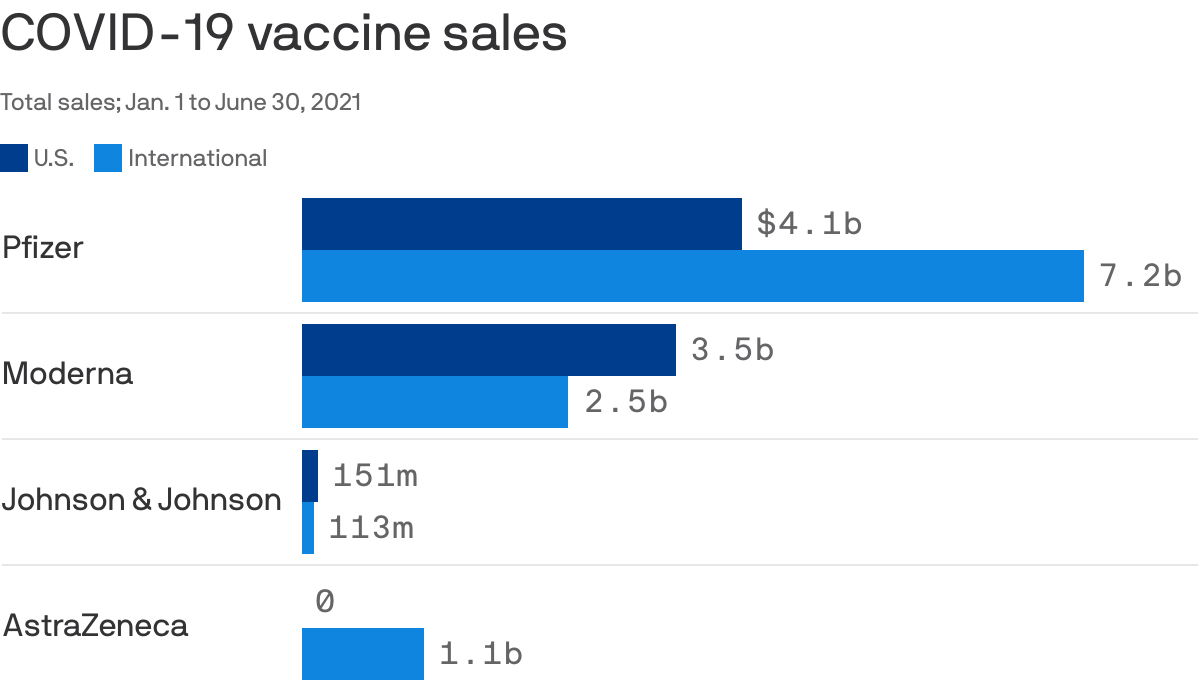
The four main drug companies making COVID-19 vaccines have sold a combined $18.6 billion worth of the shots in the first half of 2021, and sales are expected to reach a combined $60 billion by the end of the year.
The big picture: Even though the U.S. represents less than 5% of the global population, the U.S. market makes up 41% of the vaccine sales.
Moody's is acquiring climate and natural disaster risk modeling company RMS for about $2 billion from Daily Mail and General Trust.
Why it matters: Modeling climate risk exposure is becoming critical for a growing number of industries, especially as extreme weather events are dramatically picking up in frequency and impact. Supply chain disruptions are of particular concern.
The largest LBO financing since the financial crisis is coming to a debt market near you. A bevy of banks made their initial pitch this week to sell investors part of a $15 billion loan backing the $34 billion buyout of medical supplies company Medline Industries.
What's new: A banking group led by JPMorgan and Goldman Sachs asked a select group of high yield fund managers to buy a piece of the Medline debt commitment known as a "bridge loan," sources tell Axios. Investors were asked to make their decisions by Wednesday.
Yelp on Thursday added two new features that allow businesses to show customers their coronavirus vaccine requirements.
Details: Users will be able to see whether proof of vaccination is required to visit participating businesses and/or if a business' staff is fully vaccinated.
The Wall Street Journal reports this morning that Exxon is "considering a pledge to reduce its net carbon emissions to zero by 2050."
Why it matters: It would be a major shift for Exxon, the U.S.-based multinational giant, which to date has opposed the long-term targets embraced by European giants like Shell and BP.
The Washington Post on Thursday named Michelle Jaconi as its head of news talent strategy and development, a position that will help guide the Post's efforts to match its journalists with new and emerging media platforms.
Why it matters: In her four years at the Post, Jaconi has helped to develop an array of cross-platform news products that have broadened the reach of the 144-year-old news giant, including the paper's popular TikTok account.
What kind of investor would ignore economics? A successful one, says legendary hedge fund manager Howard Marks in the memo we wrote about on Monday.
Why it matters: Nearly all investors — Marks included — have views on the economy, how it works, and where it's headed. Many of them go to great lengths to disseminate and popularize those views. (Looking at you, Ray Dalio.) But that's all marketing, not investing.
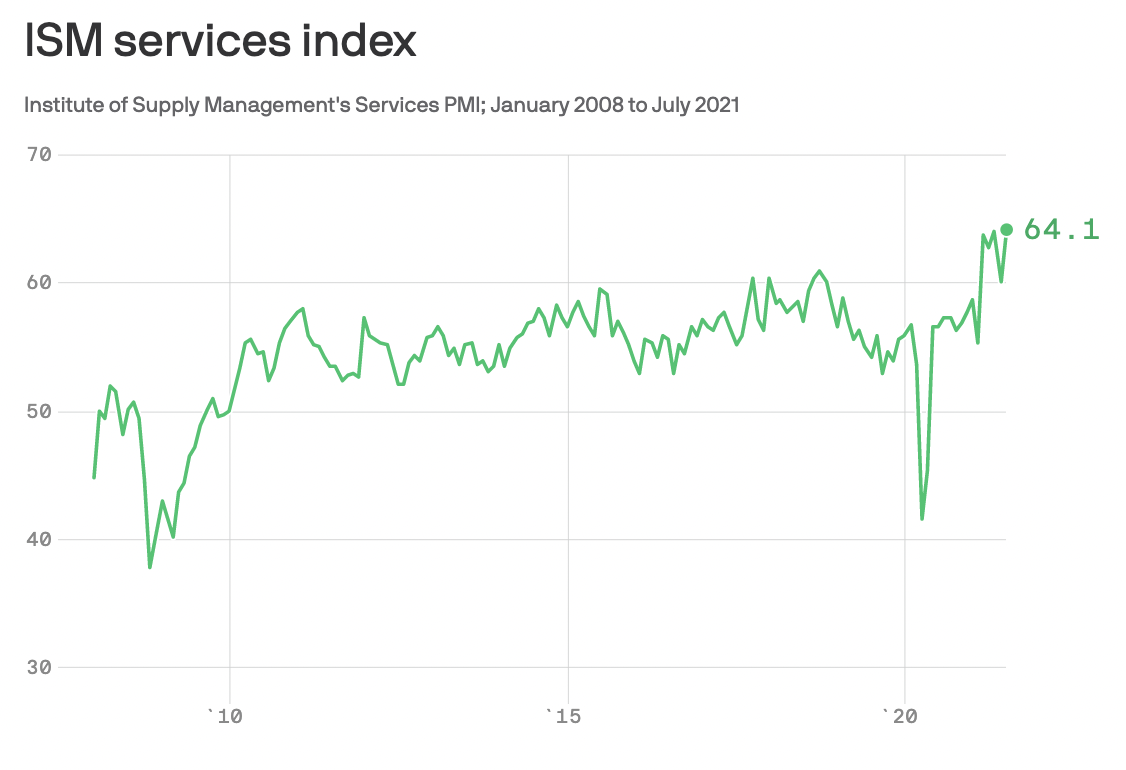
With the recession officially ending in April 2020, we're now 16 months into the recovery and the contours of the post-pandemic economy have taken shape.
Why it matters: While the coronavirus continues to infect roughly 100,000 new Americans every day, it's no longer driving the course of the economy.
A widely followed valuation metric suggests stocks have been getting cheaper over the past year, even as prices have surged to new highs.
Why it matters: When stocks rise and company market caps balloon, it’s tempting to think that the shares must eventually fall in order to get to more reasonable levels.
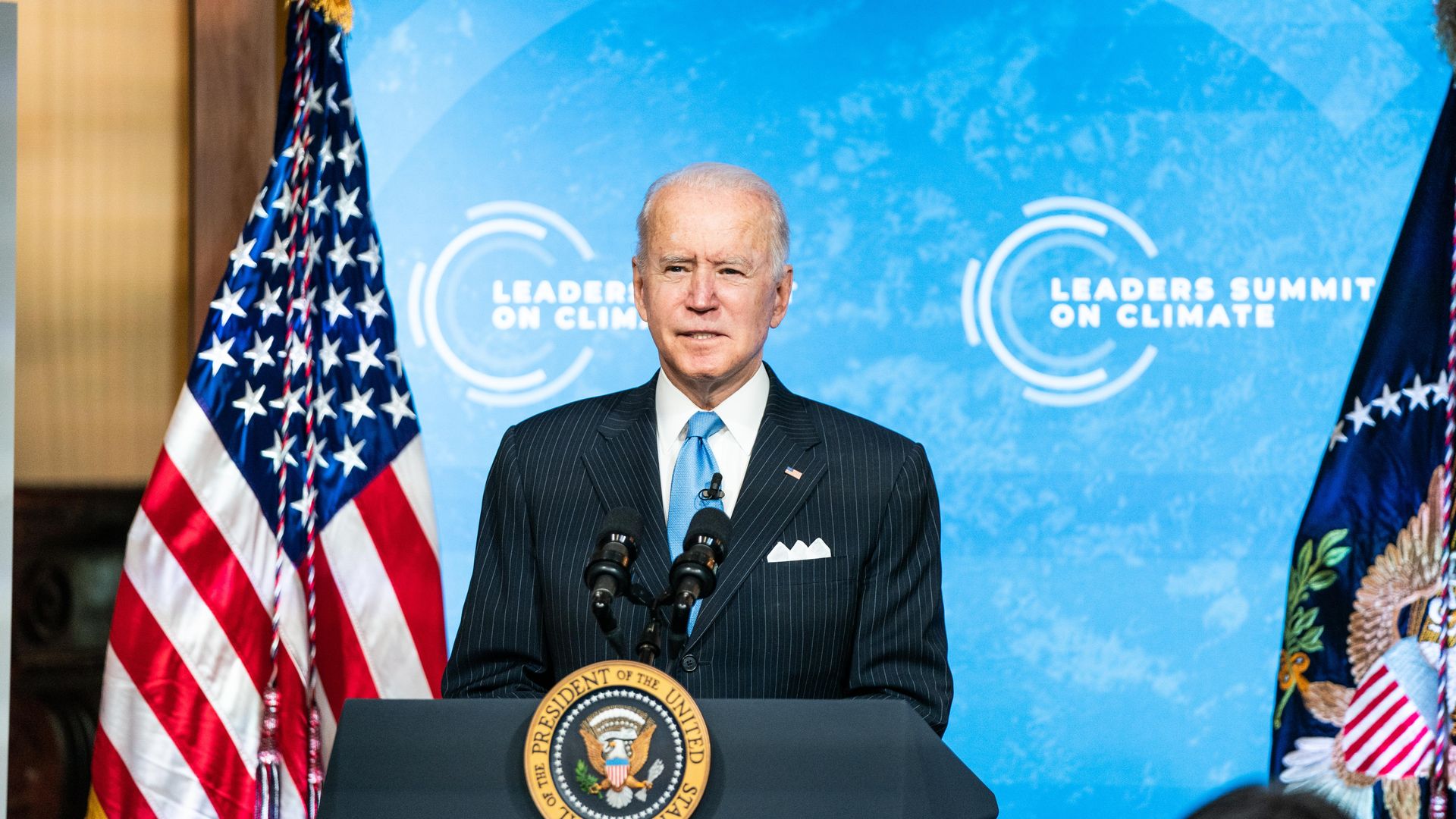
The White House on Thursday is unveiling draft mandates and aspirational targets aimed at drastically cutting vehicle carbon emissions and accelerating the shift to electric models.
Why it matters: Transportation is the largest source of U.S. emissions.
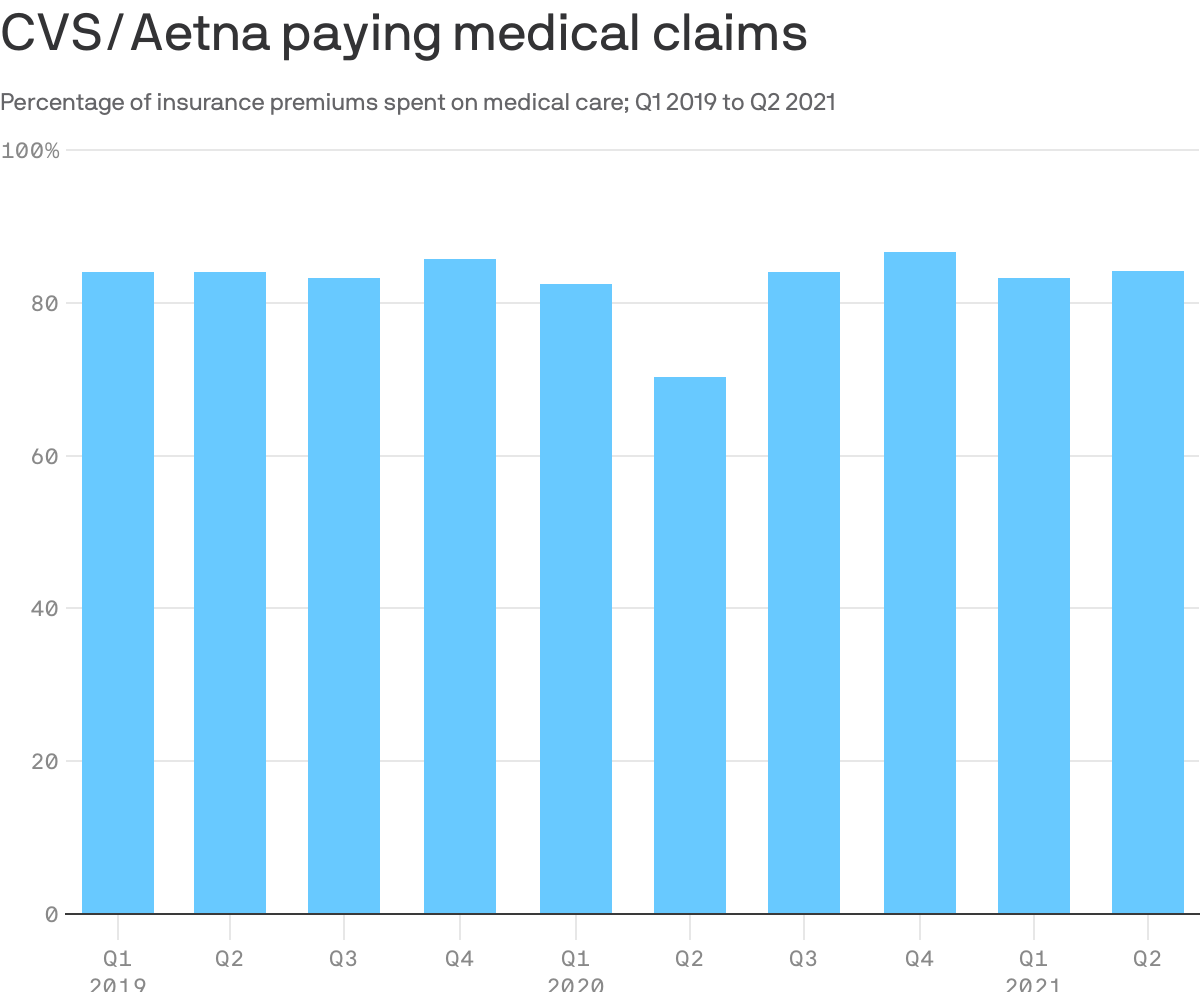
For every premium dollar that CVS Health's insurance arm, Aetna, collected in the second quarter, it paid a little more than 84 cents to medical providers — a "medical loss ratio" that was a lot higher than Wall Street expected.
The big picture: Health insurers were the main beneficiaries of the pandemic last year, as the widespread delay of doctor visits and procedures greatly offset what they had to pay for COVID-19 hospitalizations.
A group of landlords and real-estate companies issued a legal challenge on Wednesday night in a D.C. district court to the Biden administration's new national eviction moratorium.
Driving the news: The Alabama and Georgia Associations of Realtors' emergency motion argues that the Centers for Disease Control and Prevention's order Tuesday barring evictions for most of the U.S. through Oct. 3 exceeds the CDC's powers, according to a statement from the National Association of Realtors.

/2021/08/05/1628198683640.gif?w=3840)