Three global alliances representing 58 airlines are pushing governments to replace onerous quarantine restrictions with widespread COVID-19 testing and digital travel passes that would verify who's safe to fly, AP reports.
Why it matters: Adopting common testing procedure with results verified by a secure smartphone app could help restart international travel by building trust between countries without requiring a 14-day quarantine.
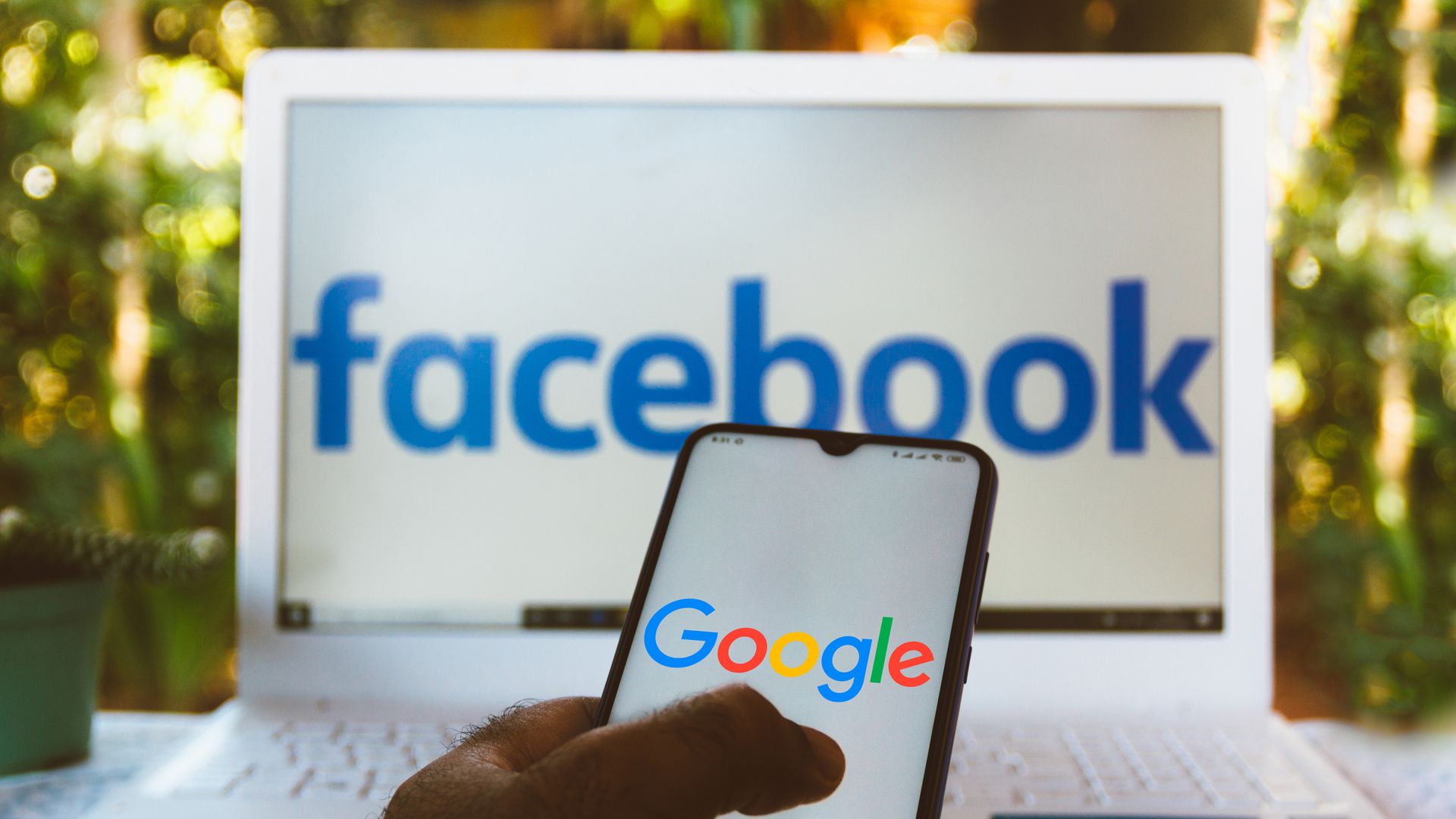
Facebook and Google are extending their bans on political ads to prevent confusion about the election, the Financial Times reported Wednesday.
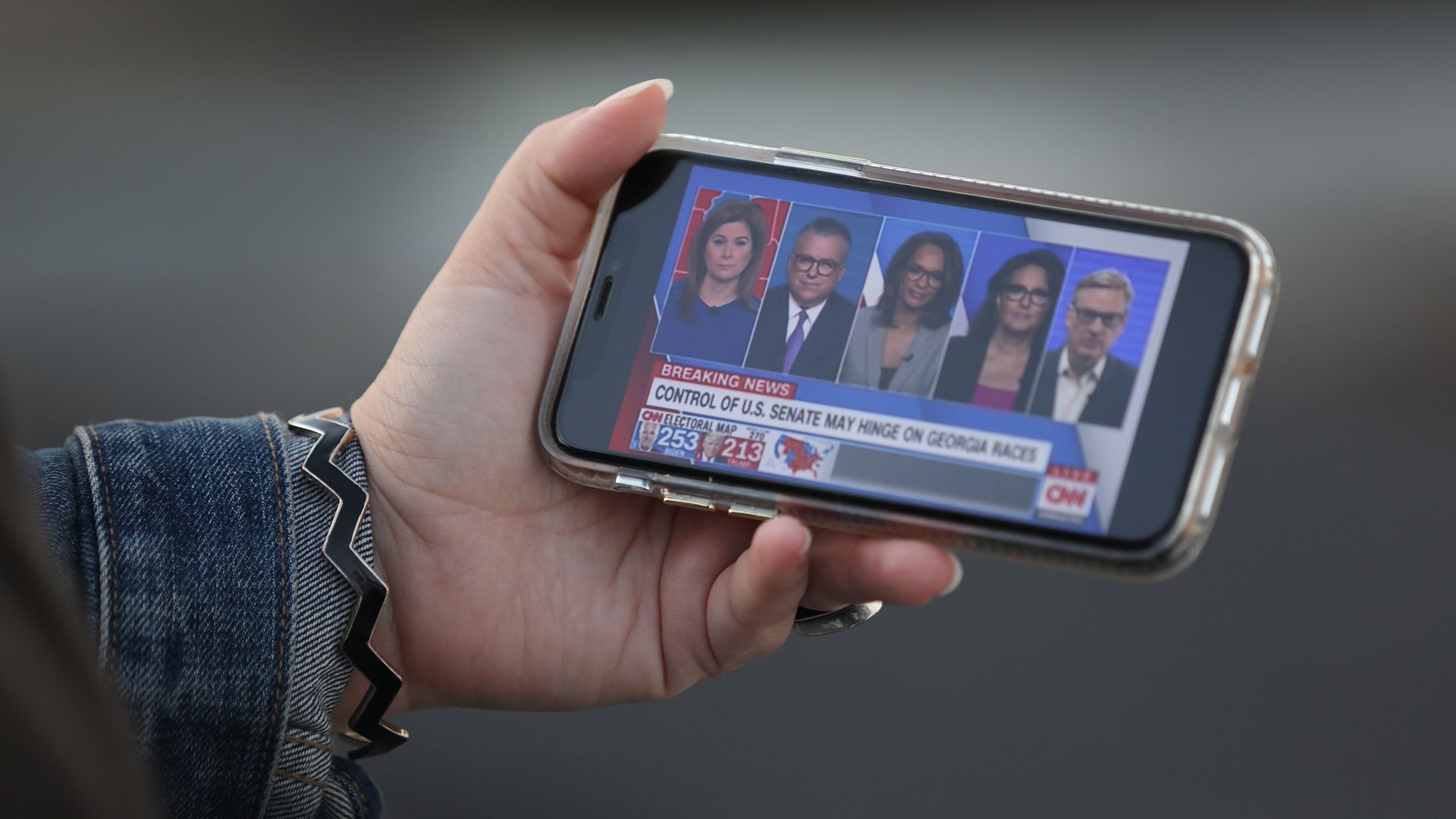
Why it matters: While tech companies are trying to limit post-election misinformation, hundreds of millions of dollars are about to pour into Georgia, now that control of the Senate — and the fate of the next president's agenda — hinges on runoffs for now one, but both of the state's seats, set for Jan. 5.
Business travel could settle into a "new normal" that's 10%-20% lower than before the COVID-19 pandemic, Delta Air Lines CEO Ed Bastian recently suggested per AP.
What they're saying: With the coronavirus pandemic still raging, demand for flights has dwindled. Southwest Airlines CEO Gary Kelly told AP that overall passenger revenue is down 70%. Business travel — normally more than a third of Southwest's traffic — is off by 90%.
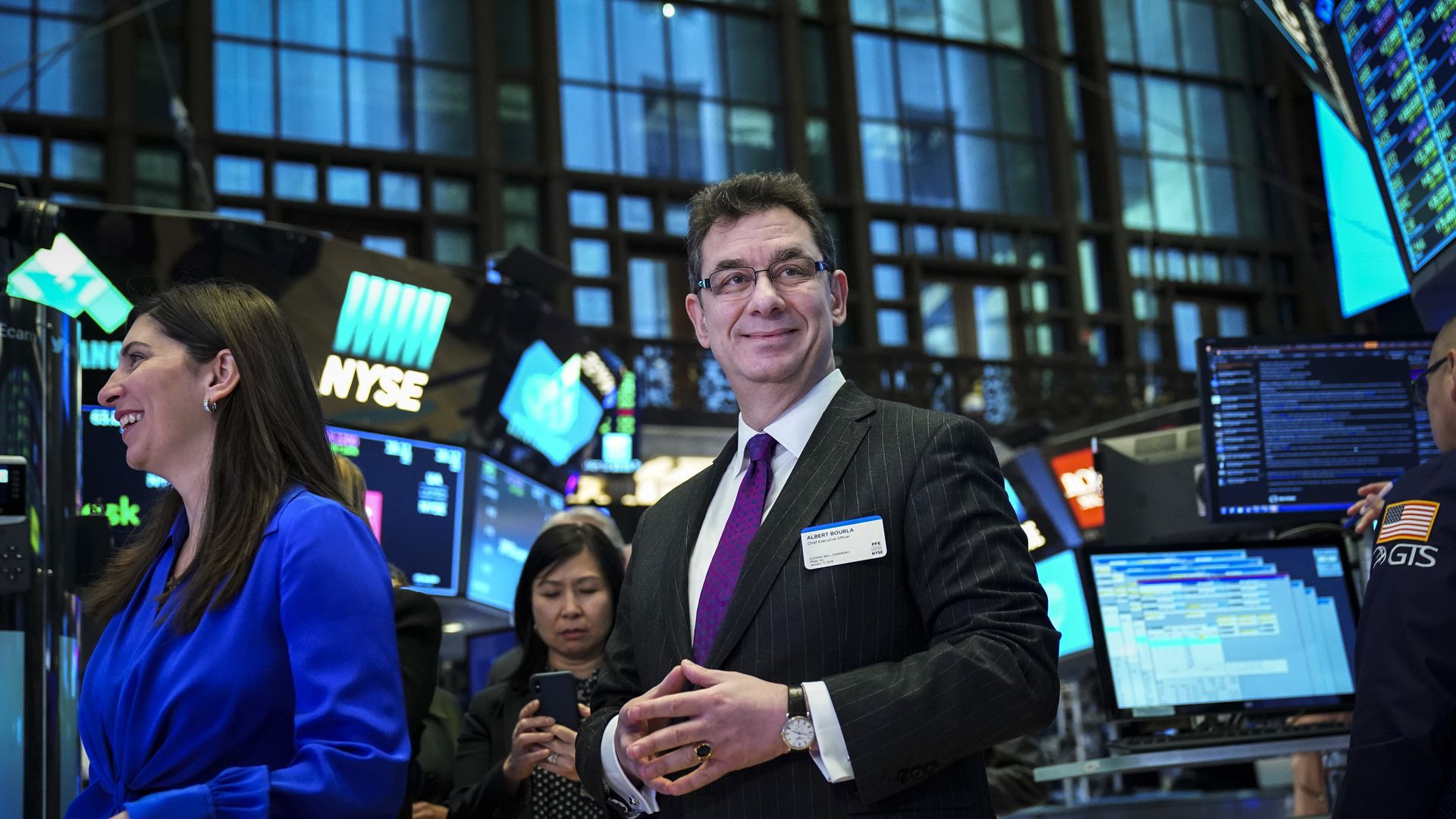
Pfizer CEO Albert Bourla sold $5.6 million worth of stock on Monday — the same day it said its and BioNTech's coronavirus vaccine showed 90% effectiveness in preliminary results, which saw the company's stock soaring almost 8%.
Between the lines: The stock sale is perfectly legal through a predetermined plan called Rule 10b5-1, but the optics aren't great. A Pfizer spokesperson did not add any new information in a statement, saying the sale was part of a predetermined plan created in August.
TikTok could be banned in the U.S. after this Thursday, although it remains unclear whether the Trump administration will follow through or if a judge will intervene.
Why it matters: The short-video entertainment and social networking app is estimated to have around 100 million U.S. users and more than 1,500 U.S. employees.
Lyft posted a much larger loss than analysts expected, though it beat revenue estimates, in its third quarter results reported Tuesday. But on a call with analysts, the company pointed to its recent legislative victory in California and the potential it sees in expanding its foray into delivery as signs of better times ahead.
Why it matters A week ago, Lyft and other gig companies got California voters to back a ballot proposal that cements their drivers' status as independent contractors, which is central to the companies' business models.
State and local education employment is down 8.8% in October compared with 2019. That's education's lowest national jobs total in 20 years, according to an analysis out Tuesday from Pew Charitable Trusts.
Why it matters: With school closures, temporary layoffs and positions left unfilled in the new school year, the education workforce has been one of the hardest hit amid the pandemic.
For years, retail has been lurching toward automation. Last week, Walmart took a significant step back.
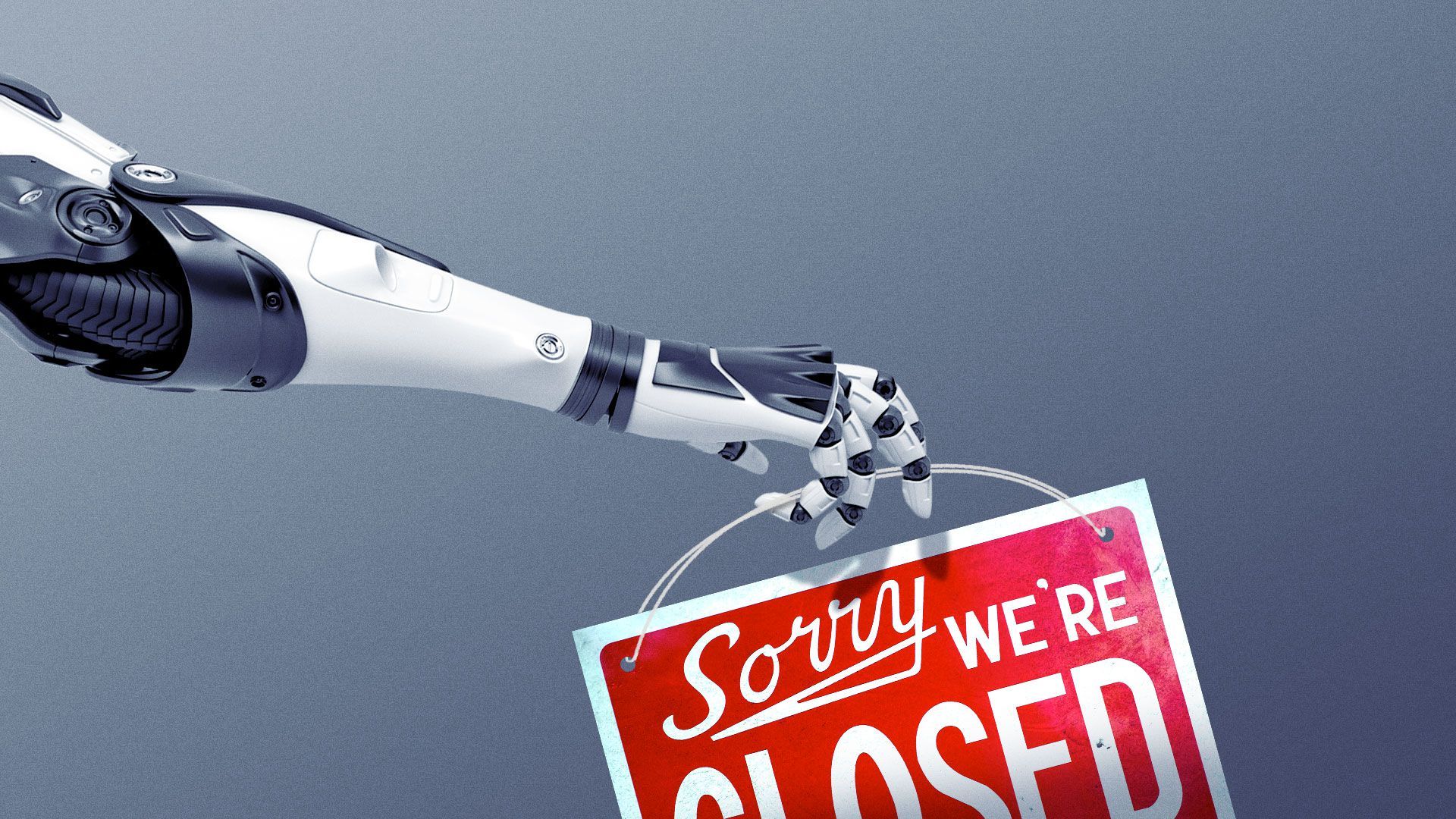
Why it matters: In a rare win for retail workers, Walmart decided to take shelf-scanning robots out of its stores in favor of humans. But automation is still coming faster for retail jobs than for most other occupations, experts say.
The coronavirus pandemic has exposed the inextricable link between child care and the economy — and it's pushing businesses to confront the cost of working parents' unpaid side gig.
The big picture: Child care is denting the workforce, preventing a huge swath of Americans from contributing to their firms and to the economy at large. To chip away at the problem, and protect their bottom lines, employers are bulking up child care benefits for workers.
Gig economy companies like Lyft and Uber got a huge win in California last week, when voters approved a measure that will let them continue to classify many of their workers as independent contractors instead of employees.
Axios Re:Cap digs into the ballot measure and what comes next, both in California and nationally, with Lyft co-founder and President John Zimmer.
SoftBank Vision Fund posted a nearly $18 billion operating loss for the fiscal year ended in March, and wrote down about 75% of its WeWork investment — but who cares if it managed overall gains of $9.6 billion, right? At least, that's the message SoftBank execs are expected to deliver to investors later today in a briefing focused on the two Vision Funds, according to a source familiar with the fund.
Why it matters: SoftBank famously raised about $100 billion in 2017 to back big tech unicorns, but disappointing bets like WeWork and Brandless raised questions about Vision Fund's, well, vision.
Reuters is launching "Reuters Professional," a new business line that will include news, analysis and events for decision-makers, executives tell Axios.
Why it matters: Much of Reuters' revenue is focused on serving corporate clients through licensing news and data services. With this effort, Reuters will push to serve individual professionals more directly, which it believes brings significant financial opportunity.
Spotify said Tuesday that it's acquiring Megaphone, one of the top podcast advertising platforms, from Graham Holdings for $235 million. Deal terms were not disclosed.
Why it matters: It's the latest mega-investment Spotify is making into boosting its podcast business. The company has invested hundreds of millions of dollar in buying up podcast companies and exclusive rights to big-name shows.
Walmart is partnering with self-driving technology company Cruise to pilot autonomous grocery deliveries in Scottsdale, Arizona.
Why it matters: Cruise is not the first partner Walmart has selected to test AV deliveries. But the retailer noted that Cruise's fleet of electric vehicles, powered with renewable energy, supports its mission to achieve zero emissions by 2040.
The International Energy Agency has boosted its estimate of renewable power growth this year and now sees installations setting a fresh record.
Why it matters: Wind and solar are proving more resilient to COVID-19 than initially believed as projects and manufacturing "ramped up again quickly" after disruptions in the first half of the year, IEA said.
The positive news about a possible coronavirus vaccine could prove to be a negative for many struggling small business owners, as economists worry that it could reduce the urgency for Congress to pass a new fiscal relief package.
Why it matters: A new survey from Goldman Sachs through its 10,000 Small Businesses program provided first to Axios finds that more than half of small business owners (52%) have stopped paying themselves in a bid to keep their businesses afloat and four in 10 (42%) already have begun laying off employees or cutting worker pay.
33% have dipped into personal savings to stay operational.
28% say the legislative uncertainty has caused them to consider closing their business.
What's next: Moving forward, 38% of those surveyed said they will have to lay off more employees or cut employee compensation and 20% said they will not be able to pay their commercial rent through the end of the year without additional help from Congress.
.The big picture: The number of businesses that say they are unsure whether or not they will be able to survive reached its highest level in November since the survey began.
Watch this space: 59% of business owners surveyed say their revenue has been negatively impacted.
86.5% of those whose revenue has been negatively impacted attribute it to changing customer behavior, while 44% say the decline in revenue is due to more restrictive state and local regulations.
Black business owners have struggledeven more mightily, with 61% saying they have forgone paying themselves as a result of congressional inaction and 57% saying that less than half of their pre-COVID revenue has returned.
What we're hearing: "The economy is dependent on fiscal support to sustain momentum in the near term and to generate reflation in the longer term," Eric Winograd, senior economist at AllianceBernstein, said in an email detailing his expectations for the U.S. after this month's elections.
"This electoral outcome is the one that most jeopardizes the prospect of fiscal stimulus over both time horizons and therefore is the one that is most threatening to the economic outlook."
"With monetary policy largely bled dry, fiscal policy is the only game in town when it comes to managing the economy. That means that fiscal stimulus is critical to the economic outlook."
So far, 86% of S&P 500 companies have reported a positive EPS surprise for Q3, on pace for the highest percentage of companies reporting positive EPS surprises since FactSet began tracking the metric in 2008.
The big picture: Earnings for the S&P 500 in Q3 are on pace to decline by 7.5% from Q3 2019. That means S&P earnings are still headed for the third largest year-over-year decline since 2009, but the positive surprises have taken expected earnings up notably from an expected -25.3% on June 30.
Risk assets had a very good day on Monday, but U.S. stock performance was mixed after news that a COVID-19 vaccine from Pfizer and BioNTech could be distributed to millions of people before the end of the month.
Why it matters: Beyond just stocks, Monday's market moves clearly reflected investor enthusiasm and a market pricing in a return to pre-pandemic life that will benefit risk at the expense of safety.
Pfizer yesterday took a giant step toward a COVID-19 vaccine, reporting that its vaccine candidate was effective in over 90% of uninfected clinical trial patients.
Reality check: It's a giant and welcome development, but the pandemic will be with us long after vaccine distribution begins.







/2020/11/10/1605033554766.gif?w=3840)









/2020/11/09/1604956521148.gif?w=3840)