The Dow closed up 2.9%,or 835 points, after Pfizer announced promising, though early, findings about the effectiveness of its coronavirus vaccine. The S&P 500 finished up 1.2%.
The state of play: The vaccine progress is fueling market optimism about a possible return to normal, as the coronavirus pandemic and social-distancing restrictions have held back the U.S. economy.
Virgin Hyperloop carried its first passengers in a high-speed vacuum tube Sunday in a test run that company officials hailed as a major milestone toward commercializing the revolutionary transportation technology.
Why it matters: The test was intended to show that hyperloop travel — using magnetic levitation to whisk small pods through a vacuum tube at speeds of up to 600 miles per hour — is safe for humans. The company says it could one day enable a 45-minute journey from Los Angeles to San Francisco, with no emissions.
Pfizer on Monday announced that its COVID-19 vaccine has proven effective in over 90% of previously uninfected people, and added that it could have 50 million doses available by year-end.
Axios Re:Cap talks to Pfizer CEO Albert Bourla about vaccine data, distribution, politics, and how he reacted upon receiving the news.
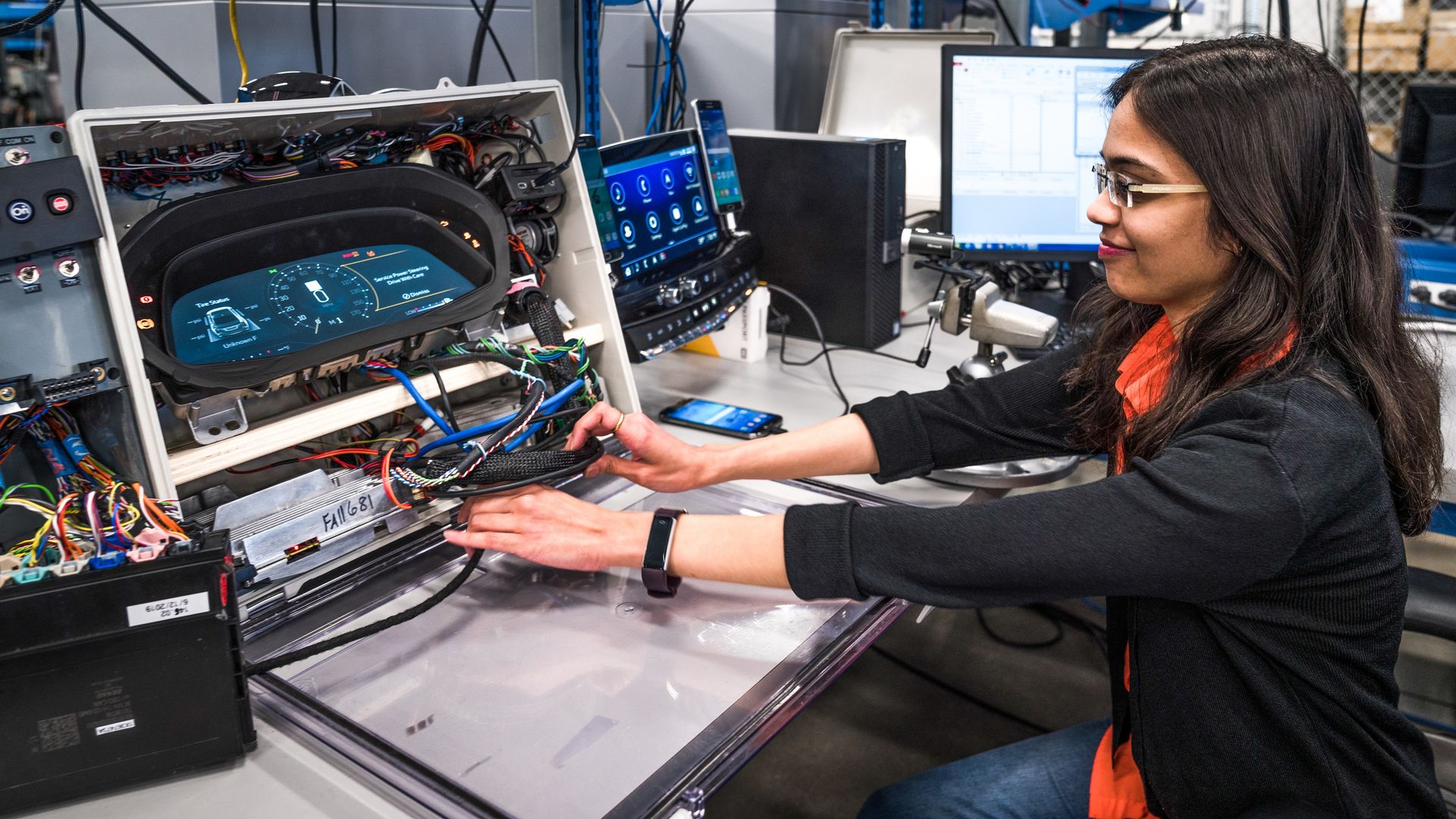
General Motors is pulling ahead the launch of two future electric vehicles and plans to add 3,000 new software jobs by early next year as it races to get electric vehicles on the road faster.
Why it matters: The hiring spree is a sign that GM is accelerating its transition toward an electric future by mid-decade. It comes as President-elect Joe Biden is also talking up electric vehicles as part of his climate and energy priorities.
Japan's SoftBank Group on Monday reported $6.1 billion in third-quarter profit, with chairman Masayoshi Son telling analysts that "regardless of interest rates or regardless of who the president is, we want to continue to invest in the American market, and also in China."
Why it matters: This was a strong rebound for SoftBank, which had been bleeding red ink.
With the Masters' first-ever November start just three days away, it's a great time to look back on 2020's golf boom.
Why it matters: Golf was a physical and mental safe haven for millions of Americans with cabin fever this year, and even moderate retention of the sport's newcomers could help buoy an entire industry for years to come.
Turkey's minister of finance and treasury, who is also President Erdoğan's son-in-law, announced in an Instagram post that he is stepping down from both roles to spend more time with his family.
The expected gridlock in Washington and more monetary easing across the globe combined with a less antagonistic approach to countries like Mexico and China from President-elect Biden is getting asset managers excited about emerging markets again.
State of play: Fund managers at JPMorgan Asset Management say EM assets are in a “sweet spot” in the months ahead, especially bonds denominated in local currency.
The U.S. economy added more jobs than expected last month — 638,000 — marking the sixth month of consecutive declines in the unemployment rate, but there are still 10 million fewer jobs filled than there were in February.
What they're saying: "The combination of elevated unemployment and part-time employment and low participation all point to significant slack in the labor market," economists at Jefferies write in a note to clients.
Central banks already have started priming their collective money printers and in the coming months are poised to crank them up to 11, buying up more bonds and delivering more liquidity to markets.
Why it matters: The recent rally in equities now has more backing from central banks.
This week America witnessed a forecasting failure of almost unprecedented magnitude. October's unemployment rate came in at 6.9%, after dozens of the best-paid and most experienced economic forecasters in the world had predicted the number would come in at 7.7%.
Why it matters: Those forecasters had literally millions of data points of information to go on, and have had ample experience with unemployment releases, which come out like clockwork on the first Friday of every month. But there will be no great post-mortem about why they got the number so wrong.
Big tech has been the biggest corporate winner of the Trump presidency, according to an Axios analysis of public-company corporate financials.
Why it matters: The tech giants have spent the past four years facing increased scrutiny from Washington, and Google has even been hit by an antitrust lawsuit. But Google parent Alphabet has seen its profits soar by $12 billion per year since Trump's surprise election in November 2016.
An independent panel of medical experts overwhelmingly said last week there is not enough evidence for the Food and Drug Administration to approve Biogen's experimental Alzheimer's drug, aducanumab.
Why it matters: This is one of the most consequential drug evaluations in years, aside from pending coronavirus vaccines and drugs. The FDA is not required to follow the experts' recommendations, but bucking their advice and siding with Biogen's data-parsing would call into question the agency's standards and motives.