Five years ago, Zocdoc was one of New York's hottest tech companies. It raised venture funding at a $1.8 billion valuation, back when that was still rare, and seemed poised to become the industry standard for physician discovery and appointment scheduling.
Fast forward: According to a lawsuit filed yesterday in the New York Supreme Court, there was a behind-the-scenes power struggle that co-founder and former CEO Cyrus Massoumi now refers to as a fraudulent "coup."
Snowflake, a San Mateo, Calif.-based cloud data warehousing company, disclosed that Berkshire Hathaway and Salesforce Ventures each will purchase $250 million shares as part of its upcoming IPO. Berkshire also said it plans to buy around 4 million additional shares from insiders.
Why it matters: It's tough to square Warren Buffett's value investing philosophy with Snowflake, a tech unicorn without profits or a public trading history.
DoorDash is branching out from food and grocery delivery with a new partnership with PetSmart to provide same-day delivery in more than 1,400 stores.
Why it matters: DoorDash is reportedly gearing up to go public soon (it confidentially filed with regulators for an IPO in February). Expanding its business could broaden the company's appeal to investors.
U.S. corporate bankruptcies have risen in 2020 — already reaching the highest number at this point in the year since 2010 — but the pace remains well behind what was seen during the Great Recession.
Why it matters: The increased pace of bankruptcies has grabbed headlines in light of the coronavirus pandemic, but is quaint compared to what took place from 2007–2009. In fact, there have been fewer bankruptcies so far in 2020 than in 2006 and in 2005, according to data from S&P Global Market Intelligence.
Total consumer borrowing rose in July, as Americans increased purchases of new vehicles and borrowed for college tuition for the second month in a row, the Fed's latest credit report shows.
By the numbers: Outstanding consumer credit increased by $12.3 billion in July from the month before, a 3.6% increase. Credit rose at a revised 3.3% annual rate in June.
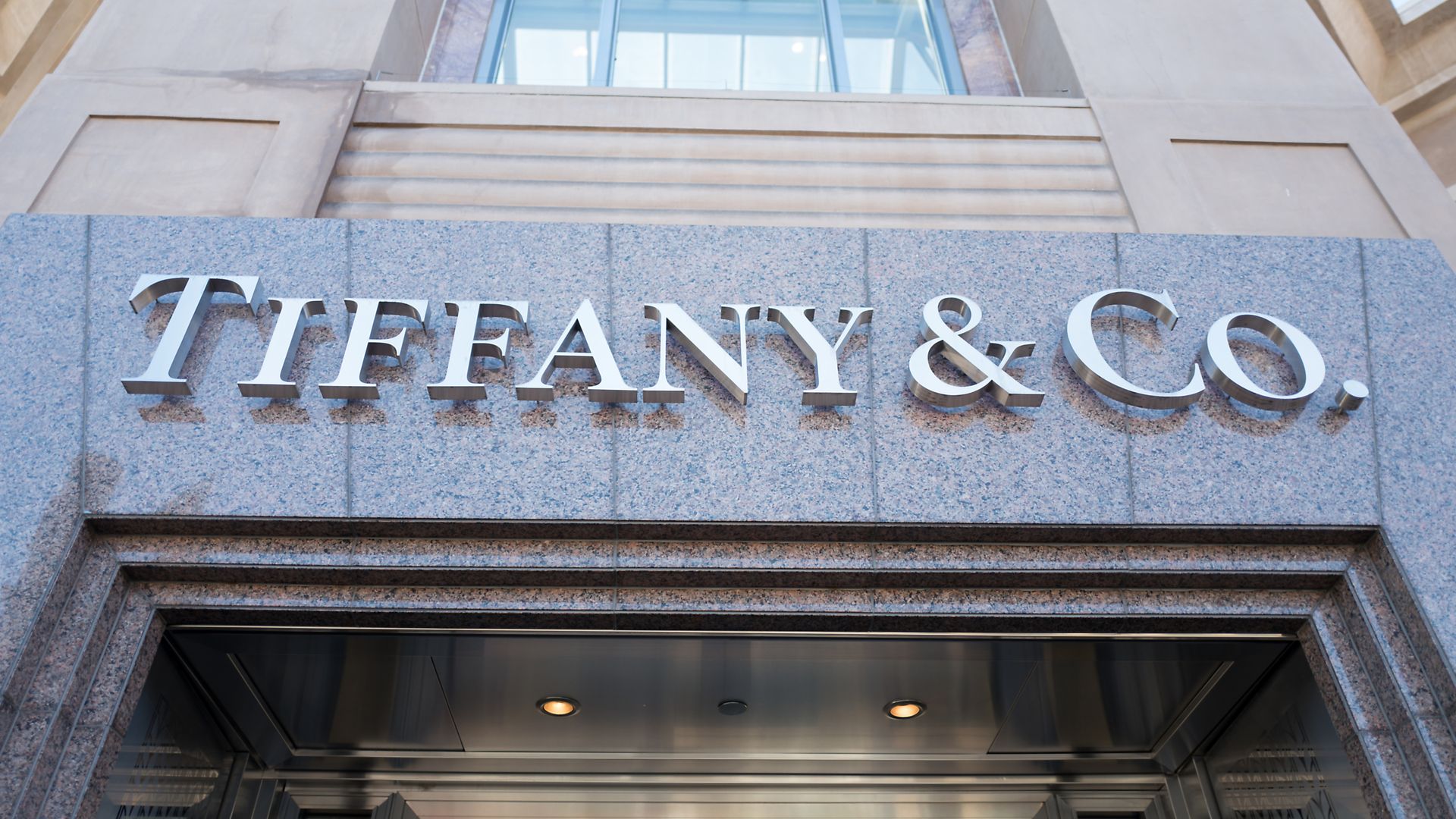
LVMH backed out of an $18.5 billion agreement to buy jeweler Tiffany & Co. Wednesday, citing U.S. tariffs on French products.
The big picture: LVMH’s board of directors recently made the decision after a "succession of events which undermine the acquisition," the company wrote. Tiffany filed a lawsuit in Delaware to enforce the acquisition.
Our thought bubble via Axios' Dan Primack: The move highlights how the U.S. is in trade wars with more than just China, with the Trump administration proposing new tariffs on French luxury goods in retaliation for a French tax on U.S. tech companies.
Small businesses have largely exhausted their federal funding and are starting to lay off workers, with many worrying about having to shut their doors for good, according to a new survey from Goldman Sachs provided exclusively to Axios.
Why it matters: Business still has not returned to normal, six months after the coronavirus pandemic first appeared in U.S. But small firms say the money they received from the Paycheck Protection Program has run dry.
Mark Zuckerberg told "Axios on HBO" that he believes Apple has "unilateral control of what gets on phones, in terms of apps," when asked if he believes that the product-driven company is a monopoly.
What he's saying: "I think it's probably about 50% of Americans who have smart phones, and a lot more people around the world. I think there are more than a billion Apple devices," Zuckerberg said in an interview with Axios' Mike Allen.
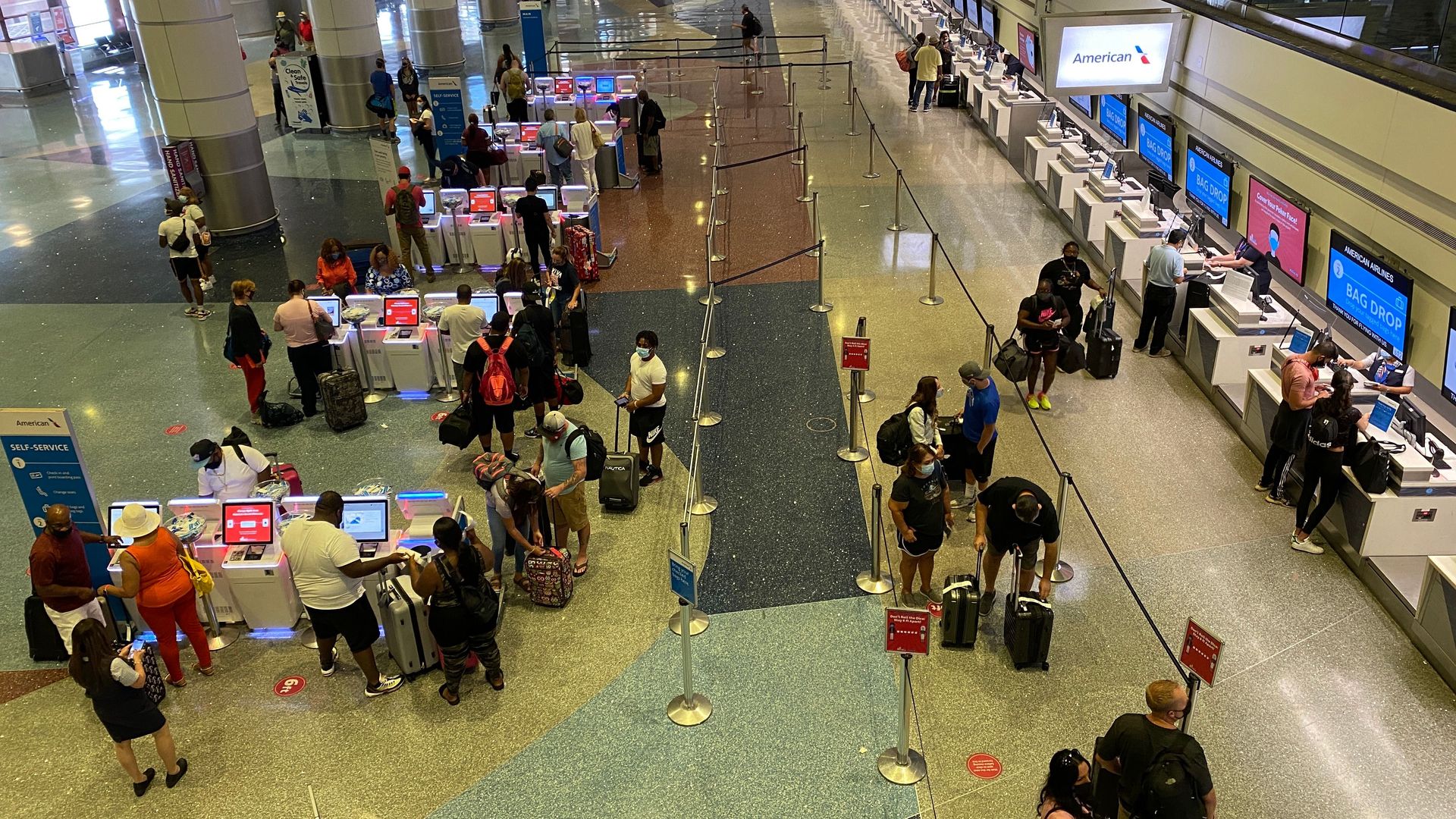
More than 3 million people passed through U.S. airports over Labor Day weekend, with nearly 969,000 passengers boarding flights on Sept. 4 and another 935,000 on Sept. 7, the Transportation Security Administration announced.
Why it matters: Those dates saw the most individuals screened on any single day since the coronavirus pandemic arrived in the U.S. in mid-March — suggesting that Americans may be warming up to air travel.
The number of unemployed Americans vastly outnumbers the number of open jobs in every single state.
Why it matters: Even though we've come back from the worst unemployment numbers, the pandemic's economic toll keeps turning furloughs into job losses — and pushing millions of people out of the workforce entirely.
We're approaching six months of telework — and, for many Americans, that means six months of Zoom, Google Meet, Facetime, text messages and actual "phone calls" (remember those?).
Why it matters: The incessant video-conferencing is tiring CEOs and college students alike.
Most Americans agree on the need for a safe and effective vaccine to protect us against COVID-19, but President Trump's repeated hints at a pre-election vaccine approval has sparked debate that politics could get ahead of the science.
Axios Re:Cap speaks with Zeke Emanuel, an Obama-era health policy official, about what he's looking for if and when a vaccine is approved.
EA Sports announced Tuesday that it added Colin Kaepernick to Madden NFL 21, marking his first appearance in the popular football video game series since 2016.
Why it matters: Kaepernick has not been signed to an NFL team since 2016, when he began kneeling during the national anthem to protest police brutality and systemic racism. EA Sports said it wanted "to see him back in our game," calling him "a starting-caliber quarterback."
School closures from the coronavirus pandemic could cause global GDP to be 1.5% lower for the remainder of the century, resulting in a $15 trillion loss for the U.S. economy, according to a report from the Organization for Economic Cooperation and Development.
Why it matters: The OECD projects that missed time in the classroom would result in a loss of the skills needed to boost economic productivity.
An academic study has found that since 2012, when the Chinese government began allowing more foreign films into the country, Hollywood movies have cast more light-skinned actors in starring roles.
Key takeaway: The researchers concluded U.S. film studios were casting to fulfill the aesthetic preferences of Chinese movie-goers, in a culture that places a premium on light skin — a phenomenon known as colorism.
President Trump's deadline for a TikTok deal is one week from today, as certainty continues to drain from the voices of sources close to the process. The big question now is what happens if no deal is struck.
Between the lines: One possibility is that Trump won't follow through on his threat. This could mean dropping the entire thing altogether, or perhaps saying the parties are close to an agreement but just need a bit more time. Maybe an extra 50 days or so, just to get Trump past Nov. 3.
Advantage Solutions, an Irvine, Calif.-based provider of sales and marketing services to consumer goods makers and retailers, agreed to go public via a reverse merger with Conyers Park II Acquisition Corp., a SPAC formed by Centerview Capital.
Why it matters: Private equity is on both sides of this transaction, illustrating how the industry is integrating what could otherwise become a rival.
Mainland China is expected to remain the second-largest global cinema market both in admissions terms and in box office revenue through 2024, per PwC.
The state of play: Prior to the pandemic, PwC estimated that China would overtake the U.S. box office this year. Mainland China already has the most movie screens of any country in the world and continues to grow despite the pandemic.
ABC News will announce on Tuesday three new digital video brands designed for mobile viewing leading up to the election, executives tell Axios.
Why it matters: "[W]e believe mobile is the most dominant device in people’s lives for everyday life, including to consume news," says Terry Hurlbutt, Vice President and Executive Editor, ABC News Digital.
The Biden campaign has brought on the progressive advertising firm Bully Pulpit Interactive (BPI) to run a new mobilization advertising program online that is uniquely focused on educating interested voters with ways to cast ballots amid the coronavirus pandemic.
Why it matters: In a normal election, the campaign would focus its advertising efforts on persuading voters in the weeks leading up to the election. But the Biden campaign faces a different challenge: it needs to mobilize voters that want to vote about how to do so during COVID-19, requiring more advertising expertise and resources.
A group of prominent media veterans are advising a team of millennials who are launching a new company called "Column," which modernizes the placement of public notices.
Why it matters: Public notices have been one of the biggest and most reliable revenue streams for local newspapers for centuries. Amid the pandemic, they are becoming more important to local papers that are seeing regular local advertising dry up.
Why it matters: It's the latest in a series of developments in the past few years that showcase ways artificial intelligence is being experimented with to replace functions of journalism, but not the industry itself.
This weekend, Disney revealed that some scenes from its live action remake of the 1998 animated classic "Mulan" were filmed in Xinjiang, where the Chinese government is engaged in a campaign of cultural and demographic genocide against indigenous minorities.
Why it matters: The riches promised by China's massive domestic film market are buying the silence — and even complicity — of one of America's most powerful entertainment empires.
The Trump administration's trade war with China and the coronavirus pandemic have crippled U.S. exports this year and could worsen as the administration reportedly is considering export restrictions on China’s most advanced manufacturer of semiconductors.
Where it stands: The U.S. trade deficit has risen to its highest since July 2008 and U.S. exports of goods and services as a percentage of GDP shrank to the lowest level since 2003 in the second quarter.
Surveys tracking the sentiment of U.S. manufacturers have surged back to their 2019 levels, showing a V-shaped recovery in the industry — but the hard numbers for sales and shipments tell a different story.
What's happening: Highly tracked purchasing managers' indexes from the Institute for Supply Management and IHS Markit have surged in recent months to show growth in the industry.
Even after the pullback to end last week, U.S. stock prices are booming and fund managers have largely hitched their wagons to the idea that prices will continue rising for the foreseeable future. But many are hedging their bets, showing bullishness in words much more than in deeds.
What's happening: The vast majority of assets — including currencies, bond prices, commodities and equities — have risen notably in price since the start of the third quarter. It’s a "buy anything" market.
Companies around the world are trying to solve the back-to-work puzzle — but few workers trust their bosses to make the right decisions.
By the numbers: Just 14% of employeestrust CEOs or senior managers to lead the return to work, according to an Edelman survey. Only half believe their offices are safe.
The 2020 holiday buying season is expected to be like no other: An avalanche of ecommerce deliveries, merchants running promotions earlier than ever, and tight crowd controls on Black Friday.
Why it matters: Retailers desperately need the revenue from this critical time of year — and they fear that overwhelmed package-delivery services will leave their customers high and dry (and angry).












/2020/09/08/1599604845830.gif?w=3840)












/2020/09/07/1599505624415.gif?w=3840)
/2020/09/08/1599568425090.gif?w=3840)