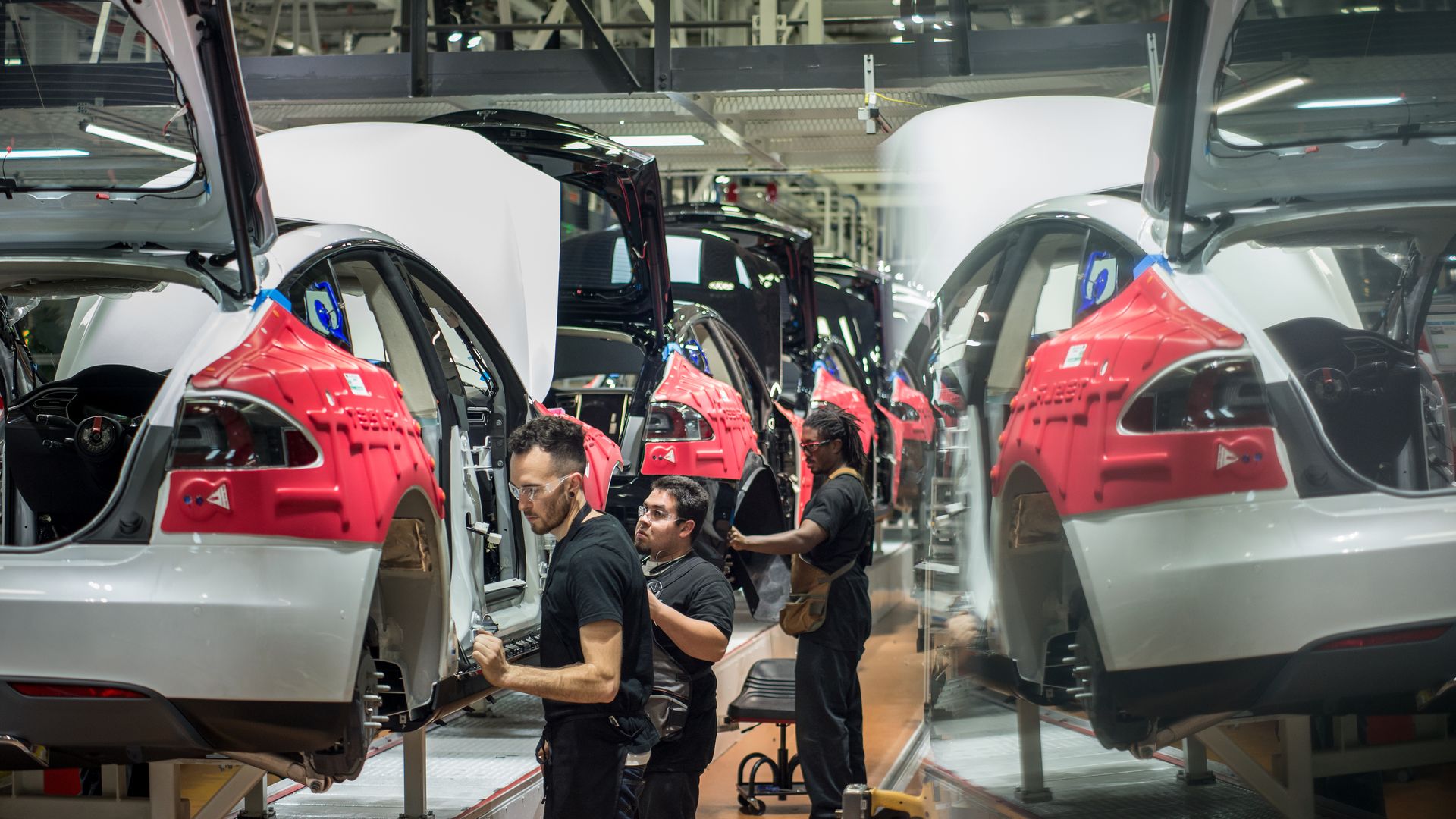
Telsa announced that it will suspend production at its chief U.S. plant, located in the Bay Area, on March 23 amid the coronavirus pandemic — a week after local authorities ordered all nonessential businesses to shut down.
The big picture: Tesla has been among a small number of businesses resisting a full shutdown of operations to curb the potential spread of the virus among workers. Local law enforcement has been in discussion with the company after it told employees to keep coming to work.
"Basic operations" that fall under the shutdown order's carveout for essential business will continue "to support our vehicle and energy service operations and charging infrastructure," Tesla added.
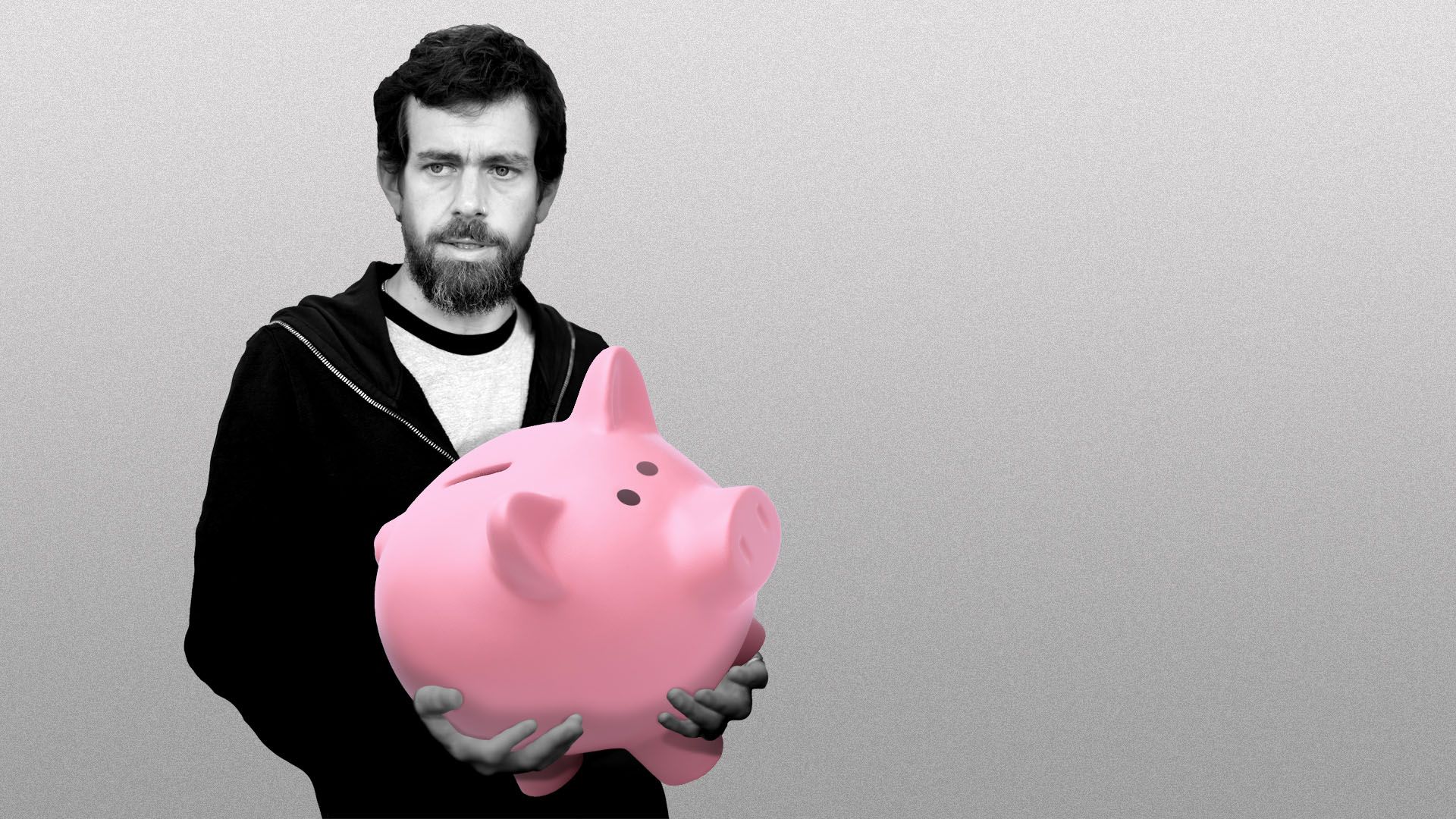
Jack Dorsey's Square, the upstart payment processor for smaller merchants, got the OK to open a bank, after nearly three years of trying.
Why it matters: Square applied to set up an industrial loan company — a "lite" bank that isn't subject to Federal Reserve supervision — which hasn't been approved in more than a decade. It may open the floodgates for companies that want all the perks of being a bank without the same amount of oversight.
President Trump told reporters on Thursday he would be "OK" with a conditional coronavirus bailout that bans stock buybacks for companies that receive federal relief.
Why it matters: Trump's tax cuts set off a record-setting buyback spree in corporate America. The comments are a shift in tone, given that his deputies have defended share repurchases in the past.
Your life has been upended by the novel coronavirus. Your quotidian routines, your relationship with your immediate family, your news consumption, your wealth, quite possibly your income — all of these have changed in ways that were unthinkable just a few weeks ago. At some point, they will change back.
Why it matters: This is not a shooting war, but in important ways it looks and feels like one. Understanding the similarities and differences is a useful way to judge the potential economic consequences of the pandemic.
Small businesses can lay off or furlough employees if they are forced to close for the duration of a lockdown. They can stop buying goods from vendors. They can even stop paying their owners. But they still owe rent.
The big picture: If no money is coming in, then most businesses won't write those rent checks. Some will simply fall behind; others will take advantage of formal rent moratoriums. Either way, the problem just gets kicked down the road, creating a nasty past-due rent liability.
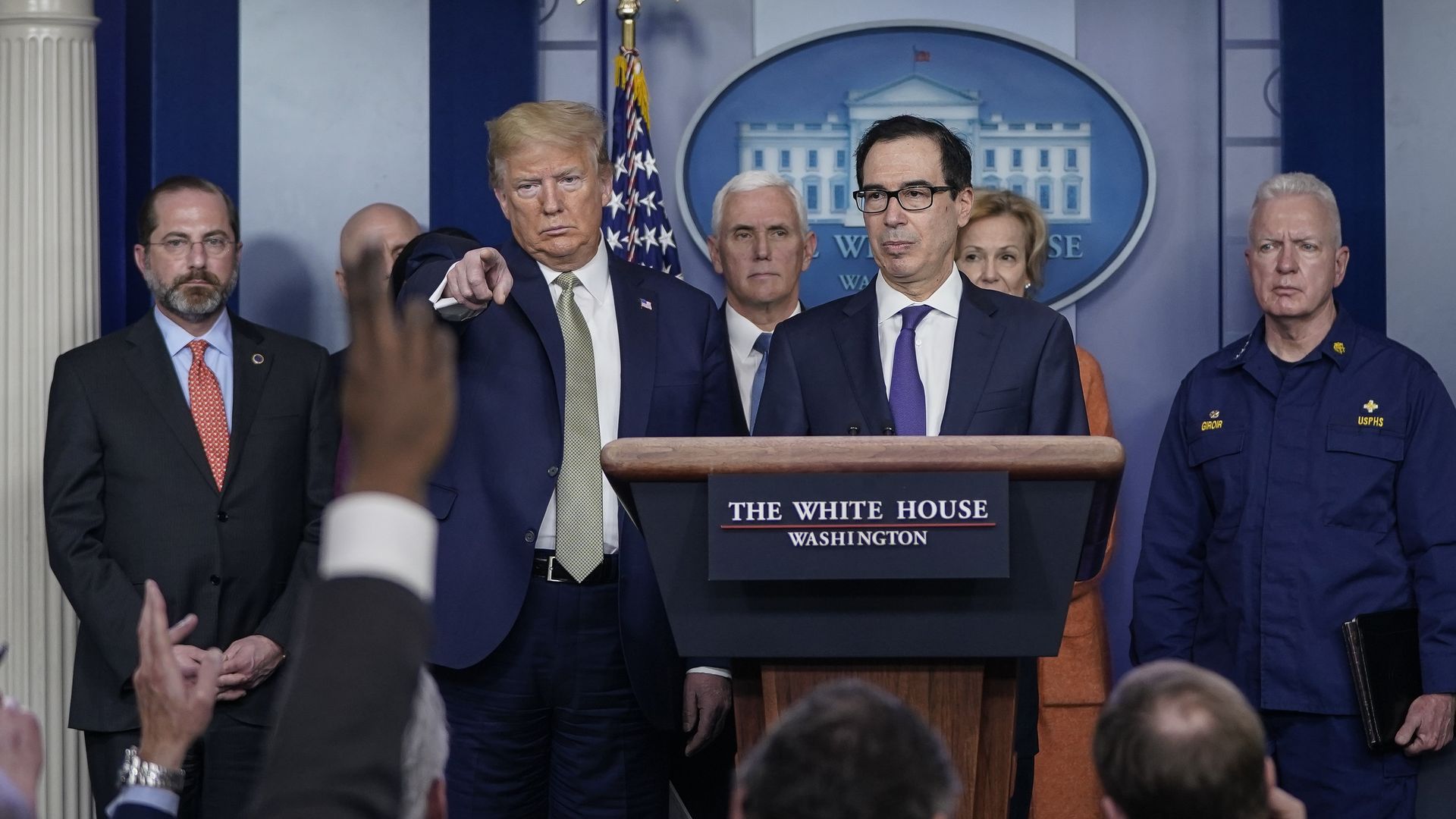
The White House has pledged to spend "whatever it takes" to win the fight against the novel coronavirus, and to that end has put forward a $1 trillion bailout package.
How it works: Half the sum will be spent directly, in the form of checks sent to American households. Details are still being worked out, but there will be an element of means testing, with poorer Americans getting more money.
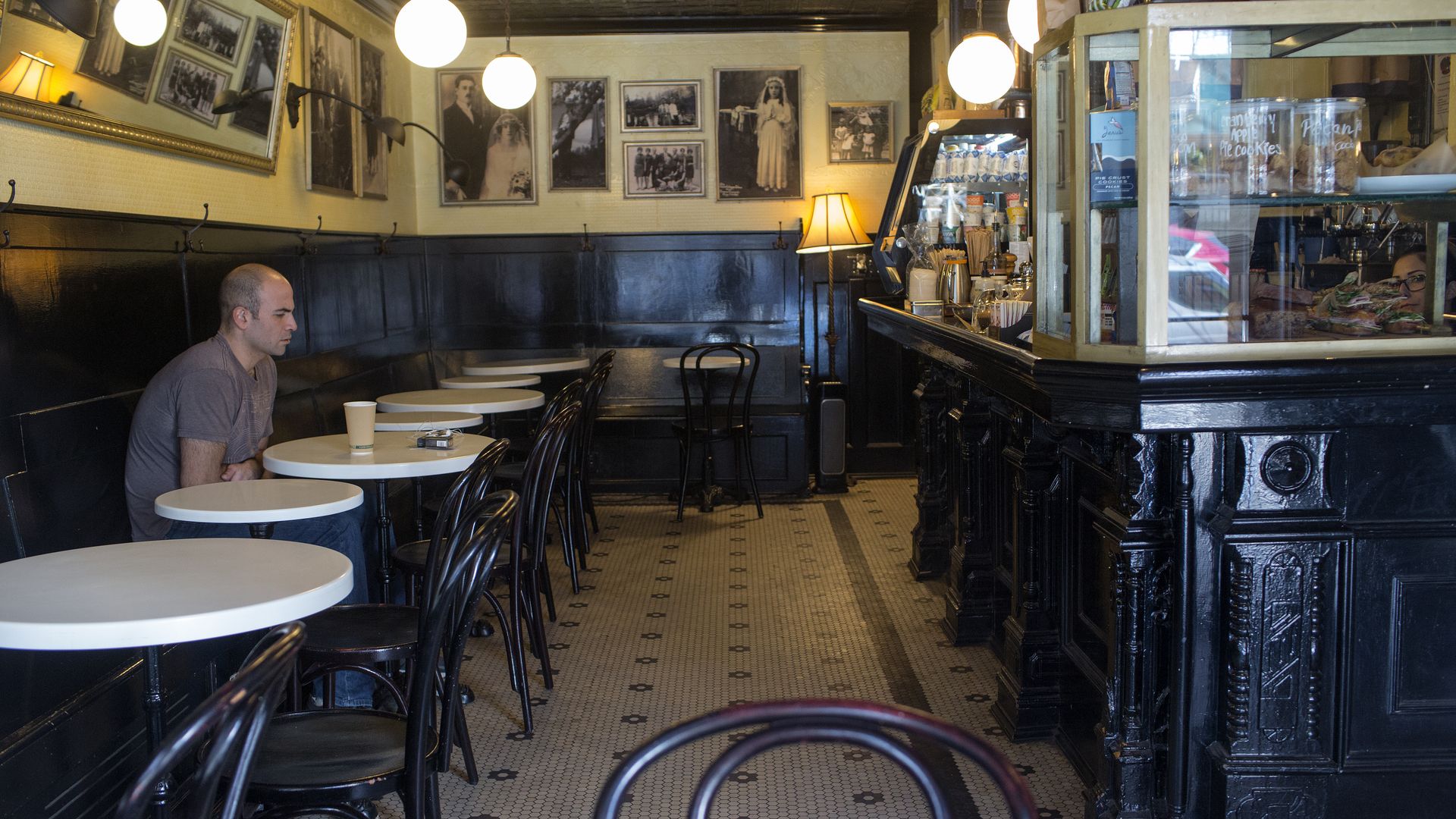
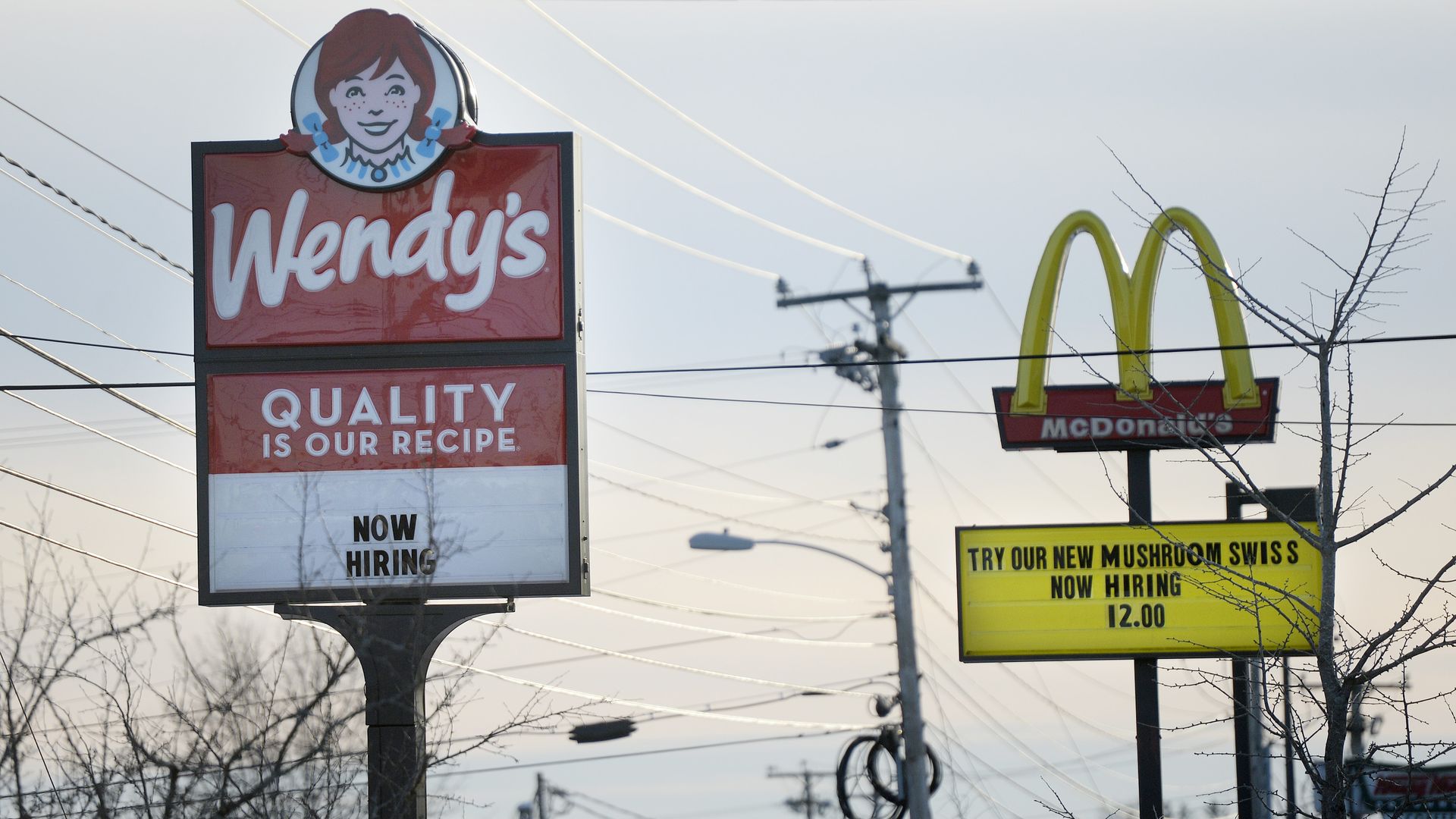
More than half of U.S. small business owners say their business will not be able to continue operating more than three months due to economic strain caused by the coronavirus pandemic, according to a Goldman Sachs survey of more than 1,500 small business owners conducted March 16-17.
Why it matters: Much of the conversation around the economic effects of the outbreak has centered on the stock market and bailouts for large corporations, but its most acute impacts are being felt on Main Streets around the country.
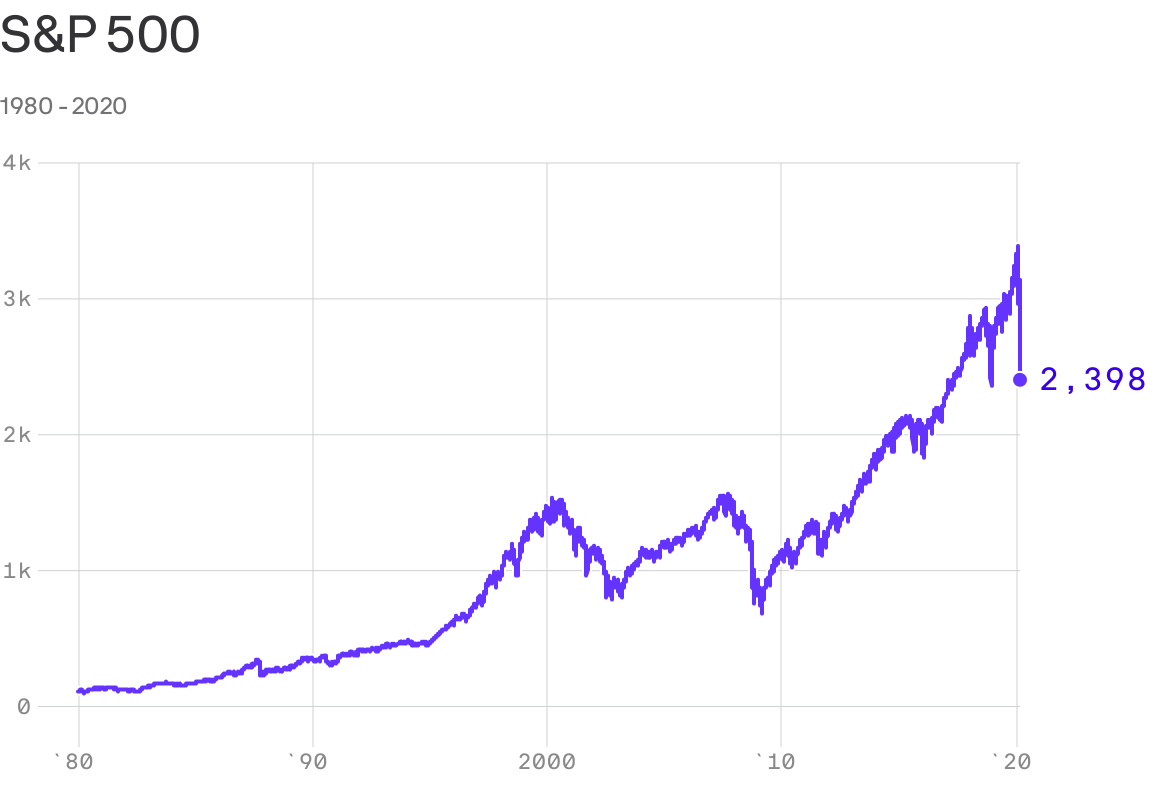
The longest bull market of all time is over — so, what now? That's the question facing millions of individual investors in the U.S. and around the world.
The bottom line: How worried you should be depends entirely on your time horizon, and when you might need to start spending the money y0u have saved up in the market.
One high-profile group of stocks has been doing particularly badly during the coronavirus crisis — the 30 companies that make up the Dow Jones Industrial Average.
The state of play: The Dow stocks are down 33% over the past month, compared with a 30% decline for the S&P 500, and a 24% drop for the more tech-focused Nasdaq. On up days and down days the Dow has generally underperformed the market as a whole.
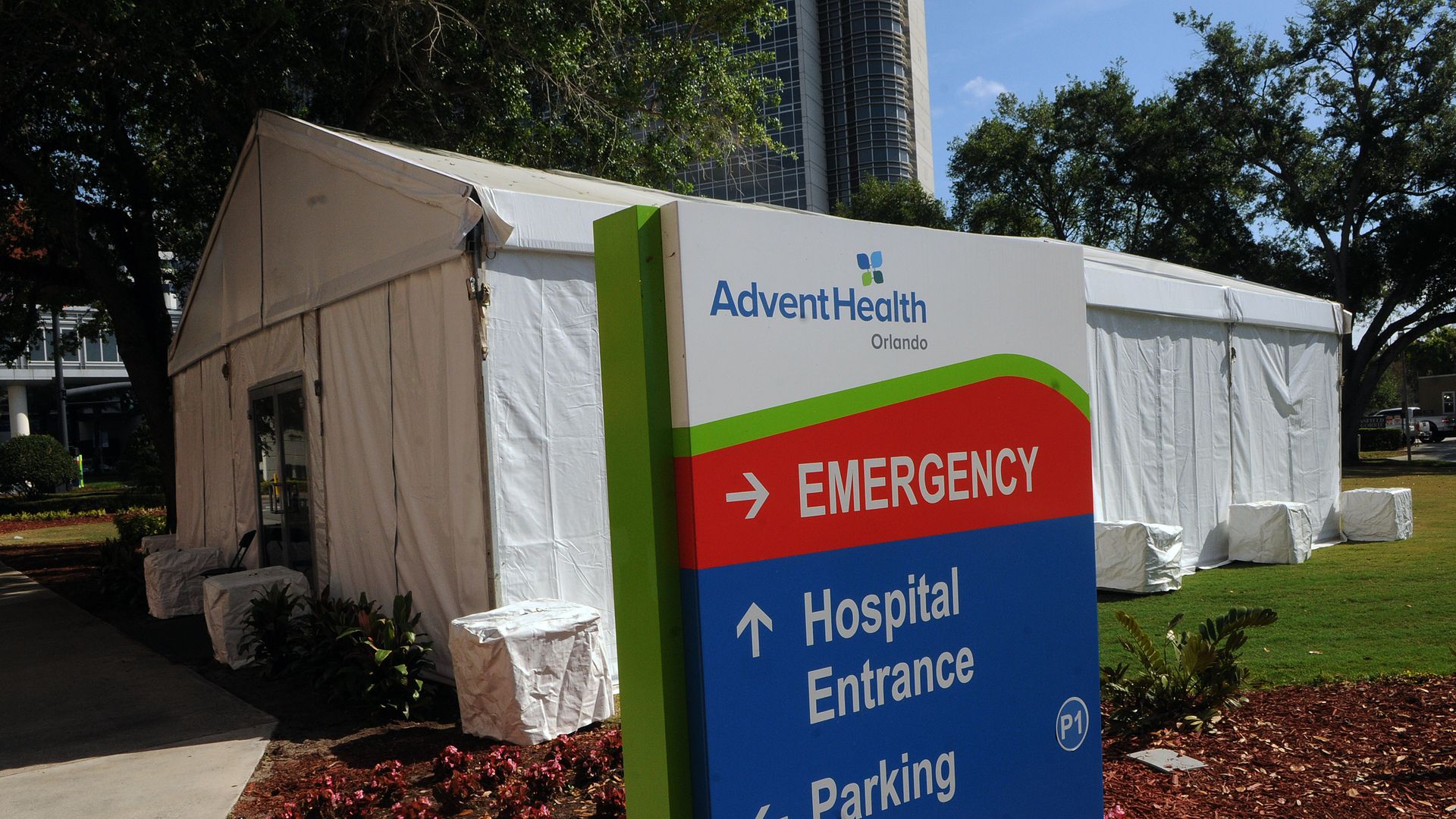
The health care industry, led by the American Hospital Association, asked Congress on Thursday for $100 billion to offset the expenses related to coronavirus testing and treatment.
The big picture: Other industries like airlines and hotels are asking for taxpayer bailouts as their operations grind to a halt. Hospitals and medical groups are asking for money as their operations prepare for a capacity overload.
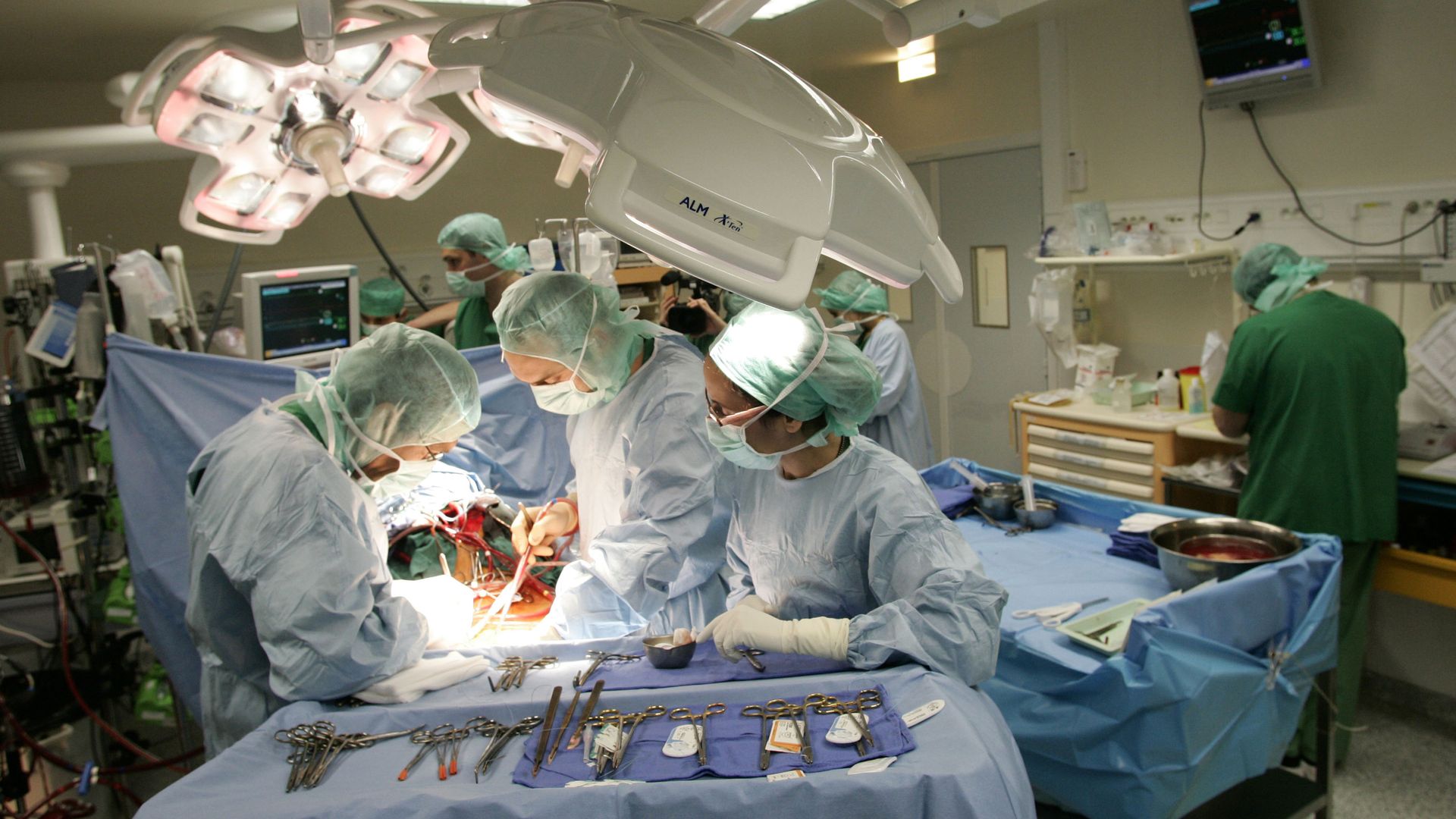
Hospitals and surgery centers should delay less urgent procedures like carpal tunnel surgeries, cataract surgeries, colonoscopies and joint replacements, but they should not postpone more serious care such as cancer treatments, brain surgeries, transplants, trauma care and major heart surgeries, according to new recommendations from the Centers for Medicare & Medicaid Services.
Why it matters: Health care providers are delaying elective care to keep beds open and to prevent patients from catching the new coronavirus, but that does not mean patients should be cut off from lifesaving treatments if they need them.
"Try to remember how you felt in September 2008, right when you learned Lehman collapsed. Were you more scared then, or are you more scared now?"
The intrigue: That's a question I've been asking investors and other sources since late February. When I began, the responses were pretty evenly split.
KKR agreed to buy Viridor, the waste management unit of British utility Pennon Group for £4.2 billion ($4.9 billion), including assumed debt.
Why it matters: It's the largest post-coronavirus buyout so far. For KKR, comfort came from the fact that Viridor has long-term contracts with government agencies. For Viridor, which reportedly had higher offers from strategics, comfort came from the fact that the deal value isn't subject to the buyer's share price.
U.S. unemployment filings surged to 281,000 in the week ended March 14 — a two-year high and an increase of 70,000 from the week prior — according to Labor Department data released Thursday.
Why it matters: There have been widespread layoffs, as municipalities began shutting down restaurants, bars and large public gatherings due to the coronavirus outbreak — but, given that many of those economic hits only came in the last few days, this batch of data doesn't provide the full scope of their impact.
I asked Axios Pro Rata newsletter readers on Wednesday to submit riddles from their kids, as so many of us try to balance working from home with childcare/makeshift school amid the coronavirus outbreak.
My 9 year-old kicked it off: A cowboy rode to town on Friday. He stayed for three days. He rode back home on Friday. How did he do it?
A major part of the worry in markets is that so many industries could be affected by the coronavirus outbreak.
Driving the news: President Trump has pledged to help the airline industry, and the administration’s $1 trillion proposed rescue plan includes $300 billion for small businesses, $50 billion for the airline industry and $150 billion to prop up hotels and other sectors.
Panic in financial markets has grown to the point that many now believe the only safe asset is the U.S. dollar.
Driving the news: The value of the dollar index rose to near its highest level in 18 years, as banks, traders and businesses made a rush for cash, fearful they could run out as the economy sinks into recession.
In its latest repricing of the economy, the market sees the now-expected global recession caused by the coronavirus outbreak morphing into an economic depression unlike any the world has seen in generations.
The big picture: Bankers and traders are looking to sell everything that isn't nailed down to boost cash positions and hunker down for the worst.
As the Senate was passing a "Phase 2" stimulus package Wednesday to address the coronavirus, the White House and leaders on Capitol Hill were pushing ahead on a "Phase 3" deal that would pump an additional $1 trillion into the economy.
Why it matters: In just a few weeks, the White House has gone from proposing a few billion dollars in quick aid to one of the largest and most expensive stimulus packages in modern history.
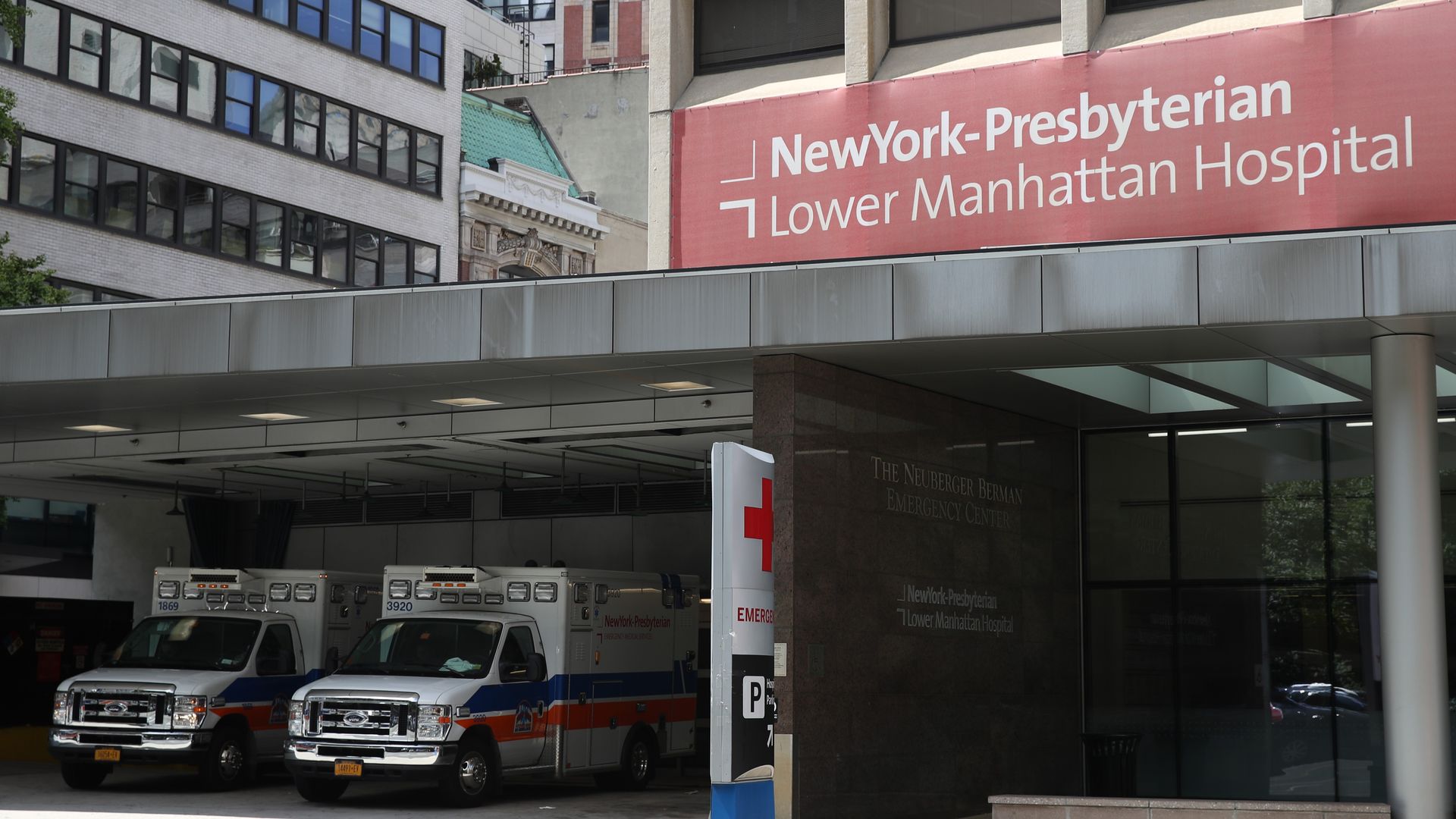
NewYork-Presbyterian, one of the largest hospital systems in New York City, is anticipating the coronavirus outbreak will trigger anywhere from $350 million to $700 million in losses, according to a new financial disclosure.
The big picture: NewYork-Presbyterian is in one of the hardest-hit states and was forced to delay all elective surgeries and procedures, which will ding its revenue and profit. But even with a nine-figure negative swing, the system is not in danger of going under.