Tuesday's business stories

Anthropic shares fall again, close under IPO price
Anthropic shares fell another 6.5% today, closing at $81.91 — and under their IPO price of $83.
Why it matters: The stock, ticker ANT, has slumped for three straight sessions since last week's record IPO — a bad look for the company, its bankers and the broader AI industry.

Jensen Huang is back, but Nvidia is not out of the woods
With Jensen Huang back as CEO, Nvidia might be hoping for a return to normal — but questions about the scandal, internal turmoil and the direction of federal policy will continue to hang over the company.
Why it matters: The overhang is substantial — the company's market cap remains well over $1 trillion below its all-time high despite a historic stock jump Monday after Huang's return was announced.

Netflix's World Cup power play


Netflix is making its most ambitious push into live sports yet, taking a reported lead in the bidding war for U.S. FIFA World Cup rights.
Why it matters: Facing growth pressure, the streamer is eyeing live sports to boost engagement and grow its ad business.

NFL takes over Thanksgiving week
The National Football League is taking over Thanksgiving week, with a first-ever Thanksgiving Eve game that will include a halftime performance and an expanded partnership with Netflix.
Zoom out: It's part of a broader effort by the league to tap into holiday co-viewing, when families are more likely to spend time watching TV together.


Trump phones his way into the news cycle
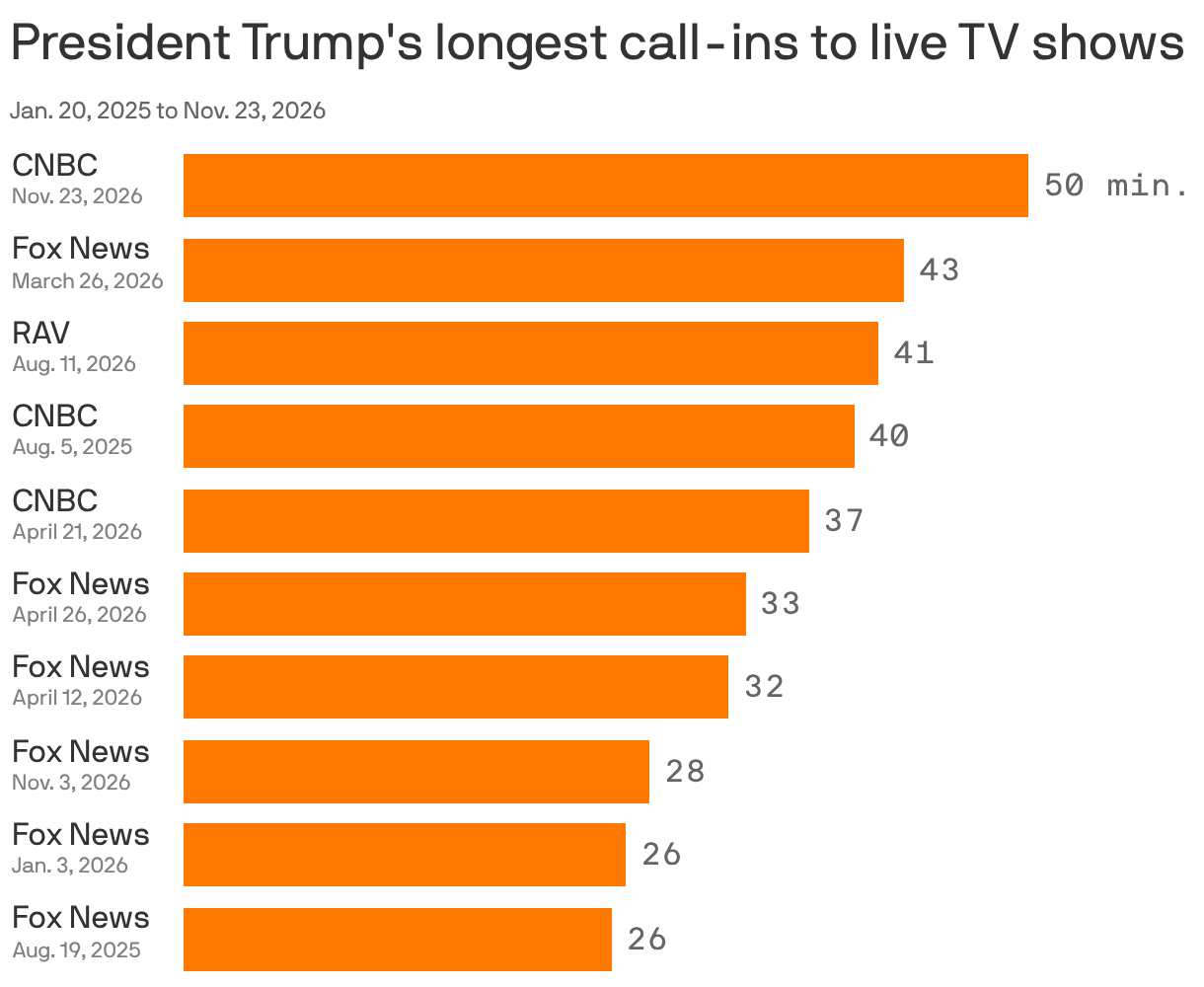
President Trump's 50-minute phone interview with CNBC on Monday represents the longest call he's made on a live TV news program in his second term, according to an Axios analysis.
Why it matters: Live call-ins allow the president to shape the news cycle in real time without having to convene a formal press conference or rely on journalists' coverage of his Truth Social posts.

The Economist credits video for subscription, revenue surge
The Economist Group is experiencing a subscription bump even as Google search traffic declines, thanks in large part to its investment in video, CEO Luke Bradley-Jones told Axios.
The big picture: Publishers have traditionally used video as a growth marketing tool since the margins against production are usually low. But as more outlets look to build subscriber loyalty, video has emerged as a key subscriber retention and acquisition tool, justifying the investment.


Gaming bets on GTA's halo effect
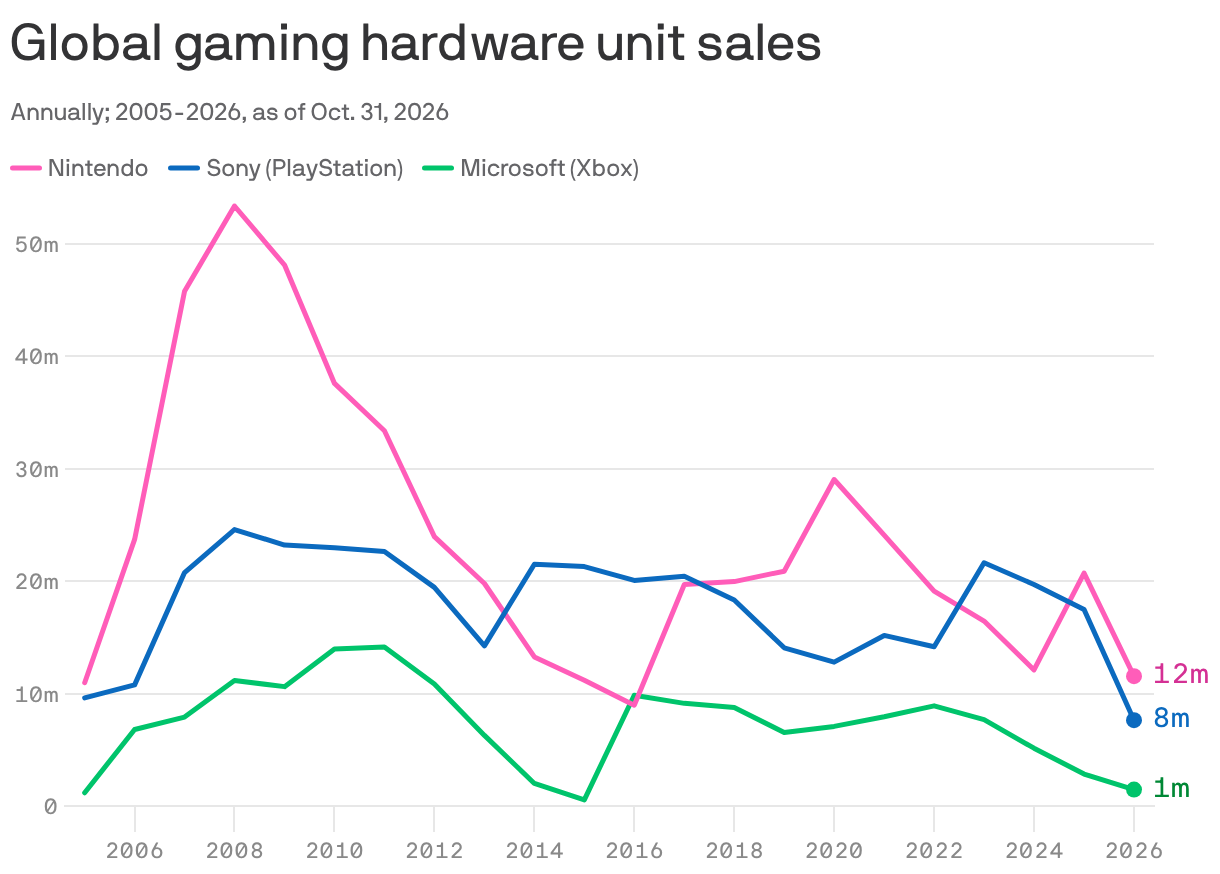
The release of Grand Theft Auto VI may siphon attention from rival games in the short term, but its success could reinvigorate an industry that's desperate for growth.
Why it matters: Gaming's future depends on effectively monetizing fans long after their purchase of one game.


Booming new businesses, low layoffs: 5 reasons we're thankful

Not all the economic surprises of 2026 have been unpleasant. Some developments offer good reason to be optimistic about the years ahead.
- Here are five we are grateful for ahead of Thanksgiving.
1. The productivity revival
After years of lackluster productivity growth, the U.S. economy is getting better at producing more with the same amount of labor. Stronger productivity growth creates room for businesses to raise wages without raising prices, and for the economy to grow faster without fueling inflation.
- The productivity numbers are already encouraging, even before the transformative economic benefits promised by AI are clearly visible in the data.
- Labor productivity has grown at a 2.5% annual pace since early 2023, according to San Francisco Fed research. That's well above the 1.5% pace that prevailed from 2005 to 2022, though short of the 3.3% recorded during the technology boom of the late 1990s and early 2000s.
- That has obviously come with some existential angst about the future of human labor in the era of AI. But we spent too much time handwringing about the weak productivity gains of the 2010s — and related sluggish growth in incomes — not to view this shift with optimism.
2. The entrepreneurship boom
Americans are applying to start new businesses at the fastest pace on record, with more than 5 million applications filed in the first 10 months of this year, according to Census Bureau data.
- There are early clues that AI may be fueling a new wave of entrepreneurship by making it easier to launch and run a business without employees.
By the numbers: Businesses less likely to hire employees accounted for 86% of the increase in new business applications in the first 10 months of the year, compared with the same period in 2025 — a sign of a burgeoning "solopreneur" economy, though some of these categorized businesses may eventually hire workers.
- The boom is also evident in data from payments company Stripe. The number of new businesses launching on its platform each week has roughly doubled from a year ago, CEO Patrick Collison said last week at a Fed conference — a rate of growth without precedent in Stripe's 15-year history.
3. Low, low layoffs
This time a year ago, there was deep angst over the outlook for the labor market, as companies looked to an AI-powered future and the unemployment rate edged up.
- But not only has the headline unemployment rate held steady at low levels this year, but the rate at which companies are laying people off is near all-time lows.
State of play: The rate at which employers laid off or discharged workers was 1% in September, only a tick above the 0.9% low in a data series that dates to 2001.
- That rate averaged 1.2% in 2019, which was then viewed as a healthy labor market.
- Weekly data on unemployment insurance claims tell the same story. The four-week moving average of initial claims has been below 200,000 in recent weeks.
- Those are the lowest levels on record in a data series dating to 1967 — a time when the labor force was much smaller.
Zoom out: Getting a job is challenging in some sectors, as hiring rates are relatively low, especially in white-collar professions. But those who have a job have been able to hold onto it this year at historically high rates.


4. People can handle high gas prices better
There's no doubt that gasoline prices have risen a lot since the Iran war began in March. But households are better positioned to handle those costs than they were in the past.
Zoom in: The average nationwide price of a gallon of gasoline was $3.64 last week, per the Energy Information Administration — up from $2.94 in late February.
- But $4 gasoline is a considerably smaller burden relative to wages and overall spending than it was in past energy shocks.
We like to look at gasoline prices in terms of how long a typical laborer — someone making the average hourly earnings for production and nonsupervisory workers — would have to work to afford a gallon.
- In October, that figure was just shy of 8 minutes. That was nearly 11 minutes during the onset of the Ukraine war in 2022.
- It was at or above 10 minutes for most of the period from early 2011 to the fall of 2014, as well as from the spring of 2007 to the fall of 2008.
Of note: Energy is also a smaller share of household spending than it once was, reflecting greater energy efficiency of modern cars and household appliances.
- In September, gasoline and other energy goods were 2.4% of total personal consumption expenditures. Twenty years ago, that figure was 3.5%.
5. America's financial dominance
The U.S. remains at the center of the global financial system, giving American companies an extraordinary ability to raise money to finance growth and innovation.
- Set aside the day-to-day swings in Anthropic's stock price: The 5-year-old company pulled off the largest IPO in history last week, raising more than $90 billion for its own coffers before fees.
- The two largest IPOs in world history took place in the U.S. this year: SpaceX and Anthropic.
Two episodes this year suggest investors still turn to traditional U.S. safe-haven assets in times of turmoil.
- The dollar rallied following the outbreak of the Iran war, and it's the strongest since before President Trump's "liberation day" tariffs in April 2025.
- Long-term Treasury yields fell during last week's stock market sell-off in a classic flight to safety, despite stubborn inflation and the prospect of further Fed rate hikes.
America's AI investment boom is helping sustain its growth advantage. The International Monetary Fund, for instance, projects the U.S. economy will grow 2.3% next year — faster than any other G7 nation.
The bottom line: The U.S. economy has plenty of problems, and nobody would claim that all is perfect. But there are striking areas of resilience and strength that we can be grateful for this Thanksgiving.


The Jensen Huang saga is short on answers
We don't know why Nvidia's board ousted Jensen Huang two weeks ago. We also don't know why they rehired him yesterday.
- All of the celebration and condemnation are educated guesses at best and ignorant noise at worst.
If the company and its CEO are really too big to fail — linchpins to America's economy and tech sovereignty — then the American people deserve to know what actually happened.


Nuro and Uber launch driverless testing in San Francisco
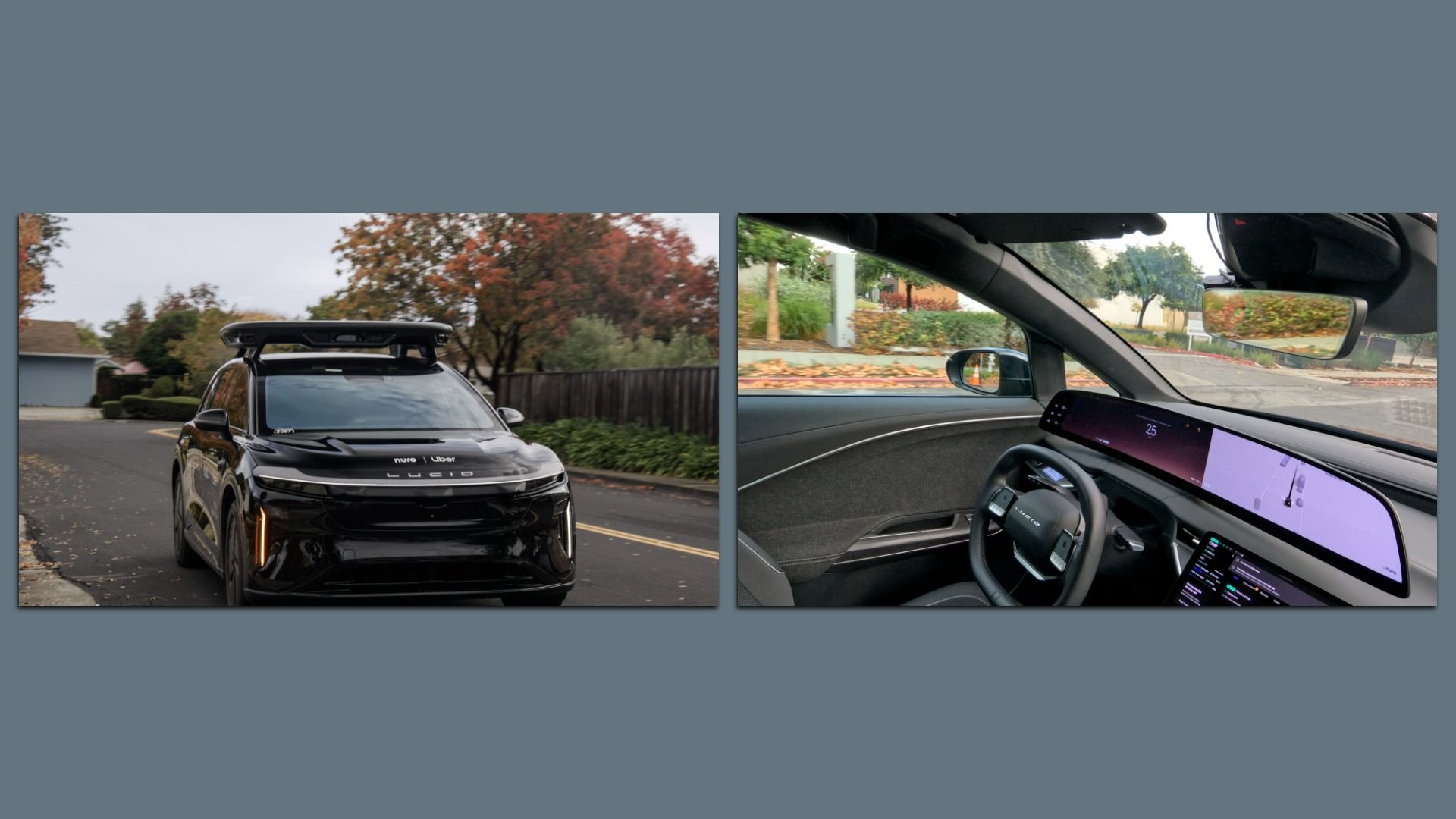
Nuro and Uber have started testing fully driverless vehicles on public roads in the San Francisco Bay Area, an important step ahead of their commercial launch, now slated for early 2027.
Why it matters: As Uber assembles a network of autonomous vehicle providers to challenge Waymo's dominance, its robotaxi partners could increasingly find themselves competing against one another.

Sanofi agrees to buy Insmed for $41 billion
Sanofi on Tuesday agreed to acquire Insmed, a New Jersey-based drugmaker focused on respiratory diseases, for $41 billion in cash.
Why it matters: This would be the largest biotech merger in three years.

It's still Trump's stock market
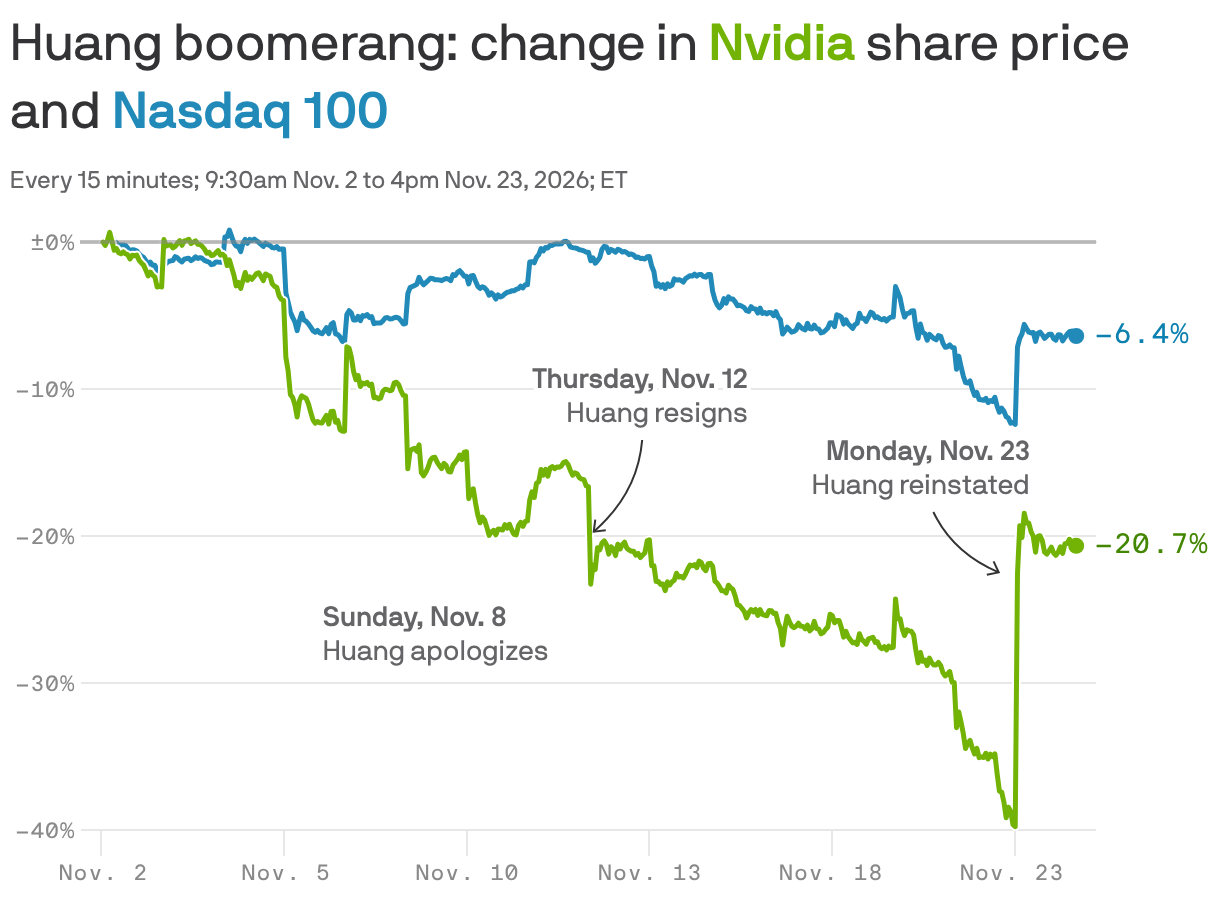
The "Trump put" — the idea that you can bet on the president to make moves that will support the stock market — is back.
Why it matters: The shock reinstatement of Nvidia CEO Jensen Huang, at President Trump's explicit urging, is just the latest in a series of moves from the White House that have bolstered stocks.
- But the president's efforts to bring back Huang raise longer-term uncertainties about the role the U.S. government plays in picking market winners and losers.

The "bank of AI" is back in business
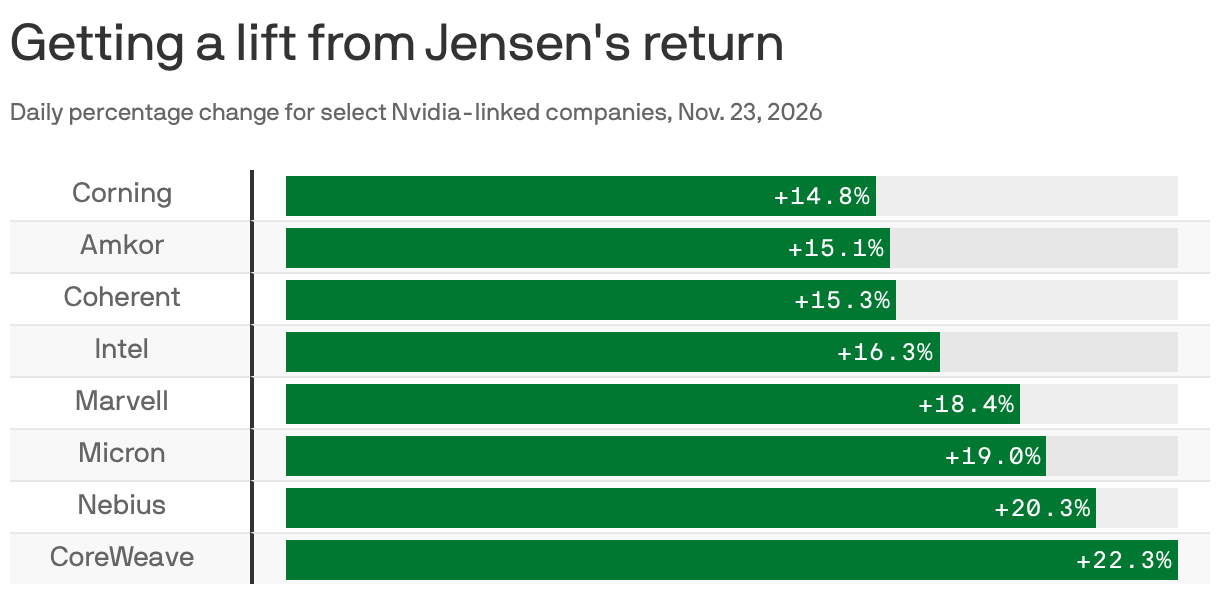
AI players that have been supported by Jensen Huang's willingness to finance, invest and otherwise backstop the AI ecosystem soared on his return.
Why it matters: Their surge highlights Nvidia's role as the linchpin of the AI trade that has powered the market in recent years.

Scoop: Northwood hits key Space Force milestone
Northwood Space quickly connected its antennas with a satellite in deep orbit during a Space Force test, a key milestone first shared with Axios.
Why it matters: The U.S. military wants rapidly deployable, survivable and reliable ground stations for future conflicts.

"The Axios Show": Bob Woodward's memoir spills 50 years of secrets
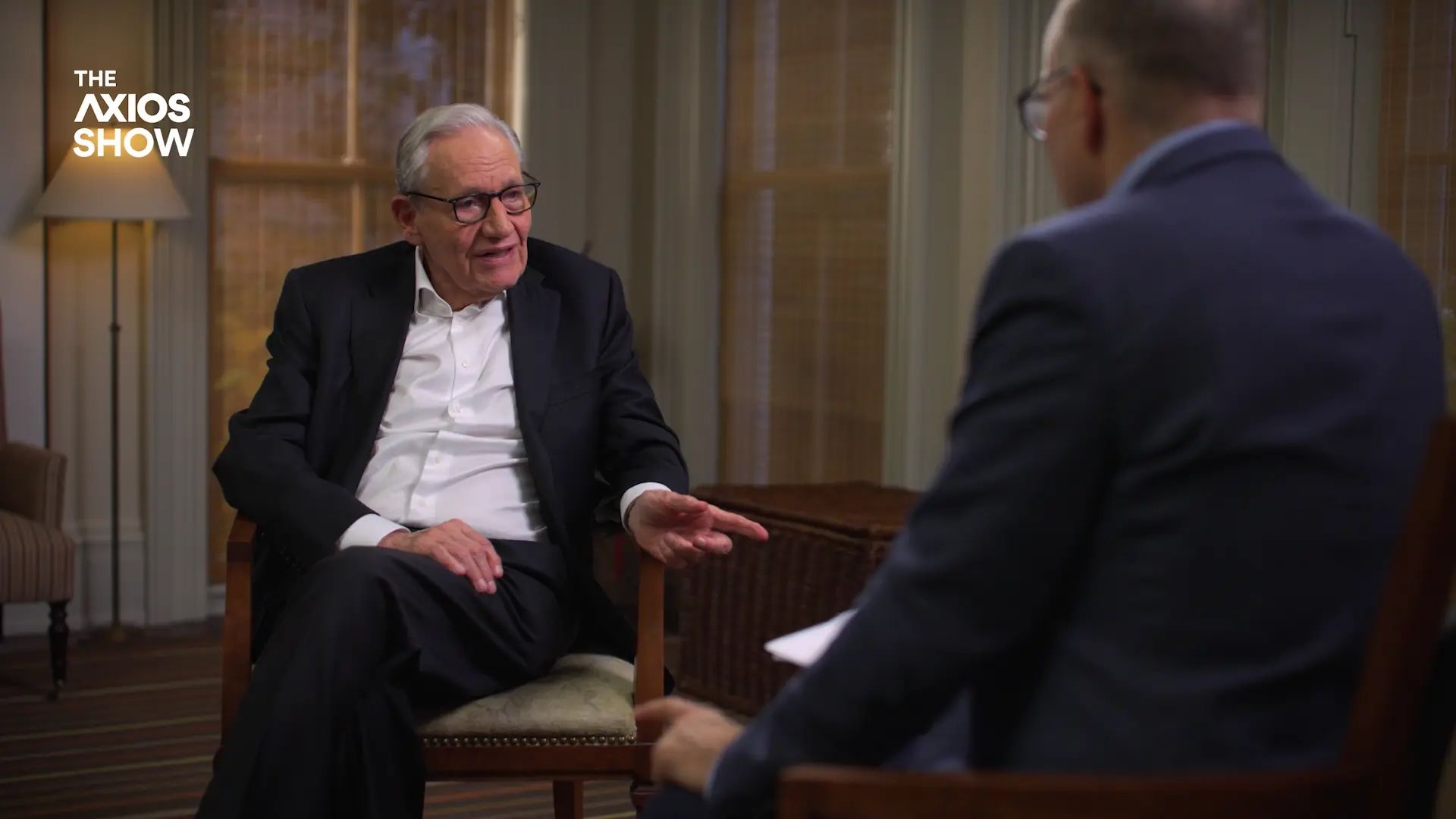
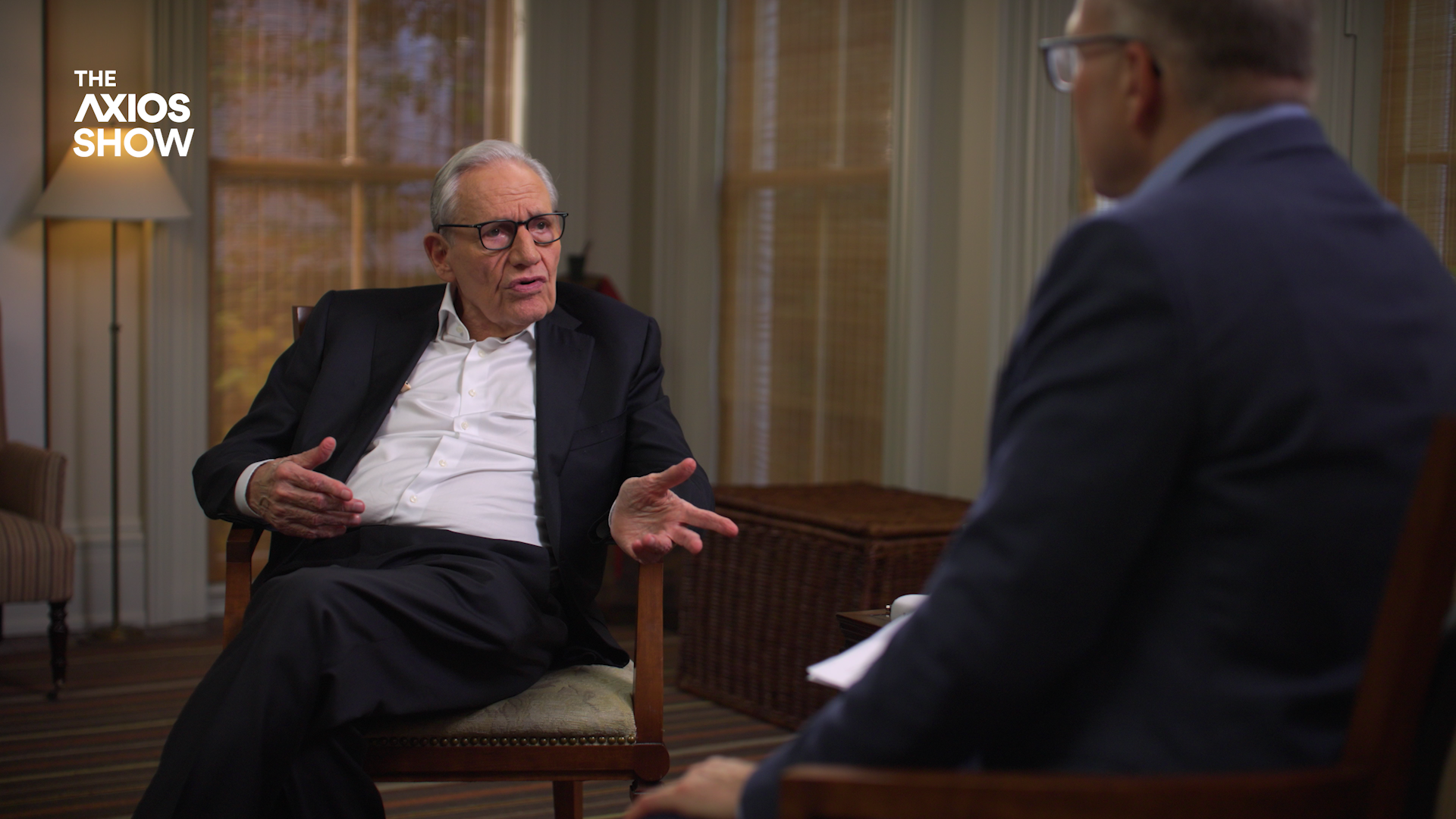
Bob Woodward — out Tuesday with "Secrets," his memoir of 55 years of reporting for The Washington Post and 24 cinematic bestsellers, covering 10 presidents — told me in an interview for "The Axios Show" that the book exposes some confidential sources who are now dead because he feels a duty to history.
Why it matters: Woodward, 83, is a double Pulitzer winner whose Watergate investigative reporting with Carl Bernstein became a book and movie, "All the President's Men," that inspired generations of would-be reporters, including me. But no journalism school teaches students they can out "secret sources" who are dead, as Woodward does in "Secrets."


Behind the Curtain: When reality shouts
We naturally assume people in business and power are slightly full of it, spinning us wildly to exaggerate their achievements or capabilities.
- In the case of AI and its ability to do irreparable damage to society, it's time for all of us — the media, the White House and Congress — to believe them: They've truly built something we don't understand and soon, if not already, can't fully control.
Why it matters: This is no longer a future problem. It's a today problem, if not a crisis.

Scoop — AI employees sound alarm: models too powerful to ever release
Anthropic and OpenAI are facing an increasingly urgent problem: Internal, unreleased models are becoming so powerful that many employees no longer believe they can be safely released, according to more than two dozen sources familiar with the internal debates.
Why it matters: The challenge could significantly slow the AI boom, as the gap between what the best AI systems can do and humans' ability to control them continues to widen, sources told Axios.

Nvidia's one-man board: How Trump inherited Jensen Huang's scandal
A euphoric Wall Street erupted Monday as President Trump personally secured Jensen Huang's return to Nvidia, trading on the end of a scandal that — in reality — has only just begun.
Why it matters: By assuring Nvidia's board that Huang poses no national security risk, Trump has staked the credibility of the U.S. government on a CEO who lied about his relationship with a suspected Chinese spy.

Read the transcript of Bob Woodward's interview with "The Axios Show"
Axios' Mike Allen:
- Bob Woodward, you're the most famous journalist alive. You've inspired... you shake your head, but you are —
Bob Woodward:
- Yes, I do shake my head.