Exclusive: Nasdaq sees AI behind solo founder boom

Add Axios as your preferred source to
see more of our stories on Google.
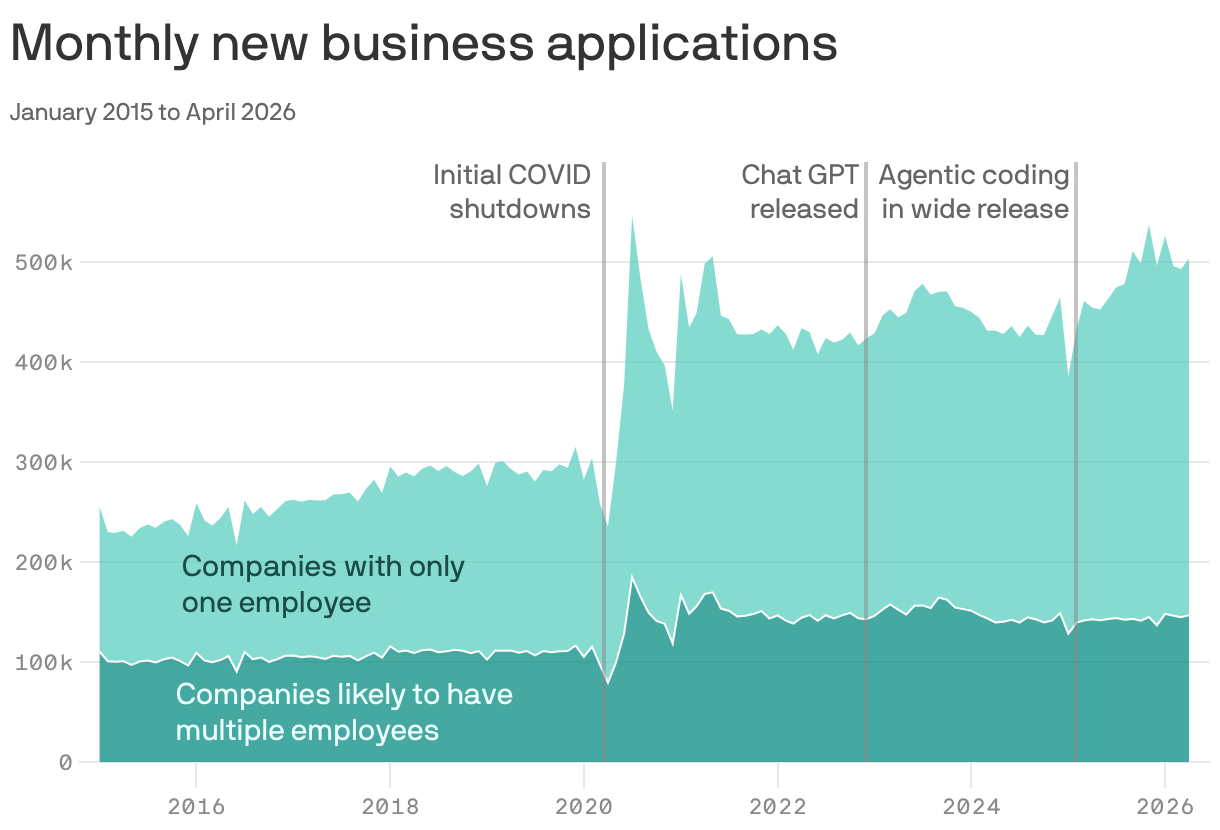
America may be entering its busiest era yet of one-person entrepreneurship: New research ties a surge in solo business formations to advances in AI.
Why it matters: The pandemic-era startup boom was widely viewed as a leading indicator of future hiring, innovation and growth.
- The sharp rise in AI-enabled solo founders is a new and largely untested model of entrepreneurship. The economic benefits may emerge differently.
Driving the news: The first research from the newly launched Nasdaq Economic Institute links the surge in one-person business formation to advances in generative AI and agentic coding tools.
- Nasdaq's analysis of Census Bureau business application data found the recent entrepreneurship boom is increasingly being driven by solo operators.
Applications from one-person firms have risen more than 20% since early 2025, while applications from companies likely to hire workers have remained largely flat.
- Nearly half of the growth in solo business applications has come from high AI-adoption industries such as technology, finance and professional services.
What they're saying: The rise of solo founders in these high-productivity industries is "a meaningful signal for where AI's economic impact may show up first," Nasdaq chief economist Phil Mackintosh said in a release.
Yes, but: Some of the increase appears tied to tax policy changes that pushed sellers on platforms like Etsy and eBay to formally register as businesses.
Friction point: AI may be making entrepreneurship more accessible while reducing the need for early hires, raising questions about whether a startup boom will translate into a jobs boom.
- The report notes that even if many of today's solo founders never build large payrolls, a rise in business creation could still boost innovation, competition and productivity growth — especially if the new firms cluster in some of the economy's most productive industries.
Not all of those businesses will stay one-person operations. The census category captures businesses that don't expect to hire workers or pay wages in the near term, though some businesses may do so later.
