Monday's business stories

$2.8 trillion: The value of Huang's return to Nvidia
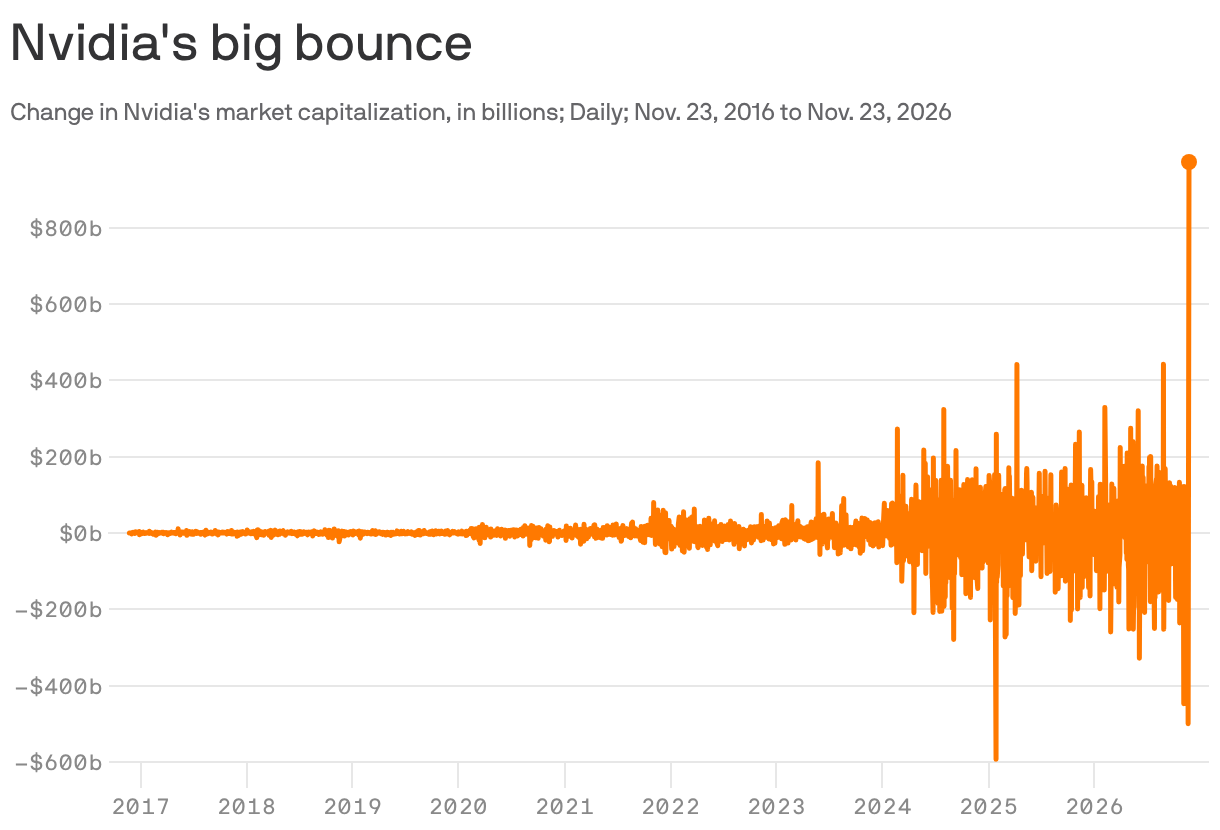
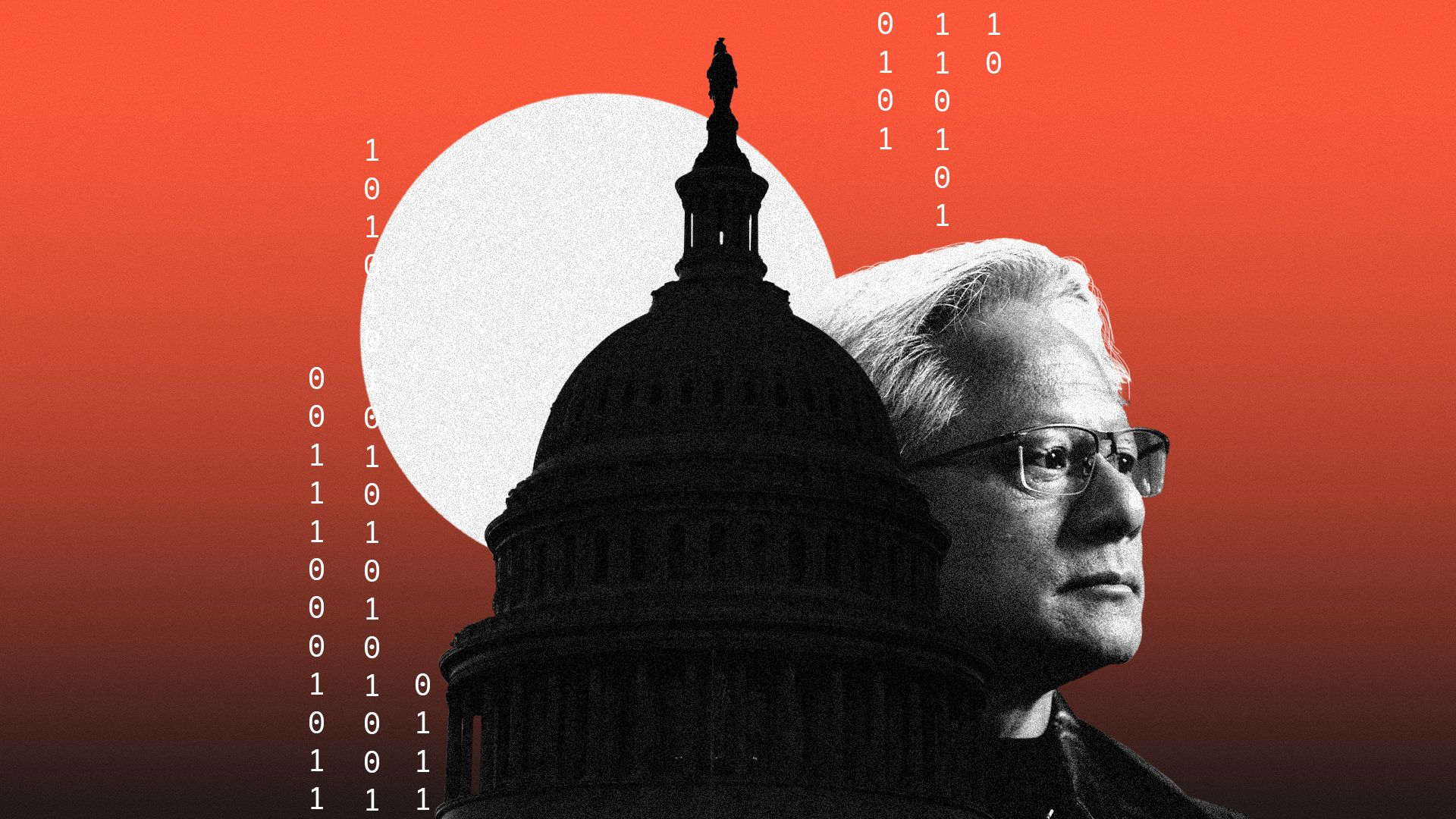
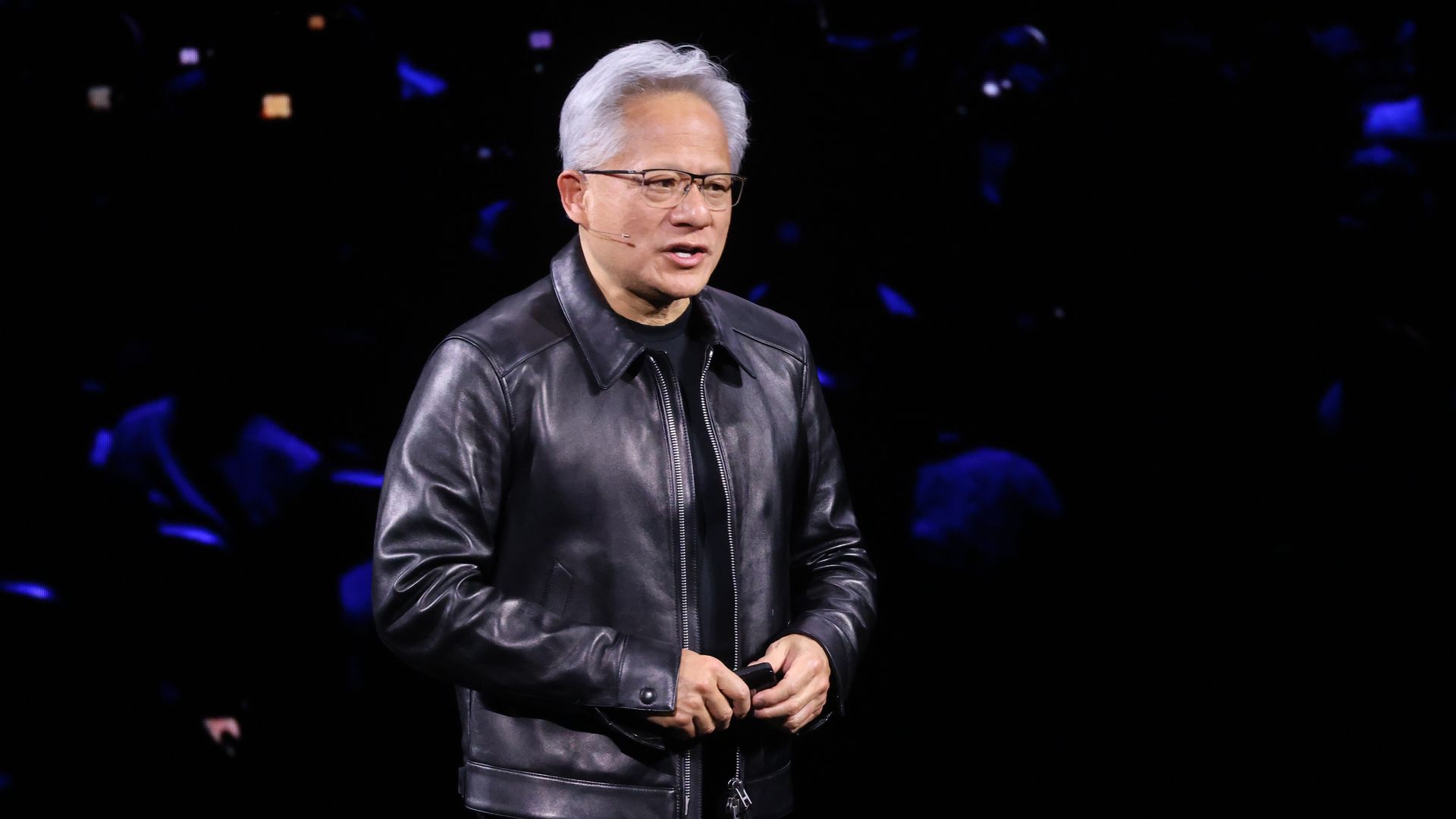
The shocking return of Jensen Huang as Nvidia's CEO triggered a violent surge in the company's stock, and the overall market.
Why it matters: The big bounce in Nvidia's share price triggered the largest single-day gain in market value for a stock ever, at roughly $940 billion, according to Bloomberg.

"Troubling and problematic": Gov. Moore rips Trump's Nvidia actions on "The Axios Show"
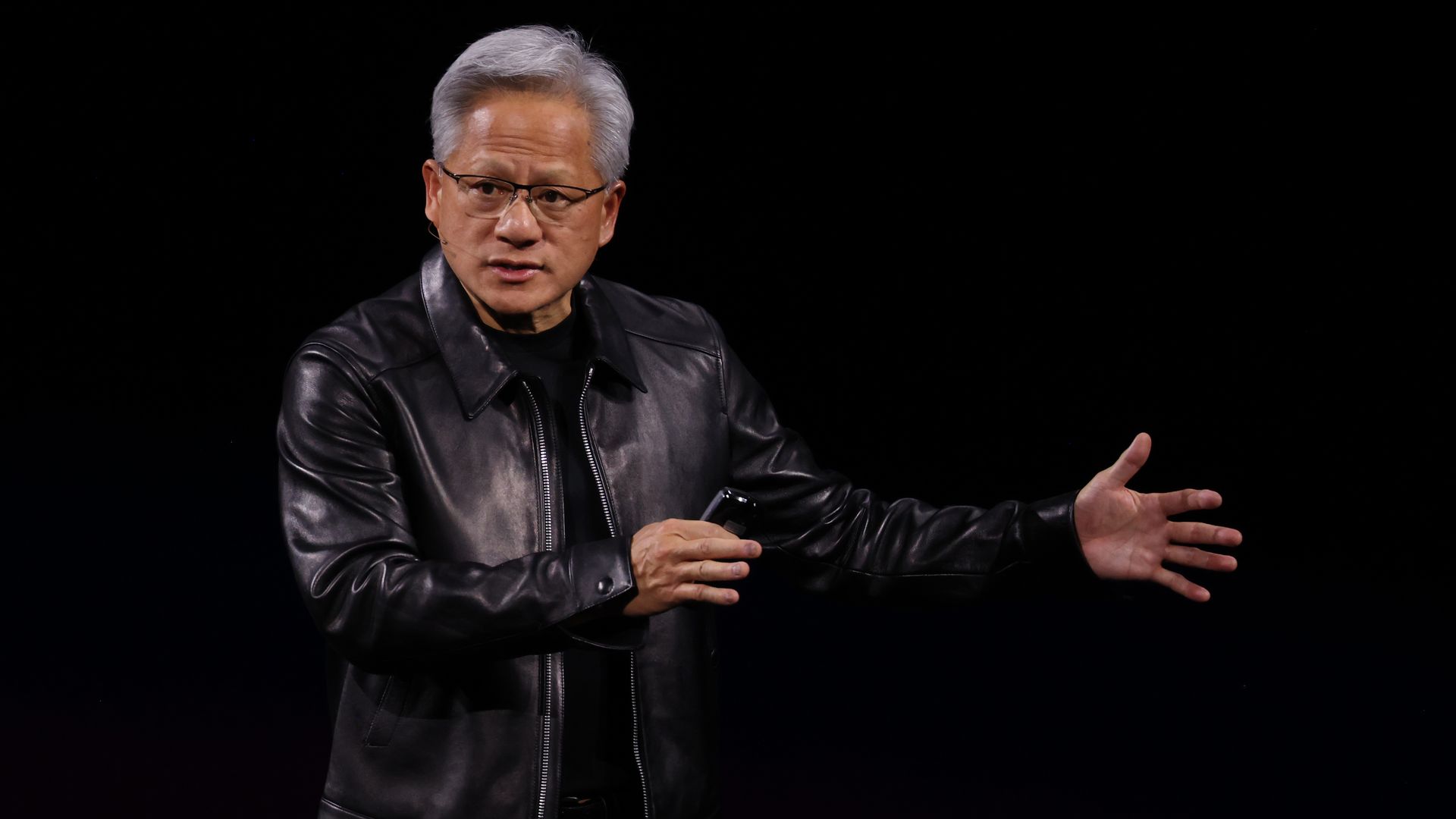
Maryland Gov. Wes Moore criticized President Trump's involvement in Nvidia's decision to reinstate CEO Jensen Huang, calling it "troubling and problematic" in an interview for "The Axios Show."
Why it matters: Moore, chair of the National Governors Association and often seen as a 2028 presidential contender, is one of the most outspoken state leaders pushing for stronger federal oversight of AI companies — but not like this.

5 reasons Nvidia changed its mind about Jensen Huang
A push from President Trump, backlash from Silicon Valley and a Wall Street meltdown are among the complex forces behind Nvidia's stunning decision to bring back Jensen Huang as CEO.
The big picture: Nvidia reversed course with Huang just days after ruling out the return of the company's founder.
- Huang stepped down from his position after he was accused of having multiple extramarital affairs, including one with a woman who U.S. authorities suspected of being a Chinese spy.

Nvidia board shows "lack of backbone" in re-hiring Jensen Huang, governance experts say
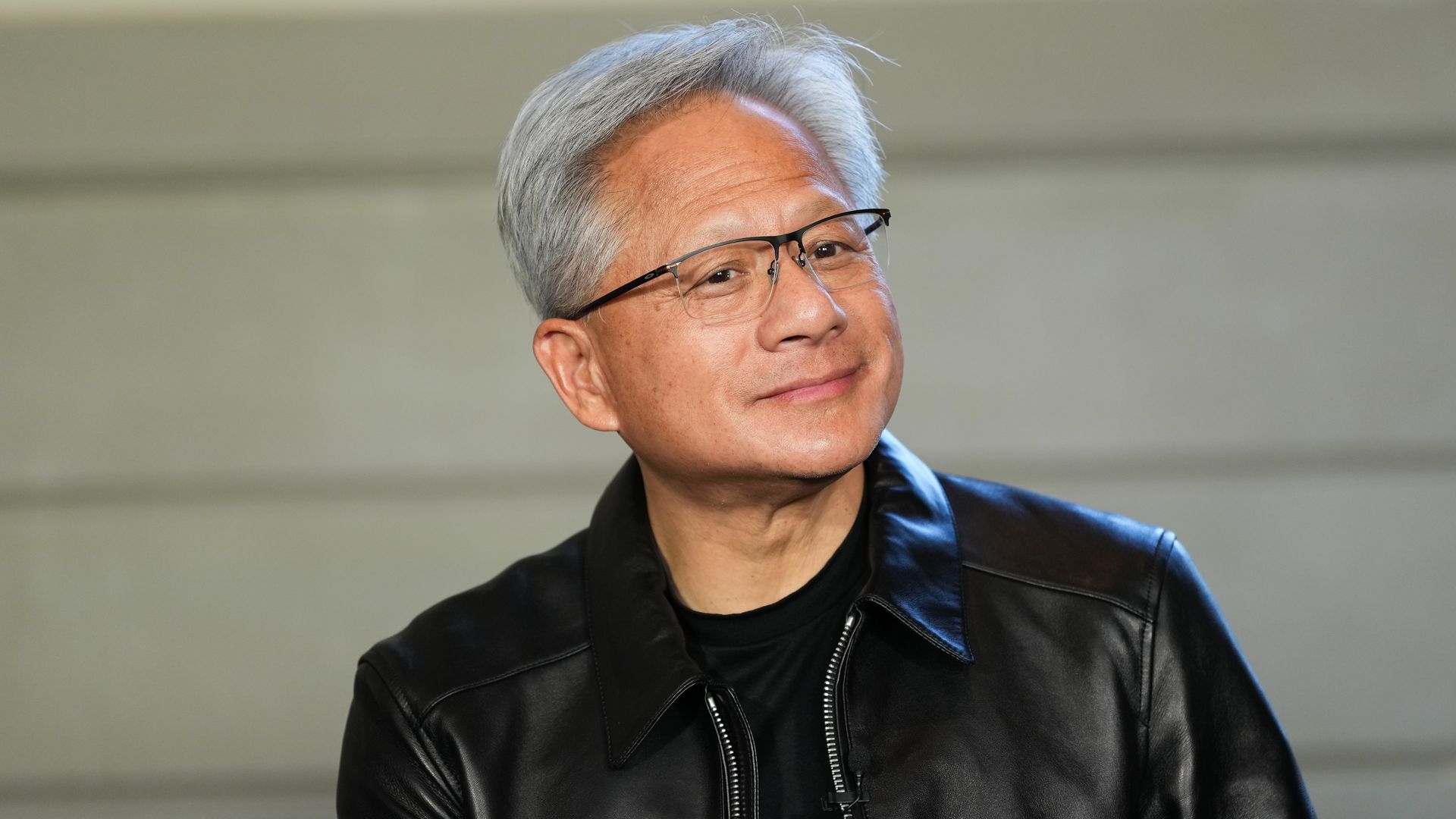
Nvidia's shock reappointment of Jensen Huang exposes the company to legal liability, political blowback and internal turmoil while rendering the board nearly toothless to keep its CEO accountable moving forward, say corporate governance and business ethics experts.
The big picture: Huang's return exhilarated investors — the stock soared more than 30% in early trading Monday — but unnerved experts who say Huang now looks beyond reproach.

Nvidia saga tests corporate communications on every front
Jensen Huang is back as Nvidia's CEO, less than two weeks after stepping down amid allegations of multiple affairs — another turn in a crisis that has unsettled the company's relationships with employees, investors, government officials and customers.
Why it matters: Nvidia now needs to explain its reversal while preserving confidence in the business, its founder and the board that brought him back.

Jensen's Hill test will keep Nvidia's reputation in focus
Jensen Huang is back as Nvidia's CEO ahead of his slated testimony before Congress over revelations of an affair with a suspected Chinese spy and his push to loosen restrictions on advanced chip sales to China.
Why it matters: President Trump said he intervened in the leadership fight at one of the world's most valuable companies, but his backing will only make lawmakers' questions more pointed.
- Congress could still tighten the rules governing Nvidia's chip sales and force administration officials to justify their handling of intelligence warnings.

Nvidia's stunning CEO reinstatement highlights the need for succession plans
Jensen Huang is back at Nvidia, but his reinstatement as CEO raises new questions about the board's independence, executive accountability and the company's dependence on its founder.
Why it matters: The reversal underscores the risks of building a company so closely around one leader that replacing them becomes difficult, even amid a crisis.
- The challenge now is demonstrating that Huang can be held accountable while building confidence in the broader leadership team and the company's future beyond its founder.

Nvidia's chaos opens the door to an uncomfortable comms conversation
A CEO misconduct scandal is a foreseeable risk, but raising the possibility with your own leaders isn't easy. Nvidia's leadership chaos gives comms leaders an opening to start that conversation.
Why it matters: The person who would normally lead the company's crisis response could be the source of the crisis. Teams need to know who would establish the facts, make decisions and speak for the business, including if that executive stays or returns.

How the Fed will react to wobbling markets
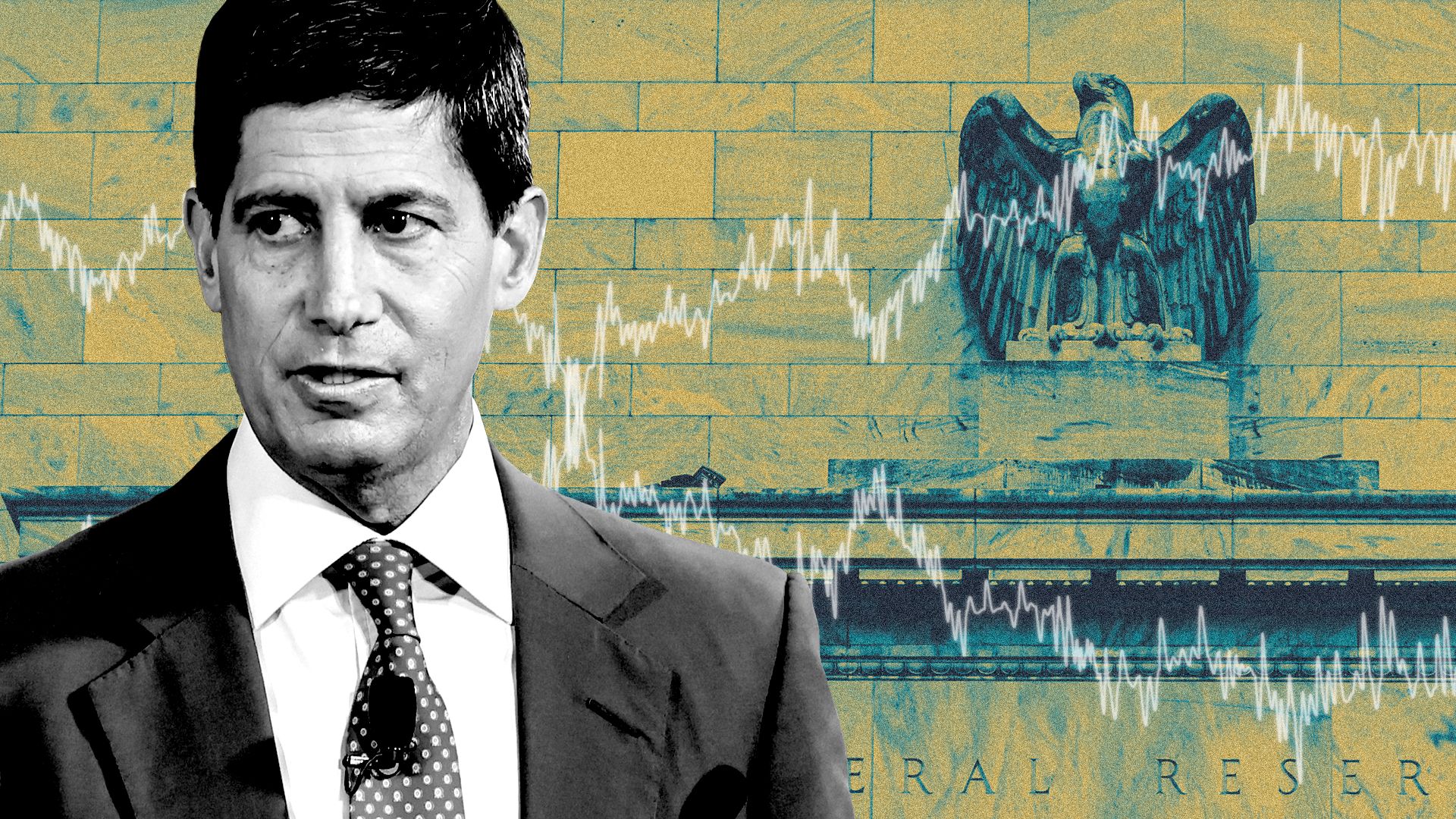
Monday morning's furious market rally notwithstanding, the tenor on Wall Street has turned more ominous this month. It puts pressure on Kevin Warsh's Fed to rethink its plans to keep raising interest rates — though at this juncture the mood swing probably isn't enough to derail them.
The big picture: During periods of financial turmoil, the Fed can ride to the rescue, offering cheaper money that helps offset declines in prices of risky assets.
- Right now, however, it is more constrained given lingering high inflation — and a sense that the very sectors showing signs of financial strain have been a cause of the elevated inflation the Fed is seeking to quash.
- As a result, a slowing of the AI investment boom may not be the worst thing in the world, at least in the view of many Fed policymakers — so long as it remains contained and doesn't spill over into a broad retrenchment of economic activity and a worsening of the job market.
Catch up quick: Stocks fell in each trading session last week, including a whopping 3.7% drop in the S&P 500 on Friday.
- There has been a remarkable bounce back this morning, with the S&P up 4.1% as of 10:00am — but even after that surge, the market is down about 5% in November, more if you confine the analysis to leading tech stocks.
- That has coincided with other measures of tightening in financial conditions, like a widening in spreads between riskier corporate bonds and Treasuries.
By the numbers: Goldman Sachs economists estimated that the tightening in financial conditions through Friday was the economic equivalent of 1 percentage point's worth of Fed rate hikes — and, if sustained, would reduce GDP growth by 0.5 percentage points over the next year.
Yes, but: The Fed raised interest rates a quarter point in September and has all but locked in another rate hike on Dec. 9, and most officials seem inclined toward one or two more next year.
- Against that backdrop, 100 basis points' worth of financial conditions tightening seems downright welcome, basically getting ahead of a policy move many at the central bank have thought is necessary.
- In a speech on Friday, for example, governor Lisa Cook said that in her view "financial conditions are too accommodative at a time when inflation remains stubbornly above target, with no clear signs of disinflation in train."
- "The current stance of policy does not appear to be curtailing the AI buildout, and equity prices continue to support consumer spending," she said in Chile.
Reality check: If the stock market were to resume its plunge and credit conditions tighten up more widely, it would inevitably make the Fed back off its rate-rising plans. It's easier to talk tough when all that has transpired is a few bumpy days of stock trading.
- For better and worse, this episode of volatility has featured a traditional inverse relationship between stocks and bonds: On days when stocks fall and the world looks scary, bonds rise and their yields fall, in anticipation of easier monetary policy in the future.
- That implies that, unlike in the last three periods of meaningful market disruption (the onset of the Iran war in March, the "liberation day" tariffs in April 2025 and the Fed tightening campaign of 2022), the smart money believes that the Fed will ultimately provide relief if the road gets too bumpy.
What they're saying: "Further tightening could eventually persuade the FOMC that additional rate hikes are unnecessary," Goldman Sachs economist David Mericle wrote.
- "A further equity market selloff led by concerns about AI spending in particular might lessen the need for further hikes" because AI demand is boosting inflation, Mericle added.
What's next: Just six days ago, New York Fed president John Williams told us that he saw market moves as "more of a normalization of financial conditions which are still pretty supportive of growth."
- Williams is scheduled to appear at an event in the Bronx at 4:00pm ET today, right at the market close, and the world will be watching whether three days of turbulence last week followed by today's rebound bring a change of tone.

CrowdStrike buying Zscaler as cybersecurity consolidates
CrowdStrike on Monday said it's agreed to acquire cybersecurity firm Zscaler for around $43.9 billion in stock.
Why it matters: Cyber consolidation is accelerating as companies seek to defend against both AI-enabled threats and AI-discovered security holes.


GTCR kicks tires on fintech mega-deal


Global Payments shares spiked nearly 10% on Friday, after private equity firm GTCR confirmed in a regulatory filing that it's working on a take-private bid.
The big picture: Global Payments shares had fallen since the Worldpay deal, and perhaps GTCR believes the market is underestimating what the combined business will do once fully integrated. Or that it could do a better job on the integration.

Nvidia stock skyrockets after Jensen Huang is reinstated
Nvidia shares skyrocketed more than 30% as trading opened Monday after the company's board made the stunning decision to reinstate Jensen Huang as CEO.
Why it matters: The chip giant — which had lost more than $2.5 trillion off its market share from its peak — remains at the center of the AI universe.


Nvidia board reinstates Jensen Huang as CEO
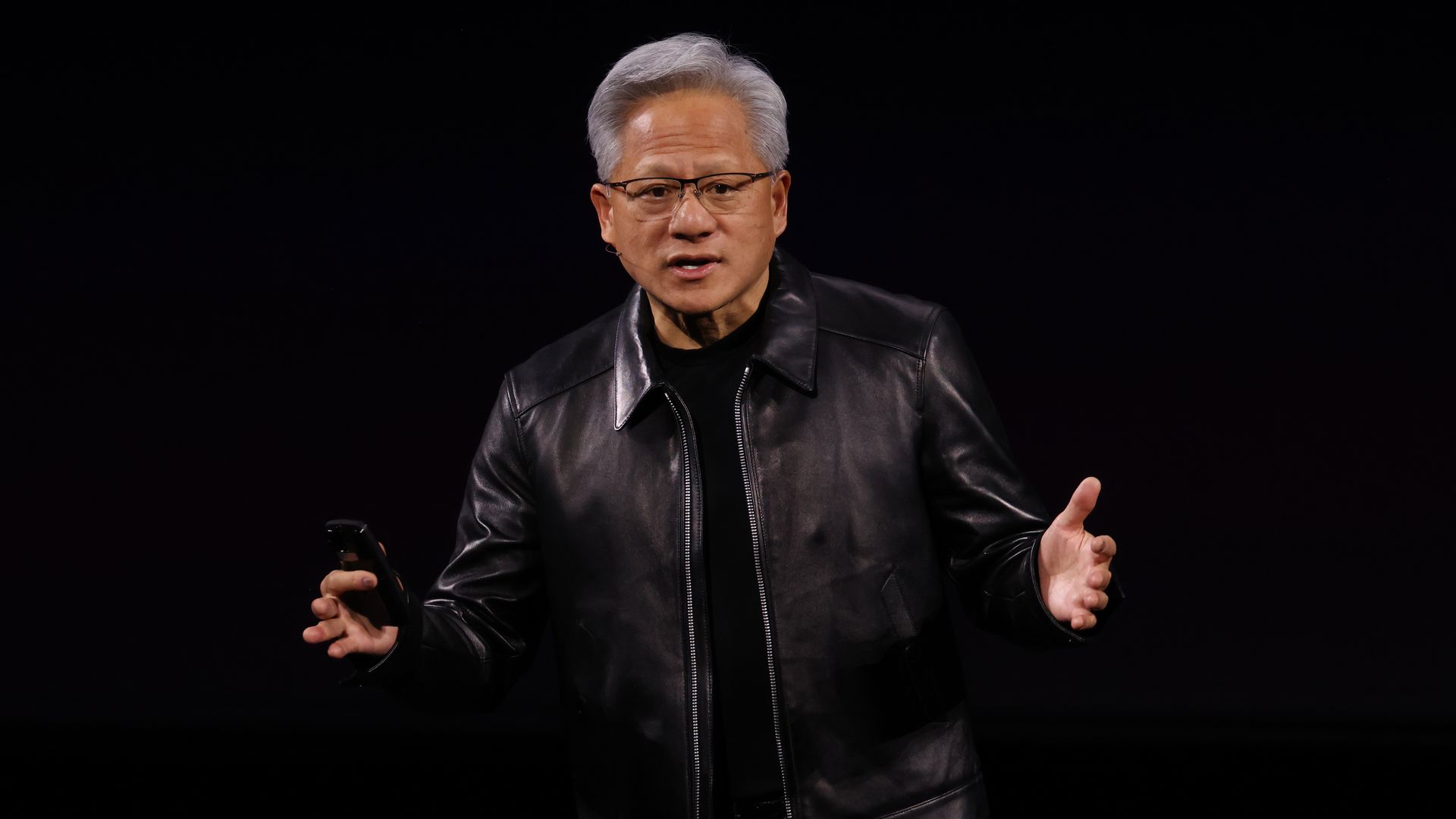
Nvidia has announced that it will reinstate Jensen Huang as CEO, president and as a member of the board.
Why it matters: Huang's ouster just days ago sent the stock market into correction territory. His return sparked a massive early rally in stocks Monday.

Axios BFD: Business leaders weigh AI's potential against actual ROI

NEW YORK — AI is driving new investment and changing how companies operate, but business leaders at an Axios BFD roundtable say the quantifiable returns vary.
Why it matters: Organizations that can strategically apply the technology to deliver value that shows up in bank accounts will stand out in a crowded and competitive landscape.
Axios' Madison Mills and George Moriarty moderated the roundtable discussion. The Nov. 19 event was sponsored by KPMG.
5 big takeaways from the conversation:
- AI costs are growing as organizations pay for tokens on top of headcount, Morgan Stanley managing director Todd Castagno said. However, it's "a real jagged frontier," VSP chief data and AI officer JD Hannick said, because the biggest AI users aren't always the best ones.
- Whether AI delivers ROI depends on the industry, Spice Capital founder and general partner Maya Bakhai said. She pointed to revenue cycle management in health care as an example of a sector "that's seen great margin improvement from" the technology.
- Candidly CEO and founder Laurel Taylor said her fintech company uses GitHub, Notion and other tools to measure whether AI influences productivity and operations. She calculates a "40% cost deflection … [and] an increase in revenue production."
- The technology is reshaping infrastructure investment, JLC Infrastructure vice president Riddhish Rege said. AI has sped up sourcing and diligence, he added, and transformed the types of investments getting attention across the industry, including power, internet and cybersecurity.
- "We're still in the very early innings of all this unfolding," said LinkedIn chief economist Liz Wilke, but a "huge tail of economically productive activities" is already at varying stages of AI adoption. "What we don't see is … broad indicators" that companies can blame — or credit — AI for big changes in the job market, she added.
Content from the sponsor's remarks:
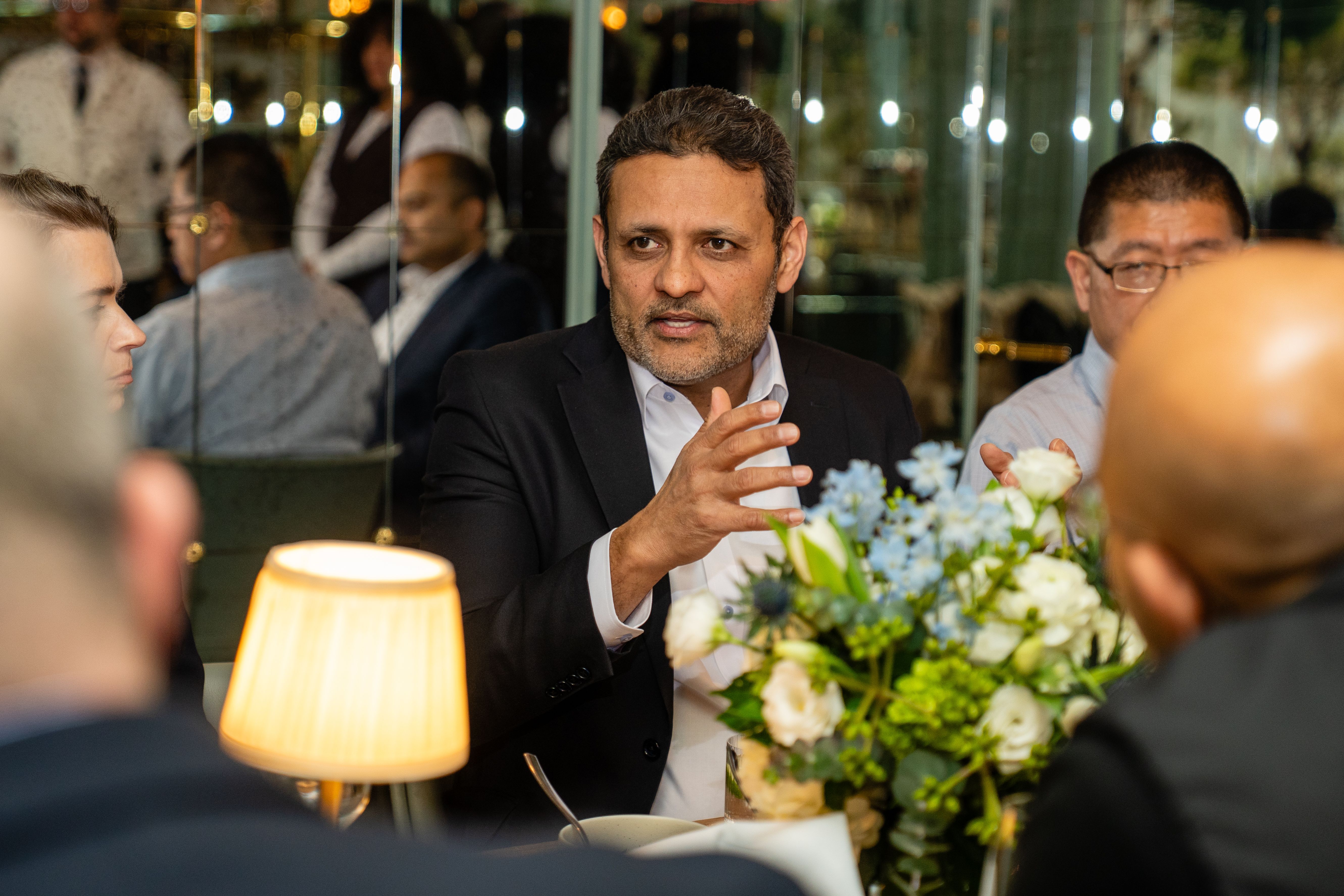
In opening remarks, KPMG deputy chair and managing principal Atif Zaim said AI has unprecedented potential, but companies still struggle to measure tangible value.
- "CEOs want to invest; they are investing; they're expecting huge value from it," Zaim said. "A very small portion are reporting actual, really realized value so far from it, and … I don't know how set up enterprises are to actually capture value that's occurring at the margins … [or] shows up in the earning statements."

AI's spending slowdown

The AI trade has entered uncharted territory as stocks limp to the end of an astonishing month.
The big picture: An important new reality for AI emerged in the just concluded third-quarter earnings season that has been overshadowed by the midterm elections, Jensen Huang and the Anthropic IPO.
Zoom in: Wall Street analysts covering the hyperscalers didn't ratchet up forecasts for further capital investment by Amazon, Alphabet, Microsoft, Meta and Oracle — the biggest spenders of the AI data center boom.
- That's a change from recent trends, seen in the chart below, where tech giants regularly announced shocking amounts of planned AI investment as part of quarterly results.
- Those announcements would lead Wall Street analysts to increase their estimates, and the capex line would spike up and to the right.
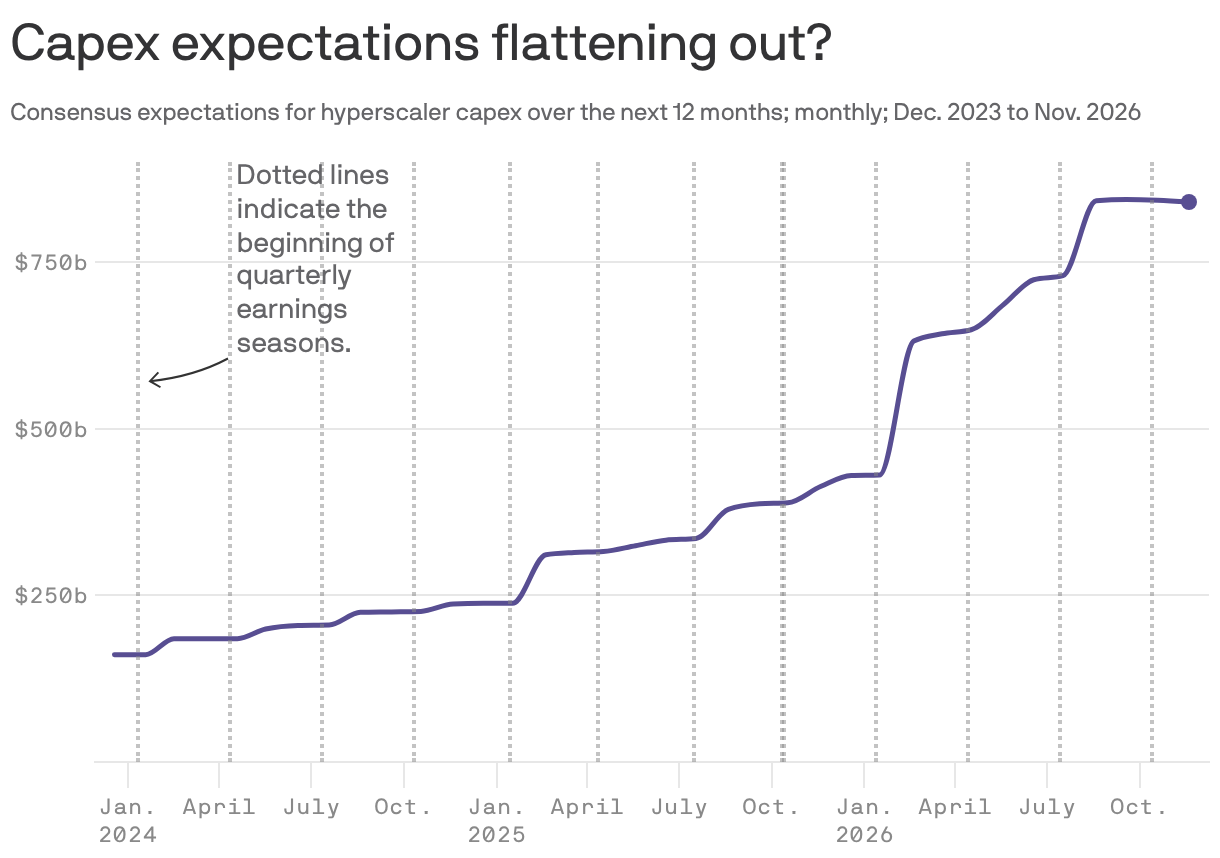
Reality check: This flatlining trend is huge.
- That wave of hyperscaler investment into data centers is also the source of giant profits that other companies — construction and engineering firms, merchant power providers, fiber-optic cable makers and, of course, makers of chips and memory devices — have been raking in from the boom.
- The AI investment gravy train has driven levels of S&P 500 earnings growth and overall corporate profitability to remarkably high levels.
Threat level: Slower capex will curb profits for the "picks-and-shovels" AI stocks that delivered some of the most astonishing gains of the AI boom.
- That's not necessarily a disaster: Analysts are expecting a more-than-respectable 16.4% increase in earnings for the S&P 500 next year.
- But it's clearly a sharp slowdown from earnings-per-share growth of nearly 35% that Wall Street thinks we'll end up with in 2026.
What they're saying: "We think the nature of the market environment is shifting a bit away from this sort of constantly higher capex numbers," David Lefkowitz, head of U.S. equities at UBS Global Wealth Management, told Axios last week, adding "We need to see the monetization at the AI layer, because that's ultimately who's paying for all this capex."
What we're watching: As Lefkowitz says, we're watching for clear, conclusive proof that there's serious money to be made from AI — aside from selling equipment used to build data centers. We haven't seen it yet.
The bottom line: Slowing future earnings expectations, expected Federal Reserve interest rate hikes and the chance of increased AI regulation have the market on edge.

We're all chaos CEOs in the AI age
You know my operating theory by now: We're locked in a new, sustained period of constant, wild, holy-crap (!) changes — good and bad. AI is the instigator. This means being a CEO evolves in equally wild ways, too.
Forget wartime vs. peacetime CEOs. That choice seems quaint.
Why it matters: Ben Horowitz's famous war vs. peace frame dates to 2011. It assumed we knew which mode we were in, and then locked into a method based on our circumstance. Truth is, we're all Chaos CEOs now.

A blunt gut check on where AI stands for CEOs right now

One of the smarter, large-size business leaders pulled me aside at dinner this week and whispered: "I read your newsletter and think it's way too bullish on AI upside right now."
- His argument: Existing companies, especially large ones, are seeing very little meaningful ROI on AI investments right now. It's proving harder than they thought to implement in areas that drive substantial revenue or savings. (This is the messy middle I write about a lot.)
- On top of that, AI is exposing new vulnerabilities in their tech stacks, forcing them to basically spend (read: lose) money to fix or avoid new problems with no revenue upside. Basically, cyber defense is all cost, no juice, worsened by great AI.
Why it matters: I put this theory to the test in private conversations with other CEOs and investors. Most agree AI implementation is messier and slower for BIG companies. There was almost universal agreement that non-AI companies see very little benefit — even as they concede the tech is getting better, faster.