Fed minutes show broad support for more rate hikes

Add Axios as your preferred source to
see more of our stories on Google.
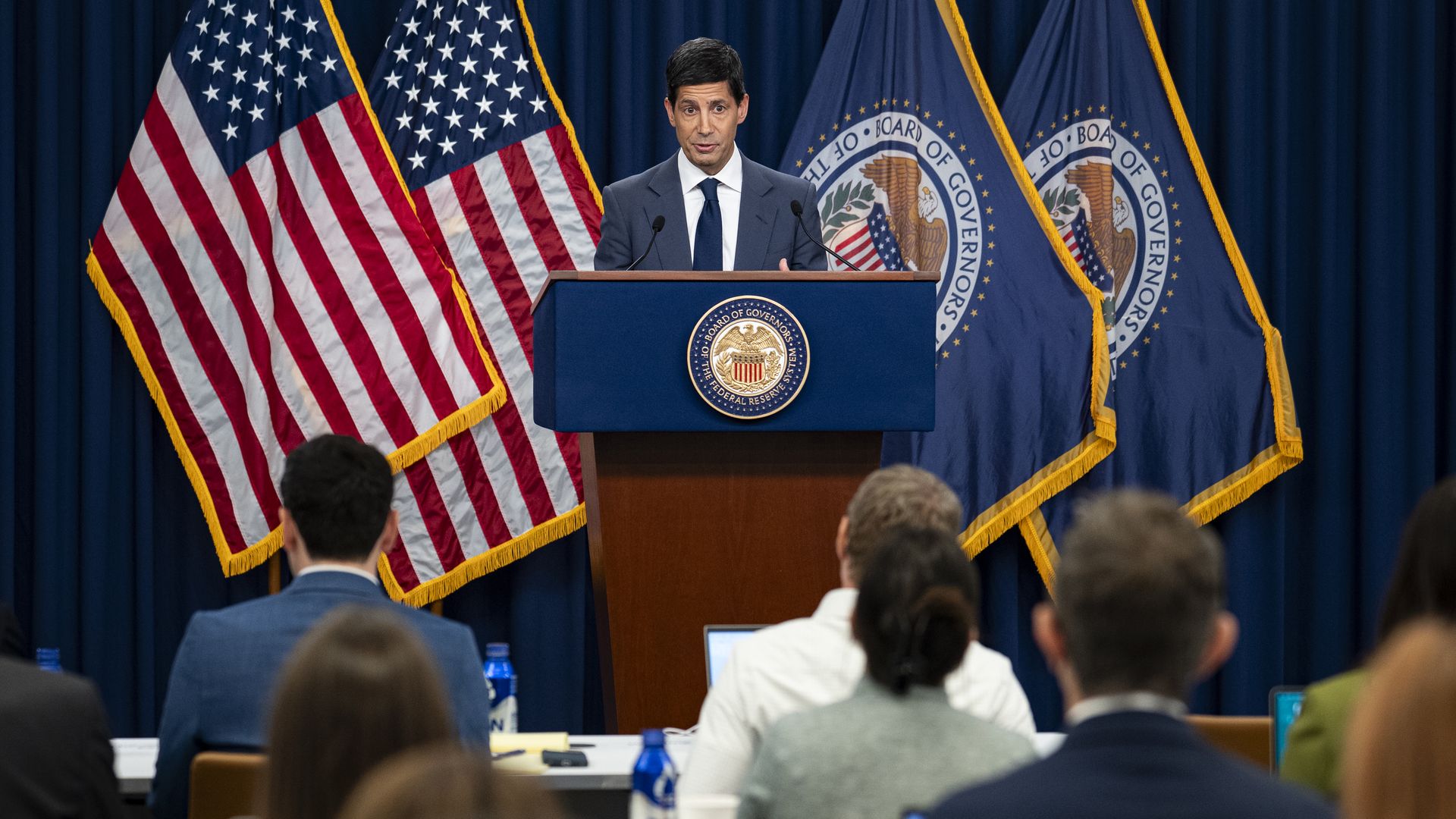
Federal Reserve chair Kevin Warsh speaks at a news conference in Washington, D.C., on Oct. 28. Photo: Al Drago/Getty Images
Minutes from the Federal Reserve's October meeting suggest Fed officials broadly agree on the need for higher interest rates, even as they debate how quickly to raise them.
Zoom in: "Almost all" policymakers expected further rate increases would be appropriate, broadly in line with their September projections.
- Some officials favored raising rates in October, arguing that inflation remained too high and monetary policy wasn't restrictive enough. A few warned that waiting could allow inflation to become entrenched or require more disruptive action later.
- But a few who favored raising rates were willing to accept a pause, provided markets understood that "further tightening was likely."
- "A couple of participants" suggested that an increase of more than a quarter percentage point "could warrant consideration ... if incoming inflation data were unfavorable."
- In other words, Fed governor Christopher Waller is not alone in his support for a potential half-percentage point hike next month.
The big picture: Most policymakers saw risks that inflation could prove higher than expected, even as they ultimately anticipate relief from energy prices, tariffs and AI-related investment.
- Many officials warned that the AI buildout was straining supplies and raising technology-related consumer prices, with some pressures spreading beyond industries directly involved in data center construction.
- A majority warned that higher costs could be passed through "more broadly and persistently" to consumer and business prices.
- Several officials also warned that the AI investment surge "could be excessive," leading to disappointing returns. A couple raised the possibility that it could be "crowding out other types of investment."
What to watch: Fed officials also discussed what could happen if enormous investments in AI failed to deliver the lofty returns investors expect.
- "Almost all" participants discussed the risks of disappointing AI investment returns. Most observed that AI-related debt had grown rapidly through "complex and opaque financing structures."
- Several officials also worried that bank supervisors might not fully capture banks' indirect exposure to those risks — including through credit lines to private credit funds and other financial institutions.
