Grand Theft Auto VI defies entertainment economics

Add Axios as your preferred source to
see more of our stories on Google.
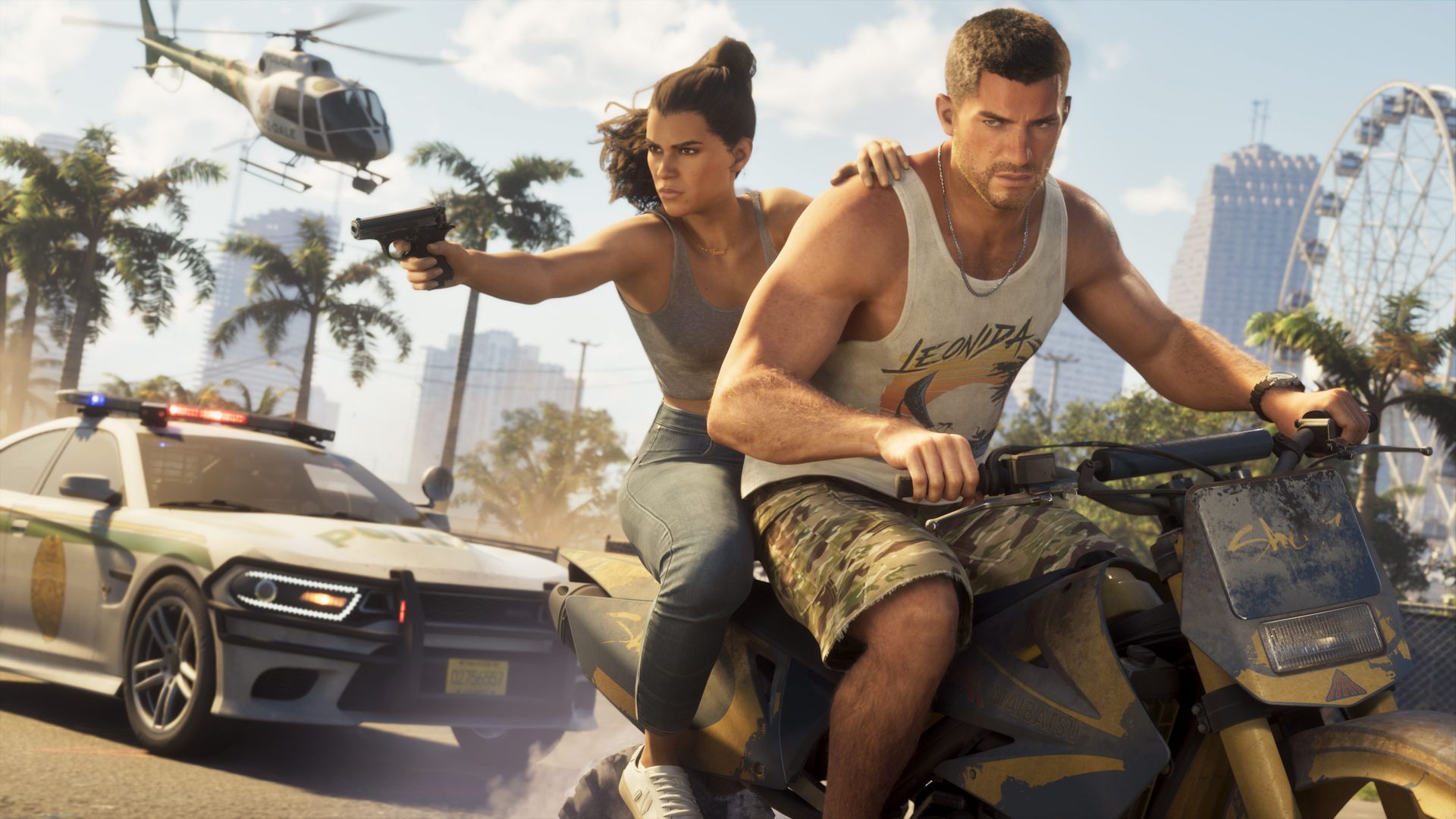
A screenshot of Grand Theft Auto VI featuring the game's main characters, Lucia Caminos and Jason Duval. Photo: Courtesy of Rockstar Games
The debut of Grand Theft Auto VI on Thursday is expected to be so big that internet providers are already sounding the alarm about global bandwidth and traffic disruptions as fans begin pre-downloads.
Why it matters: The game, which returns after a 13-year hiatus, proves how much free expression can drive economic value, even when those ideas are provocative or controversial.
- It also underscores how rare it is for an entertainment franchise to recoup its return on such a massive development budget so quickly. GTA VI is likely the most expensive video game ever created.
Follow the money: GTA VI has netted nearly $1.5 billion in sales, according to Sensor Tower estimates, with nearly 15 million digital pre-order copies sold across Xbox and PlayStation devices.
- Early demand foreshadows another blockbuster hit for the franchise, which has generated more than $10 billion in revenue since the debut of GTA V in 2013, per a third-party analysis of financial filings from Take-Two Interactive, the parent of GTA publisher Rockstar Games.
State of play: Daily players on all other games are expected to decline by 10% in the month following launch, per Sensor Tower estimates, with the most impacted titles ranging from Fortnite to Call of Duty.
- The other side: Mobile user time spent on social media apps, such as YouTube, Instagram and Discord, is slated to rise by more than 60 million hours, or roughly four hours per GTA player.
Zoom out: The blockbuster success of the GTA franchise is driven by its unique ability to drive years-long revenue from a single release using interactive features and online updates that keep players engaged indefinitely.
- "Frankly, it's one of the reasons that the motion picture business is so compromised," Strauss Zelnick, chairman and CEO of Take-Two Interactive, said at a Business Insider event last month.
- "Because you spend all this money to get an audience, and then even making the sequel, like you got to start from scratch. In our business — you know — if we do this right, you never leave us."
Flashback: GTA V's success transcended initial game sales through GTA Online, a multiplayer platform Rockstar introduced two weeks after the title was released.
- Doing so, "broke Rockstar's own formula" of releasing sequels or downloadable expansions, said Stephen Totilo, founder and editor of Game File.
- Zelnick said nearly 100% of Take-Two's business now involves ongoing player engagement, such as add-on content or multiplayer options, and most of its earnings come from recurring consumer spending as a result.
- Take-Two executives have been mum about what the multiplayer experience will look like after the initial debut of GTA VI.
The big picture: The entertainment industry, inclusive of games, has struggled to make big-budget franchises reliably profitable in an era where production costs are higher and consumers have more choice.
- Entertainment industries are struggling with a scale problem where they're unable to expand the number of consumers while costs keep rising, Totilo said.
- GTA, therefore, "is not representative of the video game industry," he added. "This is an exception. They don't have to play by the rules everybody else has to play by."
Case-in-point: GTA VI's marketing strategy flexes the franchise's cultural reach beyond games, with The Weather Channel unveiling an exclusive forecast of the weather in the game's fictional version of Miami and the Miami Heat unveiling new jerseys timed to the game's release.
- Its 27-minute trailer sent Netflix traffic soaring when it debuted as an exclusive livestream in August.
Reality check: With streaming and theatrical revenues facing growth caps, Hollywood has looked to games as a way to expand their IP. But gaming has proven illusive and entertainment giants continue to mostly license games rather than invest in building them.
- Netflix has shuttered four of its gaming studios over the past three years and sold one back to its founders. The company is reportedly 10% behind its 2026 internal gaming targets.
- Warner Bros. Discovery closed three gaming studios in 2025 before it was acquired by Paramount.
- Amazon made major cuts to its video game division last year.
- Disney shuttered its in-house console gaming business a decade ago and has since invested in Fortnite maker Epic Games to build an interactive gaming universe around its own franchises.


What to watch: Investors are anxiously awaiting the release of GTA VI, which has been delayed twice since its originally planned debut for late 2025. But they also are eager to understand Take-Two's plan for driving recurring revenue after Thursday's release.
- Shares in the company skyrocketed between 2023 and 2025 ahead of the anticipated debut, but have been down around 20% this year with the hype already baked into Wall Street projections.
- Take-Two has told analysts it expects the game to drive record financial results for the company for fiscal 2027.
The bottom line: "It's astounding that no one has bought Take Two," says LightShed Partners' Rich Greenfield, noting the company has no controlling shareholder.
- Asked why, he said, "I think a lot of these companies don't understand gaming."
