The Trump administration has made exporting American AI a key part of its plans for global AI dominance, but ad hocpolicy decisions around the most advanced AI are threatening that effort.
Why it matters: A flagship U.S. program designed to boost AI exports could be undermined by the very administration that created it.
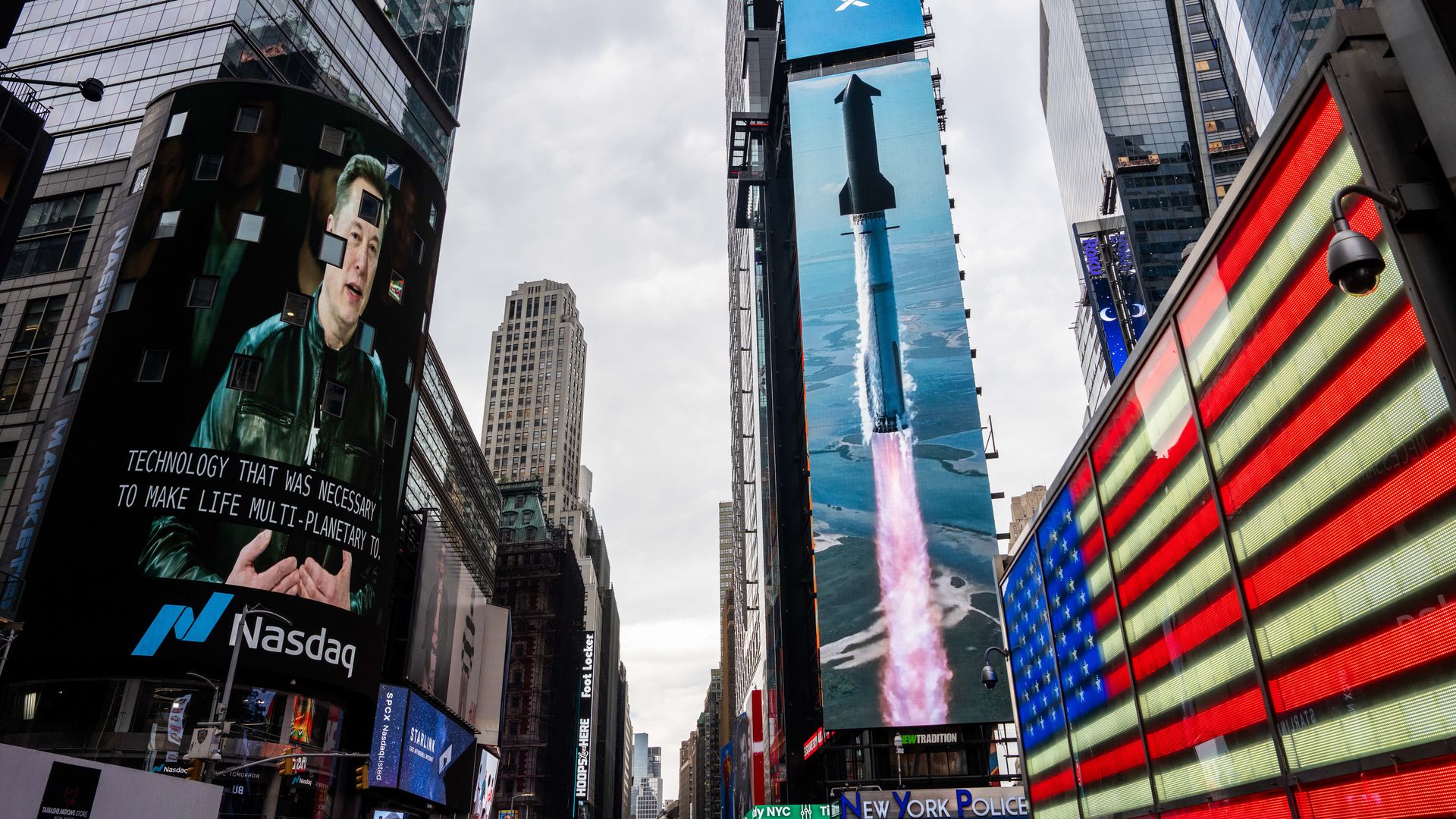
SpaceX jumped another 4.8% Tuesday, enabling Elon Musk's space launch/satellite services/AI/social media conglomerate to leapfrog Amazon.com in market value.
In just its first two full days of trading, SpaceX has added roughly $537 billion to push its market value to $2.659 trillion, according to FactSet data.
That puts it ahead of Amazon.com, which was valued at $2.646 trillion at Tuesday's close.
The still-secret terms of President Trump's Iran deal have triggered a furious debate over how much Tehran stands to gain financially — and how soon.
The big picture: The deal is expected to allow Iran to sell oil freely during a 60-day negotiating window, while opening the door to broader sanctions relief, access to frozen funds and a potential $300 billion rebuilding investment fund if a final nuclear agreement is reached.
Snap on Tuesday unveiled its long-awaited Specs augmented reality glasses, making them available to consumers after several years of private development.
Why it matters: Snap is betting its future on Specs, but the consumer smart glasses race is getting more competitive and investors want the company to focus more on growing its core ads business.
General Motors and Lockheed Martin plan to work together to strengthen U.S. manufacturing and boost America's readiness for war.
Why it matters: The collaboration, at the urging of the Trump Administration, is portrayed as an effort to protect national security by strengthening the U.S. industrial base across the defense sector.
Hightouch, an ad tech startup recently valued at $2.75 billion, has offered to buy LiveRamp's identity business from ad holding group Publicis for $800 million–$1.2 billion in cash and stock, according to a letter sent to Publicis' board last week and obtained by Axios.
Why it matters: A fast-growing ad tech startup is trying to convince Publicis to sell off a significant part of LiveRamp before the ink is even dry on its acquisition.
Microsoft is moving Copilot Cowork to usage-based pricing as it expands access to the enterprise AI tool — and is considering a Microsoft-hosted version of DeepSeek as a cheaper model option.
Why it matters: Microsoft's move to add a model from a Chinese AI company could draw criticism.
Despite intense geopolitical instability, global advertising revenue has reached its highest share of nominal GDP on record, according to new data from WPP Media.
Why it matters: The attention economy has shifted advertising budgets from discretionary to essential.
New York Post Media Group is launching its first free ad-supported streaming TV (FAST) channel, head of video and audio Warren Cohen exclusively tells Axios.
Why it matters: Publishers are revisiting the strategy as consumers seek premium programming without a subscription fee, connected TV ad dollars grow and digital video can be more easily repackaged.
Paramount Skydance executives believe that antisemitism is playing a role in opposition to the company's proposed $111 billion takeover of Warner Bros. Discovery, which still faces possible challenges from state AGs and European regulators.
DOJ signed off on the deal last week, reportedly before career antitrust staffers had an opportunity to object.
The big picture: Debate over this merger has become more about personalities than policies, which is unusual.
People Inc., one of America's largest publishers, has acquired Hot Luck, an Austin-based food and music festival co-founded by famed pitmaster Aaron Franklin, People Inc.'s executive vice president of food and home content Eric Handelsman told Axios.
Why it matters: The deal is part of People Inc.'s broader push to bring live experiences to its portfolio of lifestyle brands to create deeper ties with consumers and new opportunities for advertisers.
USA Today is adding 1,000 Marvel digital comics and an exclusive new, vertically formatted Marvel Infinity series, "Spider-Man Today," to its consumer gaming platform USA Today Play, executives told Axios.
Why it matters: The newspaper giant is betting that content will help grow its subscriber base as comics expands USA Today Play beyond its core offerings of puzzles and games.
Disney is using custom Adobe Firefly AI models trained on its own characters to help Imagineers design concepts and prototypes for theme parks and hotels.
Why it matters: The partnership shows Disney is willing to deploy generative AI when it can control how its intellectual property is used and protected.
Databricks is launching new tools to help companies cap AI costs, after finding customers had accidentally spent tens of millions of dollars on their broader AI bills in a single month.
Why it matters: AI agents are making corporate software bills harder to predict, and Databricks wants to be the layer companies use to keep them under control.
American Action Network is launching a $3 million ad campaign in four House districts, Axios has learned, as Republicans sharpen an affordability-focused message ahead of the midterms.
Why it matters: Republicans are trying to make affordability a defining issue of the November elections, betting voters will reward candidates who can claim credit for lowering costs and cutting taxes.
Why it matters: Nvidia's bond sales are part of an AI-related wave of change now sweeping through both bond and stock markets, as the world's largest and most cash-rich companies find that they too need investors to finance the AI buildout.
Why it matters: The IPO on Friday was just the beginning — over the next days and weeks, Wall Street is launching all kinds of ways to invest in the company and speculate on the direction of its stock price.
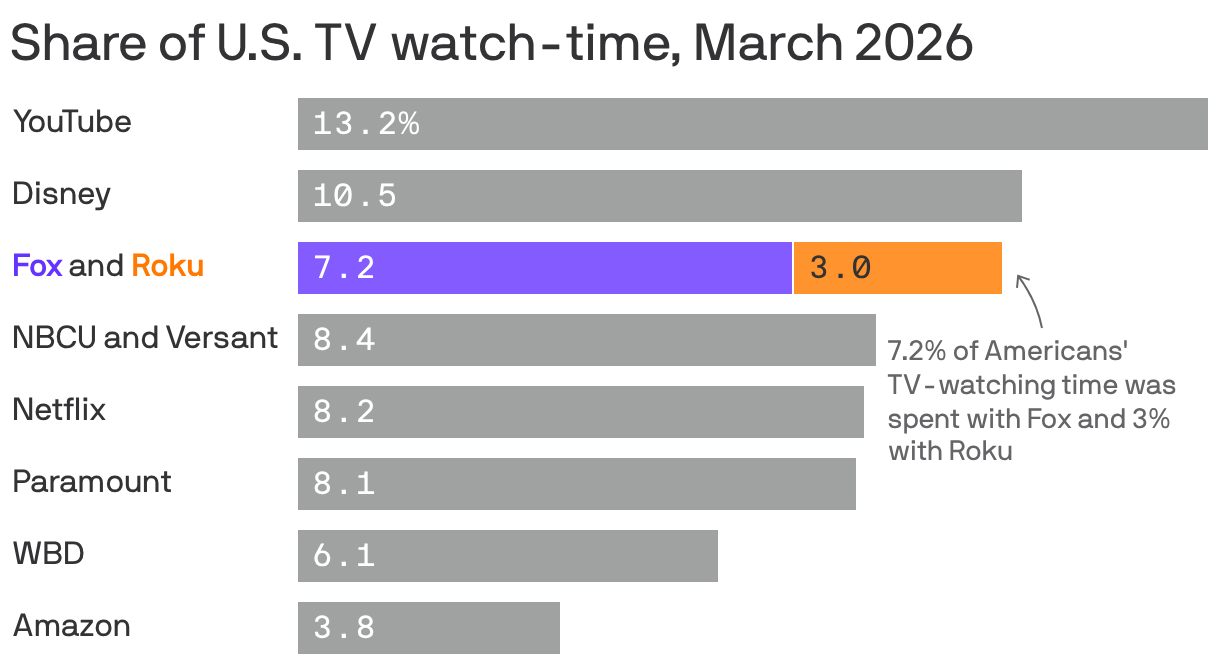
Fox's $22 billion deal to buy Roku marks a turning point in the streaming wars and a new era for the Murdoch media empire.
Why it matters: Streaming is no longer a paid subscriber race, but rather an opportunity for entertainment giants to accelerate other parts of their businesses where they have a competitive edge against Netflix.