Tech giants swing from AI darlings to debt doubts

Add Axios as your preferred source to
see more of our stories on Google.
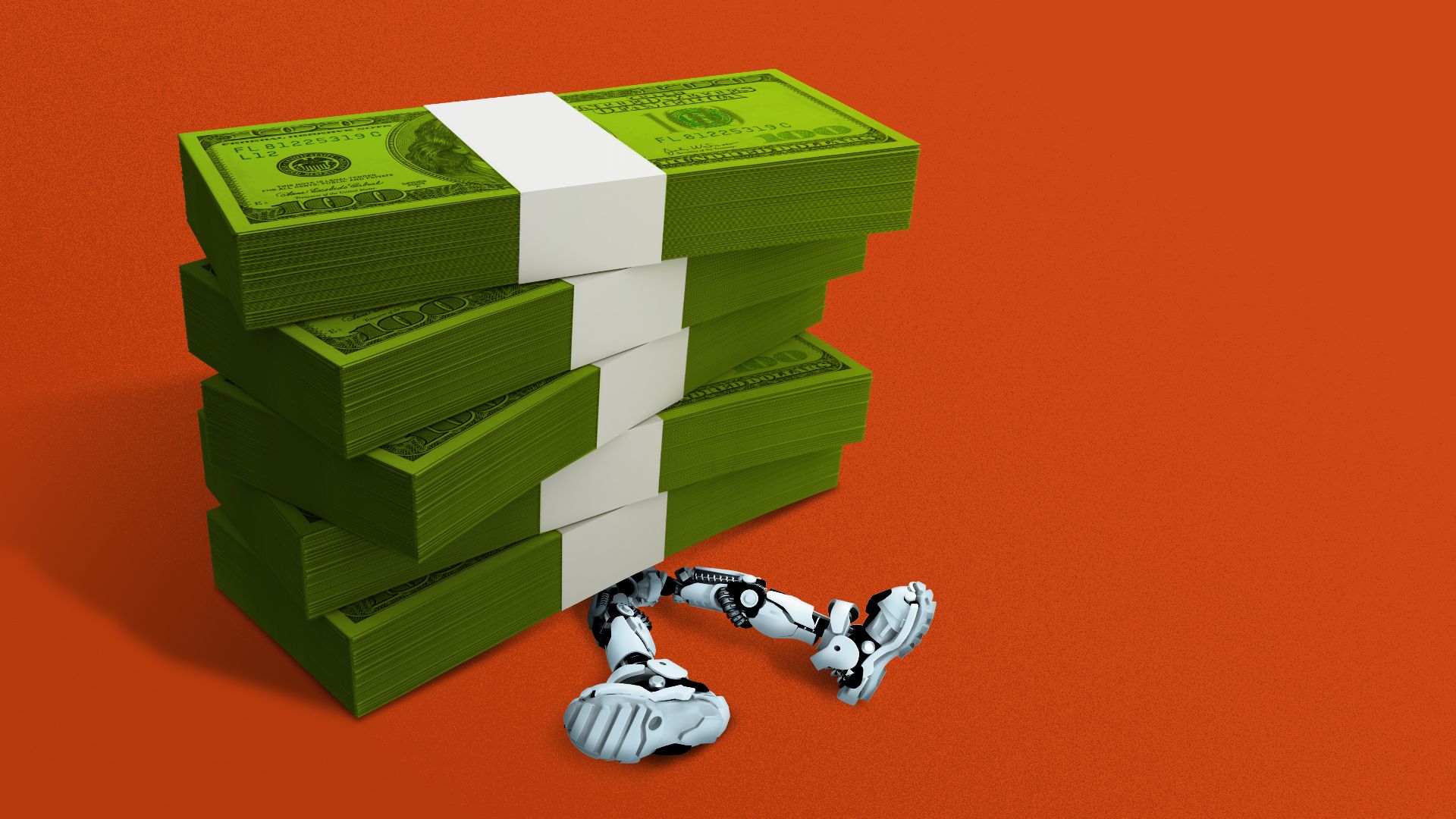
Illustration: Allie Carl/Axios
Oracle missed its quarterly revenue, pushing its bond yields to their highest levels of the year, a sign that investors are demanding greater compensation for the risk of holding its debt.
Why it matters: The spotlight is on Oracle, but the market move underscores a broader shift in how tech giants are perceived: from huge cash generators to companies making enormous AI bets using debt.
What they're saying: "This is the 1998 moment," Anuj Kapur, the CEO of software firm CloudBees and a tech executive who worked during the dot-com bubble, tells Axios.
- The promise of AI is meeting "the inconvenient math of debt and capex," Mark Malek, chief investment officer at Siebert, writes in a note.
State of play: The biggest tech companies are expected to spend over $700 billion next year to finance their AI buildouts, according to Bloomberg data and earnings reports.
- Historically, the fortress balance sheets of these large tech firms allowed them to finance these ambitions through their own cash on hand.
- Now, firms like Meta, Google and CoreWeave as well as Oracle are tapping the debt markets and issuing $121 billion in investment-grade supply this year, up from just $17 billion last year, according to Bank of America.
Zoom out: The state of the debt market is "so much more important" than the equity market, Kapur says.
- That's because debt investors don't need moonshot returns. They just need confidence that they will get their principal back plus interest.
- If investors think that's a riskier proposition, they will demand more compensation for owning the debt, pushing bond yields higher.
- That happens any time there is a shift in sentiment around the AI trade, which we now see more and more frequently from investors.
Between the lines: While corporate debt may be the best broad indicator, credit default swaps — derivatives betting on the possibility of underlying debt defaulting — are also flashing warning signs.
- "Oracle's credit default swaps are priced like the company is jogging barefoot across a field of Legos," Malek writes.
- Some investors do trade CDS to express more speculative views.
Reality check: Other data center giants are still financing their expansions predominantly through cash rather than debt.
- "That could change going forward," Joseph Briggs, an economist with Goldman Sachs, tells Axios. "We saw that happen, and a rise in debt in the late 1990s…But that's certainly not the bulk of what's happening today."
- Goldman Sachs, he says, is confident "we're not in a bubble yet."
What to watch: Demand.
- If there is a whiff that enterprises are ready to slow down their AI spending, investors could get nervous, Kapur says.
The bottom line: Investors are starting to separate AI companies by the strength of their balance sheets instead of just their growth potential.
- Debt loads, financing costs and cash burn matter again, reshaping how credit markets price the future winners and losers of AI.
