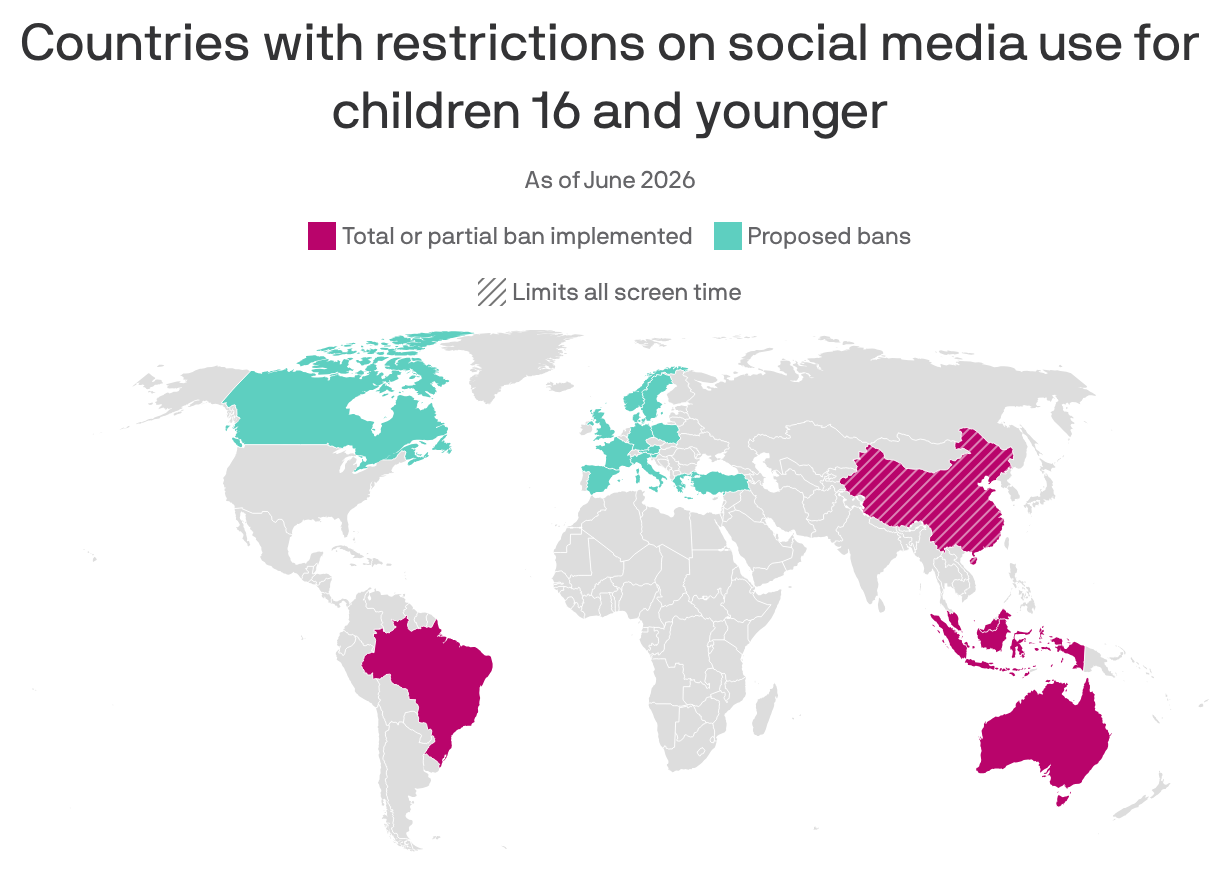
The U.K. plans to ban children under 16 from major social media platforms starting in 2027, joining a growing international effort to restrict minors' access.
Why it matters: Governments worldwide are increasingly pursuing social media restrictions for minors amid concerns about young people's health, wellbeing and online safety.
Data: Pew Research Center; Map: Danielle Alberti/Axios
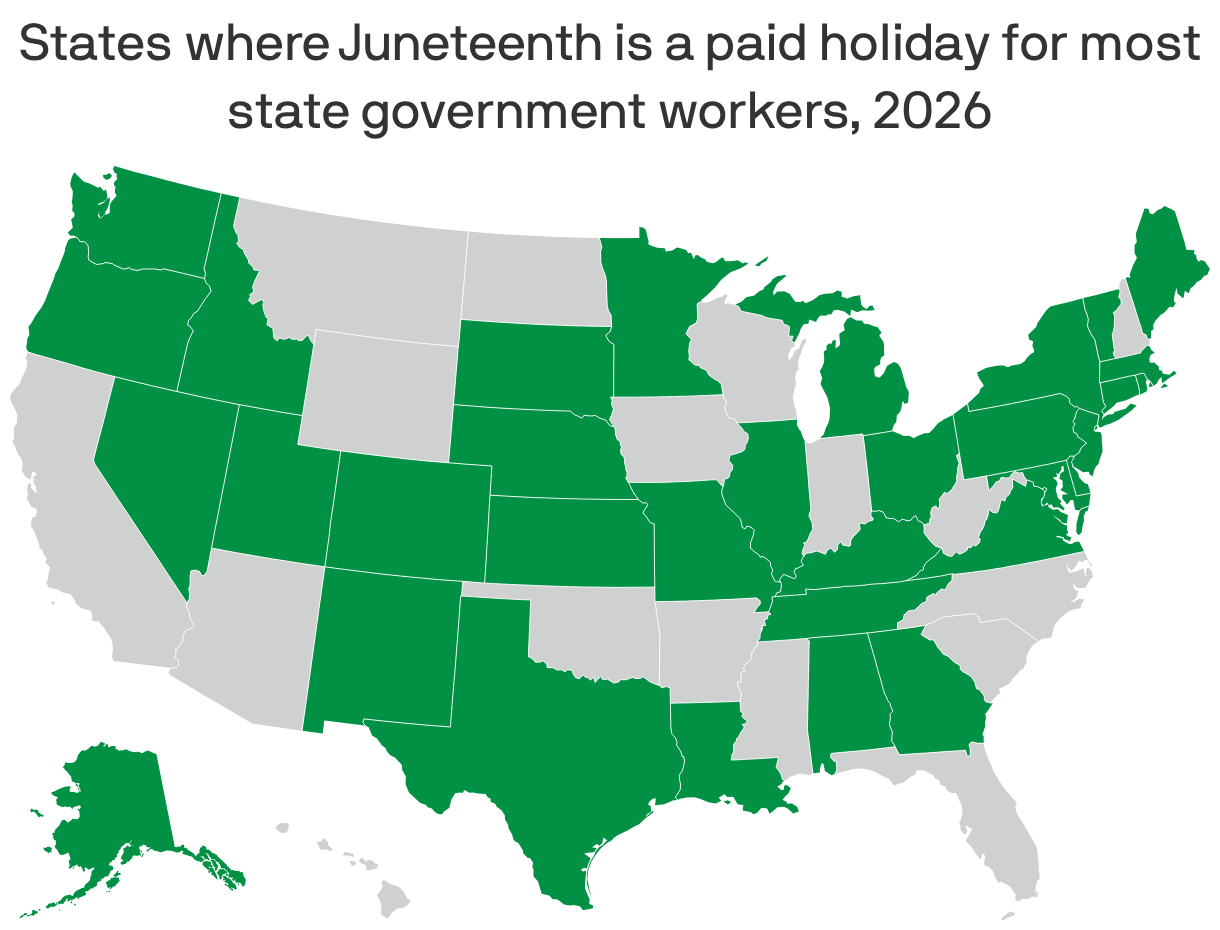
At least 33 states and D.C. will give most state government workers a paid day off Friday for Juneteenth this year, according to the Pew Research Center.
Why it matters: States differ considerably on how to mark the day when enslaved Black people in Galveston, Texas, learned they were free.
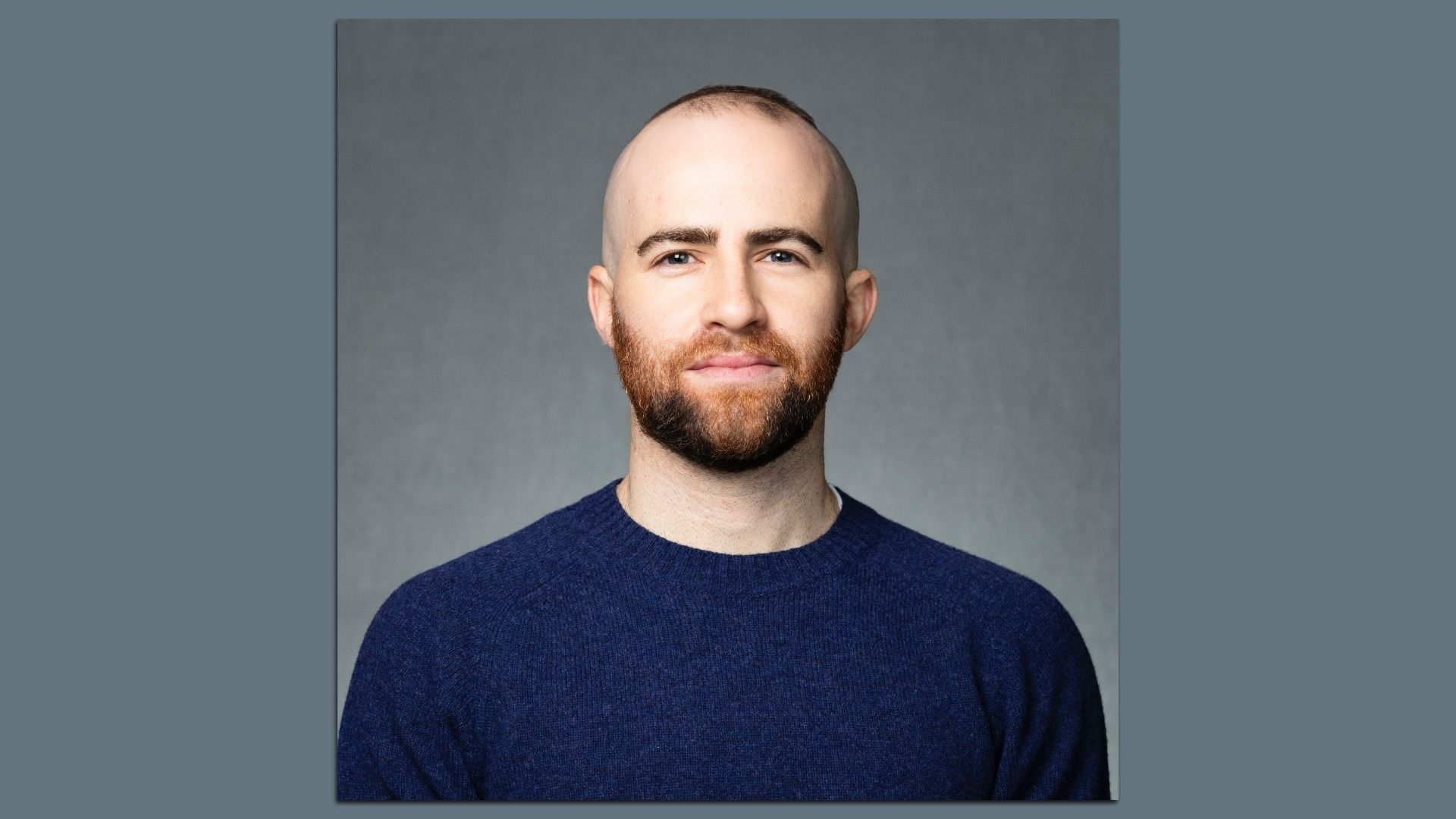
Substack has hired former Roku and PayPal executive Dan Robbins as its first head of brand sponsorships, he exclusively tells Axios.
Why it matters: The hire is part of a notable strategy shift at Substack, which started its business championing subscriptions over advertising but is now embracing sponsorships as a complementary revenue stream.
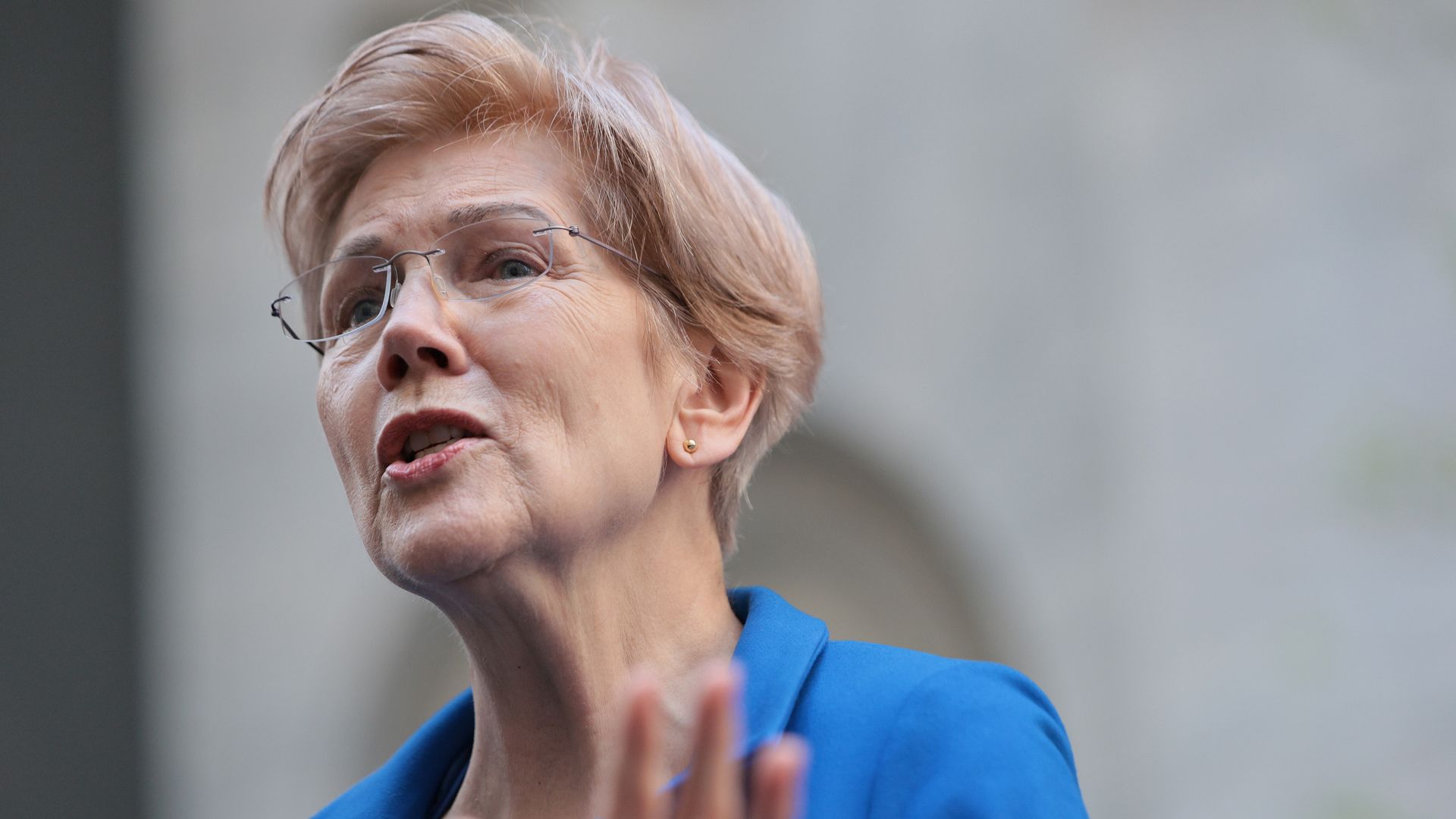
Sen. Elizabeth Warren (D-Mass.) on Friday sent letters to four large infrastructure investors, requesting more information on their data center deals, Axios has learned.
She's specifically interested in possible overlaps between ownership of data centers and utilities (i.e., the demand and supply), but does not allege any wrongdoing.
Why it matters: There is growing political anxiety over data centers that underly the AI revolution, particularly as energy prices rise, and private equity's involvement pours populist fuel on the fire.
Fox Corporation said Monday it has reached a definitive agreement to acquire Roku in a cash-and-stock deal valued at roughly $22 billion, or $160 per share.
Why it matters: The combination would create a free streaming powerhouse by combining Roku's free ad-supported channel with Tubi, Fox's free ad-supported service.
The markets are starting the week in their trillion-dollar IPO era, now that SpaceX shares are trading.
Why it matters: Think of Elon Musk's company like a pebble, a big one, thrown into a giant lake of equity — there will be ripples through the public and private markets, and they'll be rippling for a while.
🥸 Unreal job candidates ... Here's one that was new to me: Our HR head told me this week that we weren't posting a high-level job publicly. The reason? We're getting slammed by bots posing convincingly as human applicants. At least one advanced through a few screens.
Turns out, this is happening everywhere. Gartner thinks that a quarter of all candidate profiles could be fake by 2028.
Why this matters to CEOs: Um, call your HR head. This is weird shit.
The most important concept in AI right now isn't agents. It's loops.
What's happening: The smartest builders have stopped prompting AI directly. They design systems — called loops — that prompt AI automatically, check the results, remember what worked and improve with every run.
We reported that Wall Street has handed the AI hyperscalers more than twice as much money in 2026 as all of last year — roughly $255 billion in equity and debt across Alphabet, Amazon, Meta, Microsoft and Oracle.
Why it matters: The hyperscalers are absorbing a staggering share of America's available capital. Every dollar they borrow is a dollar that costs everyone else more to borrow. The AI buildout is quietly repricing money itself.
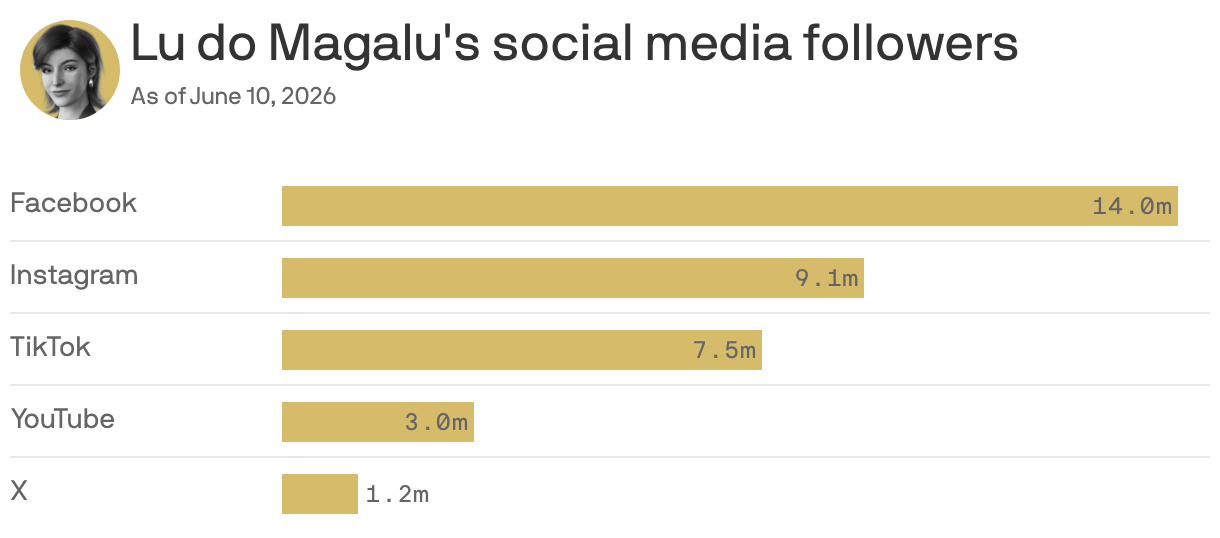
A made-up woman is the most effective marketer at one of Brazil's largest big-box retailers.
Lu do Magalu (Lu from Magalu, shorthand for Magazine Luíza) started in 2003 as a virtual shopping assistant for the brand — a replacement for Magalu's in-store salespeople as the company moved online — and built trust over decades by being genuinely useful.
Why you should care: Lu showcases the possibilities of owning your own trusted brand voice, rather than throwing cash at human influencers with their own shifting audiences and prices.
Boris Epshteyn is such a fixturein Donald Trump's White House that he's in Oval Office meetings when some attendees don't even know it.
Epshteyn, the president's senior personal counsel, speaks with "the boss" so often that Trump sometimes puts him on speakerphone without telling others in the room, two people familiar with the routine tell Axios.
Why it matters: In a White House where proximity to power is power itself, Epshteyn is one of the most influential people in D.C. — not just because he's listening in, but because Trump listens to him as well.
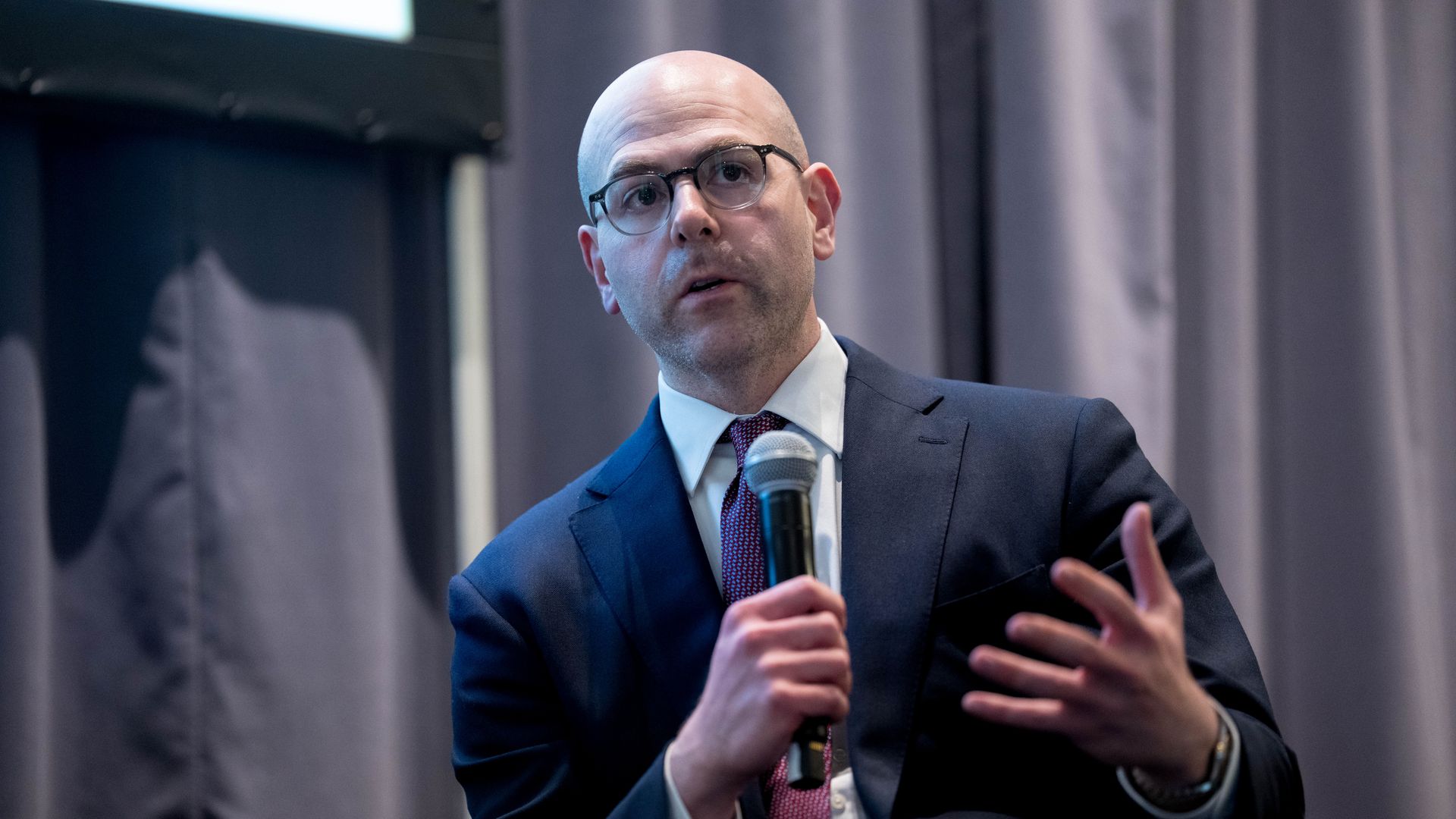
Former Federal Reserve governor Stephen Miran is returning to Hudson Bay Capital Management as a senior strategist in his first role since leaving the Fed in May.
The big picture: Miran returns to the hedge fund with a rare insider view of the White House's economic agenda and the Fed's interest rate-setting debates after serving as President Trump's top economist and the central bank's most persistent advocate for lower rates.